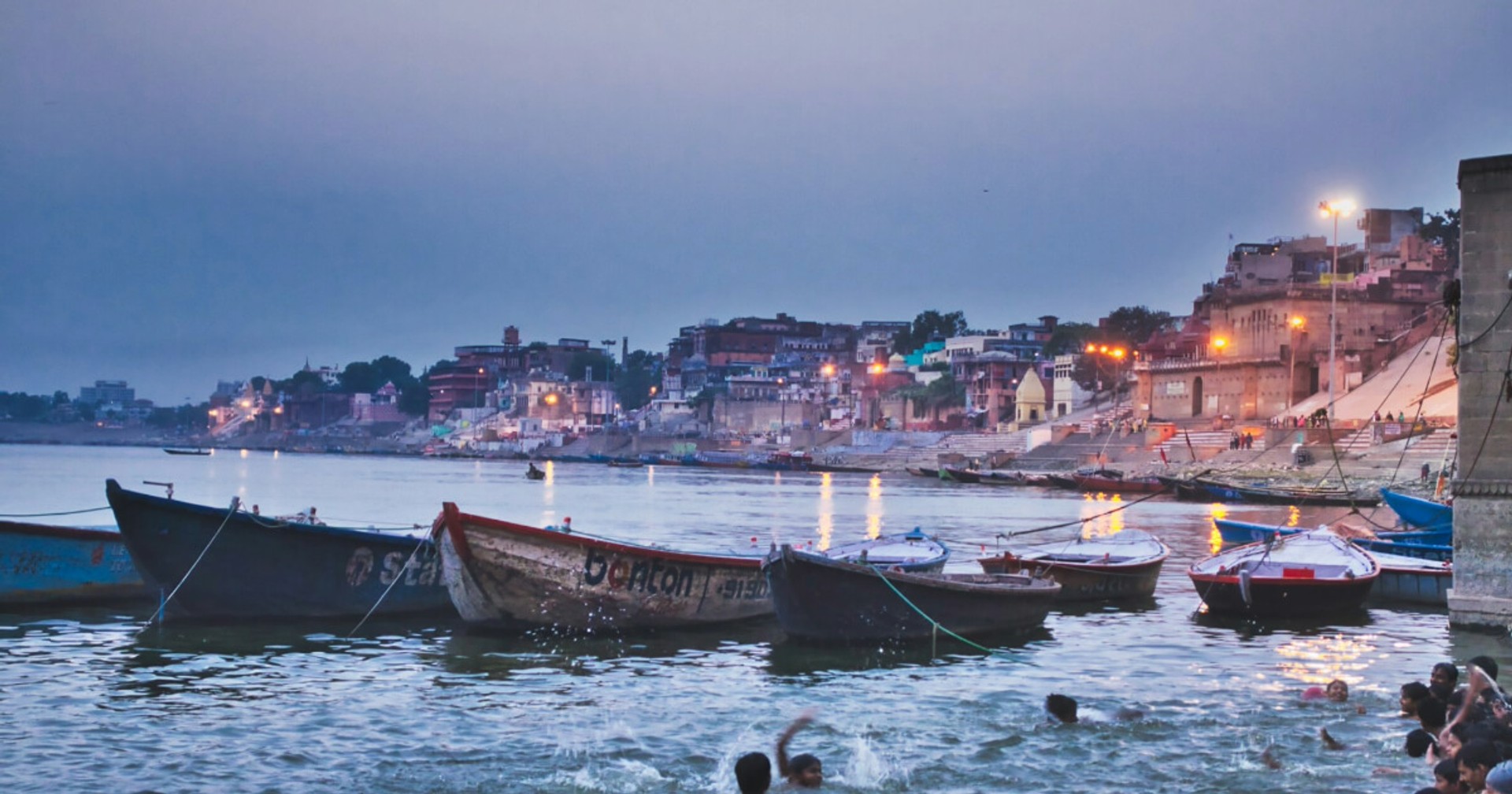

There are guesthouses in Varanasi that accept only the dying.
They are called mukti bhavans — liberation homes. The admission requirement is a physician's note confirming that death is expected within 15 days. Two of the most well-known, Kashi Labh Mukti Bhavan and Ganga Labh Bhavan, are a short walk from the ghats. Families of the dying cook communal meals in the courtyard. They recite prayers around the clock. They wait. If the patient lives beyond 15 days — which happens, because dying on a schedule is not as reliable as it sounds — they are asked, gently, to leave, so that someone else can come.
This is not a hidden or obscure fact about Varanasi. It is simply how the city has operated for most of its 3,000-year existence. Varanasi — also called Kashi, also called Banaras — is the city Hindus come to die, because dying here on the banks of the sacred Ganges is believed to grant moksha, liberation from the cycle of rebirth. This belief is not a tourism narrative or a tourist brochure simplification. It is the literal reason the city exists. Every pilgrim who arrives on the ghats, every sadhu in saffron who has left his family and his possessions, every elderly Hindu who has made a one-way journey here — they are all oriented toward the same thing. The river. The fire. The end that is also the beginning.
No amount of reading prepares you for this. The Ganga Aarti photographs you've seen don't. The travel blogs about sunrise boat rides don't. Varanasi is not a monument or a ceremony or a viewpoint. It is a functioning theology, conducted in public, at the scale of a city, continuously, without pause.
Three days is enough time to begin to understand it. It is not enough time to fully absorb it. You will leave wanting more — which is exactly as it should be.
Before anything else: sort VisitorsCoverage travel insurance before flying to Varanasi. The city is physically manageable, but the narrow lanes, the river, and the elevated emotional intensity make travel protection worth having. Policies from approximately $12–25 USD for a week. For a budget-friendly second quote, EKTA offers coverage from $0.99/day at ektatraveling.com — fully digital, 24/7 multilingual support, and genuinely affordable for a short domestic India add-on.
3-Day Varanasi at a Glance
| Day | Focus | Key Experience |
|---|---|---|
| Day 1 | Arrival + Evening Ghats | Dashashwamedh Ghat, Ganga Aarti |
| Day 2 | Sunrise Boat + Temples + Sarnath | 5am boat, Kashi Vishwanath, Sarnath day trip |
| Day 3 | Slow Varanasi + Departure | Morning lanes, Assi Ghat, ghat walk |
Getting to Varanasi
Varanasi's Lal Bahadur Shastri International Airport (VNS) receives direct flights from Delhi (1h 30min), Mumbai (2h), and a few international connections. Search on FlyFlick — Delhi to Varanasi flights start from ₹3,500–₹6,000 ($37.23–$63.83 USD) booked in advance. Set a Compensair alert — VNS is a smaller airport and delay-cancellation rates are higher than Delhi or Mumbai, particularly in fog season.
The far better option for most travellers from North India is the overnight train. The Mahamana Express (12430) departs Delhi at 3:55 PM and arrives Varanasi at 6:30 AM — depositing you in the city at the exact hour you need for Day 2's sunrise boat. AC 3-Tier ₹900–₹1,200 ($9.57–$12.77 USD). The Vande Bharat Express (22415) runs the route in 8 hours in daytime — Chair Car from ₹1,500–₹2,000 ($15.96–$21.28 USD). Both bookable through 12Go Asia with international card support. Book 3–4 weeks ahead.
Book your station-to-guesthouse transfer through KiwiTaxi or GetTransfer — both confirmed for Varanasi transfers. From Varanasi Junction station, the ghats are 2–3 kilometres by auto or rickshaw. Pre-booking eliminates the negotiation that greets every arriving tourist at the station exit.
Activate Saily 5G eSIM before boarding — it works across Varanasi's main areas. Signal becomes intermittent in the deep gali lanes behind the ghats — which is both a technical inconvenience and a feature. You are not supposed to be looking at your phone in those lanes. For rural extensions or onward travel to smaller pilgrimage sites, Drimsim handles patchy UP network coverage automatically.
Day 1: Arriving Varanasi — The Evening the City Introduces Itself
Arrive by afternoon. Do not try to do Day 2's activities on Day 1 — the sunrise boat is a 5am start, and if you've just come off an overnight train or a delayed flight, you need the afternoon to eat, settle, and walk to the ghats without a schedule.
Where to stay: The correct Varanasi decision is to stay as close to the ghats as possible, preferably in a guesthouse with a rooftop or a room facing the river. Assi Ghat and Dashashwamedh Ghat are the two main poles — Assi is calmer, more residential, better for long-stay travellers; Dashashwamedh is in the thick of it, noisier, and puts you 3 minutes from the Aarti stage. Budget guesthouses near the ghats run ₹1,500–₂,500 ($15.96–$26.60 USD) per night. Midrange with river view: ₹3,500–₆,000 ($37.23–$63.83 USD). Book in advance — ghat-area guesthouses fill quickly October–March.
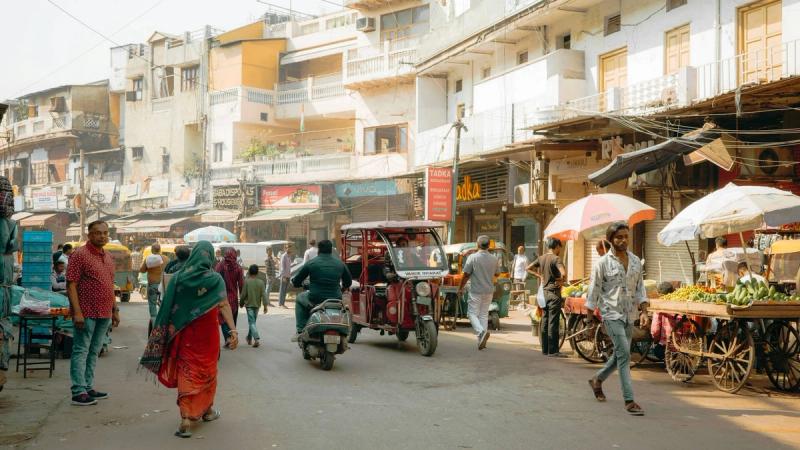
The lanes behind the ghats — locally called the galis — are a separate education. They are narrow enough in places that two people cannot pass without turning sideways. They carry, at different times: morning yoga practitioners, silk weavers carrying bolts of Banarasi fabric, stray cows, funeral processions moving at walking pace, school children, and cycle rickshaws that should not fit but somehow do. There is no correct way to navigate them without getting lost. Getting lost is, to a significant extent, the point. The lanes are where the city's actual life happens — the chai stalls where sadhus discuss philosophy, the 800-year-old temples that exist in what appears to be someone's living room, the windows where silk weavers run handlooms in rooms barely larger than the loom itself.
Dashashwamedh Ghat at dusk. Walk from wherever you're staying to Dashashwamedh in the late afternoon, when the pre-Aarti preparation is beginning. The ghat — whose name means "the ghat of ten horse sacrifices," from the Puranic legend that Lord Brahma performed the Ashwamedha sacrifice here — is Varanasi's main public stage. Vendors arrange marigold offerings. The priests set out their massive brass lamps on the stepped platform. Boats begin collecting viewers on the river. The stone steps fill progressively from 4pm onwards. By 5pm on a winter evening, it is already difficult to find front-row position.
The Ganga Aarti. The ceremony begins at approximately 6:45 PM in summer and monsoon, 5:45 PM in winter at Dashashwamedh. Arrive 45 minutes before the start time to position yourself on the steps. Entry to the steps is free. The paid VIP chair section nearest the ceremony costs ₹150–₹350 ($1.60–$3.72 USD) — available from attendants at the ghat.
What the ceremony is: seven priests, each at one of seven stations along the ghat, performing the identical synchronized ritual simultaneously. Five-foot brass lamps. Conch shells. Incense. Sanskrit mantras broadcast on speakers loud enough to hear from across the river. The ceremony was formalized into its current theatrical seven-priest choreographed form in 1991 by the Ganga Seva Nidhi trust — before that, it was conducted by a single priest. In the 35 years since, it has grown into what may be the most organized spiritual spectacle in India: a ceremony that begins and ends to the second, performed nightly without exception, 365 days a year.
What no photograph tells you: the sound is as important as the vision. The conch blasts. The synchronized bell rings. The mantras coming from seven directions at once. The crowd — and it will be a crowd, easily 800–1,000 people on a normal evening — utterly silent except for the devotional parts where it is anything but. Watch from the steps for the crowd context and the sound. For the visual — the fire on the water, the diyas floating past in the dark, the priests' reflection on the Ganges — you want a boat.
Evening boat for Aarti (recommended): Book a private boat through Klook for the Aarti viewing. A private boat up to 6 passengers runs ₹1,299–₂,500 ($13.83–$26.60 USD) per boat total — not per person. The boat anchors 30–40 metres from the ghat, giving you an unobstructed view of all seven priests simultaneously, the fire reflected in the moving water, and diyas floating past from the ritual offerings upstream. This is the most complete single visual experience available in Varanasi. Depart from the ghat approximately 45 minutes before the Aarti begins to secure the best position on the water.
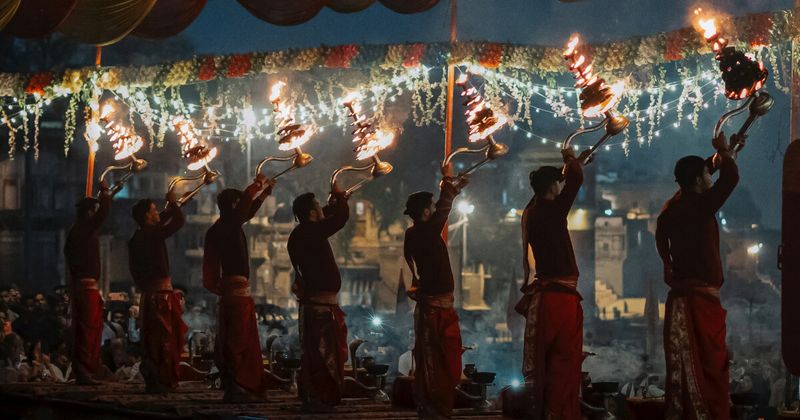
The Ganga Aarti was formalized into its current seven-priest choreographed form by the Ganga Seva Nidhi trust in 1991 — before that, the ceremony was performed by a single priest; the trust now employs and trains a rotating roster of priests to maintain the nightly performance to an exact sequence, ensuring the ceremony is consistent whether conducted on a Tuesday in February or Kartik Purnima night when 50,000 people are watching.
Day 2: 5am — The Most Important Alarm You Will Set in India
Wake up at 4:30am. This requires willpower you will not feel you have. Set three alarms.
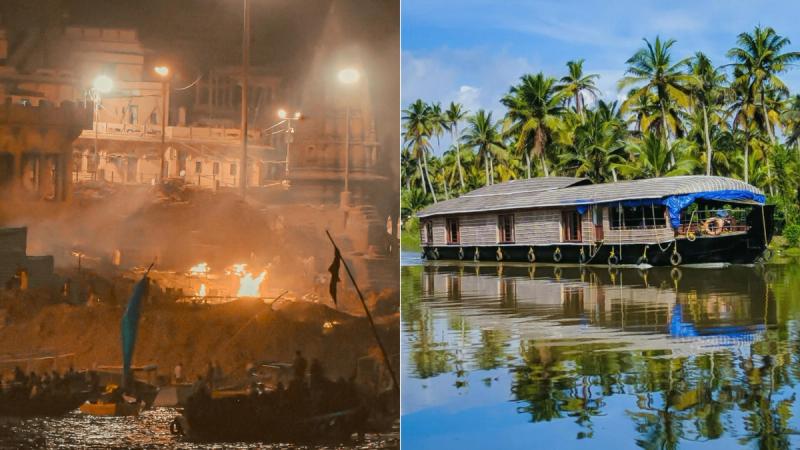
The Ganges at dawn — before the sun rises, in the blue-grey pre-light — is the experience that defines every honest first-person account of Varanasi. It cannot be adequately described in a way that matches what it is to be in it. There is a quality of light and silence that exists at 5am on this river in this city that exists nowhere else: the chanting from the temples, the distant conch shells from the morning aarti at smaller ghats, the smoke from the fires at Manikarnika curling upward in the still air, the pilgrims already waist-deep in the cold water performing Surya Namaskar before the sun has actually risen. All of this happening in near-darkness, with the first fractional warmth of light beginning above the riverbank palaces.
There is one other thing I need to prepare you for — which we'll cover fully in the Manikarnika section below. But at dawn, from the boat, the burning ghat appears as an orange glow on the horizon before the sun does. You will see it before you understand what it is.
Sunrise boat, 5–5:30am departure. Shared boat: ₹200–₹400 ($2.13–$4.26 USD) per person — your boatman picks up passengers at the main ghat until the boat fills. Private boat for 2–4 people: ₹800–₁,500 ($8.51–₁5.96 USD) total. Book through Klook the evening before, or negotiate directly with a registered boatman at the ghat (official rate card is displayed at Dashashwamedh and Assi). The ride covers all 84 ghats in a 60–90 minute circuit, moving south from Assi to north past Manikarnika and back. Your boatman will know which ghats to slow at, when to stop, and when to let the silence carry the boat.
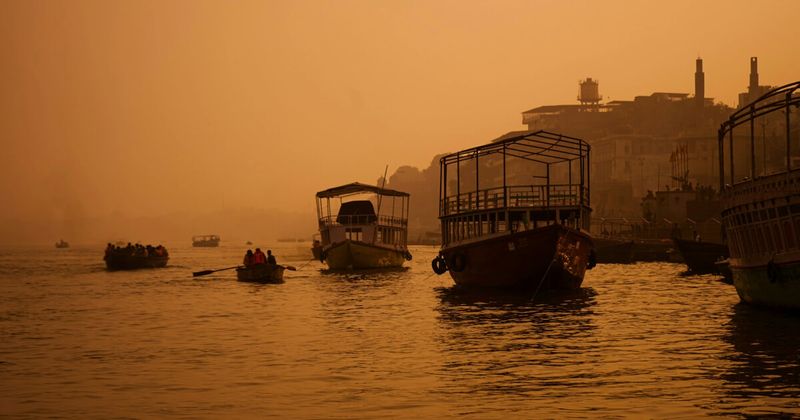
Varanasi's ghats face east — toward the rising sun and the Ganges — by deliberate orientation; the city's builders understood that the auspicious direction for dying and cremation in Hindu cosmology is the east bank of a sacred river, which is why the western bank of the Ganges at Varanasi became the city and why no construction of permanent buildings is permitted on the opposite eastern bank, preserving the open sky above the river for sunrise.
The 84 Ghats: What Each One Is and Why It Matters
The 84 ghats stretch 6.5 kilometres along the western bank of the Ganges. Most travel guides list them all. This is the honest, selective version.
Assi Ghat (southernmost) is where the Assi River meets the Ganges. It is the most popular ghat for long-stay visitors — yoga sessions every morning from 6am, a more residential pace, and a cluster of good cafés. The evening Aarti here is smaller and quieter than Dashashwamedh's — more intimate, less theatre. If you stay near Assi and the Dashashwamedh evening crowd genuinely overwhelms you, the Assi Aarti at 6:30–7:00 PM is a genuine alternative.
Dashashwamedh Ghat (central) is the public heart of the city. The most crowded, the most photographed, and also the most charged. The stone steps here have absorbed 3,000 years of ritual — the pilgrims bathe here, the flower offerings float from here, the priests stage their ceremony here every evening. You will return to this ghat multiple times across three days.
Manikarnika Ghat (north of Dashashwamedh) is the primary cremation ghat. It burns approximately 200 bodies per day, 24 hours a day, every day of the year. The fire is said to have burned continuously for 3,500 years — the claim is mythological but the cremations are genuinely uninterrupted. The wood used for cremation is stacked in massive piles along the upper ghat and priced by weight: regular wood runs approximately ₹5,000–₈,000 per cremation; sandalwood (considered most auspicious) significantly more.
I'll tell you what you need to know about this ghat because no one else does it properly: do not photograph it, ever, from any position. Not from the steps. Not from the boat. Not at distance. This is a functioning cremation ground where real families are performing their most private religious act. The prohibition is cultural and spiritual, not legal, but it is absolute. Cameras and phones should be put away as you approach. Touts will approach you and offer "photography permission for a donation" — this is a scam with no validity. The observation boats keep a respectful distance; if your boatman offers to pull in closer for a better view, decline.
What you can do: observe from the river at a respectful distance, watch the fires and the smoke, and sit with what you're seeing. The experience of watching a cremation from across the water — understanding that this is happening continuously, that it has been happening for 3,500 years, that this is the intended final destination of devout Hindus who have spent their lives hoping to die here — is not disturbing if you approach it the way the city itself does. With reverence. Manikarnika is not a spectacle. It is the point of the entire place.
Kedar Ghat has one of the ghats' finest temples — the Kedareshwar temple, a South Indian architectural style amid the North Indian city, with black and white stripes on its walls that make it immediately recognizable from the river.
Man Mandir Ghat features an 18th-century observatory built by Maharaja Man Singh of Jaipur — the same ruler who built the Jaipur Jantar Mantar — with astronomical instruments set into the ghat's upper terrace.
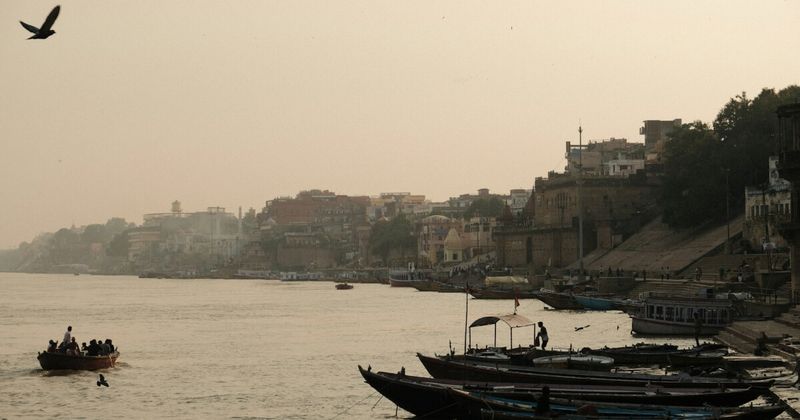
The ghats are not ancient in their current form — most were rebuilt or significantly modified in the 18th century by Maratha rulers, particularly the Scindias and Holkars, who rebuilt several that had collapsed or been destroyed; the iconic stepped-ghat form that lines the riverfront today is largely an 18th-century architectural intervention onto a far older ritual site.
Kashi Vishwanath Temple — The Sacred Core
After the sunrise boat, breakfast on the ghat — Banarasi kachori sabzi (fried bread with spiced potato curry, ₹40– $0.43–$0.64 USD), jalebi, and chai from the stalls at Dashashwamedh. Then walk the lanes to Kashi Vishwanath.
The Kashi Vishwanath Temple is dedicated to Lord Shiva in his form as Vishwanath — Lord of the Universe. It is one of the twelve Jyotirlinga shrines in India, considered the most sacred among them. The temple is free to enter. There is no ticket, no entry fee, and no designated "foreign tourist" queue — which is both spiritually appropriate and practically significant, because the queue for standard darshan on a busy day runs 2–4 hours. A VIP fast-track darshan pass (₹300–$3.19–5.32 USD, available at the temple trust office) reduces this to 15–30 minutes and is worth it on a 3-day trip.
The new Kashi Vishwanath Corridor, completed in 2021, redeveloped 400 metres of lanes between the temple and the Ganges, demolishing buildings that had obscured the visual connection between the temple and the river for centuries. The corridor now connects the ghat directly to the temple compound — you can walk from the Ganges steps to the sanctum in 3 minutes. What the redevelopment did to the surrounding neighbourhood is a more complicated story involving the displacement of households and businesses that had been in those lanes for generations, which is not a narrative the official tourism materials cover. Worth knowing before you arrive.
After Kashi Vishwanath: Annapurna Devi Temple (free, adjacent — the goddess of food and nourishment, considered Shiva's consort), Kal Bhairav Temple (free — Varanasi's city-god, a fierce form of Shiva; the prasad distributed here is whisky, which is theologically correct and practically surprising), and a walk through the Vishwanath Gali — the lane outside the temple packed with flower sellers, sweetshops, and religious goods traders, indistinguishable from every other Varanasi lane except for its particular intensity.
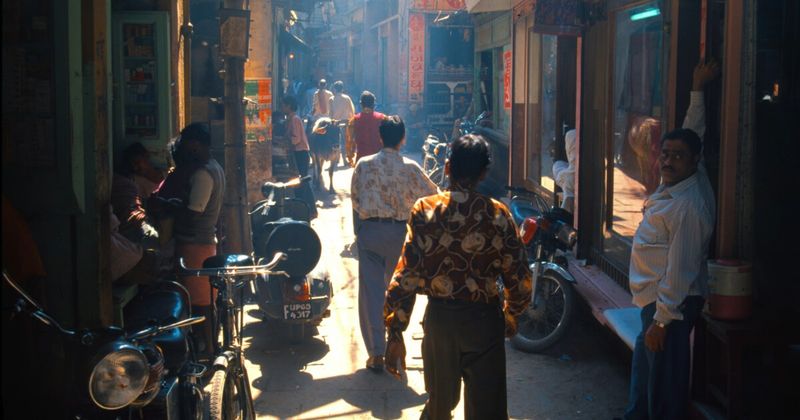
The galis of Varanasi follow routes established over centuries of organic urban growth — they do not follow a grid, they do not follow logic, and they shift slightly with every monsoon as walls settle and buildings sag; the residents navigate by landmarks (a specific temple, a particular chai stall, a recognizable cow) rather than by street names, most of which change block by block anyway.
Check Live Flight Prices
Afternoon: Sarnath — Where Buddhism Began
Ten kilometres north of Varanasi — 20–30 minutes by cab — is one of the most historically significant religious sites in the world.
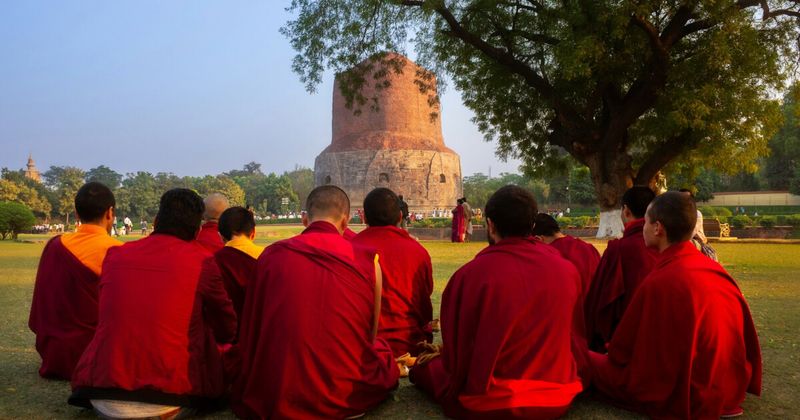
At Sarnath, in 528 BCE, Siddhartha Gautama delivered his first sermon after achieving enlightenment under the Bodhi tree at Bodh Gaya. He had walked here to find the five ascetics he had previously studied with, and in the Deer Park — which still exists, with deer still living in it — he taught the four noble truths and the eightfold path. This first sermon is called the Dhammacakkappavattana Sutta, the Turning of the Wheel of the Dharma. What began here has 500 million practising adherents today. The park where it happened costs ₹50 ($0.53 USD) to enter.
The Ashoka Lion Capital in the Sarnath Museum — four lions standing back-to-back atop a circular abacus with the Dharma wheel — was adopted as the emblem of the Republic of India in 1950; the original sandstone carving is displayed in the museum without elaborate security or lighting, making Sarnath one of the most understated presentations of a genuinely world-significant artefact anywhere in India.
The Dhamek Stupa — the enormous cylindrical stone monument built in 500 CE to mark the spot of that first sermon — is covered in intricate floral stone carvings that have survived 1,500 years of weather, invasion, and the British archaeological excavations of the 1790s that mistook it for a treasure trove and nearly demolished it before finding nothing valuable inside. The stupa is ₹25 per person for Indian nationals; foreigners pay the ASI international rate — check the official ASI website for the current foreign national fee, which has historically been higher. Book the Sarnath entry through Klook to avoid the walk-up queue.
The Sarnath Archaeological Museum (adjacent, separate ₹25 ticket, same caveat for foreigners) houses the original Ashoka Lion Capital — the four-lion sandstone sculpture commissioned by Emperor Ashoka in 250 BCE that became independent India's national emblem, the same emblem on every Indian passport and rupee note. It is displayed in a simple case in the museum's central hall. There is no crowd. There is no elaborate lighting. It is simply there, 2,300 years old, looking exactly as it does on every document issued by the Indian government.
The surrounding Sarnath complex includes Thai, Tibetan, Japanese, Chinese, and Korean Buddhist temples, each architecturally distinct, each built by the national Buddhist communities as expressions of their own traditions. The contrast between them and the ancient Indian ruins creates a site that spans 2,500 years of one religious tradition's global spread, visible from a single vantage point.
Return from Sarnath by 4:30 PM for the evening ghat walk and the second Ganga Aarti.
Day 3: The Slow Day — Varanasi at Its Own Pace
Day 3 is deliberately unscheduled. Varanasi punishes itinerary density. The city has a pace — call it the pace of pilgrimage — and it is slower than any schedule you bring from outside. The third day is for submitting to it.
Morning at Assi Ghat, 6am. Walk to Assi Ghat before breakfast and sit on the steps. Watch the yoga practitioners who gather every morning at the southern end of the ghat — the yoga tradition here predates Rishikesh's commercial yoga economy by centuries. Watch the pilgrims. The Ganges at this hour, in full morning light rather than pre-dawn, is different from Day 2's dawn experience: wider, warmer in colour, more inhabited. The ghats are the most democratic space in India — no entry fee, no hierarchy of access, no separation between the local Bihari family doing their morning puja and the Japanese Buddhist pilgrim and the European traveller who got on a flight from Frankfurt because someone told them Varanasi changes things. They are all here together on the same stone steps, facing the same river.
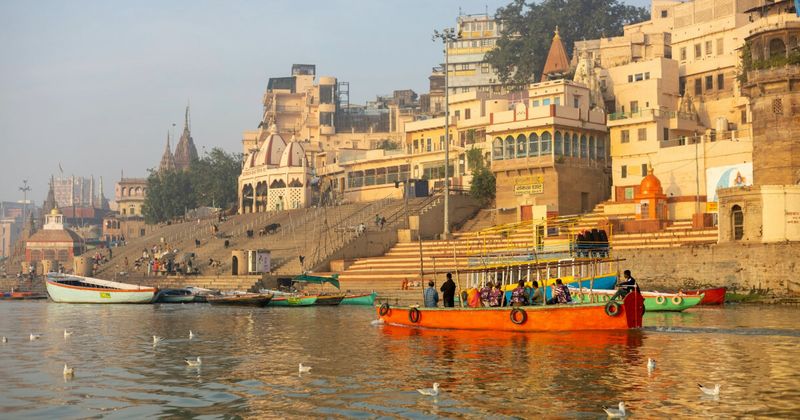
The prohibition on permanent construction on the eastern bank of the Ganges at Varanasi is not a legal code but a cultural and spiritual convention maintained across centuries — building on the eastern bank would obstruct the sunrise above the sacred river and interfere with the ritual orientation of the ghats; the one exception, Ramnagar Fort, was built by rulers who were outsiders to the city's priestly tradition and accepted the cultural compromise of staying on the far side.
Tulsi Manas Temple — free, 10 minutes' walk from Assi Ghat. Built in 1964 on the site where the 16th-century saint-poet Tulsidas is said to have composed the Ramcharitmanas — the Hindi devotional retelling of the Ramayana that is the most-read religious text in North India after the Vedas. The temple walls are engraved with verses from the Ramcharitmanas in their entirety. It will take you three days to read them. The temple is calm, the carvings are extraordinary, and almost nobody is visiting it at any given time.
Sankat Mochan Hanuman Temple — free, 1.5 kilometres south of Assi Ghat, founded by Tulsidas in the 16th century and considered the most beloved of Varanasi's non-Kashi Vishwanath temples. The atmosphere is different from most Hindu temples you will visit — there are musicians performing devotional kirtan in a dedicated hall, monkeys in the large courtyard (remove anything edible from your bags), and a steady stream of local Varanasi residents rather than pilgrims. It feels like what it is: a neighbourhood temple that happens to be 500 years old.
Ramnagar Fort, across the river on the eastern bank — take a ferry from the ghats (₹30 – $0.32 – 0.53 USD one way), walk across the sandbanks in dry season, or take a longer auto route via the bridge. The 18th-century fort of the Maharaja of Varanasi (the Kashi Naresh, who still lives in part of it) houses a genuinely remarkable museum of Mughal weapons, palanquins, vintage cars, astronomical clocks, and astronomical equipment. Entry approximately ₹20–₁50 depending on section. The view from the fort walls back across the Ganges toward Varanasi — the eastern bank perspective, all the ghats visible at once, no buildings on this side — is the one most professional photographers use when they want the widest possible shot of the city.
What Nobody Prepares You For
This section is the reason I chose to write this guide myself rather than assign it to the editorial team. Some things about Varanasi require a first-person voice.
The cremations are continuous and visible. You will see them. Not from a discreet distance — from 30 metres away if you walk the ghat, from slightly further if you're on the boat. The smell of burning wood and the smoke that hangs over Manikarnika are part of the sensory experience of the city. Most people manage it better than they expect. Some people do not. If you are someone who processes grief or death very differently from others, or who has recently experienced a personal loss, Varanasi requires some emotional preparation that no itinerary guide can provide.
The funeral processions come through the lanes. At any hour, including 3am. A procession consists of a body wrapped in saffron or white cloth, covered in marigold garlands, being carried on a bamboo stretcher by the male relatives of the deceased, who chant "Ram naam satya hai" (The name of Ram is truth) as they walk. The processions move quickly through the lanes because speed is considered auspicious. If you encounter one, step aside immediately against the wall, remain silent, and let it pass. Do not photograph it under any circumstances.
The touts at the ghats are among the most sophisticated in India. The Varanasi ghat tout has refined his approach over decades of international tourism. The most common script is a friendly introduction, an offer to "show you the burning ghat" from a "good viewing point" (which is the roof of the Dom caste families' house, for a fee), followed by a request for charitable donations for the "wood fund" for poor families who cannot afford proper cremation. The wood fund may be real. The percentage going to the stated cause is impossible to verify. This is a matter of personal judgement. What is not personal judgement: the "government tourist office" near the ghats that is not a government tourist office. Read the India travel scams guide before arriving in the city.
The dying come to wait, and you will know this without being told. You will see elderly pilgrims on the ghats, alone, with small bags, sitting in a particular stillness that is different from tourist stillness. You will see families gathered around people who are clearly very ill, near the river, in the shade. You will understand, without needing it explained, that this is the city as it was designed — a receiving ground for those approaching the end, a place that considers dying here the highest spiritual achievement of a Hindu lifetime. This is not macabre once you see it. It is, in its own way, the most coherent urban philosophy I have encountered anywhere in the world: a city built around the question of how to die well.
The Ganga Aarti will move you regardless of your faith. I am not particularly religious. I have attended the Ganga Aarti at Dashashwamedh multiple times and each time, about twelve minutes in — when the conch shells sound simultaneously from seven directions and the priests raise the fire lamps in perfect unison above their heads — something happens that I cannot explain in secular language. The ceremony doesn't require you to believe anything. It requires you to be present. That distinction is what Varanasi operates on.
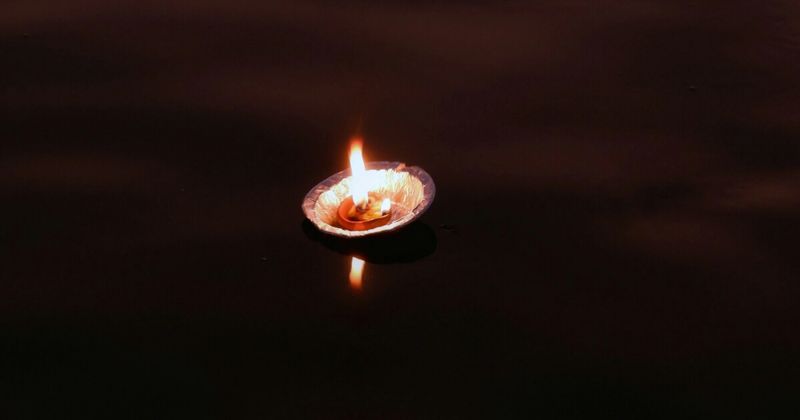
The tradition of floating diyas on the Ganges during Ganga Aarti and Dev Deepawali dates back centuries — the lamp is believed to carry prayers and offerings downstream to the ocean, and the act of releasing it is considered a surrender to the river's current and, by extension, to the divine; on Dev Deepawali (November full moon), the ghats release over a million diyas simultaneously, making it one of the most visually extraordinary public rituals in the world.
What to Skip in Varanasi
The "exclusive" rooftop views of Manikarnika. Numerous touts and guesthouses near the burning ghat will offer rooftop access for a view of the cremations, often framed as a "donation for the wood fund." The wood fund may be legitimate — families who cannot afford the cost of cremation wood do receive donations — but the "exclusive rooftop" framing is a commercial operation capitalizing on the sacred. If you want to support cremation wood costs for poor families, donate at the ghat itself or through a verifiable trust. Do not pay for a view.
Varanasi silk shopping without research. Varanasi is India's silk-weaving capital — Banarasi silk saris are genuinely one of the finest textiles produced anywhere in the world, hand-woven on traditional pit looms by master weavers in the Peeli Kothi and Madanpura areas. The saris sold in the tourist shops near Dashashwamedh are not always what they're presented as — "pure Banarasi silk" at ₹800 is not pure Banarasi silk, which starts from ₹3,000–₅,000 for a basic weave and can reach ₹50,000+ for elaborate zari work. Visit the weavers directly in the Peeli Kothi weaving colony if you want to buy authentic textile — your guesthouse owner can direct you to registered cooperatives.
Adding Allahabad (Prayagraj) on the same trip as a day trip. It's 120 kilometres, 2.5–3 hours each way. On a 3-day trip, a Prayagraj day trip consumes the entire middle day and leaves you with nothing but transit. It requires a separate trip.
Multiple full-day temple circuits. Varanasi has excellent temples. You will not remember them if you see nine in two days. Kashi Vishwanath, Sankat Mochan, Tulsi Manas — these three, done slowly, are more meaningful than twelve done quickly.
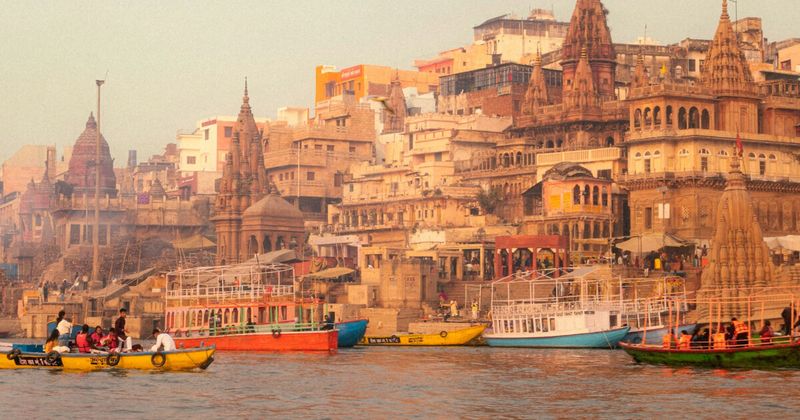
Varanasi's built environment is one of the densest in India — the city has grown upward along the western bank of the Ganges for over 1,500 years, each generation adding structures above and behind the existing ones, producing a layer-cake of architectural periods in which a 16th-century temple may stand directly below a 19th-century palace which is itself beneath a 21st-century concrete addition; the ghats are the one horizontal space in the city, and their openness to the river is what gives the city its only visual breathing room.
Pace and Burnout: Managing Varanasi
Varanasi has an emotional intensity unlike any other city on this itinerary. The sensory weight — the sound, the smell, the constant encounter with death and ritual — accumulates. Most first-time visitors underestimate this. The standard advice is to plan one half-day or morning with no agenda, no temple, no scheduled activity. Day 3's unstructured morning is built around this.
If you find yourself overwhelmed on Day 2 afternoon: go to Assi Ghat, sit on the steps, order chai from the nearest stall (₹10–₂0), and do nothing for an hour. This is also valid Varanasi. The city doesn't require performance. It requires presence.
Photography rules: Apply everywhere. No photos at Manikarnika under any circumstances. No photos of individuals bathing — ask permission first. Funerals and processions: no photos ever. Temple interiors: check for posted rules at each temple. The ghats themselves and the general river view: photograph freely. The Ganga Aarti ceremony at Dashashwamedh: photography from the ghat steps is generally acceptable; from the boat, even more so. At the Aarti, the spectacle is designed to be witnessed — but point your camera at the ceremony, not at grieving families.
North to South India connection: Varanasi is the natural eastern anchor for a North India circuit. Our 2 Weeks in India itinerary builds Varanasi into a proper Golden Triangle loop. Our North India vs South India comparison guide covers what to do after Varanasi if you're planning a longer India trip.
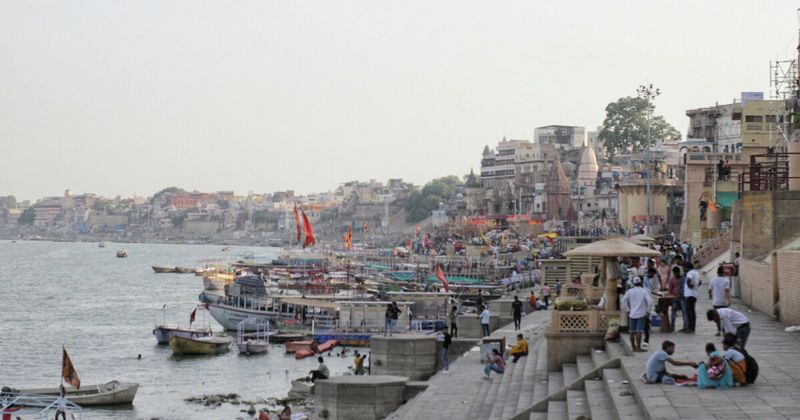
The wooden rowboats used for tourist and pilgrim river circuits at Varanasi are called nao or kishti — they are operated by families of traditional boatmen (mallah caste) who have held hereditary rights to specific ghat sections for generations; a 2017 NGT order banned motorized boats from most sections of the Varanasi ghats to reduce water pollution, making the human-powered rowboat the dominant and now legally protected mode of the sunrise circuit.
3-Day Varanasi Budget Breakdown
| Expense | Budget | Mid-Range | Splurge |
|---|---|---|---|
| Delhi→Varanasi train (one way) | ₹350–500 Sleeper ($3.72–$5.32) | ₹900–1,200 AC 3-tier ($9.57–$12.77) | ₹1,500–2,000 Vande Bharat ($15.96–$21.28) |
| Return train or flight | ₹350–1,200 ($3.72–$12.77) | ₹1,200–2,500 ($12.77–$26.60) | ₹4,000+ flight ($42.55+) |
| Accommodation (3 nights) | ₹1,500–2,500 ($15.96–$26.60)/night | ₹3,500–6,000 ($37.23–$63.83)/night | ₹8,000+ ($85.11+)/night |
| Sunrise boat | ₹200–400 shared ($2.13–$4.26) | ₹800–1,500 private boat ($8.51–$15.96) | ₹2,499 VIP all-day ($26.59) |
| Ganga Aarti viewing | Free (steps) | ₹150–350 VIP chair ($1.60–$3.72) | ₹500 ($5.32) |
| Kashi Vishwanath | Free | ₹300–500 VIP fast-track ($3.19–$5.32) | ₹500 ($5.32) |
| Sarnath entry | ₹50 Indians; check ASI for foreign rate | Same | Same |
| Sarnath cab (round trip) | ₹400–600 ($4.26–$6.38) | ₹800–1,500 ($8.51–$15.96) | — |
| Klook guide/experience | — | ₹1,200–2,500 ($12.77–$26.60) | ₹2,499 full-day combo ($26.59) |
| Food (3 days) | ₹300–600 ($3.19–$6.38)/day street food | ₹800–1,500 ($8.51–$15.96)/day | ₹2,000+ ($21.28+)/day |
| Airport/station transfer | ₹100–200 auto ($1.06–$2.13) | ₹500–1,000 via KiwiTaxi ($5.32–$10.64) | — |
| Travel insurance | VisitorsCoverage or EKTA from ~$12 | from ~$12 | from ~$12 |
| 3-day total per person (approx) | ₹7,000–₁4,000 ($74–$149) | ₹20,000–₃5,000 ($213–$372) | ₹60,000+ ($638+) |
All prices INR. USD at ₹94 = $1. INR prices are reliable; USD approximate — check current rate before budgeting.
Check Live Flight Prices
The Bottom Line
Varanasi does not perform for you. It performs for the river, for the dead, for the 3,000-year theology it was built to serve. The tourist element of the city is real and visible but it exists on the surface of something much older and much less interested in your approval.
Most people who go to Varanasi come back changed in ways they don't fully have language for. Not because the Ganga Aarti is beautiful — though it is. Not because the sunrise is extraordinary — though it is. Because Varanasi is the only place I've been where the largest questions — what happens after we die, what do we owe to the dead, what does a city built around dying actually feel like — are not philosophical abstractions. They are just Tuesday morning.
Go slowly. Watch more than you photograph. Eat the kachori at the ghat stall. Get on the boat at 5am.
Your Varanasi Trip Planning Checklist
🛡️ Travel Insurance — First, Always: VisitorsCoverage — Compare plans; minimum $100K medical + emergency evacuation; Varanasi policies from ~$12–25 USD | EKTA — Affordable second option from $0.99/day at ektatraveling.com; fully digital, 24/7 multilingual support; compare quotes from both before choosing.
✈️ Flights & Delay Protection: FlyFlick — Search all routes into Varanasi VNS (Delhi, Mumbai, international connections) | Compensair — Claim up to €600 for delayed/cancelled flights; VNS has higher delay rates than major hubs; EU-connected legs especially worth protecting.
🚖 Airport & Station Transfers: GetTransfer — Pre-booked fixed-fare airport transfer at VNS | KiwiTaxi — Pre-booked fixed-price transfer from Varanasi Junction station or VNS airport to ghat-area accommodation; also covers Varanasi→Delhi and Varanasi→other UP routes.
🚂 Trains — Book 3–4 Weeks Ahead: 12Go Asia — Book Delhi→Varanasi in English with your international card; Mahamana Express (overnight, arrives 6:30am — perfect for Day 2 sunrise) AC 3-tier ₹900–₁,200; Vande Bharat (8hrs daytime) ₹1,500–₂,000.
🎟️ Experiences to Pre-Book: Klook — Private Ganga Aarti boat ₹1,299–₂,500/boat (up to 6 passengers — book the night before, fills on weekends and festival evenings); sunrise boat package ₹200–₂,499 depending on format; Varanasi morning ghat walk with guide; Sarnath entry.
📱 Connectivity: Saily — City 5G eSIM; works across main Varanasi areas including ghats | Drimsim — Off-grid eSIM for rural Uttar Pradesh roads and smaller pilgrimage sites beyond Varanasi.
Get on the 5am boat. The rest is Varanasi's business.