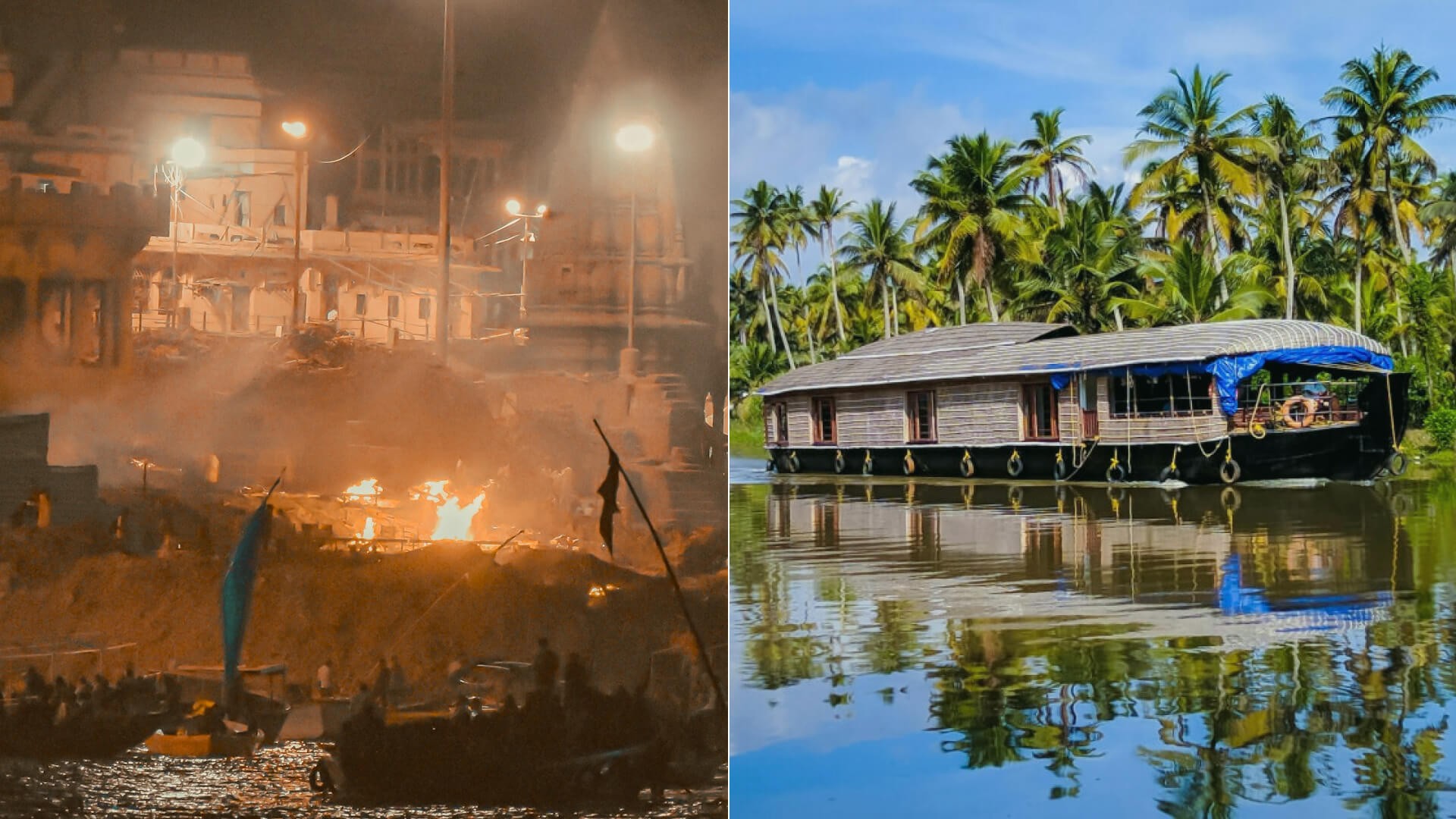

The question isn't which half of India is better. It's which half of India you're ready for.
At Manikarnika Ghat in Varanasi, a cremation fire has been burning continuously for an estimated 3,500 years. The smoke is real. The bodies are real. The chanting is real. Boatmen call from the river, chai sellers push through the crowd, a dog naps on a stone step two metres from a pyre, and none of the locals find any of this remarkable because it's just Tuesday morning. That's North India on a good day — magnificent, confronting, relentless, alive in a way that no other place on earth quite replicates.
Two thousand three hundred kilometres south, the Meenakshi Amman Temple in Madurai has 14 gateway towers. Each one is covered in approximately 33,000 individual stucco sculptures — gods, demons, celestial musicians, mythological scenes — all of them painted by hand by a dedicated guild of sculptors called shilpis every twelve years in a ceremony called Kumbhabhishekam. The most recent repainting was completed in 2023. The colours are still vivid. The detail is staggering. And almost nobody from outside South India knows this temple exists, let alone the repainting tradition.
Both experiences are India. They happen simultaneously, in the same country, under the same flag, 2,300 kilometres apart. The question every first-timer faces — North or South, which first — is really a question about what kind of traveller you are, how much intensity you can absorb, and how much you want India to meet you halfway.
We have an actual answer. Not "both are wonderful, do whatever you like." A real, opinionated recommendation based on who you actually are.
But first: before any flight booking, itinerary building, or Google Maps pinning — sort VisitorsCoverage travel insurance. Whether you land in Delhi or Kochi, India's medical costs for a hospitalisation, motorbike accident, or serious gastrointestinal illness run from ₹30,000–₹2,00,000 ($319–$2,128 USD) before anyone has assessed you. Your domestic health policy doesn't cover this. VisitorsCoverage takes ten minutes and costs from roughly $12–40 for a two-week trip depending on age and coverage level. Sort it before you do anything else on this list.
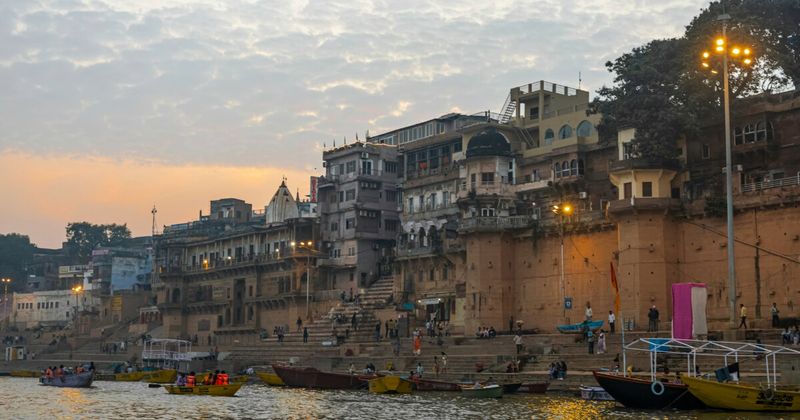
Varanasi's 88 ghats stretch for 6.5 kilometres along the western bank of the Ganges — Manikarnika Ghat alone handles an estimated 80–100 cremations daily, a number that has not changed significantly in centuries.
What Separates North India from South India
India is 3.29 million square kilometres, 28 states, 22 officially recognised languages, and somewhere around 6,500 years of continuously recorded civilisation. "North" and "South" are shorthand for two genuinely different travel experiences — different architecture, different food systems, different colonial histories, different languages, different pace, and a meaningfully different relationship with international tourists.
For this comparison, North India means the destinations that most first-timers research first: Delhi, Agra (the Taj Mahal), Jaipur and Rajasthan, Varanasi, and the broader Gangetic plains. South India means Kerala, Tamil Nadu, Karnataka, Goa, and Pondicherry — the peninsula below roughly the Vindhya mountain range that runs across the country's midsection.
These are generalisations, and India resists generalisations with the same energy it resists everything else. But for the purpose of helping a first-time international visitor decide where to land, they hold.
The Case for North India First
North India is where most of the world's mental image of India comes from. The Taj Mahal, built between 1632 and 1653 by Mughal Emperor Shah Jahan as a mausoleum for his wife Mumtaz Mahal, is one of perhaps five buildings on earth that exceed every photograph ever taken of them. Amber Fort in Jaipur, Mehrangarh in Jodhpur, the ghats of Varanasi, the Red Fort in Delhi — these are not just landmarks. They are the visual vocabulary that India is built from in the Western imagination and seeing them in person recontextualizes every image you've absorbed about the subcontinent since childhood.
The Golden Triangle — Delhi, Agra, Jaipur — is the most compact, most developed, most internationally-optimised tourist circuit in India. It covers roughly 720 kilometres in a triangle, connects by express trains and good highways, has the highest density of international-standard hotels and restaurants in the country, and can be done meaningfully in 7–10 days. For a first-timer who wants landmark density and maximum iconic India per day of travel, it remains the most logical starting point.
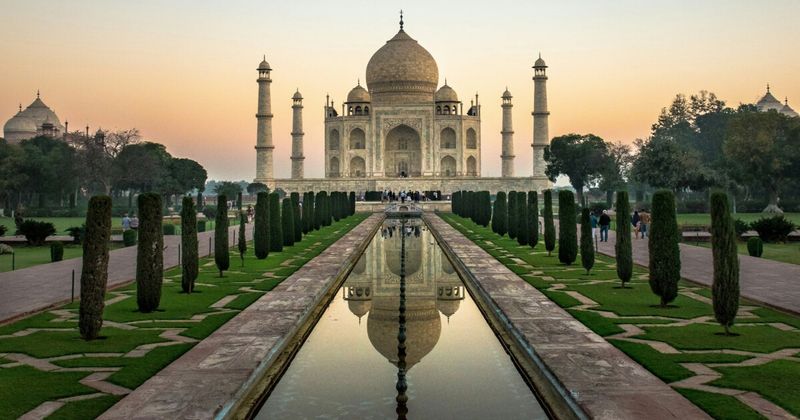
The Taj Mahal receives approximately 7–8 million visitors per year — around 20,000 on an average day. The only way to experience it without a crowd is to book the first-entry sunrise slot and be at the gate at 6:30am before the tour coaches arrive from Delhi.
North India also has the Himalayas. Dharamsala with the Dalai Lama's residence, Manali's mountain passes, the wild landscape of Ladakh at 3,500 metres — none of these have any equivalent in the south. If mountains are what you're chasing, the north is where they are, and our Dharamsala travel guide covers the whole circuit in depth.
Search and book flights into Delhi (DEL) through FlyFlick — Delhi is the primary international gateway for North India, with direct connections from London, New York, Toronto, Sydney, Dubai, and Singapore. Set a Compensair delay alert before departure — Delhi routes, particularly in December and January, are among India's most fog-affected corridors.
The honest case for going North first is this: the Golden Triangle is India with training wheels. The infrastructure is developed, the English signage is pervasive, the tourist circuit is well-worn, and the chaos — while real — is a managed chaos that millions of first-timers have navigated successfully. If your budget is limited, if your time is limited, and if you want to go home saying you saw the Taj Mahal, start in the North.
The Case for South India First
South India is a different country inside the same passport stamp. The languages are Dravidian — Tamil, Telugu, Kannada, Malayalam — entirely unrelated to Hindi. The architecture is Dravidian too: temple towers called gopurams rising 40–50 metres, covered in thousands of painted sculptures, structurally and aesthetically unlike anything in the Mughal North. The food is rice-based, coconut-heavy, fermented, fresh, and served on a banana leaf with more dishes than you can count. The pace is slower. The scam density is lower. The English signage is — in Kerala particularly — genuinely good.
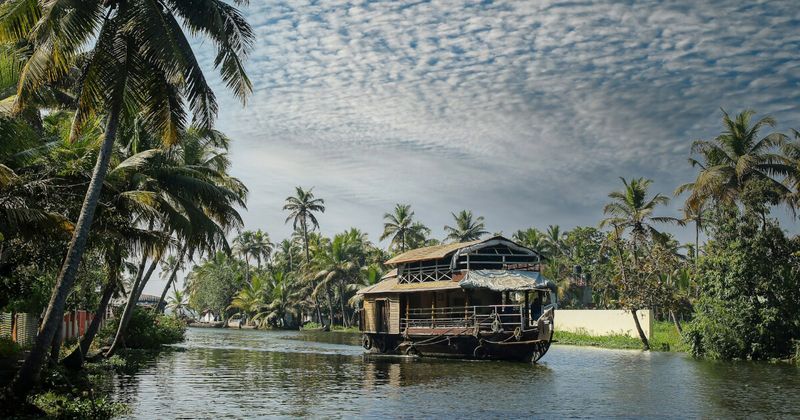
Kerala alone offers the kind of landscape diversity that most countries stretch across their entire geography: a mountain range (Western Ghats), a working tea economy (Munnar at 2,000 metres), a unique inland water system (the backwaters of Alleppey), ancient forest and spice farms (Thekkady), and a coast on the Arabian Sea (Varkala, Kovalam). Our full Kerala 7-day loop itinerary covers the complete route with all 2026 prices. Tamil Nadu adds Dravidian temple culture at a scale that has no Northern equivalent — Meenakshi Temple in Madurai alone could consume two full days and still leave something unseen.
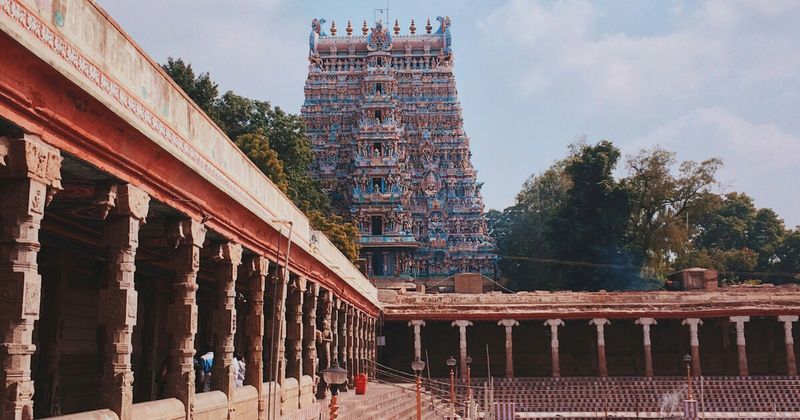
The Meenakshi Amman Temple complex in Madurai covers 6.3 hectares and has been continuously active for over 2,500 years — it remains a functioning place of daily worship for Tamil Hindus and is visited by an estimated 15,000 to 20,000 pilgrims and tourists every day.
The honest case for going South first is this: South India is kinder to first-timers. The tourist infrastructure in Kerala is among the best in the country — having deliberately cultivated responsible, premium international tourism since the 1990s under the "God's Own Country" campaign. Goa, whatever its beach-party reputation, is one of the most navigable first arrivals in India for an international tourist. Tamil Nadu's temple trail is extraordinary and almost completely free of the hustler culture that characterises Agra, Delhi, and Jaipur's major tourist zones.
Search flights into Kochi (COK), Chennai (MAA), or Goa (GOI) through FlyFlick — all three airports receive international connections via the Gulf, Southeast Asia, and Sri Lanka, with increasing direct routes from the UK and Europe. Book your airport transfer through GetTransfer before you land — fixed fare, vehicle class confirmed, driver waiting with a sign. South India's airports are manageable but the taxi ranks outside arrivals have the same unmetered-negotiation dynamic as everywhere in India.
Check Live Flight Prices
Side-by-Side: The Honest Comparison
The fundamental differences between the two regions aren't about which is better — they're about which is right for you.
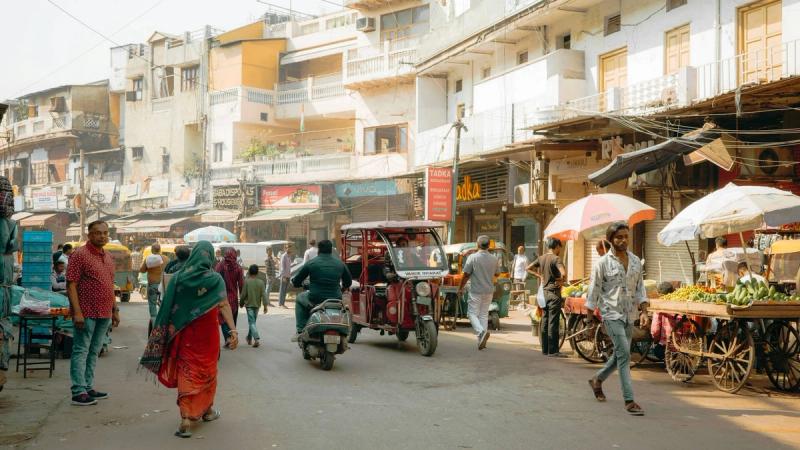
Intensity and pace. North India is faster, louder, more chaotic, and more demanding of a traveller's attention at all times. Delhi's Paharganj, Agra's Taj Mahal approach road, and Varanasi's ghat area require constant awareness — not of physical danger, but of the relentless negotiation economy that surrounds every major tourist site. South India, particularly Kerala, operates at a rhythm that is closer to Southeast Asia — slower, greener, more willing to give you space to breathe.
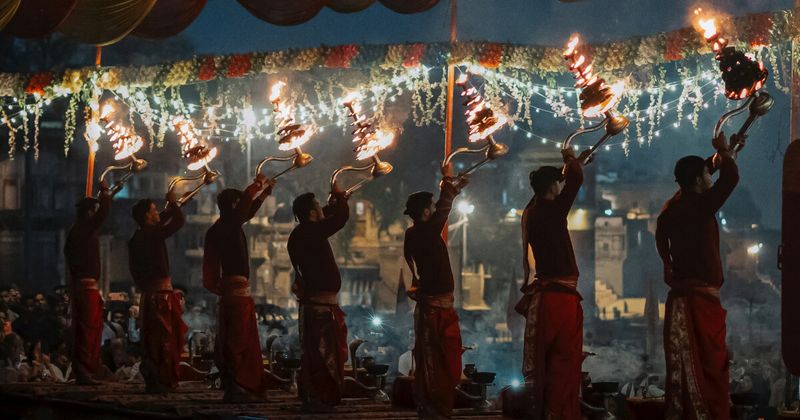
The Ganga Aarti at Varanasi's Dashashwamedh Ghat has been performed every evening without interruption for centuries — the ceremony runs for approximately 45 minutes and involves seven priests performing synchronised fire rituals to the chanting of Sanskrit hymns as boats crowd the river to watch from the water.
Landmark density. North India wins on UNESCO-listed, globally famous architecture per square kilometre. The Golden Triangle alone contains the Taj Mahal, Agra Fort, Fatehpur Sikri, Amber Fort, Jantar Mantar, and Humayun's Tomb — six UNESCO World Heritage Sites within a 720-kilometre circuit. South India has fewer of the globally famous icons but deeper cultural complexity — the Dravidian temple tradition is less photographed and, arguably, more architecturally significant.
Safety and scam density. South India is consistently rated safer for international tourists, particularly solo female travellers. Kerala, Tamil Nadu, and Karnataka have lower recorded rates of tourist-facing scams than Delhi, Agra, and Jaipur. This isn't a major distinction for experienced travellers — read our India travel scams 2026 guide before either trip and you'll manage fine. For first-timers arriving from countries with low ambient scam pressure (northern Europe, Australia, Canada), the North requires a mental gear-shift that the South doesn't.
Food. The cuisine difference is the most underrated dimension of this comparison. North Indian food is wheat-based, dairy-rich, tandoor-cooked, Mughal-influenced — butter chicken, dal makhani, naan, biryani. South Indian food is rice-based, coconut-forward, fermented, lighter — idli, dosa, sambar, fish curry, appam, Kerala prawn dishes that are among the best seafood preparations in Asia. Neither is better. But if you've already eaten North Indian food at restaurants abroad and want something genuinely unfamiliar, the South delivers it.
Language. English is widely spoken across both regions in tourist contexts. South India — Kerala in particular — has historically higher English literacy rates due to British colonial presence in Madras and Kochi and the state's emphasis on education. Practical result: in Kerala, English signage is comprehensive, train station announcements are bilingual, and random strangers who approach you are more likely to be genuinely helpful than commission-seeking. In North India's tourist zones, English is everywhere, but so is the performance of English — designed to initiate a commercial transaction rather than assist a confused traveller.
Weather windows. North India is best October–March, when temperatures are 15–25°C across the plains and the Rajasthan desert is genuinely cold at night. Avoid April–June (extreme heat across the Gangetic plains, 40–48°C). South India is good year-round — monsoon (June–September) brings heavy rain but the landscape turns lush, prices drop 30–40%, and the backwaters are genuinely beautiful in the rain. Kerala's monsoon has a distinct, celebrated character that tourism marketers actually promote as a selling point.
Who Should Go to North India First
North India is the right first choice if you've travelled in India before (even briefly), or if you've spent significant time in other high-intensity developing-world destinations like Vietnam, Egypt, Morocco, Bangladesh, or Mexico City. The skills transfer. You'll arrive knowing how to negotiate a price without causing offence, how to read a situation where someone wants your money versus someone who wants to help, and how to eat street food without destroying your stomach for the following week.
It's also right if you're travelling with other people. The Golden Triangle is highly social, highly photogenic, and designed for group movement — multiple people manage the negotiation economy better than one person alone, share the decision-making load, and can physically occupy space in crowded sites more comfortably.
Go North first if you're on a tight timeline — 7–10 days — and want maximum iconic landmark return for the trip. The Golden Triangle is optimised for exactly this use case. Delhi (2 days), Agra (1 day), Jaipur (2 days) is the minimum viable circuit, bookable entirely through 12Go Asia for trains and Klook for Taj Mahal sunrise entry, Amber Fort skip-the-queue access, and Varanasi boat seats for the Ganga Aarti ceremony. Book train seats 30–45 days ahead for peak season.
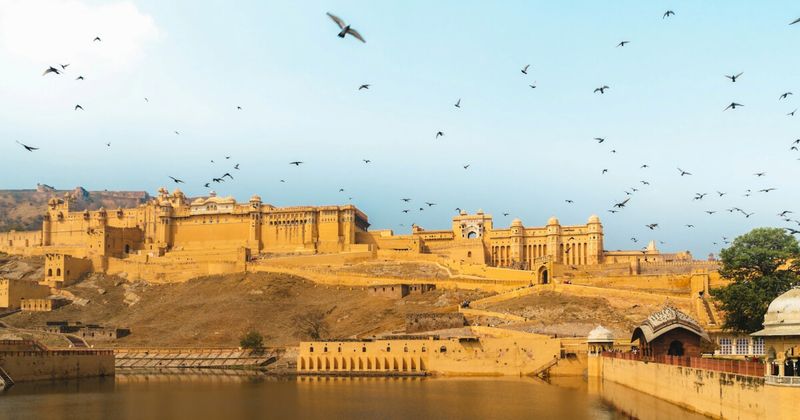
The Golden Triangle — Delhi, Agra, Jaipur — covers approximately 720 kilometres in a compact circuit and contains six UNESCO World Heritage Sites, making it the highest landmark density per travel day of any tourist circuit in India.
Go North first if Varanasi specifically is on your list. There is no Southern equivalent of Varanasi — no city in the South where the existential weight of Hindu civilisation is this concentrated, this visible, this physically confronting at 5am on a boat in the middle of the Ganges. The closest thing is Madurai's Meenakshi Temple in terms of living religious tradition, but the scale and atmosphere are entirely different. If Varanasi is a bucket list item, build your first India trip around it and accept that the North is where you start.
Use Intui.travel for within-city transfers across the North India circuit — auto-rickshaws and local taxis in Delhi, Agra, and Jaipur quote tourist pricing consistently, and a pre-booked fixed-fare vehicle eliminates the negotiation that drains first-timers before they've even reached the monument. Saily 5G eSIM covers all five major North India cities reliably.
Who Should Go to South India First
South India is the right first choice if this is your first trip to a developing country. The gap between what your home environment has prepared you for and what India delivers on day one is genuinely shocking for many first-timers — the density, the noise, the negotiation, the infrastructure variation, the sensory overload. South India lands more gently. Kerala in particular operates on an infrastructure standard meaningfully better than the North Indian tourist circuit — roads are maintained, auto-rickshaws use meters more reliably, the police tourism units are professional, and the guesthouse owners are not primarily optimised to separate you from your money.
Go South first if you're a solo female traveller. This is not a dismissal of North India — millions of solo women travel there annually with positive outcomes, and our solo female India safety guide covers the full North India circuit in depth. But the honest assessment of 2026: Kerala, Tamil Nadu, and Goa consistently rate lower for tourist harassment than Delhi, Agra, and Varanasi. Starting in a lower-intensity environment builds the confidence and skills to navigate the North on a subsequent trip.
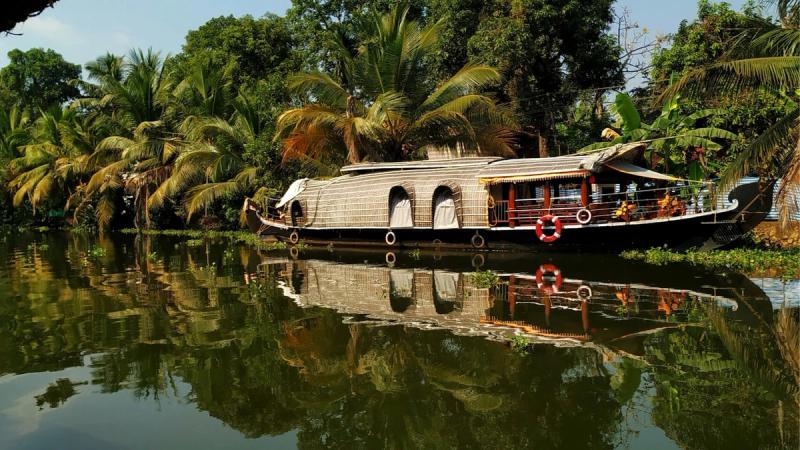
Go South first if your primary interests are nature, food, and living culture rather than landmark photography. The Meenakshi Temple in Madurai is a working pilgrimage site serving 15,000–20,000 worshippers daily — not a museum. The Kerala backwaters are a functioning inland economy of rice farming, coconut harvesting, and fish trade that the houseboat traverses rather than observing from behind a fence. Thekkady's spice farms are working plantations. South India gives you India as it actually operates, not India formatted for a tourist camera angle. Book your Kerala backwaters houseboat and Periyar Lake boat safari through Klook well in advance — vetted operators, transparent cancellation policies.
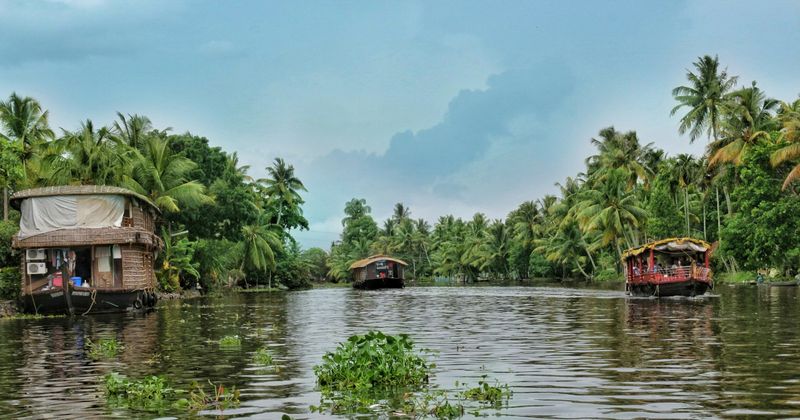
Kerala's backwater network covers over 900 kilometres of interconnected rivers, lakes, and canals — the houseboat economy supports over 1,200 registered boats and is one of the most sustainably managed tourism industries in South Asia.
Go South first if you're travelling outside the October–March window. South India is genuinely worth visiting in April, May, and the monsoon months in ways that North India isn't — Rajasthan at 45°C is not a travel destination, but Munnar's tea estates in the first monsoon rains of June are extraordinary. The Kerala monsoon has been marketed deliberately as a premium travel season, and it earns the promotion. Drimsim handles the Western Ghats signal drop (Thekkady, Kolukkumalai above 2,000m, the Periyar forest) better than standard roaming — it auto-switches between networks wherever signal exists.
The Special Cases: Goa and the North-South Middle Ground
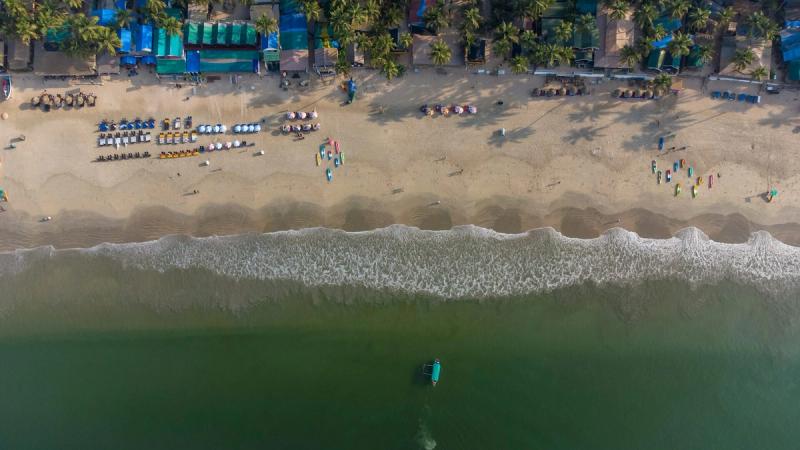
Goa is neither North nor South in the cultural sense — it's a former Portuguese colony with its own distinct identity, a hybrid of Konkani, Catholic Portuguese, and pan-Indian beach-town culture. It functions as India's most accessible first arrival for international tourists who want to ease in: English is universal, infrastructure is reliable, scam density is low outside the beach party zones, and the food is extraordinary (pork vindaloo, fish recheado, bebinca layered cake — all dishes that exist nowhere else in India quite the same way).
If you're nervous about India and genuinely unsure where to start, Goa is the answer. Fly in, spend two days in North Goa's beach towns, two days in South Goa's quieter coast, and use it as a runway before moving deeper into either direction. Our Goa Beyond the Beach itinerary covers the parts of Goa most tourists miss entirely — Fontainhas, Old Goa's UNESCO churches, the spice plantation circuit — and works as a standalone trip or a launching pad for Kerala or Mumbai.
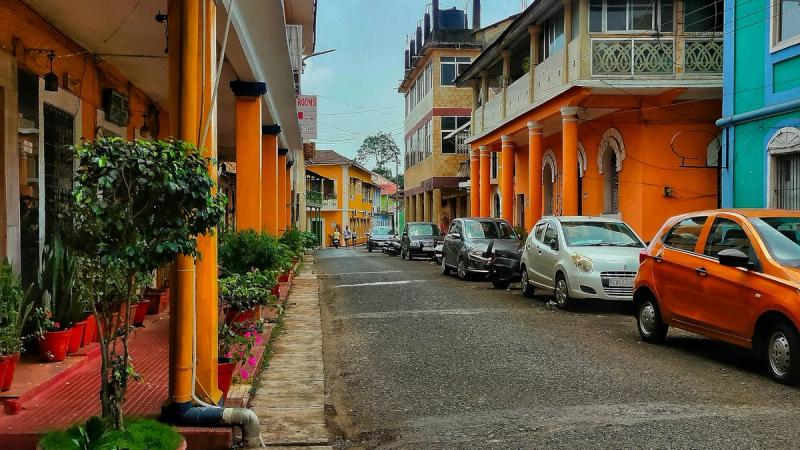
Fontainhas has been Goa's Latin Quarter since Portuguese colonial administration in the 18th century — the neighbourhood's heritage status means buildings must maintain their traditional facades, preserved by local families who have lived there for four and five generations.
Mumbai similarly sits in its own category — it's the financial and cultural capital of India, one of the world's great cities, and connects by direct international flight to more destinations than any other Indian airport. Landing in Mumbai, spending two days, and then flying south to Kochi or north to Delhi depending on your preference is a viable structure that many first-timers use successfully.
The Verdict: Who Goes Where
The honest answer, stated plainly:
Go North India first if you have prior developing-world travel experience, you're travelling with other people, you're on a timeline of 10 days or fewer, you have the Taj Mahal on your bucket list, or Varanasi specifically is the reason you're going to India. The Golden Triangle is the most optimised first-India circuit in existence and it exists because it works.
Go South India first if this is your first developing-world trip, you're solo female, you're travelling in the April–September window, you want nature and food as much as landmarks, or you want to come home having experienced something that friends who've done the Golden Triangle haven't. Kerala is the gentler, greener, more forgiving entry point to the subcontinent.
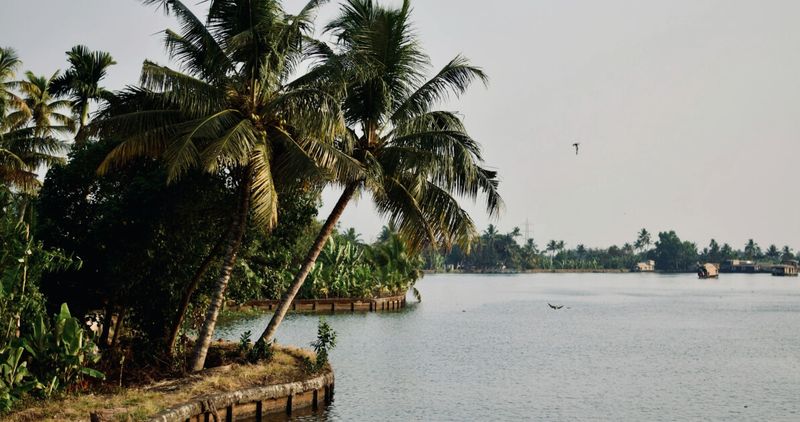
Vembanad Lake stretches 96 kilometres from Alappuzha in the south to Kochi in the north, making it the longest lake in India — the houseboat route crosses its widest section between Alleppey and Kumarakom, where the water is flat enough to walk on in the early morning stillness.
Go to Goa first if you're anxious about India's intensity and want a calibration point before committing to either direction. It's not cheating. It's smart sequencing.
One recommendation that applies in both directions: don't try to do both regions on your first trip. India is not a country you can rush, and a 14-day trip that covers Delhi, Jaipur, Varanasi, Mumbai, and Kerala leaves you with a passport full of stamps and a head full of disconnected impressions. Pick one region, go deep, come back for the other. India rewards return visits more than almost anywhere else on earth.
For a complete North India circuit, our 2 Weeks in India itinerary builds the Golden Triangle into a full two-week structure. For South India, the Kerala 7-day loop is the place to start. And for a combined itinerary that sequences North to South intelligently — or South to North — our 3 Weeks in India guide is the one to read before booking anything.
Use Yesim unlimited data eSIM if you're connecting India into a broader trip that includes Sri Lanka, the Maldives, or Nepal — it handles multi-country coverage cleanly across the whole South and Southeast Asia region.
What to Skip in This Decision
The "both are great, it depends!" non-answer. We've read every North vs South comparison piece on the internet in preparation for writing this one, and most of them end with a paragraph that amounts to "India is diverse, visit both, you'll love it!" This is useless. You have a specific amount of money, a specific number of days, a specific travel style, and a specific threshold for chaos. The answer genuinely does depend — but it depends on real, specific things that we've laid out above, not on a vague deference to India's vastness.
Trying to combine both on a first trip under 14 days. The temptation is real and the travel industry actively encourages it — Delhi, Agra, Jaipur, flight to Kochi, Kerala backwaters, done. The result is that you experience neither properly. Rajasthan deserves seven to ten days. Kerala deserves seven days. Putting both in a two-week trip means you spend four days rushing through the Golden Triangle (leaving Agra Fort, Jaipur's old city, and Varanasi entirely untouched) and three days in Kerala (leaving Munnar, Thekkady, and the backwaters circuit as afternoon stops rather than experiences). Don't do this to yourself.
Deciding based on cost alone. North India is marginally cheaper for budget accommodation in cities like Jaipur and Agra. South India is more expensive for mid-range accommodation in Kochi and Alleppey, and the overnight houseboat is a real expense (₹8,500–₹9,500/$90–$101 USD for two, all-inclusive). But these differences are not significant enough to be a deciding factor. A ₹500 ($5.32 USD) saving per night over seven nights doesn't justify going somewhere that's wrong for your travel style.
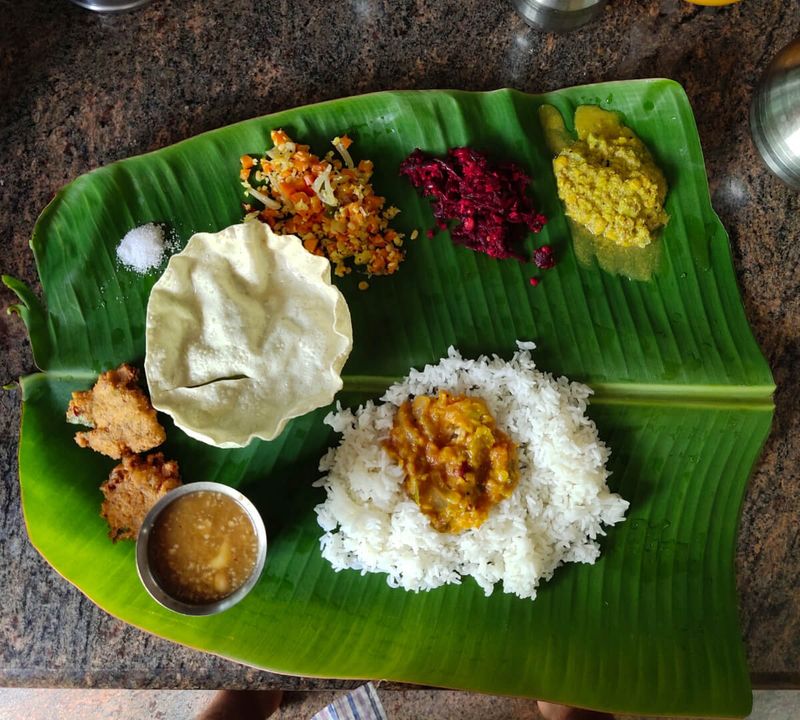
A proper Kerala sadhya includes 26 or more dishes served in a specific order — the banana leaf is placed with the narrower tip pointing left for a living guest, a distinction encoded in Brahmin temple-feast tradition that every server in Kerala knows instinctively.
Waiting until you've "done enough research." India research is a rabbit hole that has consumed years of capable travellers' planning time. At some point, you book the flight, sort VisitorsCoverage, and go. The country will teach you everything the research didn't.
The Bottom Line
India doesn't care which half you start with. It will overwhelm you in both directions, teach you things no guidebook covered, and leave you with the specific, personalised knowledge that you can only get from showing up. The question of North vs South first is a real one, but it's not the most important question. The most important question is whether you've done enough preparation to arrive ready to receive what the country offers.
Sort the insurance. Book the train tickets early. Read the scams guide before you land. Carry cash. Download offline maps in your hotel room on day one. Accept that at some point something will go wrong and it will become the best story from the trip. Then go — North or South, it doesn't matter as much as going.
Your India Trip Planning Checklist
Every item on this list is easier to sort at home than at an Indian railway station at 6am. Do it now.
🛡️ Travel Insurance — First, Always: VisitorsCoverage — Compare plans; minimum $100K USD medical + emergency evacuation; 14-day India policies from $20–50 USD. North and South both have significant medical cost exposure — a snake bite in Kerala or a motorbike accident in Rajasthan costs the same amount whether you're insured or not. Non-negotiable. Sort before flights, accommodation, or anything else on this list.
✈️ Flights & Delay Protection: FlyFlick — Compare flights into Delhi (DEL) for North India or Kochi (COK), Chennai (MAA), Goa (GOI) for South; search open-jaw options flying into one city and out of another — saves significant money on multi-city itineraries | Compensair — Claim up to €600 for delayed or cancelled flights; Delhi routes in December–January fog season and Mumbai monsoon-season routes are among India's most disrupted.
🚖 Airport & City Transfers: GetTransfer — Pre-booked fixed-fare airport transfers in Delhi (DEL), Jaipur, Kochi (COK), Chennai, or Goa; vehicle class confirmed before you pay, driver waiting with your name — eliminates the arrival-hall taxi negotiation entirely | Intui.travel — Within-city and intercity transfers: Delhi to Agra (200km), Jaipur day tours, Kochi to Munnar (130km), Munnar to Thekkady (85km); professional drivers, fixed rates.
🚂 Trains — Book 30–60 Days Ahead: 12Go Asia — Book all Indian train journeys in English with your international card; covers the full Golden Triangle circuit (Delhi–Agra–Jaipur), the North India express routes, and Kerala and Tamil Nadu train connections. For North India peak season (November–February), book 45–60 days ahead — AC classes sell out quickly on the Varanasi and Rajasthan routes.
🎟️ Experiences to Pre-Book: Klook — North India: Taj Mahal sunrise entry (essential, saves 45-minute queue), Ganga Aarti front-row boat seat Varanasi from ₹300, Amber Fort skip-the-queue Jaipur ₹1,000, Jaipur heritage walking tour. South India: Alleppey overnight houseboat from ₹8,500 for two (all meals, crew, camel included), Periyar Lake boat safari Thekkady ₹200–₹350, Kochi Kathakali performance ₹350. All with cancellation policies visible before booking.
📱 Connectivity: Saily — City 5G eSIM covering Delhi, Agra, Jaipur, Kochi, Chennai, Goa, and Alleppey — activate before boarding and it works from the moment you land | Drimsim — Off-grid eSIM; essential for Munnar's Kolukkumalai summit, Thekkady forest, Rajasthan desert areas, and Himalayan hill stations where standard SIMs drop signal | Yesim — Unlimited data eSIM for multi-country trips extending to Sri Lanka, Nepal, Maldives, or Southeast Asia after India.
Pick a half. Book the flight. The rest follows.