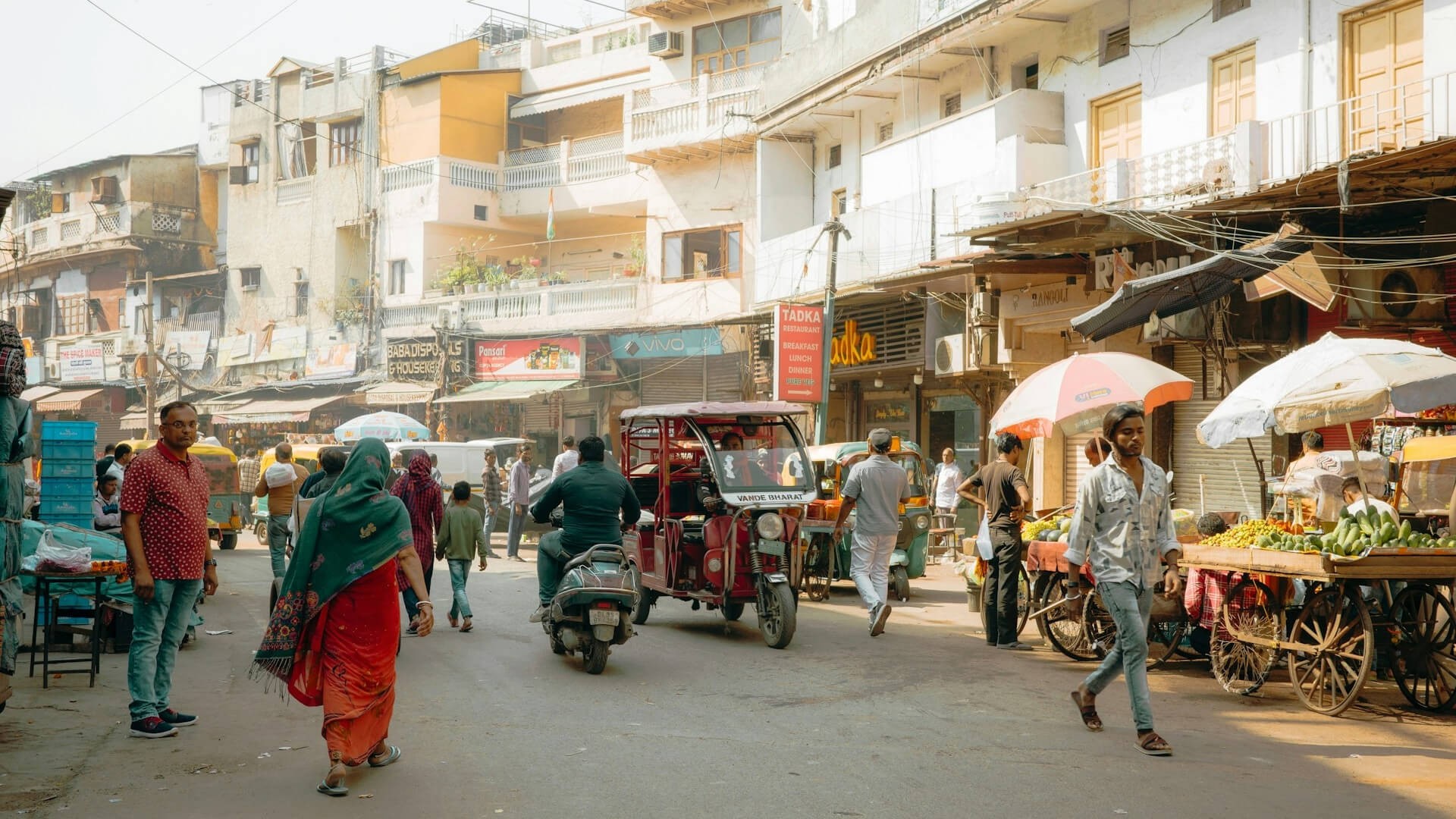

Someone hands you a laminated card. Official-looking header. Government seal. It says the monument you've been walking toward for 20 minutes is closed today — gas leak, or a VIP visit, or a national holiday you hadn't heard of. But there's another site nearby. Equally impressive. His cousin has a car.
This is the oldest scam in India. It is also running right now, today, outside the Taj Mahal, Amber Fort, and Qutb Minar. The laminated card is a new touch. So is the Google Maps listing for the "alternative" attraction it redirects you to.
India travel scams in 2026 aren't new — they've just been iterated. The mechanics are the same. The delivery has been upgraded to meet a more digitally aware tourist. This guide is the current playbook: what's active, what's evolved, and exactly how to counter each one in under 10 seconds. Search flights to India on FlyFlick once you've read it — knowing the scams before you land is half the preparation.
Part 1: Transport Scams — The Ones That Hit in the First 10 Minutes
Transport scams are first-contact scams. They target you when you're tired, disoriented, and haven't yet calibrated to local prices. They're also the most avoidable with one simple fix.
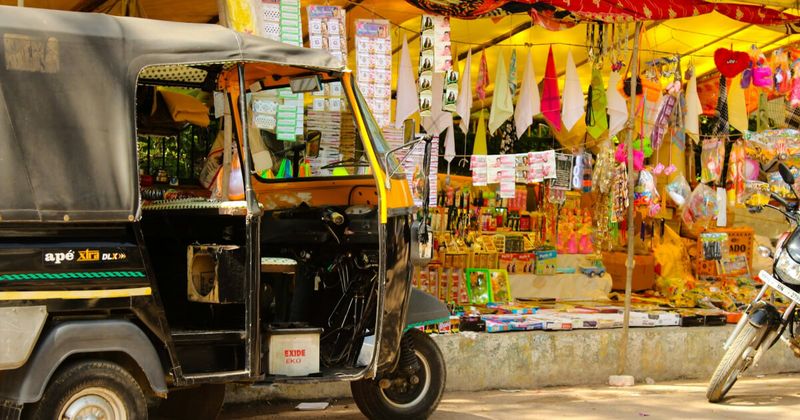
The broken meter. The rickshaw meter is broken. Happens every time, in every city, to every tourist. The driver quotes a "fixed price" that's 2–4x the correct fare. In Delhi, the metered fare from Connaught Place to India Gate is about ₹80–100 (roughly $1–1.20 USD). The tourist quote is routinely ₹300–400. The fix: use InDrive for all city rides. You name your price, the driver accepts or counters. No meter required, no negotiation theatre, and fares consistently come in 25–40% below what any auto-rickshaw tout will quote you at the kerb.
The airport taxi mafia. You exit arrivals and someone in a vest — sometimes a convincing official-looking vest — offers you a taxi. This is not the official prepaid counter. The official prepaid counter is inside the terminal, before the exit doors, with a fixed rate board. Anything outside that door is a negotiation that will go badly. The cleaner solution: pre-book your airport transfer through Welcome Pickups before you land. Fixed fare, driver waiting with your name, zero contact required with anyone in the arrivals hall.
The long route and the "traffic detour." Your driver knows a shortcut — one that adds 8 km and ₹200 to the fare. Download Google Maps offline for your destination city before you fly and track your route in real time. If the route looks wrong, say so. Most drivers will correct course immediately when they know you're watching.
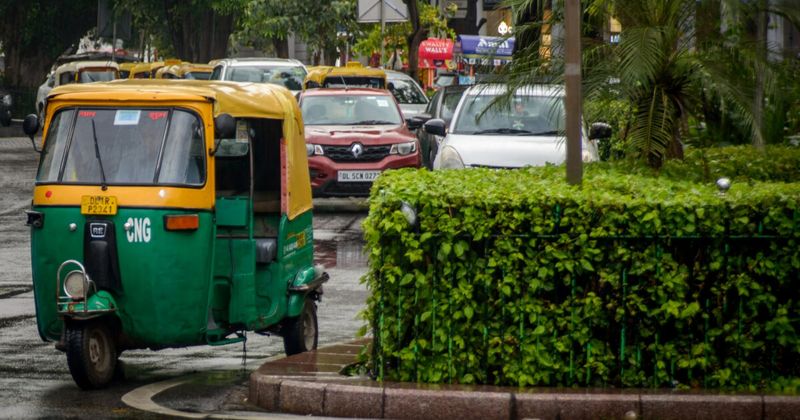
The metered fare from Connaught Place to most central Delhi landmarks is under ₹120 — if you're being quoted ₹350, the meter works fine, it just isn't being used.
Part 2: The Attraction Scams — Old Tricks With New Props
The closed monument. Covered in the opening — but the 2026 version is worth detailing. The laminated "official closure notice" is now supplemented in some cases by a real-looking Google Maps listing for an "alternative" site that is actually a paid setup. The fix: check Google Maps yourself before leaving your hotel. Official sites like the Archaeological Survey of India's site ASI official closures list genuine closures. If someone tells you a monument is closed and you haven't seen it on an official source, keep walking.
The fake ticket office. Near the Taj Mahal in Agra, near Amber Fort in Jaipur, near major ghats in Varanasi — unofficial "ticket offices" set up 200–400 metres from the real entrance. They sell convincing-looking tickets at inflated prices. Some sell genuine tickets at a 40% markup. Some sell paper that gets rejected at the gate. Buy tickets at the official gate or pre-book on Klook — digital confirmation, no paper, no chance of a fake.
The "free" boat ride. In Varanasi especially, a boatman offers a "free" sunrise row on the Ganges. At the end, the price is whatever he decides, and the social pressure to pay is significant because you're in the middle of a river. The fix: agree on the price before you get in. ₹300–500 (about $3.50–6 USD) for a one-hour early morning Ganges row is fair. If he won't name a price upfront, don't board.
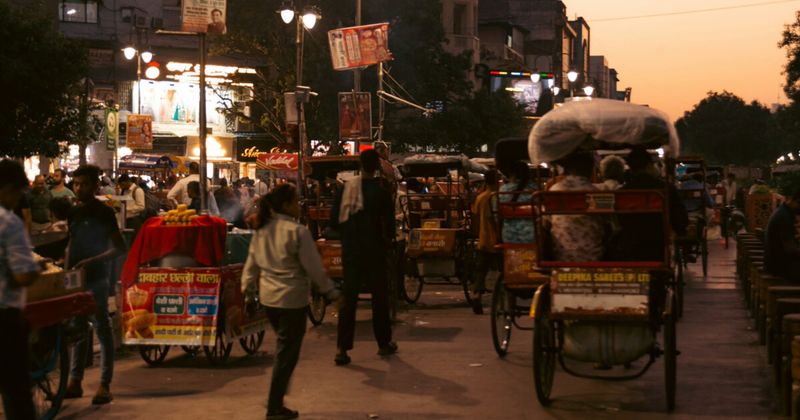
The fake ticket office is usually set up 200–300 metres before the real entrance — if someone approaches you well before the gate, that's your first signal.
Part 3: The Shopping Traps — The Scams That Take the Most Money
These are the expensive ones. Transport scams cost you ₹200. Shopping scams can cost you ₹15,000–50,000 ($180–600 USD) in a single afternoon if you're not paying attention.
The gem export scam. A well-dressed, articulate person — often near a major monument — explains that he works for a gemstone export company. If you carry gems back to your home country and "sell them" to his contact there, you'll make $1,000–2,000 USD profit with zero effort. The gems are worthless. The "contact" doesn't exist. The 2026 update: the follow-up now happens over WhatsApp, the "company" has a professional-looking website, and there's sometimes a fake testimonial video. If someone proposes a gem deal within 20 minutes of meeting you, leave.
The government emporium fake. Your rickshaw driver insists on taking you to a "government fixed-price handicraft emporium" — implying it's official and therefore fair-priced. There is no such thing as a government-mandated fixed-price tourist shop in India. The driver earns 30–40% commission on your purchase, baked invisibly into the price. Rajasthan is where this runs hardest — Jaipur, Jodhpur, Udaipur.
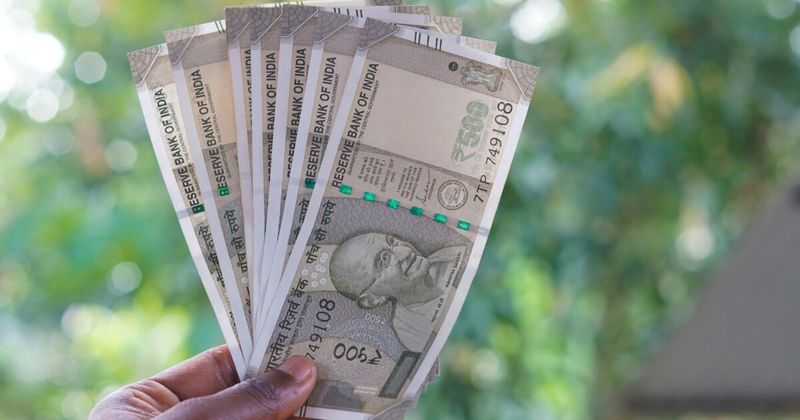
The art school carpet pitch. A young, well-spoken person near a monument mentions their art school and the beautiful handmade textiles the students produce. 25 minutes later you're in a showroom drinking chai and feeling guilty about not buying a carpet that costs ₹18,000 ($215 USD). The textiles are often genuinely beautiful. The price is 4–8x what you'd pay if you found the same item independently. Be friendly. Don't go to the showroom.
Check Live Flight Prices
Part 4: Digital and SIM Card Scams — The 2026 Updates
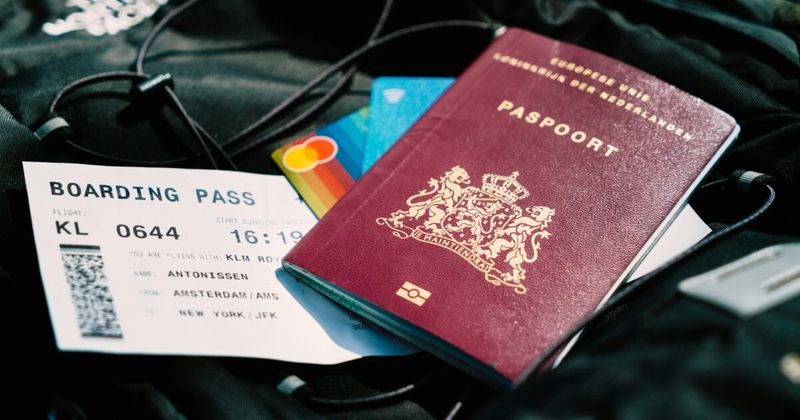
The SIM counter switch. At airport SIM counters — specifically unofficial ones set up to look like Airtel or Jio — some operators activate a SIM in your name using your passport details, then clone or copy your personal information before handing it back. The fix: only use the official, clearly branded Airtel or Jio counters inside the terminal. Better still, activate a travel eSIM through Saily before you fly — you never hand your passport to a stranger at a kiosk, your SIM can't be physically swapped, and you have working 5G from the moment you clear immigration. If your trip covers multiple countries beyond India, Yesim gives you unlimited data across borders on one plan — one activation, no SIM handling at any airport.
The QR code payment trap. A vendor, guesthouse, or street seller shows you a QR code to pay. In some cases — particularly at smaller stalls and informal guesthouses — the QR code is a collect-payment code that can be set to any amount, and the amount gets quietly changed after you've scanned but before you've confirmed. Always check the amount on your screen before confirming any UPI or payment app transaction. Never let someone else confirm a payment on your behalf.
The ATM card skim. Older scam, still active. Standalone ATMs in tourist areas — not inside bank branches — have a higher incidence of card skimming devices. Use ATMs inside bank branches (HDFC, ICICI, SBI) during opening hours where staff are present. Cover your PIN. Notify your bank before travel to prevent automatic fraud blocks on legitimate India transactions.
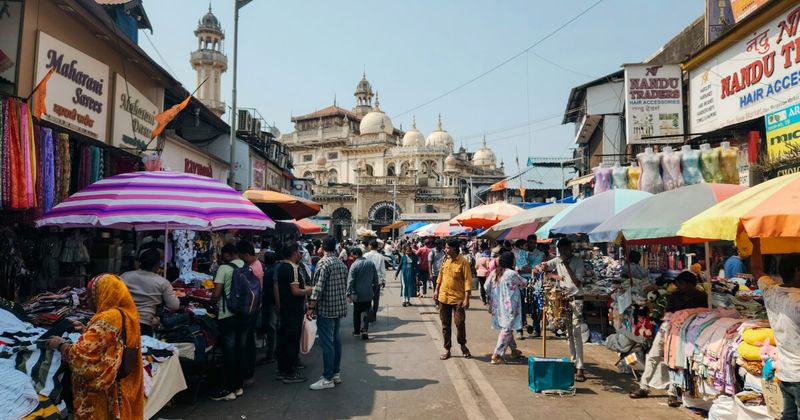
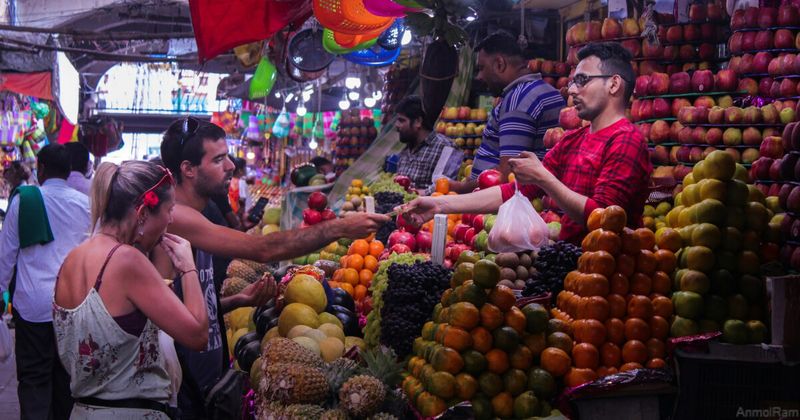
High-footfall markets like Zaveri Bazaar are legitimate trading hubs — the scam risk comes from the person who intercepts you before you reach them, not inside them.
Part 5: Train and Tour Scams — Where First Timers Lose the Most Time
The fake train ticket office. In Delhi's Paharganj area (the budget traveller hub near New Delhi Railway Station), unofficial "travel agents" sell train tickets at inflated prices, with the wrong class, or in some cases fake tickets entirely. The only legitimate way to buy Indian train tickets is through IRCTC directly or through 12Go Asia, which books through official channels in English with an international card. If a travel agent on a street corner offers to sort your train tickets "without the queue," he's either charging a heavy commission or issuing an unofficial ticket that may not be honoured.
The fake guide with a Klook uniform. In 2025 and 2026, several reports emerged of unofficial guides at major monuments wearing branded lanyards and t-shirts designed to look like those of Klook, Viator, or other booking platforms. They approach tourists who've pre-booked legitimate tours and attempt to redirect them to a lower-quality paid alternative. The fix: when you book a tour through Klook, the confirmation includes your guide's name, phone number, and meeting point. Verify all three before you follow anyone. A legitimate guide won't pressure you if you ask to confirm their booking details.
The "monastery / ashram / orphanage" donation scam. A well-presented person outside a religious site explains they're collecting for a local orphanage, monastery, or flood relief fund. They have a laminated donor list with Western names and large donation amounts written in. The fund doesn't exist. The names are fake. Decline politely and move on.
Part 6: If Something Goes Wrong — Medical Overcharging and Emergency Scams
This one is less a street scam and more a systemic vulnerability that catches tourists when they're most vulnerable. Private hospitals and clinics in tourist areas — particularly in Rajasthan and Goa — have in some cases overcharged foreign patients significantly, knowing they have no reference point for local pricing. A consultation that should cost ₹500–800 (about $6–10 USD) at a walk-in clinic gets billed at ₹4,000–8,000 ($48–96 USD) with vague line items.
The protection is simple: travel insurance. Not because Indian hospitals are bad the good private hospitals in Delhi and Mumbai are genuinely excellent. But because having coverage means you can negotiate from a position of knowledge, request itemised billing, and escalate through your insurer if the pricing is clearly inflated. Get covered before you fly through VisitorsCoverage a comprehensive 2-week India policy runs $30–80 USD and covers emergency medical, hospitalisation, evacuation, and trip cancellation. It takes about 10 minutes to sort. It matters more than any other item on this list.
If you're heading into remote areas — Spiti Valley in Himachal Pradesh, Rann of Kutch in Gujarat, the Himalayan foothills around Rishikesh — connectivity becomes critical in an emergency. Drimsim auto-switches to the strongest available network in areas where a standard local SIM loses signal. Knowing you can reach someone if something goes wrong is not a luxury in remote India.

Once you know the fare structure and have InDrive on your phone, every Indian rickshaw ride becomes exactly what it should be a genuinely enjoyable ₹80 way to see a city.
Check Live Flight Prices
The Bottom Line
Most of India's scams are not aggressive. They're social. They rely on politeness, disorientation, and a tourist who hasn't yet calibrated to local prices or patterns. The counter isn't rudeness it's preparation. Know the correct auto fare before you leave your hotel. Book your airport transfer in advance. Use apps that remove the negotiation entirely. Pre-book tickets through verified platforms. Carry travel insurance so that even if something goes genuinely wrong, you're not navigating it alone and unprotected.
India is not a country that is trying to harm you. It is a country with 1.4 billion people and a small percentage who have figured out that disoriented tourists are a reliable revenue stream. Once you're not disoriented — and this guide is a significant part of that the percentage of your trip spent dealing with any of the above drops to almost zero.
The streets are extraordinary. The food is extraordinary. The chaos, once you're inside it rather than fighting it, is extraordinary. Don't let a ₹200 rickshaw overcharge be the thing you remember.
Your India Travel Safety Checklist
Sort these before you land — every single one of them becomes harder to fix on the ground.
🛡️ Travel Insurance — Do This First: Visitors Coverage — Compare plans for India; minimum $100K USD medical + evacuation coverage; 2-week plans from $30–80 USD. This is your protection against medical overcharging and emergency costs — non-negotiable for India.
✈️ Flights & Delay Protection: FlyFlick — Compare flights to Delhi, Mumbai, Bengaluru, Chennai; open-jaw tickets often save $100–200 USD | Compensair — Claim up to €600 for delayed or cancelled India flights; India routes have above-average disruption rates in monsoon season and Delhi fog season.
🚖 Airport Transfer: Welcome Pickups — Pre-booked, fixed-price driver waiting with your name; eliminates all airport taxi tout contact on arrival. Your first 30 minutes in India is not the moment to negotiate.
📱 Connectivity: Saily — City 5G eSIM; activate before boarding, live from the moment you land; no SIM counter required | Yesim — Unlimited data eSIM for multi-country trips covering India, Nepal, Sri Lanka, and beyond | Drimsim — Off-grid eSIM that auto-switches networks; essential for remote Himalayan areas, desert regions, and anywhere a standard SIM loses signal.
🚂 Getting Around Safely: 12Go Asia — Official Indian train tickets in English with an international card; eliminates fake ticket office risk entirely | InDrive — Bid-based city rides across India; set your price, eliminate broken-meter negotiations in one tap.
🎟️ Tours & Tickets: Klook — Pre-book Taj Mahal entry, guided tours, food walks, and experiences through verified operators; digital confirmation means no fake paper ticket risk and no fake guide interception.
Eyes open. India awaits.