
There's a version of a 3-week India trip that looks impressive on paper. Nine cities. Two UNESCO sites a day. An overnight bus every third night. A WhatsApp group called something like "India 2026 🇮🇳🔥" that goes quiet by Day 13 because everyone is too exhausted to type.
Most 3-week India itineraries are that version.
This one isn't. It covers seven cities across three regions — North India, Goa, and South India — and it does it at a pace where you actually absorb each place rather than just tick it off. It builds in transition time. It tells you which cities to cut. It explains the one domestic flight that makes the whole North-to-South move work without costing you two travel days. And it gives you the specific trains, the real costs in USD and INR, and the pre-bookings that prevent the most common planning collapses.
If this is your first trip to India and you want the honest groundwork before diving into a 21-day plan, read our First Time in India guide first — it covers everything from airport arrivals to stomach preparation that applies directly to this itinerary. Start your flight search on FlyFlick while you plan — India flight prices are volatile, and open-jaw tickets into Delhi and out of Kochi or Bengaluru often save $150–250 USD over a return.
The Pace Problem: Why Most 3-Week India Itineraries Leave Travellers Exhausted
This section exists because the title of this post makes a specific promise and that promise deserves to be kept with specifics.
India is physically demanding in ways that most destinations aren't. The heat is real — 35°C in Delhi in April is not the same as 35°C in Barcelona. The sensory volume of Indian cities — the noise, the crowds, the traffic, the smell, the constant social friction — is a form of stimulation that drains energy whether you want it to or not. Add overnight trains, early-morning safaris, temple queues, and the mental overhead of navigating everything in an unfamiliar language, and you've got a recipe for a traveller who is technically "seeing everything" while feeling nothing.
The fix isn't reducing the number of cities. It's sequencing them correctly and building in what I'd call mandatory idle time — a term that sounds contradictory but is the single most valuable resource in an India itinerary.
Three structural rules this itinerary follows:
Rule 1: Never move cities more than three days in a row. Every time you move cities you lose half a day to transit and another half-day recalibrating to a new neighbourhood, new temperature, new food, new noise level. Clustering movements and adding a genuine rest day after every third city prevents the compounding exhaustion that hits around Day 12 in badly planned itineraries.
Rule 2: Sequence from high-intensity to low. North India — Delhi, Varanasi, Udaipur — is the most intense part of this trip. Goa sits in the middle as a genuine decompression zone. South India ends the trip at Kerala's pace, which is roughly half of everywhere else. This isn't arbitrary: it mirrors how your body and attention actually function over three weeks.
Rule 3: Fly the North-South transition. The train from Rajasthan to Kerala takes 36–40 hours. That's two days of your 21-day trip sitting on a train. A 2-hour domestic flight from Udaipur or Goa to Kochi costs ₹3,500–8,000 (about $42–96 USD) — cheap enough and fast enough to make the train version a bad trade. This itinerary flies.
Before You Leave Home: Four Things That Cannot Wait
Get these sorted before you touch any other planning.
Travel insurance — always first. India is not the place to skip this. A hospitalisation in a reputable private hospital in Mumbai or Delhi runs ₹15,000–80,000 per day (about $180–960 USD) for foreigners. A medical evacuation adds $30,000–150,000 USD. Compare plans on VisitorsCoverage — comprehensive 3-week India policies run $40–100 USD depending on your age and coverage level. Get it before you book flights.
Airport transfers at both ends. You'll land at Delhi (DEL) and depart from Kochi (COK) or Bengaluru (BLR). Book both in advance through GetTransfer — choose your vehicle class and driver rating before confirming, fixed fare, no arrivals-hall negotiation at midnight after a long-haul flight. Delhi airport to Connaught Place is roughly 45 minutes; the GetTransfer fixed fare is typically ₹700–1,100 (about $8.50–13 USD) depending on vehicle size.
Your eSIM. Activate it before you board. Saily provides fast 5G coverage across Delhi, Varanasi, Udaipur, Goa, Kochi, and every stop on this itinerary from the moment you clear immigration. For multi-country trips that include Nepal, Sri Lanka, or Southeast Asia as extensions, Yesim gives you unlimited data across multiple countries on one plan.
Train tickets. Book all internal train journeys through 12Go Asia — English interface, international cards accepted, official Indian Railways inventory. Book 60 days ahead for 1AC or 2AC class on peak-season routes.
The 21-Day Itinerary at a Glance
| Days | City | Region | Nights | Key Experience |
|---|---|---|---|---|
| 1-2 | Delhi | North India | 2 | Old City, Humayun's Tomb, street food |
| 3-4 | Varanasi | North India | 2 | Ganges dawn boat, Ganga Aarti |
| 5-6 | Agra | North India | 1 overnight | Taj Mahal sunrise, Agra Fort |
| 7-9 | Udaipur | Rajasthan | 3 | Lake Pichola, City Palace, rest day |
| 10-14 | Goa | West Coast | 5 | North beaches, South Goa, slow days |
| 15 | Hampi | Karnataka | 1 | Ancient ruins, UNESCO World Heritage |
| 16-17 | Kochi | Kerala | 2 | Fort Kochi, spice quarter |
| 18-20 | Alleppey + Munnar | Kerala | 3 | Houseboat, tea plantations |
| 21 | Kochi departure | Kerala | - | Morning free, afternoon flight |
Week 1: North India — Delhi, Varanasi, and Udaipur Done at the Right Pace
Days 1–2: Delhi
Two nights in Delhi is the correct allocation for a 3-week trip. Not one, not four — two. The mistake most travellers make is treating Delhi as a gateway city. It isn't. Old Delhi alone — the medieval quarter around Jama Masjid (India's largest mosque, free entry outside prayer times) and Chandni Chowk — is a full day by itself.
Book your airport transfer from IGI Airport (DEL) through GetTransfer before you land. The drive to central Delhi takes 45 minutes to 1.5 hours depending on traffic and time of day.
Day 1: Arrive, settle, do nothing ambitious. Find dinner near your accommodation — a bowl of dal makhani (slow-cooked black lentils) at any decent North Indian restaurant costs ₹180–280 (about $2–3.50 USD) and is one of the better meals you'll have on this trip.
Day 2: Old Delhi — Jama Masjid at 7 AM before the crowds, then Chandni Chowk's lanes for breakfast and sensory recalibration. Book a 3-hour morning food walk through Klook (₹1,500–2,500 / about $18–30 USD) — it fast-tracks your vendor intuition before you go independent. Afternoon: Humayun's Tomb (₹600 / about $7.20 USD for foreigners — less crowded than the Taj Mahal, architecturally its direct predecessor).
Scam note: Delhi's Connaught Place is one of the most scam-dense tourist areas in India. Our India Travel Scams 2026 guide covers the specific patterns that run here — read it before Day 2.
Days 3–4: Varanasi
Varanasi (Uttar Pradesh state, North India) is the oldest continuously inhabited city on earth. Everything you've heard about it is true and simultaneously inadequate.
Getting there: Overnight train from New Delhi station to Varanasi Junction — the Kashi Express or Poorva Express departs around 6–7 PM, arrives 7–9 AM. 12–14 hours in 3AC sleeper class, ₹485–1,500 (about $6–18 USD). Book through 12Go Asia. You arrive rested, you save a night's accommodation, you gain a morning.
Day 3: Arrive, check in near the ghats (the stone stairways descending to the Ganges). Get to Dashashwamedh Ghat by 6 AM. Hire a rowboat for ₹300–500 (about $3.50–6 USD) — agree the price before stepping in. The morning light, the smoke from the cremation ghats, the sound of ritual bells — there is nothing else like this on earth and I mean that precisely. Evening: Ganga Aarti ceremony. Pre-book a seated front-row platform through Klook for ₹500–800 (about $6–10 USD). The standing view is free. The seated view is transformative.
Day 4: Walk the galis (old city lanes) slowly. Eat a thandai (a spiced milk drink with saffron and rose) at a narrow-lane milk shop for ₹50 (about $0.60 USD). Afternoon departure: train to Agra.
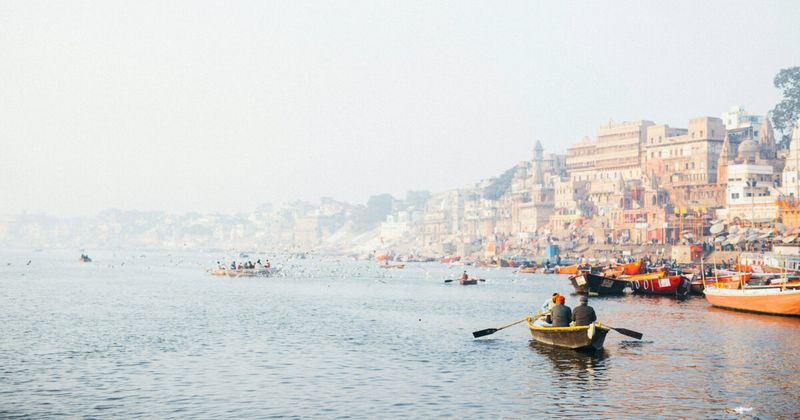
A Varanasi rowboat at dawn costs ₹300–500 — agree the price before you step in, and ask specifically for the stretch from Dashashwamedh to Manikarnika.
Days 5–6: Agra
Agra is a one-stop city and that stop is the Taj Mahal. Everything else is context.
Getting there: Agra is 3.5–4 hours from Varanasi by the Marudhar Express or Jan Shatabdi — ₹300–900 (about $3.60–11 USD) in chair car or 3AC via 12Go Asia.
Day 5 — Taj Mahal at sunrise: Pre-book your ticket on Klook before this trip — ₹1,300 (about $16 USD) for the complex entry plus ₹200 for the mausoleum for foreigners. Arrive at the East Gate by 6:00 AM. Thirty minutes of soft light and thin crowds before the tour buses arrive. That's the version worth having. Agra Fort in the afternoon (₹650 / about $7.80 USD for foreigners) — the Taj is visible from the river-facing towers.
Day 6 — Fatehpur Sikri and departure: Fatehpur Sikri, 40 km west of Agra, is a completely intact Mughal city abandoned in the 1580s — one of the most atmospheric UNESCO sites in India and consistently overlooked. Entry ₹610 (about $7.30 USD) for foreigners. Arrange your Agra city transfers — station to hotel, hotel to Taj East Gate — through Intui.travel for fixed fares and no platform negotiation. Evening: overnight train or morning flight to Udaipur.
Days 7–9: Udaipur — The Rajasthan Choice That Changes the Trip
Most 3-week itineraries go to Jaipur after Agra. It makes geographic sense. It's also the most visited city in Rajasthan, and after Delhi and Agra, another heavily-touristed North Indian city on Day 7 is where burnout starts.
Udaipur (Rajasthan state, West India — about 620 km southwest of Agra) is the antidote. The "City of Lakes" is built around Lake Pichola and dominated by the City Palace complex — a 400-year-old layered palace that looks genuinely impossible from across the water. It's quieter than Jaipur. The lanes of the old city are narrow and walkable. The rooftop restaurants overlooking the lake cost ₹300–600 (about $3.60–7.20 USD) for a full meal. It's the first place on this itinerary where you can sit down without someone trying to redirect you.
Day 7: Arrive, walk Lake Pichola at sunset. Boat ride on the lake (₹400 / about $4.80 USD per person, 45 minutes) — this is the best view of the City Palace and the Taj Lake Palace (now a hotel, but open for day visits for a fee).
Day 8: City Palace — entry ₹300 (about $3.60 USD) for foreigners — and Jagdish Temple (free, 5 minutes from the palace). Afternoon: Saheliyon ki Bari garden (₹50 / about $0.60 USD), which is inexplicably lovely and inexplicably uncrowded.
Day 9 — The Rest Day: Do almost nothing. Sleep late. Eat breakfast on a rooftop at 9 AM. Walk somewhere aimlessly. This is not wasted time — it's the day that makes Days 10 through 21 sustainable. If you feel compelled to do something: Ranakpur Jain Temple is 90 km north of Udaipur and one of the finest pieces of medieval architecture in India (entry ₹50 / about $0.60 USD). Book a private return day transfer through Intui.travel.
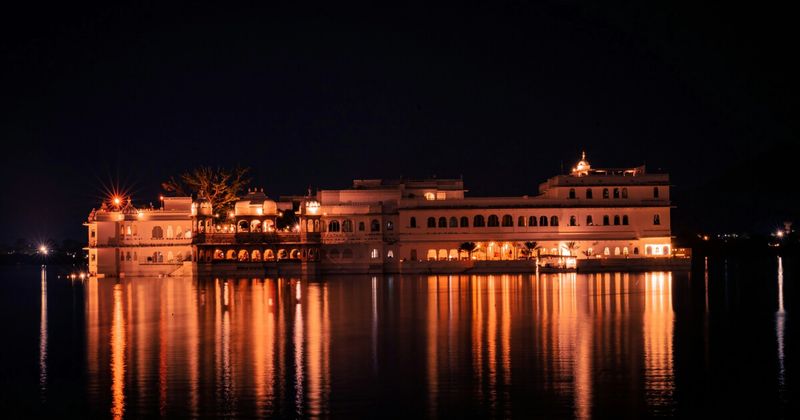
You don't need to stay at the Taj Lake Palace to appreciate it — the free view from the ghats across Lake Pichola at sunset is the one that stays with you.
Check Live Flight Prices
Week 2: Goa — How Long to Stay, Which Part to Choose, and Why 5 Nights Is the Number
Goa sits in the middle of this itinerary by design. After nine days of temples, trains, heat, and sensory overload, you need somewhere that requires nothing of you. Goa is that place.
Five nights is the correct allocation. Three nights is too rushed — you spend the whole time moving between beaches and never settle. Seven nights goes stale unless you're the type who's happy reading on a beach for two days, which some people genuinely are (those people can extend to 7 and shorten Kerala).
Getting there from Udaipur: Fly from Udaipur Airport (UDR) to Goa. Goa now has two airports: Dabolim (GOI) in South Goa and the newer Manohar International Airport (GOX) in North Goa, which opened in 2023. Check both on FlyFlick when comparing fares — GOX is the better arrival point if you're starting in North Goa, GOI for South Goa. Fares run ₹3,000–9,000 (about $36–108 USD) depending on timing. Book your arrival transfer through GetTransfer for a fixed-fare pickup directly to your beach base.
North Goa vs South Goa: The Decision That Shapes Your Week
North Goa (Anjuna, Vagator, Arambol, Morjim) is louder, younger, more developed, and more party-forward. Beach shacks run from dawn to midnight. The Saturday Night Market at Arpora (November–March) is a genuine Goa institution — 200+ stalls of crafts, clothes, food, and music until midnight. The beaches are good but busy.
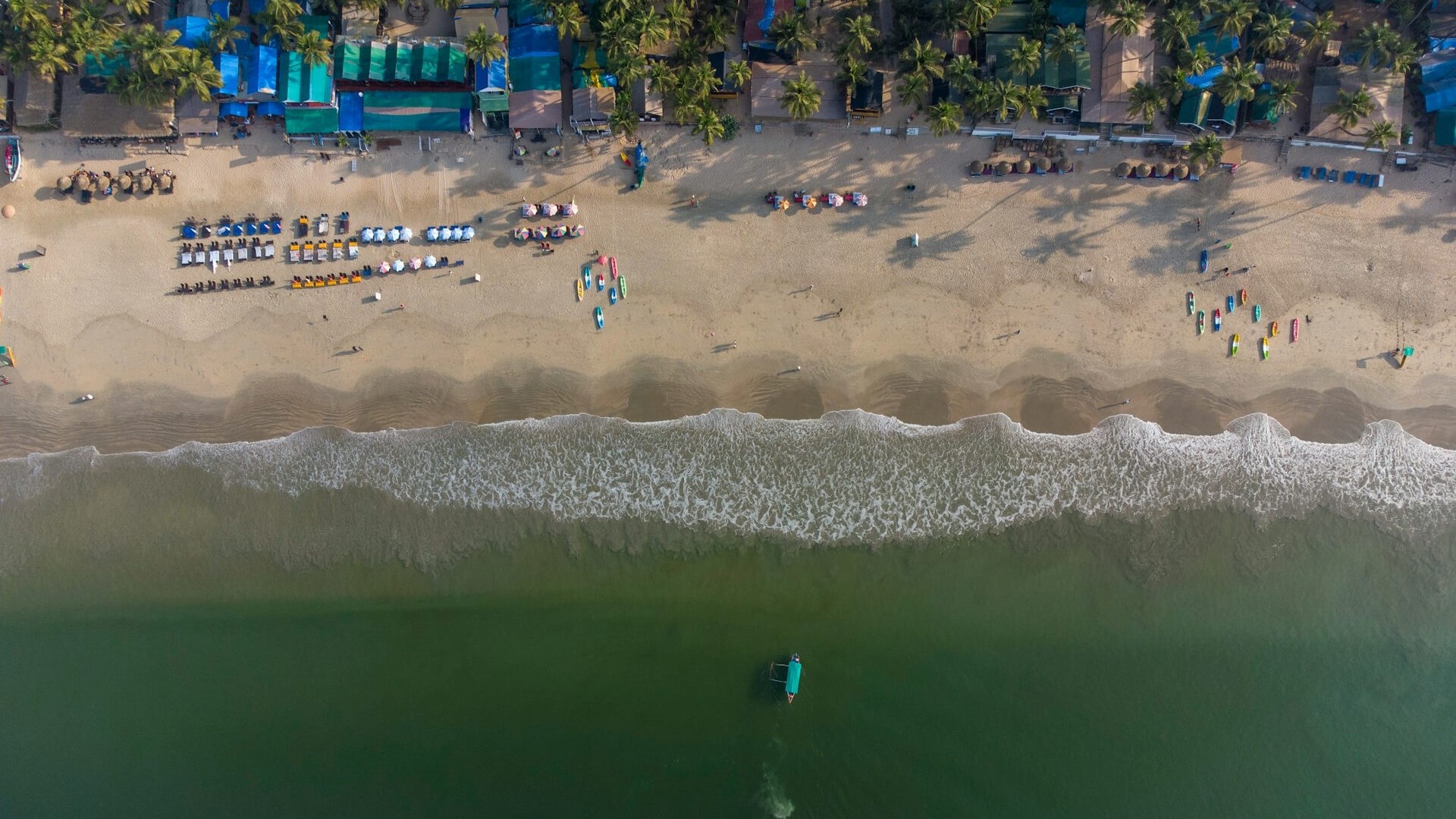
South Goa (Palolem, Agonda, Patnem, Benaulim) is quieter. The beaches are genuinely better. Palolem is a crescent-shaped bay that looks like it was designed specifically for people who've spent nine days in Indian cities and need to stop. Agonda is even quieter. South Goa goes to sleep by 11 PM.
The right call for this itinerary: base yourself in South Goa for 3 nights, take a day trip to North Goa for the market and the Anjuna-Vagator cliff scene. You get both; you don't sacrifice your decompression week for nightclub energy.
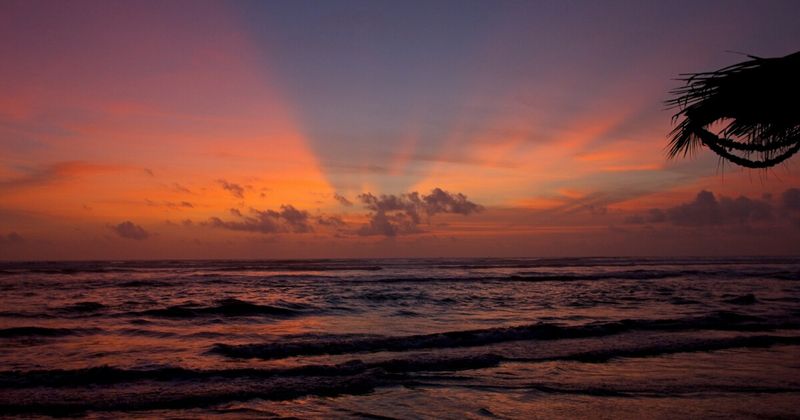
Goa sunsets start at 6 PM in winter and go on longer than seems reasonable — the best ones are watched from the water, not the shore.
Days 10–14 in Goa:
Day 10: Arrive, check into South Goa (Palolem or Agonda), do nothing except eat and swim.
Day 11: Palolem beach, kayaking (₹500 / about $6 USD per hour from most beach shacks), seafood lunch — Goan fish curry with red rice costs ₹280–420 (about $3.40–5 USD) at any local restaurant and bears almost no resemblance to the fish curry you've had anywhere else.
Day 12: Day trip to North Goa — Vagator cliffs, Anjuna flea market (Wednesdays, November–April), the Portuguese-era Chapora Fort for the sunset. Book transport through Intui.travel for a private day-transfer north and back — the public bus is fine in theory and runs on its own schedule in practice.
Day 13: Old Goa — 6 km east of Panaji, accessible by local bus (₹15 / about $0.20 USD). The Basilica of Bom Jesus (UNESCO World Heritage Site, free entry) contains the relics of Saint Francis Xavier and is genuinely extraordinary 16th-century Portuguese architecture in the middle of tropical India. Se Cathedral next door (also free) is the largest church in Asia east of Suez. Takes 2 hours. Nothing about it feels like a tourist attraction.
Day 14: Rest day. Full Palolem beach day. Read. Swim. Order the pork vindaloo at a restaurant in Palolem village (₹320–420 / about $3.90–5 USD) — it's the original dish, not the vinegar-bomb version exported to UK curry houses.
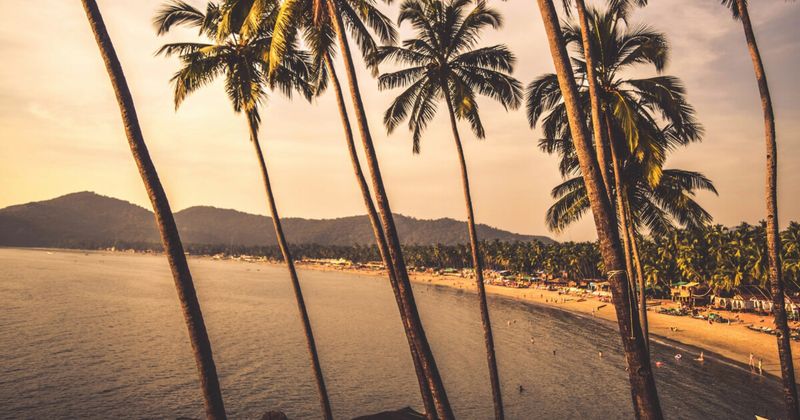
Palolem is South Goa's most famous beach, which means it's both the most beautiful and the most likely to have someone offering you a dolphin tour — they're worth doing; ₹400–600 per person for a morning trip.
Week 3: South India — Hampi, Kerala, and the Part That Changes the Trip
Week 3 is where most first-time India travellers get surprised. North India and Goa both broadly match expectations — the Taj Mahal looks like the Taj Mahal, Goa's beaches look like beach photos. South India doesn't look like what anyone is expecting, and that's precisely why it's on this itinerary.
Day 15: Hampi — The UNESCO Ruins Almost No One Sees on a 3-Week Trip
Hampi (Karnataka state, South India — about 340 km from Goa) is the ruined capital of the Vijayanagara Empire, abandoned in 1565 and declared a UNESCO World Heritage Site in 1986. It covers 26 square kilometres of boulder-strewn landscape with 1,600 surviving monuments scattered across it. It's completely unlike anything in North India. It looks like a science fiction landscape borrowed from a different planet.
Getting there: Overnight bus from Goa (Panaji) to Hampi — 8–9 hours, ₹600–1,200 (about $7.20–14.50 USD). Book through 12Go Asia. Alternatively, bus to Hospet (the nearest town) and auto to Hampi (25 km, about ₹250 / about $3 USD).
Day 15: Sunrise at the Virupaksha Temple (entry ₹50 / about $0.60 USD) — the oldest functioning temple in India, with a tower you can climb for rooftop views over the ruins. The Stone Chariot at Vittala Temple complex (entry ₹600 / about $7.20 USD for foreigners) — the most photographed monument in Hampi, best between 7 and 9 AM. Rent a bicycle for the day (₹100–150 / about $1.20–1.80 USD) to cover the main ruins without a guide forcing a route. Evening bus or shared jeep to Bengaluru (5 hours) for the flight to Kochi.
If you have any connectivity concerns navigating remote Karnataka — Hampi's mobile signal is patchier than tourist areas — Drimsim auto-selects the strongest available network and won't drop on you between ruins.
Days 16–17: Fort Kochi
Fly from Bengaluru (BLR) to Kochi (COK) — 1 hour, ₹1,800–5,000 (about $21.60–60 USD) on FlyFlick. Book your arrival transfer from Kochi International Airport through GetTransfer — it's 30 km to Fort Kochi, about 45 minutes.
Fort Kochi is the old colonial quarter of Kochi — 500 years of Portuguese, Dutch, and British architecture layered over a working waterfront, with the iconic Chinese fishing nets (Cheena vala) operating at the edge of the Arabian Sea at dawn. The Mattancherry Palace (entry ₹5 / literally $0.06 USD for foreigners) houses extraordinary Mughal-style murals painted by Keralan artists. Jewish Town and the Paradesi Synagogue (one of the oldest functioning synagogues in the Commonwealth, entry ₹5 / about $0.06 USD) are 10 minutes' walk. A full Kerala seafood dinner at a Fort Kochi restaurant costs ₹600–1,200 (about $7.20–14.50 USD) per person and is a completely different cuisine from everything you've eaten in the previous 15 days.
Days 18–20: Alleppey Backwaters and Munnar Tea Plantations
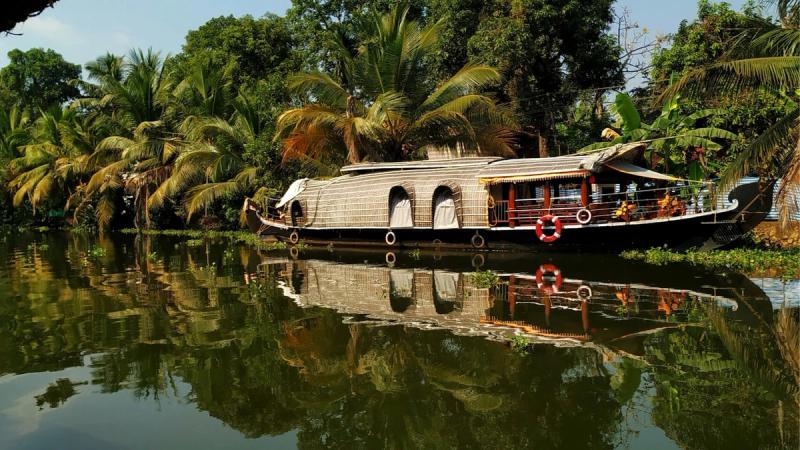
Day 18 — Alleppey backwaters: Alleppey (Alappuzha), 1.5 hours from Kochi by road — book through Intui.travel for a private transfer. The backwaters are 900 km of interconnected lakes, rivers, and lagoons lined with coconut palms. An overnight houseboat runs ₹8,000–15,000 (about $96–180 USD) per boat and includes a cook whose fish curry will be made from whatever came out of the water that morning. Book through Klook — peak season (October–March) books 3–4 weeks ahead. This is the last ambitious pre-booking on the itinerary. It's the right one to make.
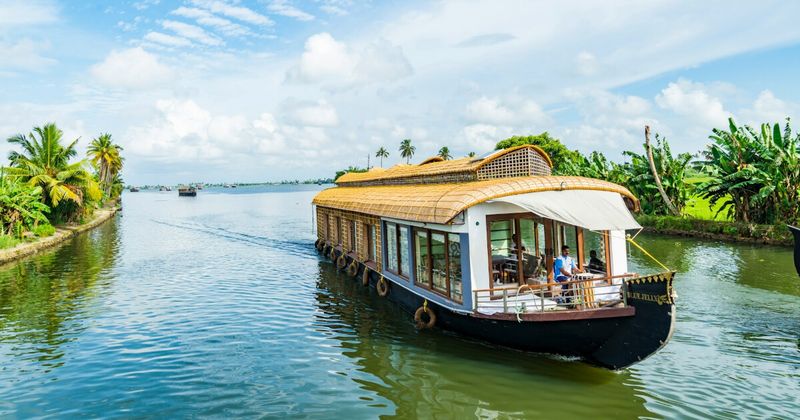
The Alleppey houseboat cook's shopping list is entirely dependent on the morning catch — tell him your dietary restrictions on the boat at breakfast, not the night before on a form.
Day 19 — Munnar: Munnar is a hill station in Kerala's Western Ghats, 130 km northeast of Alleppey — about 4 hours by road. Book through Intui.travel for a direct private transfer from Alleppey. The drive through the lower ghats — the road climbing through rubber plantations, then tea estates, then eucalyptus forest — is one of the best road journeys in South India. Munnar itself sits at 1,600 metres, which means 22°C when Goa was 34°C. The Eravikulam National Park (₹125 / about $1.50 USD for foreigners) has the highest density of Nilgiri tahr (an endangered mountain goat) in the world and views across the Annamalai range worth the 20-minute walk.
Day 20: A slow Munnar morning — tea estate walk (most estates offer guided walks for ₹100–200 / about $1.20–2.50 USD), a proper South Indian breakfast (idli-sambar-coconut chutney at a Munnar tea-town hotel, ₹80–120 / about $1–1.50 USD), and the afternoon drive back toward Kochi for your final night.
Day 21: Departure
Morning free in Kochi. The waterfront at Fort Kochi at 7 AM — fishermen operating the Chinese nets, the smell of salt water and frying fish — is the best farewell to three weeks in India that this itinerary offers. Afternoon flight home from Kochi International Airport (COK). Book your airport transfer through GetTransfer. Protect your return flight with Compensair — Kochi routes hub through Bengaluru and Dubai where disruptions cascade; claims up to €600 with minimal paperwork.
What to Skip on a 3-Week India Itinerary (This Is the Hard Part)
This section doesn't exist in most India travel guides. It should.
Skip Mumbai. Mumbai is India's greatest city by most measures — the food, the architecture, the energy, the sea, the film industry's fingerprints on everything. It also requires at minimum 3 nights to do properly, it's 2 hours by domestic flight from every city on this itinerary (adding connections), and it feels rushed if bolted onto Week 3. Mumbai deserves its own trip. Leave it for the return.
Skip Jaipur if you've already done Delhi. Jaipur (Rajasthan's Pink City, 280 km from Delhi) is excellent. It's also the third most-visited city in India by foreign tourists, and after Delhi's intensity, another massive urban North Indian experience in the same week stacks the sensory load. Udaipur gives you Rajasthan at a different pace and a different scale.
Skip Hampi if your timeline is genuinely tight. If anything on this itinerary has to go to create breathing room, Hampi is the most logistically awkward leg. Goa directly to Kerala by overnight train (10–12 hours, Goa to Kochi) is a clean move that adds a night's accommodation and removes a transit day. Hampi stays on the list for return trips, where it belongs.
Skip Kovalam. Kovalam is Kerala's most internationally marketed beach — it's fine, it's developed, it has the infrastructure of a resort town. Palolem in Goa is a better beach. Alleppey's backwaters are a better Kerala experience. Kovalam appears on most 3-week itineraries because it's near the tip of India and looks good on a map. Leave it.
How to Handle the North-South Transition Without Losing Two Days
This is the logistical section no competitor addresses. The North-South transition is where itineraries fall apart.
The geography: you're finishing North India in Udaipur or Jaipur (Rajasthan). South India starts in Goa or Kerala. The ground distance is 1,500–2,000 km. There are three ways to do it:
Option A: Fly Udaipur → Goa (recommended). 1.5–2 hours, ₹3,500–9,000 (about $42–108 USD) on FlyFlick. Half a day, fixed cost, you arrive in Goa in time for dinner. This is what this itinerary uses.
Option B: Overnight train Jaipur/Agra → Goa. The Marusagar Express runs Delhi/Agra to Vasco da Gama (Goa's rail hub) — 37–41 hours. That's a full day and a half of your 21-day trip on one train. It's an experience. It costs roughly ₹900–2,200 (about $11–26 USD). Choose it if the train journey itself appeals to you; cut two days from somewhere else.
Option C: Fly Mumbai → Goa. Add Mumbai as a 1-night transit stop — fly Delhi/Agra to Mumbai (2 hours), overnight in Mumbai, fly Mumbai to Goa the next morning (1 hour). Adds 2 flights but gives you 12 hours in Mumbai. Reasonable if Mumbai is non-negotiable.
The one option that doesn't work: driving. The road from Udaipur to Goa is 950 km of mixed highway and mountain road, taking 16–20 hours. Don't.
For all domestic flights in this itinerary, book through FlyFlick and protect each booking with Compensair. India's domestic flight disruption rate spikes during monsoon (June–September) and Delhi fog season (December–January) — both are documented, recurring, and claimable.
India in 3 Weeks: Full Budget Breakdown
| Category | Budget ($60/day) | Mid-Range ($110/day) | Comfortable ($180/day) |
|---|---|---|---|
| Accommodation (20 nights) | $300–450 USD | $700–1,100 USD | $1,500–2,500 USD |
| Internal trains (4 journeys) | $30–55 USD | $55–90 USD | $90–150 USD |
| Domestic flights (3 flights) | $100–180 USD | $150–240 USD | $240–400 USD |
| Food (21 days) | $120–200 USD | $220–380 USD | $380–600 USD |
| Entrance fees (all sites) | $70–90 USD | $70–90 USD | $70–90 USD |
| Experiences + pre-booked tours | $80–120 USD | $150–220 USD | $220–380 USD |
| Airport + city transfers | $50–80 USD | $80–130 USD | $130–220 USD |
| Total (excl. international flights + insurance) | $750–1,175 USD | $1,425–2,250 USD | $2,630–4,340 USD |
Note: India is most expensive at the extremes — the cheapest option is genuinely very cheap, and the luxury version (heritage palace hotels in Udaipur, private houseboats in Alleppey) can scale dramatically upward.
The Bottom Line
Three weeks in India is not a small undertaking. It's also not as complicated as the fear of it suggests — once the logistics are locked, the country does most of the work. The Taj Mahal at 6:30 AM will be everything. Varanasi at dawn will be more. Goa will feel like another planet after nine days of North Indian cities. Kerala's backwaters will feel like the world slowed down to a pace you didn't know you needed.
The difference between a trip that leaves you exhausted and one that leaves you changed is almost entirely in the pace. Sequence high-intensity to low. Build in the rest days. Fly the North-South transition. Pre-book the things that sell out. Cover yourself with VisitorsCoverage before you touch any other preparation.
That smell on arrival — cardamom and diesel and something you can't name — will be the same on Day 1 and Day 21. By then, you'll know exactly what it is.
Your 3-Week India Trip Planning Checklist
Every item below is easier to sort from home than on the ground. Do it all before you board.
🛡️ Travel Insurance — Non-Negotiable, Sort First: VisitorsCoverage — Compare plans; minimum $100K USD medical + evacuation; 3-week India policies run $40–100 USD. Covers North India heat emergencies, Goa water sports, and Kerala remote backwater areas equally.
✈️ Flights & Delay Protection: FlyFlick — Compare international flights into Delhi (DEL) and domestic legs (UDR→GOI/GOX, BLR→COK); open-jaw tickets save $150–250 USD | Compensair — Claim up to €600 for disrupted India flights; file from your phone; India domestic disruption rates are above average.
🚖 Airport & City Transfers: GetTransfer — Pre-booked fixed-fare transfers at Delhi (DEL) arrival, Kochi (COK) arrival, and departure; choose vehicle class and driver rating before confirming | Intui.travel — Pre-booked private city transfers for Agra (station to Taj East Gate), Udaipur (day trips), Goa (North-South day trip), Alleppey–Munnar–Kochi leg; fixed fares, no local negotiation.
🚂 Trains — Book 60 Days Ahead: 12Go Asia — Book all 4 internal train journeys in English with international card: New Delhi–Varanasi (overnight), Varanasi–Agra, Agra–Udaipur, Goa–Hampi (overnight bus).
📱 Connectivity: Saily — City 5G eSIM; activate before boarding; covers all 7 cities on this itinerary | Yesim — Unlimited data eSIM for multi-country trips including Nepal, Sri Lanka, or Southeast Asia extensions | Drimsim — Off-grid eSIM; auto-switches networks in Hampi's patchy signal zones and Kerala's remote backwater areas.
🎟️ Experiences to Pre-Book: Klook — Taj Mahal sunrise entry, Varanasi Ganga Aarti front-row platform, Delhi food walk, Alleppey overnight houseboat (book 3–4 weeks ahead in peak season), Old Goa heritage tour.
📋 Before You Leave:
- Apply Indian e-Visa at indianvisaonline.gov.in — allow 2 weeks minimum
- Carry printed or screenshotted e-Visa for immigration
- Pack ORS sachets — available at every Indian pharmacy for ₹10 but easier to remember at home
- Download Google Maps offline for all 7 cities
- Save India emergency numbers: Police 100, Ambulance 108, Tourist Helpline 1363
Three weeks. Seven cities. One trip that doesn't burn you out.