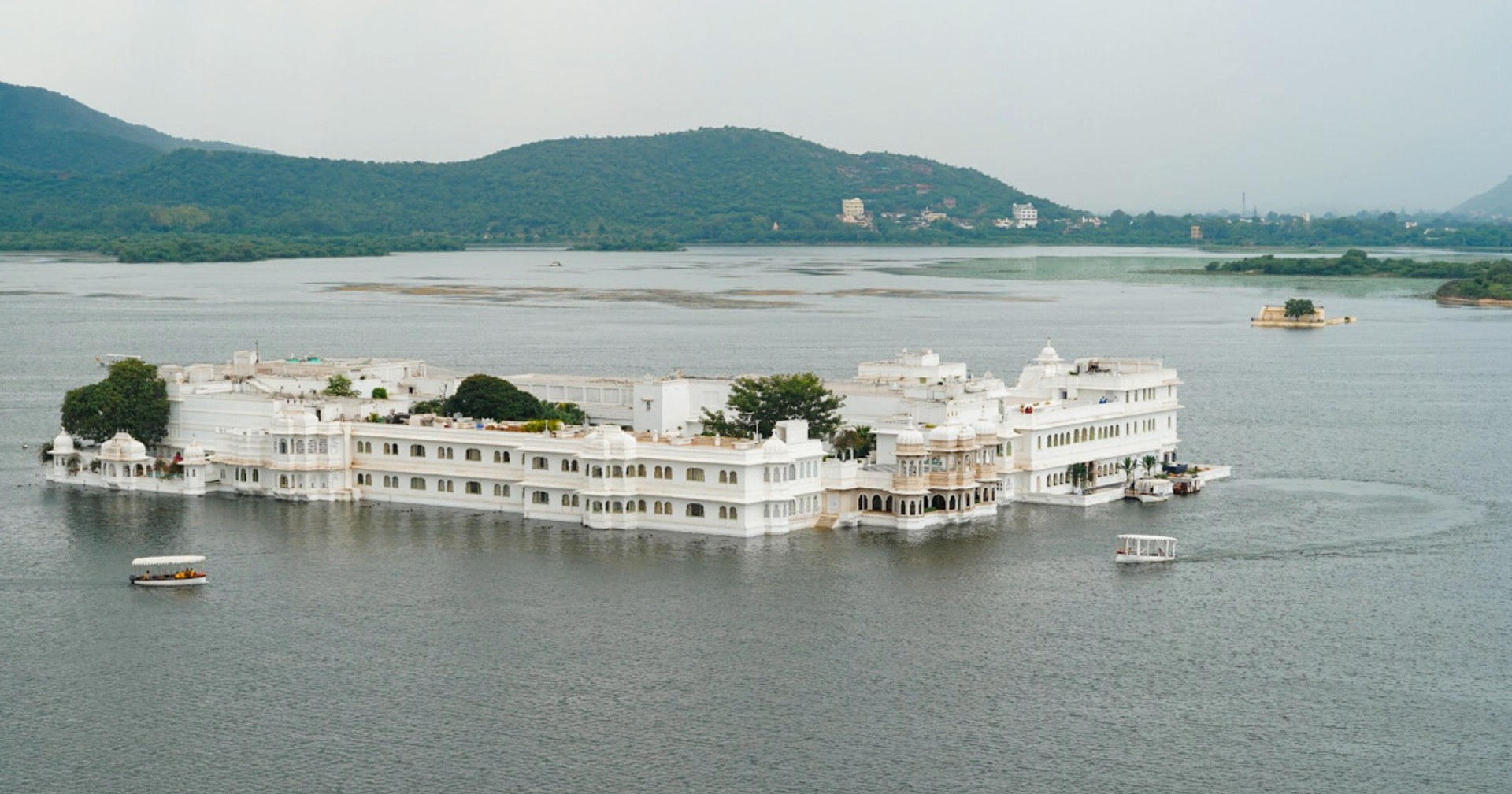

The standard Rajasthan itinerary allocates Udaipur two nights. This is understandable and wrong.
Two nights in Udaipur is enough to see the City Palace from the outside, take one boat ride on Lake Pichola, eat one rooftop dinner watching the Lake Palace hotel float in the darkening water, and leave with a vague impression of having been somewhere beautiful. What it doesn't give you is enough time to understand what makes Udaipur unlike any other city in India — or, for that matter, unlike most cities in the world.
Udaipur is a lake city. Not in the metaphorical sense that Rishikesh is a river city or Varanasi is a ghat city, but in the literal architectural sense: the city was designed around water, built to face water, and calibrated to look a specific way when the lake is full and the light is right. The City Palace reflected in Lake Pichola at 6am — the pre-dawn grey of the water, the pale stone just catching the first light — is a completely different structure from the same palace at 5pm in golden hour, when the lake turns amber and the palace glows as though it's lit from inside. Which is different again from the palace at 9pm, lit at night, reflected in the dark water below the Gangaur Ghat.
Two nights gives you one of these. Four days gives you the full sequence, plus the day trips — Kumbhalgarh's Great Wall of India, Ranakpur's 1,444-pillar marble temple — that transform Udaipur from a beautiful city into the centre of one of Rajasthan's most rewarding circuits.
Sort VisitorsCoverage travel insurance before anything else on this trip. Udaipur policies from approximately $12–25 USD — the medical infrastructure here is solid by Rajasthan standards, but travel cover for the region matters for a longer stay. EKTA offers a budget-friendly second option from $0.99/day at ektatraveling.com — worldwide coverage, fully digital, 24/7 multilingual support. Compare both before booking.
4-Day Udaipur at a Glance
| Day | Focus | Key Experiences |
|---|---|---|
| Day 1 | City Palace + Lake | City Palace, sunset boat Lake Pichola, Jag Mandir, rooftop dinner |
| Day 2 | Old City + Culture | Jagdish Temple, old bazaar, Bagore ki Haveli, Dharohar dance show |
| Day 3 | Kumbhalgarh Day Trip | The Great Wall of India, Aravalli hilltop fort, optional Ranakpur |
| Day 4 | Ranakpur + Departure | 1,444-pillar marble temple, Saheliyon ki Bari, Monsoon Palace sunset |
Getting to Udaipur
Udaipur's Maharana Pratap Airport (UDR) receives domestic flights from Delhi (IndiGo, SpiceJet, Air India — 1h 30min, from ₹3,500–₆,000/$37.23–₆3.83 USD), Mumbai (1h, from ₹3,000–₅,000/$31.91–₅3.19 USD), and seasonal connections from Jaipur and Jodhpur. Search and book on FlyFlick. Set a Compensair alert — UDR is a small regional airport and weather delays cascade into connecting flights.
By train: Udaipur City railway station connects to Jaipur (7–8 hours, overnight options from ₹500 Sleeper), Delhi (12–14 hours, overnight from ₹700 Sleeper), and Mumbai (18–22 hours). Book on 12Go Asia with international card support. If arriving from the Rajasthan circuit (Jodhpur → Udaipur), several daily trains cover the 5–6 hour journey, and the classic overland route via Kumbhalgarh and Ranakpur — covered as Day 3 and 4 on this itinerary — can be done by pre-booked intercity vehicle if you're leaving from Jodhpur.
Book your UDR airport arrival transfer through GetTransfer or KiwiTaxi — both confirmed for Udaipur airport routes. KiwiTaxi covers Trivandrum Airport → Kovalam and Kochi Airport routes also in its India network. For Udaipur to Jodhpur or Udaipur to Jaipur intercity transfers, KiwiTaxi handles these fixed-fare routes directly. Pre-booking is worth it because UDR arrivals attract aggressive taxi touts.
Activate Saily 5G eSIM before landing — good coverage in central Udaipur and the main roads. Drimsim is worth having for the Kumbhalgarh day trip, where the fort road and Aravalli hills section has intermittent signal on single-carrier SIMs.
Where to Stay in Udaipur
Stay close to the lake. The difference in experience between a rooftop guesthouse on Lal Ghat with a view over Lake Pichola and a business hotel 3 kilometres from the city centre is not primarily about price — it's about whether Udaipur feels like a living city or a day trip.
Lal Ghat / Gangaur Ghat area: The best-value lake-facing accommodation in Udaipur is concentrated in the 400-metre strip of guesthouses between Lal Ghat and Gangaur Ghat on the eastern bank of Lake Pichola. Rooms with lake views start from ₹1,500–₂,500 ($15.96–₂6.60 USD) per night for budget options; midrange rooftop properties with proper lake panoramas from ₹4,000–₈,000 ($42.55–₈5.11 USD). Book 2–3 weeks ahead in October–February — the best rooms go quickly.
Lake Palace Hotel (Taj Lake Palace): The white marble hotel floating on Jag Niwas Island in Lake Pichola — the most Instagrammed hotel in India and the one used for the James Bond film Octopussy (1983). Rooms from ₹30,000–₈0,000+ ($319–₈51+ USD) per night. Non-guests cannot visit without a restaurant reservation or the Jag Mandir boat. Worth a meal if it fits your budget; otherwise, the view from your Lal Ghat rooftop is comparable.
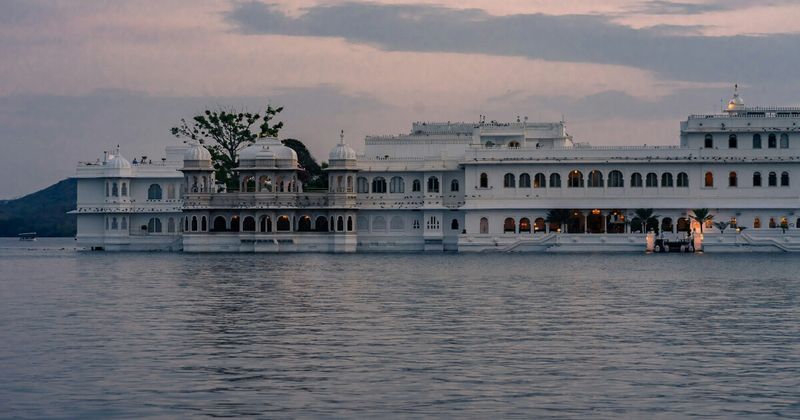
Lake Pichola was constructed in 1362 as a water reservoir by Pichhu Banjara, a member of the nomadic Banjara trading community — the Maharanas of Mewar subsequently expanded it and built the Lake Palace and Jag Mandir Island palaces on its two natural islands, making it one of the few bodies of water in India where both the lake and the architecture on it were constructed by deliberate design.
Day 1: City Palace, Sunset on the Lake and the Connection Most Guides Miss
City Palace: 9:30am. The gates open at 9:30am. Be there. Entry for foreigners: ₹300 ($3.19 USD) for the museum section; additional charges for the Crystal Gallery (₹500/$5.32 USD — a collection of Victorian crystal furniture ordered from F&C Osler in Birmingham in the 1870s, extraordinary and largely unknown) and audio guide (₹150/$1.60 USD). Hire a guide at the entrance for 90 minutes — the palace's 22 generations of Mewar dynasty history spanning 400 years requires context that the entry ticket plaques don't provide. Guide: ₹500–800 ($5.32–8.51 USD). Pre-book the whole City Palace experience through Klook.
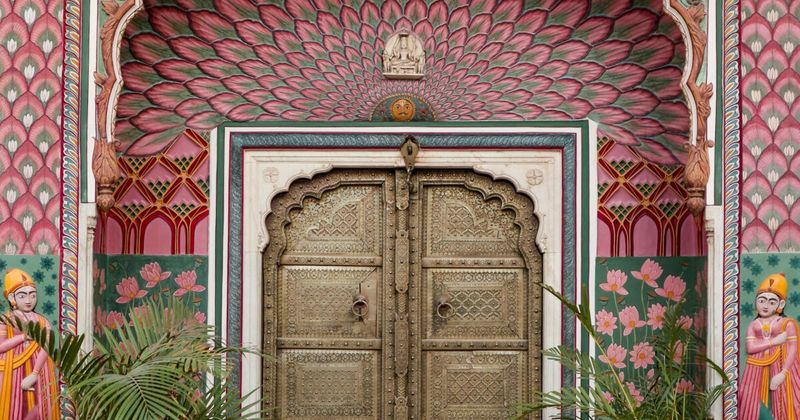
The three peacocks of Mor Chowk represent the three seasons of Rajasthan — the blue peacock represents winter, the green summer, and the gold-yellow monsoon; the mosaic was created under Maharana Sajjan Singh in the 19th century using thousands of individually cut pieces of coloured glass applied to the plaster walls by artisans whose work took four years to complete.
The City Palace is Rajasthan's largest palace complex — built from 1559 by Maharana Udai Singh II, the founder of Udaipur, and expanded by 22 successive Maharanas across 400 years. The result is not an architecturally uniform building but an accumulation of generations — each ruler added his own style, creating a layered structure of Rajput balconies, Mughal inlay work, European mirror glass, and Indian tile patterns coexisting in the same corridor. The Mor Chowk (Peacock Courtyard), with its extraordinarily detailed glass mosaic peacocks in blue, green, and gold, is the visual centrepiece. The view from the Amar Vilas terrace — Lake Pichola visible below with the Lake Palace floating white in the centre, the Aravalli Hills behind — is the most replicated view in Rajasthan.
Allow 2.5–3 hours minimum. Don't rush it.
Jag Mandir: 3pm boat. From the City Palace, walk 10 minutes to Bansi Ghat jetty for the afternoon boat to Jag Mandir island. Boat ticket: ₹600/person before 3pm; ₹800/person after 3pm ($6.38/$8.51 USD). The boat takes 20–30 minutes and the Jag Mandir palace entry is included. Open 10am–6pm.
Here is the connection most Udaipur travel guides fail to make: Jag Mandir island palace sheltered Prince Khurram when he was in rebellion against his father, the Mughal Emperor Jahangir, in 1623. The Maharana of Mewar provided refuge to the prince on this island — one of the most politically fraught decisions of the Mewar dynasty, given their centuries-long resistance to Mughal power. The prince spent years on this island. He observed the marble architecture, the gardens floating on water, the extraordinary stillness of the lake-island setting. When Prince Khurram became Emperor Shah Jahan and commissioned the Taj Mahal in 1632, the architectural DNA of what he'd seen on Jag Mandir — a marble structure on water, garden and pavilion design, the particular quality of light on white stone above a reflective surface — is directly visible in Agra. The Taj Mahal's architectural lineage runs through Lake Pichola.
The island's Gul Mahal pavilion, where Shah Jahan actually lived during his exile, is still standing. Its Islamic arches and crescent motifs are strikingly different from the surrounding Rajput architecture — a refugee's architectural imprint on the city that sheltered him.
Take the evening boat back from Jag Mandir at approximately 5pm to position yourself at the Gangaur Ghat for golden hour. The 20-minute window between 5:30pm and 5:50pm when the western light hits the City Palace face-on across the water — the palace turning gold, the Lake Palace turning amber, the Aravalli Hills behind going from gold to purple — is the best half-hour of light in Udaipur.
Dinner on any rooftop along Lal Ghat. Ambrai Restaurant (lakefront, not rooftop but ground-level under the trees with the lake 5 metres away, mains ₹400–700/$4.26–7.45 USD) is the first choice for the view-to-price ratio. Jheel Guesthouse rooftop (mains ₹200–350/$2.13–3.72 USD) is the honest local option with the same lake view and no pretension.
Day 2: Old City, Jagdish Temple and the Folk Dance Nobody Skips Twice
Day 2 moves slower than Day 1. Udaipur's old city — the lanes between the City Palace and the Jagdish Temple, the bazaars extending north toward Hathi Pol — rewards wandering rather than destination-hitting. Build in time to get lost.
Jagdish Temple: 8am. A 10-minute walk from the City Palace entrance and the most important temple in Udaipur. Built in 1651 by Maharana Jagat Singh I in the Indo-Aryan architectural style — a 79-foot shikhara (spire) covered in carved elephants, horsemen, musicians, and dancers. Entry is free. The interior enshrines a black stone image of Lord Jagannath (a form of Lord Vishnu), and the atmosphere during morning aarti (approximately 8:30–9am) — the bells, the incense, the chanting — is the closest you'll get in Udaipur to Varanasi's ghat energy. Remove shoes before entering; cover shoulders and knees.
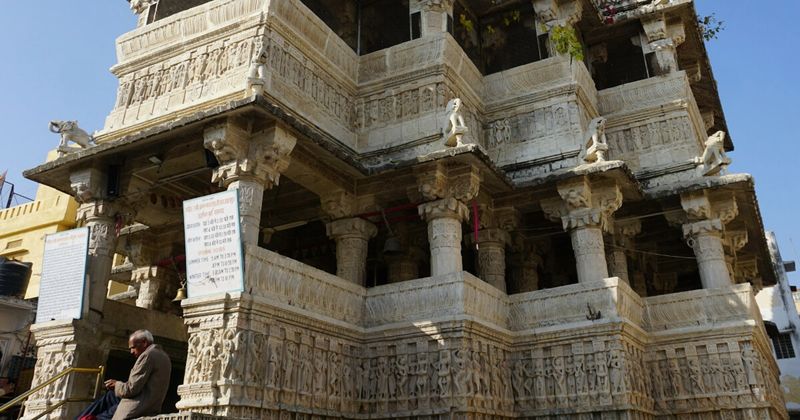
Jagdish Temple was built in just 7 years (1628–1651) despite its enormous scale — an extraordinary pace for the hand-carving of its 79-foot sandstone tower — because Maharana Jagat Singh I reportedly redirected all available royal craftsmen to the project as a statement of intent about Mewar's cultural independence; the temple has functioned continuously since its inauguration and has never been closed to worshippers.
The specific detail about Jagdish Temple that most guides omit: Emperor Akbar of the Mughal dynasty visited Ranakpur Jain Temple (covered on Day 4) in the 16th century and was so moved by its architecture that he had an inscription placed at the entrance forbidding any destruction. Jagdish Temple was built by the Mewar Maharana precisely during a period of Hindu cultural revival against Mughal pressure — it is, in a very specific political sense, a monument of resistance built in the heart of the city that most successfully resisted Mughal domination for three centuries.
Morning: Old City lanes. The market streets between Jagdish Temple and the Clock Tower (Ghanta Ghar) are Udaipur's bazaar heartland. Bada Bazaar for silver jewellery (₹500–₂,000/$5.32–₂1.28 USD), Hathi Pol for Rajasthani textiles and block-print fabrics (from ₹200/$2.13 USD per metre). The silver jewellery here is significantly cheaper than equivalent pieces in Jaipur's Johri Bazaar — Udaipur's artisan tradition specialises in fine silver work that doesn't appear in most tourist guides.
Lunch: Natraj Dining Hall near the Clock Tower — unlimited Rajasthani vegetarian thali (dal, sabzi, roti, rice, chaas, pickle) for ₹150–₂00 ($1.60–₂.13 USD). The food is continuously refilled by staff moving around with serving buckets. You will be full for the rest of the day.
Afternoon: Saheliyon ki Bari. The Garden of the Maidens — an 18th-century royal garden built by Maharana Sangram Singh for the queen and her 48 ladies-in-waiting, who spent the monsoon season here among the fountains, lotus pools, and marble pavilions. Entry: ₹50 for foreigners ($0.53 USD). Open 9am–7pm. It's smaller than it sounds but considerably more peaceful than it should be given its location — the lotus pools and carved marble elephant fountains are in genuinely excellent condition and the garden has a stillness that the city outside doesn't.
The hyper-specific Saheliyon ki Bari detail: the central fountain pool was designed to imitate raindrops — the fountains spray a fine mist that, in the right afternoon light, creates an artificial rain cloud visible from the garden's marble pavilion. During the actual monsoon, when the real rain falls simultaneously with the fountain spray, the effect was apparently indistinguishable from a private storm. The Maharana had, in effect, built a rain machine for the royal ladies who missed the monsoon while sheltering in the palace. This is either engineering genius or extraordinary extravagance, and probably both.
Evening: Bagore ki Haveli and Dharohar Dance Show. The 18th-century mansion of the prime minister of Mewar, now a museum and cultural centre on Gangaur Ghat. Museum entry: ₹50–₁00 ($0.53–₁.06 USD). The Dharohar Folk Dance Show, held in the haveli's courtyard every evening at 7pm, is 90 minutes of traditional Rajasthani and Gujarati folk dance — Kalbelia snake-charmer dance, Ghoomar (the circular group dance most people recognize from Bollywood), Bhavai (women balancing pots on their heads), and puppetry. Tickets: ₹150 for foreigners ($1.60 USD). Book through Klook or purchase at the haveli door. This is not a tourist show in the condescending sense — the performers are professional artists from Rajasthan's living folk tradition and the Kalbelia in particular is UNESCO-listed intangible cultural heritage.
Book a vehicle for Day 2 city sightseeing through Intui.travel — Udaipur's main sites are spread enough that a fixed-fare full-day vehicle is more practical than individual auto negotiations, particularly for the afternoon return from Saheliyon ki Bari.
Check Live Flight Prices
Day 3: Kumbhalgarh — The Great Wall of India That Nobody Talks About
85 kilometres north of Udaipur on the Aravalli Hills — 2 hours by car through the scenic Rajsamand district — Kumbhalgarh Fort sits at 1,100 metres above sea level and is enclosed by a wall 36 kilometres long. It is the third-longest continuous wall in the world, after the Great Wall of China and the Great Wall of Gorgan in Iran. Most people who have been to Jaipur's Amber Fort and Jodhpur's Mehrangarh — and have heard of both — have never heard of Kumbhalgarh.
Book a full-day vehicle through Intui.travel for the Kumbhalgarh circuit — depart Udaipur by 8am to arrive at the fort by 10am, have enough time to walk the wall and explore the interior, and return to Udaipur by 6pm. The road through the Aravalli Hills is good and scenic; the drive is part of the day.
Kumbhalgarh Fort. Entry for foreigners: ₹600 ($6.38 USD). Open 9am–6pm daily. Built by Maharana Kumbha in 1458 — the same Maharana who patronised the Ranakpur Jain Temple — on an Aravalli hilltop chosen for its near-impregnability. In over 300 years of existence, Kumbhalgarh was successfully breached only once: by a combined army of the Mughals, the armies of Amber (Jaipur), and Marwar (Jodhpur) in 1576, and only after they poisoned the water supply. No force had managed to breach the walls by military means.
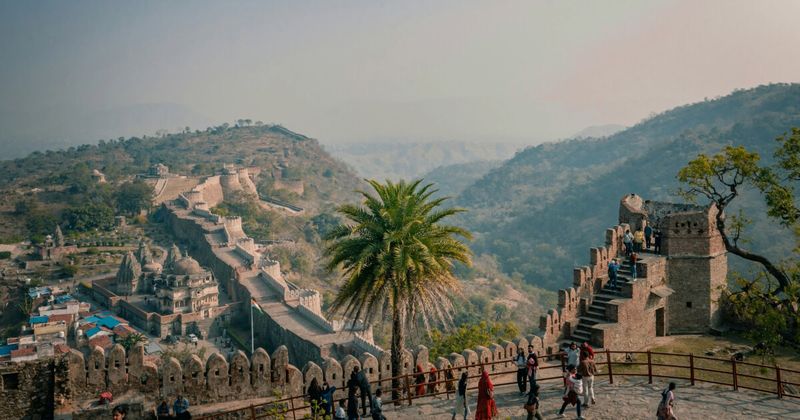
Kumbhalgarh's wall was built wide enough for eight horses to ride abreast along its top — this was not aesthetic but tactical, allowing rapid troop deployment along the entire perimeter without bottlenecks; the wall also enclosed enough agricultural land and water reservoirs within its perimeter that the fort could theoretically sustain its population indefinitely under siege, which is why it was essentially never taken by force.
The wall. Seven metres wide at its base — wide enough for eight horses to ride abreast. 36 kilometres of it, unbroken, snaking over the Aravalli ridgeline and around valleys in a continuous defensive perimeter. You can walk a section of the wall from the main fort entrance toward the Badal Mahal (Cloud Palace), approximately 3 kilometres on the wall, which provides the panoramic Aravalli views that make Kumbhalgarh's setting unlike any other fort in Rajasthan. The wall in afternoon light — the honey sandstone against the deep blue Rajasthan sky — is genuinely extraordinary.
Inside the fort walls: 360 temples (300 Jain, 60 Hindu — the combination reflects the syncretic patronage of Maharana Kumbha, who was himself Hindu but was a major patron of Jain architecture), the Kumbha Palace ruins, and the birthplace of Maharana Pratap — the 16th-century Mewar warrior who led the longest resistance against Mughal domination of any Indian ruler, and who is, for Rajasthan, what Shivaji is for Maharashtra: the defining hero of regional identity. Pre-book through Klook.
The Kumbhalgarh Wildlife Sanctuary surrounds the fort — 578 square kilometres of Aravalli forest sheltering wolves, leopards, hyena, sloth bears, and Indian antelopes. You won't see large wildlife on a day trip, but the forest road driving to the fort is genuinely scenic and the sanctuary's birdlife is visible from the wall.
Optional return stop: Ranakpur Jain Temple. 50 kilometres from Kumbhalgarh, 1 hour's drive. If you leave Kumbhalgarh by 3pm, you can reach Ranakpur by 4pm. Non-Jain visitor access runs until 5pm — giving you exactly 1 hour to see the exterior and the first hall before closing. The temple is more properly covered as Day 4's focus. If you can only do one option, save Ranakpur for a full morning.
Day 4: Ranakpur and the Monsoon Palace Farewell
Ranakpur Jain Temple: depart Udaipur by 9am. 90 kilometres from Udaipur, 2 hours through the Aravalli Hills. Non-Jain visitors are admitted from 12pm to 5pm — which means arriving by 11:45am to queue, enter at noon, and have the full afternoon. Entry is free. Camera fee: ₹100 ($1.06 USD). Leather items (shoes, belts, wallets) are deposited at the locker facility at the entrance for ₹10 — this is an absolute rule, not a suggestion. Cover shoulders and knees.
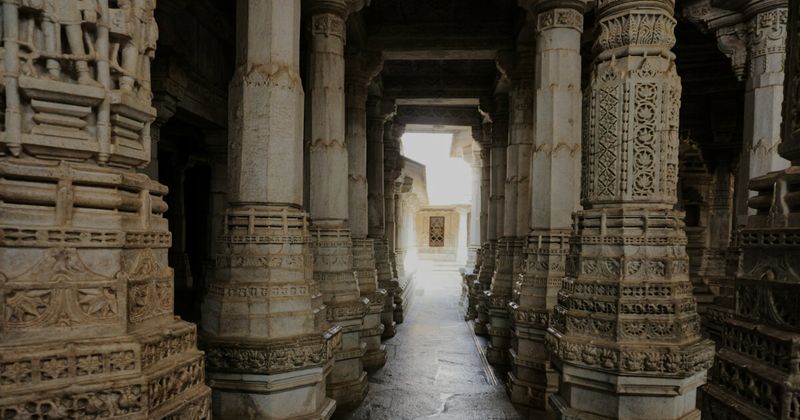
Ranakpur's 1,444 pillars were carved by artisans who worked simultaneously throughout the temple complex during the 50 years of construction — the design required each pillar to be identical in structural dimensions but unique in surface carving, which means the craftsmen were operating under a constraint (match the structure) while being given maximum creative freedom (any carving pattern); the result is the world's largest collection of non-repeating marble carvings in a single building.
The Chaumukha Temple — named for its four-faced Adinath idol facing all cardinal directions — was built between 1437 and 1458 (50 years of construction) by a Jain businessman named Dharna Shah under the patronage of Maharana Kumbha, who also built Kumbhalgarh. It contains 1,444 intricately carved marble pillars. No two pillars are identical. Every surface — ceiling, pillar, wall, doorway — is carved to a degree of intricacy that has no equivalent in Indian stone architecture. The standard description is "poem in marble." It is less clichéd than it sounds when you're standing inside it.
The specific detail that architecture guides don't emphasise: the pillars change colour. In the morning (which non-Jain visitors can't access), they are described as a warm golden-cream. In the afternoon, when the sun is at a specific angle through the carved screen windows, certain pillars shift to a pale blue as the shadow contrast changes across the marble surface. This isn't a trick of bad photography — it's the deliberate result of using marble of different mineral compositions in adjacent pillars. The 15th-century Jain architects were working with an understanding of light through stone that produces effects which took architectural historians 500 years to document.
Allow 2–3 hours. Eat at the temple's dining hall (₹50 coupon, simple vegetarian meal served 12pm–2pm). The surrounding Aravalli forest is inhabited by a troop of langur monkeys who have lived in the temple complex for as long as anyone can remember and are considered sacred.
Pre-book the Ranakpur entry experience through Klook, which includes pickup from Udaipur.
Return via Sajjangarh Monsoon Palace: 5pm.
Sajjangarh (Monsoon Palace) sits on the Aravalli ridge above Udaipur at 944 metres — the highest point overlooking the city. It was built in 1884 by Maharana Sajjan Singh as a monsoon retreat and astronomical observatory, designed to watch the monsoon clouds roll in from the south over the Aravalli range. Entry: ₹200 foreigners ($2.13 USD) plus ₹80 vehicle entry. Open until sunset.
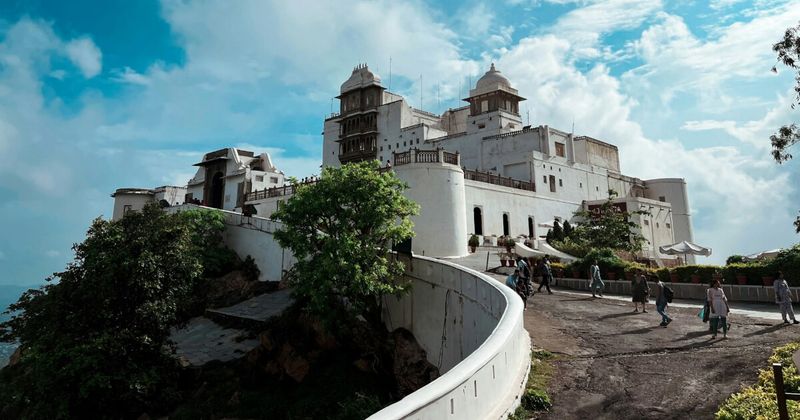
Maharana Sajjan Singh built the Monsoon Palace specifically to watch monsoon cloud formations approaching from the south — his astronomers maintained instruments here to predict the monsoon's arrival and intensity, which determined the agricultural calendar for the entire Mewar region; the palace became a diplomatic residence and guest house under later Maharanas, and was the location of several scenes in the 1983 James Bond film Octopussy.
The panoramic view from the Monsoon Palace — Fateh Sagar Lake visible to the north, Lake Pichola below with the City Palace and Lake Palace visible, the Aravalli Hills extending in every direction, and the city of Udaipur spread in the valley — is the most complete visual explanation of Udaipur's geography available from any single point. From here, you understand for the first time why Maharana Udai Singh chose this location in 1559: a series of connected lakes in a protected Aravalli valley, defensible from all approaches, with water enough to sustain a city.
The palace arrives at its most dramatic in the 20 minutes before sunset — the city below turns gold, the lakes reflect the sky, and the hills go from ochre to purple to silhouette as the light drops. On a clear day, the Thar Desert is a faint amber smear on the horizon to the west.
Book your Day 4 Ranakpur-to-Sajjangarh vehicle through Intui.travel — the Ranakpur–Udaipur–Sajjangarh circuit covers approximately 200 kilometres and benefits from a professional driver who knows the Aravalli hill roads.
What to Skip in 4 Days
The Crystal Gallery (unless you're specifically interested). The ₹500 Crystal Gallery inside the City Palace contains the furniture collection ordered in the 1870s from Birmingham — crystal beds, crystal sofas, crystal dinner services — which the Maharana ordered but never saw delivered because he died before they arrived. Historically fascinating for that reason. Visually peculiar rather than beautiful. Worth it if you're a design historian; the rest of the City Palace is more rewarding if time is finite.
Multiple full-day shopping circuits. Udaipur has excellent markets and the silver jewellery is genuinely worth buying. One morning of market wandering on Day 2 is sufficient. The circuit of multiple bazaars across multiple days starts to feel repetitive and distracts from what Udaipur does better than shopping: looking at water and light and old stones in changing conditions.
Chittorgarh as a Day 3 alternative. Chittorgarh Fort — 112 kilometres east of Udaipur, 2.5 hours — is historically important as the original Mewar capital before Udaipur and the site of three famous sieges. It's also Rajasthan's largest fort by area and requires 4–5 hours to cover properly. Adding Chittorgarh to a 4-day Udaipur trip is possible — it is, however, a significantly more demanding day trip than Kumbhalgarh, and the two forts on two consecutive days (Days 3 and 4) becomes fort-saturating. Choose Kumbhalgarh (stronger natural setting, the wall, closer proximity) for a 4-day trip; save Chittorgarh for a separate trip or a longer Rajasthan circuit.
The ferry to the Lake Palace. The Taj Lake Palace hotel doesn't admit non-guests without a dinner reservation. Dinner starts from ₹4,000–8,000 per person ($42.55–85.11 USD) and requires advance booking. If this fits your budget and you want the experience of dining inside the most famous hotel in India, it's extraordinary. If it doesn't, the view from your Lal Ghat rooftop over the same lake is equally good for the purpose of understanding why the hotel is there.
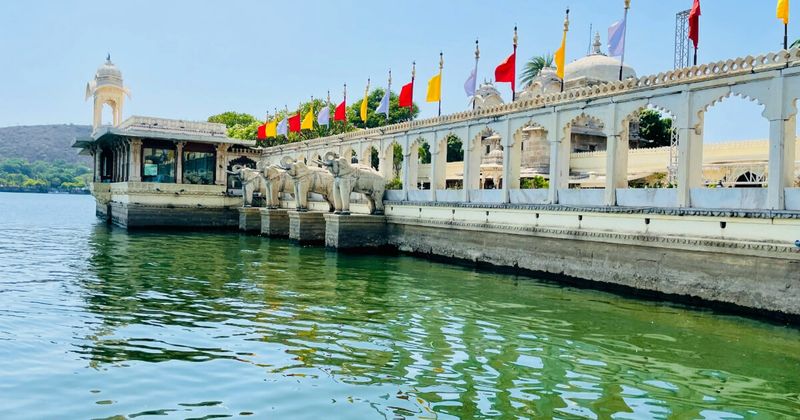
Jag Mandir Palace took three Maharanas and 87 years to build — started by Maharana Amar Singh in 1551 and completed by Maharana Jagat Singh I in 1652 — which means that Shah Jahan's exile on the partially-built island in 1623 happened in the middle of its own construction; he was sheltering in a building that was still being completed around him, which makes the architectural influence on the Taj Mahal even more remarkable.
Pace and Burnout: Managing 4 Days in Udaipur
Udaipur has a specific trap for energetic travellers: because the main sights are physically close to each other (the City Palace, Jagdish Temple, and Lal Ghat are all within 15 minutes' walk), it's tempting to front-load the first two days and feel like you've finished the city by Day 2. Then Day 3's Kumbhalgarh drive and Day 4's Ranakpur trip feel like obligations rather than highlights.
The correct approach is the opposite: be more patient on Days 1 and 2, knowing that the city rewards return visits to the same spots at different times of day. The City Palace from inside on Day 1 morning, from a rooftop guesthouse at golden hour on Day 1 evening, and from the Lake Pichola boat on Day 2 afternoon — these are three genuinely different experiences of the same structure. Budget for them.
One unscheduled half-afternoon per trip. Udaipur's café culture, concentrated in the lanes behind Lal Ghat, is good enough that sitting at a rooftop table with a masala chai and watching the lake is a legitimate way to spend 90 minutes of Udaipur time. Not every hour needs a monument.
When to visit: October–March is peak — the lakes are full, the weather is excellent (18–28°C daytime), and the light is the warm gold that makes Udaipur's lake reflections extraordinary. Book accommodation 2–3 weeks ahead. April–June is extreme heat (35–42°C). Monsoon (July–September) is atmospheric but the boat rides are sometimes suspended on choppy days and the Kumbhalgarh road can be slippery.
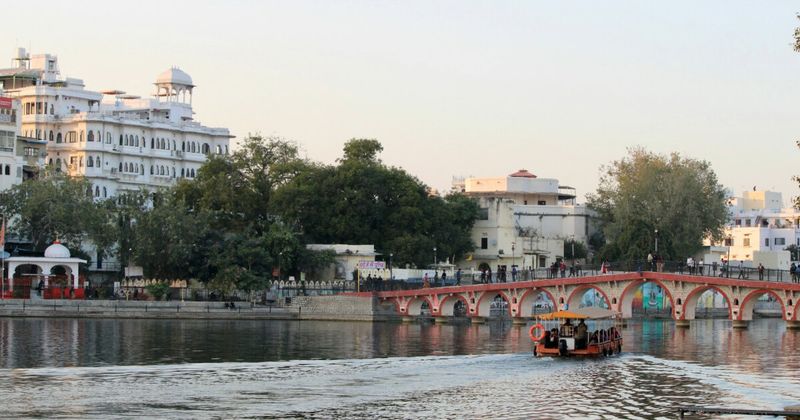
Gangaur Ghat takes its name from the Gangaur festival, one of Rajasthan's most important annual celebrations, in which clay idols of Goddess Gauri and God Isar (Shiva) are immersed in the lake in a procession that begins at this ghat; the festival occurs 18 days after Holi (February–March) and involves the royal family of Udaipur in the official procession, making it one of the last functioning royal ceremonial traditions in India.
For a longer Rajasthan circuit that includes Udaipur, our India in 10 Days guide positions Udaipur as the natural endpoint of the Delhi–Agra–Jaipur–Jodhpur–Jaisalmer route via a day-long scenic overland connection. Our Rajasthan 10-Day Itinerary covers the dedicated Rajasthan circuit.
4-Day Udaipur Budget Breakdown
| Expense | Budget | Mid-Range | Splurge |
|---|---|---|---|
| Accommodation (4 nights) | ₹1,500–₂,500 ($15.96–$26.60)/night | ₹4,000–₈,000 ($42.55–$85.11)/night | ₹15,000+ ($159.57+)/night |
| UDR airport transfer | ₹500–800 ($5.32–$8.51) auto | ₹1,500–2,500 GetTransfer/KiwiTaxi | ₹3,500+ |
| City Palace entry (foreigner) | ₹300 ($3.19) basic | ₹800 ($8.51) + Crystal Gallery | ₹2,500 full experience |
| Lake Pichola boat to Jag Mandir | ₹450–600 ($4.79–$6.38) | ₹800 ($8.51) after 3pm | ₹2,500+ sunset cruise |
| Jagdish Temple | Free | Free | Free |
| Saheliyon ki Bari | ₹50 ($0.53) | ₹50 ($0.53) | — |
| Bagore ki Haveli + Dharohar show | ₹150 ($1.60) | ₹150 ($1.60) | — |
| Day 3 Kumbhalgarh vehicle | ₹3,000–4,000 ($31.91–$42.55) car Intui.travel | ₹5,000–6,000 ($53.19–$63.83) | — |
| Kumbhalgarh Fort (foreigners) | ₹600 ($6.38) | ₹600 ($6.38) | — |
| Day 4 Ranakpur vehicle | ₹3,000–4,000 ($31.91–$42.55) | ₹5,000–6,000 ($53.19–$63.83) | — |
| Ranakpur Jain Temple | Free (₹100 camera) | Free (₹100 camera) | — |
| Sajjangarh Monsoon Palace | ₹200 + ₹80 vehicle ($2.13 + $0.85) | ₹200 + ₹80 vehicle | — |
| Food (4 days) | ₹300–500 ($3.19–$5.32)/day | ₹1,000–2,000 ($10.64–$21.28)/day | ₹3,000+ ($31.91+)/day |
| Klook guides/experiences | — | ₹1,500–₃,000 ($15.96–$31.91) | ₹5,000+ ($53.19+) |
| Travel insurance | VisitorsCoverage/EKTA from ~$12 | from ~$12 | from ~$12 |
| 4-day total per person (excl. flights) | ₹20,000–30,000 ($213–$319) | ₹50,000–80,000 ($532–$851) | ₹1,50,000+ ($1,596+) |
All prices INR. USD at ₹94 = $1. INR prices reliable; USD approximate — check current rate before budgeting.
Check Live Flight Prices
The Bottom Line
Every India itinerary gives Udaipur two nights because two nights is what fits into the standard Rajasthan circuit. It's a logistics decision, not a recommendation. The city itself is not a two-night city.
Four days in Udaipur gives you the three versions of the same palace in three different lights, the island where the Taj Mahal was imagined, the wall that almost no army could breach, the 1,444 pillars of Ranakpur that no two are alike, and enough unscheduled time to sit at a lakefront café in the afternoon and let the reflection of the City Palace on the water simply be what it is: one of the most extraordinary things that human beings have built, placed at the edge of an artificial lake constructed in 1362, in a valley in the Aravalli Hills of Rajasthan.
Come for four days. The two-night version is a photograph. The four-day version is the understanding of why the photograph exists.
Your Udaipur Trip Planning Checklist
🛡️ Travel Insurance — First, Always: VisitorsCoverage — Compare plans; minimum $100K USD medical + emergency evacuation; Udaipur 4-day policies from ~$12–25 USD; sort before flights, accommodation, or anything else | EKTA — Affordable second option from $0.99/day at ektatraveling.com; worldwide coverage, fully digital, 24/7 multilingual support. Compare both and choose the cover that fits.
✈️ Flights & Delay Protection: FlyFlick — Search all routes into Udaipur (UDR); check open-jaw options from Delhi or Jaipur into UDR if arriving from the Rajasthan circuit | Compensair — Claim up to €600 for delayed/cancelled flights; UDR is a small regional airport and cancellations cascade into connecting flights.
🚖 Airport & City Transfers: GetTransfer — Pre-booked fixed-fare UDR airport arrival and departure transfer | KiwiTaxi — Pre-booked fixed-price transfers at UDR; also covers Udaipur → Jodhpur, Udaipur → Jaipur intercity routes at fixed pre-booked fares | Intui.travel — Full-day vehicle for Day 3 Kumbhalgarh circuit and Day 4 Ranakpur–Sajjangarh circuit; both require private vehicles on Aravalli hill roads.
🎟️ Experiences to Pre-Book: Klook — City Palace entry + guide (Day 1 morning); Lake Pichola sunset boat to Jag Mandir (book 24 hours ahead in peak season); Dharohar folk dance show at Bagore ki Haveli ₹150 (Day 2 evening); Kumbhalgarh Fort entry ₹600 (Day 3); Ranakpur day trip package (Day 4).
🚂 Trains: 12Go Asia — Book all trains to Udaipur from Delhi, Jaipur, Jodhpur, or Mumbai in English with international card; overnight options available from all major Rajasthan cities.
📱 Connectivity: Saily — City 5G eSIM; works across central Udaipur and main roads | Drimsim — Off-grid eSIM for Kumbhalgarh Fort road (Aravalli hills) and the Ranakpur forest area where single-carrier SIMs drop.
Four days. Three lights on the same lake. Come back for the rest.