
The narrow lanes inside Jaisalmer Fort are not an accident of medieval town planning. They are a deliberate engineering decision. The buildings on either side lean toward each other at the top, creating a permanent overhang that keeps the lane below in permanent shade. On a day when the desert outside the fort walls reaches 42°C, the lane inside runs 7–8 degrees cooler. Over 4,000 people have been using this passive cooling system for 850 years. The fort is UNESCO World Heritage Site, the only living fort in India, and it has free entry. You can walk in off the street and eat breakfast in a dhaba that has been feeding Rajputs and merchants and travellers since the Silk Road was a working trade route.
That's Rajasthan on a good day. Not the postcard version — the actual thing.
This 10-day Rajasthan itinerary goes from Jaipur to Jodhpur to Jaisalmer on the classic western desert route. It is the right route, in the right order, for a first-time visitor who wants to understand what makes this state singular. Jaipur gives you Mughal-Rajput architecture and a baseline for everything that follows. Jodhpur gives you Mehrangarh, which is a better fort than Amber and almost nobody's favourite because Amber gets there first. Jaisalmer gives you the desert — not as a day trip backdrop, but as a place you sleep in, under stars that city light has never touched.
Before any fort or any train: book VisitorsCoverage travel insurance now, before you purchase anything else on this trip. Rajasthan roads — especially between Jodhpur and Jaisalmer — carry significant traffic, and a single accident requiring hospital attention in India can cost ₹30,000–₹2,00,000 ($319–$2,128 USD) before a specialist has looked at you. Your home country's policy doesn't cover it. VisitorsCoverage takes ten minutes, costs from roughly $15–40 for ten days, and means the rest of this guide is the only planning you have to do.
At a Glance: 10-Day Rajasthan Route
| Day | Location | Focus | Travel |
|---|---|---|---|
| Day 1 | Jaipur | Arrive, Hawa Mahal, Pink City | — |
| Day 2 | Jaipur | Amber Fort, Jaigarh Fort, Nahargarh sunset | Local |
| Day 3 | Jaipur | City Palace, Jantar Mantar, shopping | Local |
| Day 4 | Jaipur → Jodhpur | Travel day | Train: 4h 15min, from ₹160 |
| Day 5 | Jodhpur | Mehrangarh Fort, old city, blue lanes | Local |
| Day 6 | Jodhpur | Jaswant Thada, Umaid Bhawan, clock tower market | Local |
| Day 7 | Jodhpur → Jaisalmer | Travel day | Train: 5–6 hrs, from ₹215 |
| Day 8 | Jaisalmer | Living fort, Patwon Ki Haveli, Gadisar Lake | Local |
| Day 9 | Jaisalmer → Sam Dunes | Desert camp overnight | Transfer 45 km |
| Day 10 | Sam Dunes → departure | Morning in desert, return, depart | — |
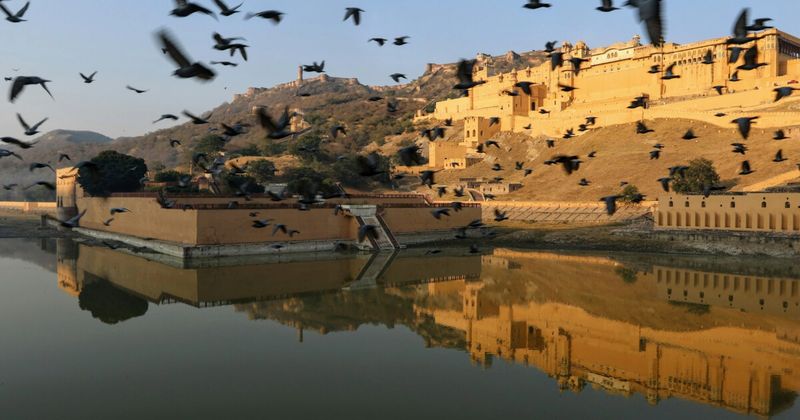
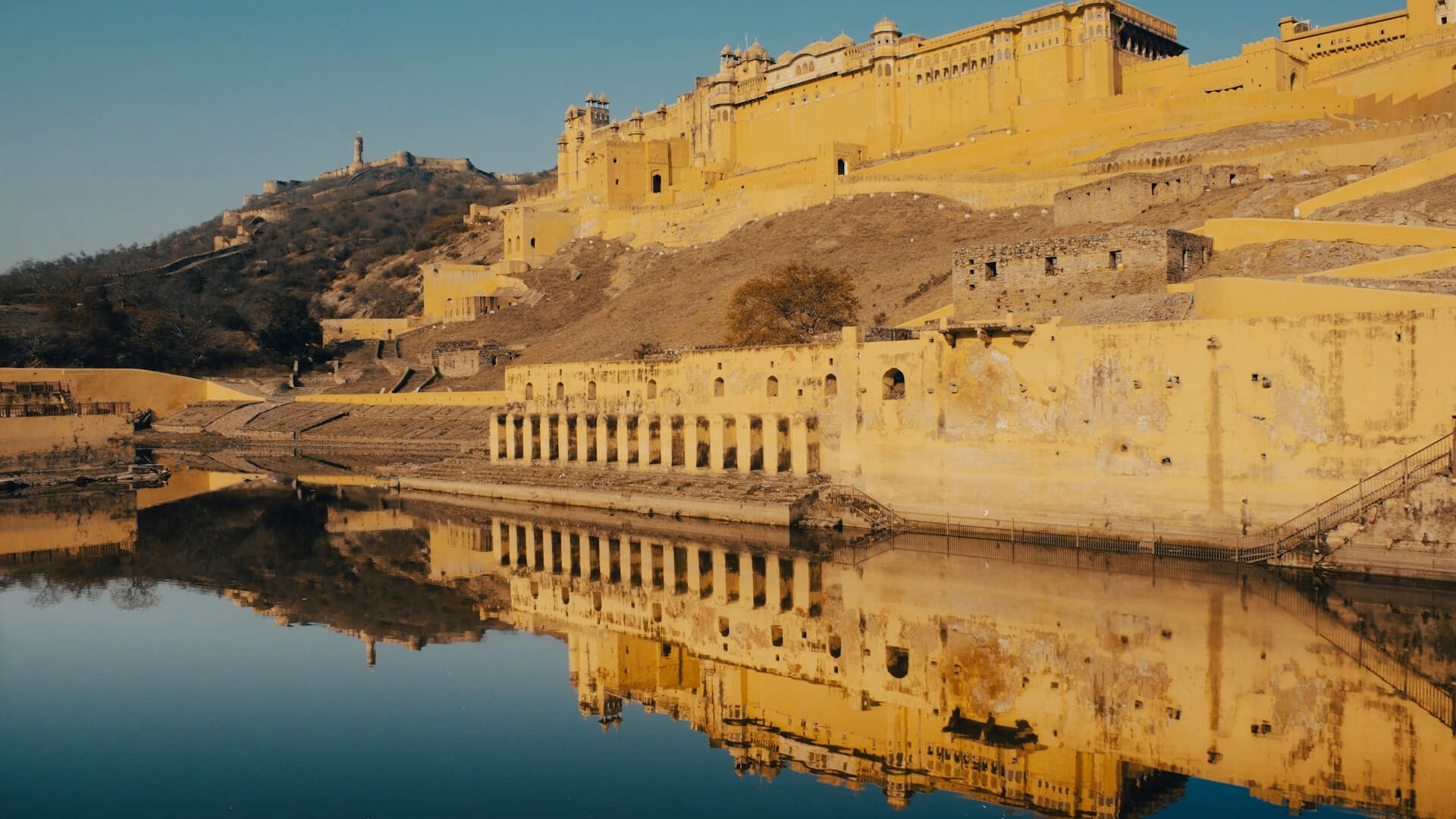
Amber Fort was declared a UNESCO World Heritage Site in 2013 under the collective designation "Hill Forts of Rajasthan" — a grouping that includes Jaisalmer Fort, Mehrangarh, Kumbhalgarh, and three other Rajput fortresses spread across the state.
Days 1–3: Jaipur — The Pink City, the Forts and the Right Order to See Them
Jaipur International Airport (JAI) receives direct flights from Delhi (55 minutes), Mumbai (1h 40min), and several international connections via Dubai and Doha. Search and book with FlyFlick — and before your departure, set a Compensair alert for up to €600 flight delay protection on any EU-connected legs. Rajasthan domestic routes in peak winter season (November–February) can be affected by northern India fog delays particularly on early morning flights.
Jaipur is a planned city — literally. Maharaja Sawai Jai Singh II laid it out on a grid in 1727, and the original old city (the Pink City, inside the old walls) still follows that grid today. The "pink" is not natural sandstone — it was painted terracotta pink in 1876 to welcome the Prince of Wales, Queen Victoria's son, on his India tour. The colour stuck. The city still repaints its old quarter periodically, and the current shade is closer to apricot in daylight than the deep salmon the photographs suggest.
Day 1: Arrive, settle in, walk to Hawa Mahal (Palace of Winds) at dusk. The entry for foreigners is ₹200 ($2.13 USD). The exterior shot of the five-storey pink honeycomb facade is taken from the café rooftop directly across Sirideori Bazaar Road — a fixed zoom position that every photographer uses because the building photographs poorly from any other angle. The interior is a maze of 953 small windows designed so the zenana (royal women's quarters) could watch street processions without being seen. Spend 45 minutes, not more. The Bazaar behind it has better shopping than Johri Bazaar — the shops between the Hawa Mahal and the Jantar Mantar entrance tend to have better price-to-quality ratios for silver and block-printed textiles.
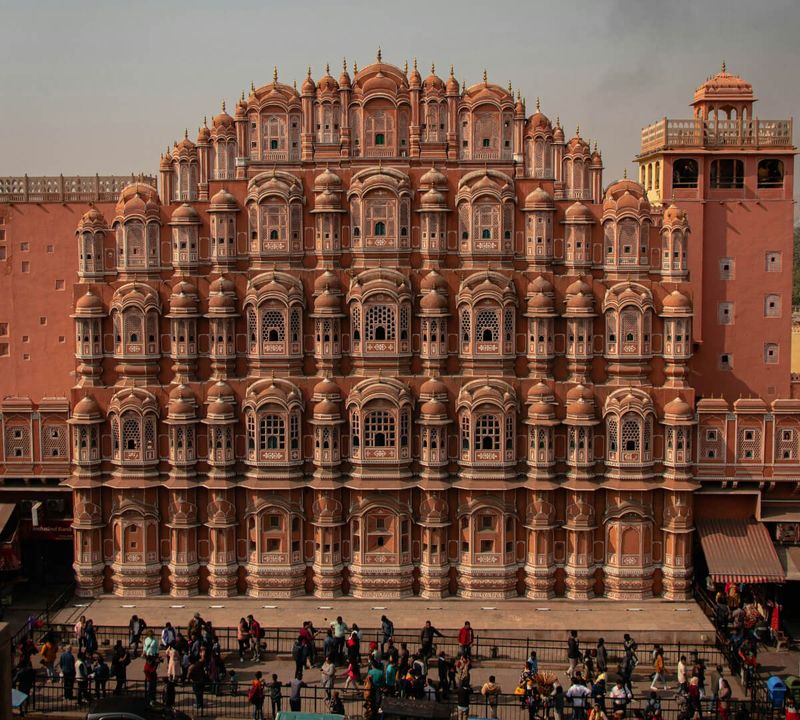
Hawa Mahal was built in 1799 by Maharaja Sawai Pratap Singh and was never intended as a palace — it is a facade with 953 windows, five storeys deep, and no more than a single room in width at its narrowest points, designed purely to allow the royal zenana to observe street festivals unseen.
Pre-book your airport transfer through GetTransfer — fixed fare, vehicle confirmed before you land, no negotiation at the taxi rank outside arrivals where touts operate with considerable persistence. The drive from JAI to central Jaipur takes 20–30 minutes depending on traffic.
Day 2: Amber Fort. Go at 8am when the gates open. Not 9am, not 10am — 8am. The Sheesh Mahal corridor (the Mirror Palace) is one of the most genuinely extraordinary spaces in Indian architecture — a vaulted ceiling of concave mirrors so dense that a single candle flame appears to multiply into a thousand. By 10:30am, 400 people are trying to stand in the same place. At 8am, it's you and the sound of pigeons. Entry for foreigners is ₹1,000 ($10.64 USD) per person as of the January 2026 revision. The Jaipur Composite Ticket at ₹1,500 ($15.96 USD) includes Amber Fort plus Jantar Mantar, Hawa Mahal, Albert Hall Museum, and four other monuments — better value if you're spending three full days.
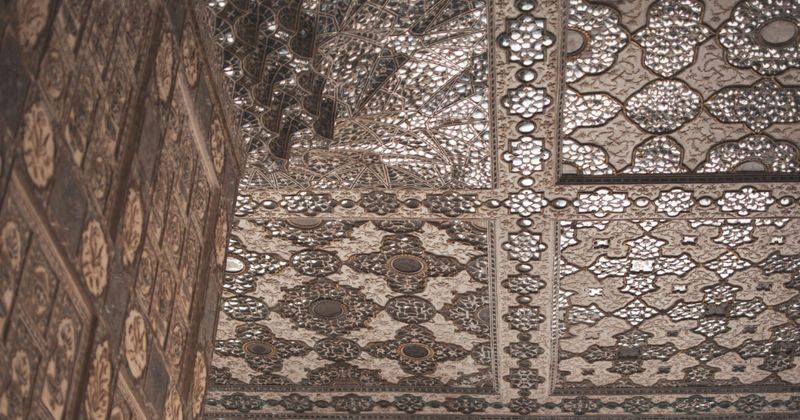
The mirrors in Sheesh Mahal are concave, not flat — they were sourced from Persia and Belgium in the late 17th century, and their curvature is what makes the light multiplication effect work; a flat mirror would simply reflect, while the concave surface fragments and scatters each flame into dozens of individual points.
Pre-book your Amber Fort entry through Klook — skip-the-queue entry with printed or mobile confirmation, especially useful on weekends from November to January when walk-up ticket lines can run 45 minutes. Book any licensed heritage walking tour of Amber through Klook as well — the fort has blind alleys, no signage in many sections, and the history of the Sheesh Mahal's construction (it took 25 years, the mirrors were imported from Persia and Belgium, and the ceiling was done entirely without scaffolding) requires a guide to make sense.
After Amber Fort, drive up to Jaigarh Fort (1km further on the same hill, ₹120 entry for foreigners) to see what Amber was actually defending — specifically Jaivana, the largest wheeled cannon in the world, 6.15 metres long, which has never been fired in battle. Then descend for sunset at Nahargarh Fort (₹200 foreigners), which sits on the Aravalli ridge above Jaipur and gives a 180-degree view of the walled city below at dusk. The city lights come on at about 6:15pm. This is when to be there.
Arrange Day 2 local transport through Intui.travel — the Amber–Jaigarh–Nahargarh triangle requires a vehicle for the hill sections and a driver who knows the one-way system around the fort approach road. An auto-rickshaw won't get you to Jaigarh.
Day 3: City Palace (₹700 foreigners, 9am–5pm) and Jantar Mantar (₹200 foreigners, 9am–4:30pm). These two are next to each other in the old city, walkable. City Palace is still partly occupied by the Jaipur royal family — the Chandra Mahal section with the royal apartments is not publicly accessible, but the museum section is exceptional for Mughal-era textiles and royal weaponry. Jaipur City Palace official site.
Jantar Mantar is one of five astronomical observatories built by Maharaja Jai Singh II between 1724 and 1730. The Samrat Yantra (the giant sundial) is 27 metres tall and accurate to within two seconds per day — better than any mechanical clock of its era by a significant margin. Allow 90 minutes with an audio guide (₹200).
For food across the three Jaipur days: Sanjay Omelette at Bapu Bazaar for the most chaotic, excellent breakfast situation in the city (₹40–₹80 per plate, cash only, open from 7am); Lassiwala on MI Road for the famous matka lassi that comes in a clay pot you smash after drinking — ₹60–₹80 per glass; Niro's on MI Road for a sit-down North Indian meal without tourist pricing.
Check Live Flight Prices
Days 4: Jaipur to Jodhpur — The Train You Should Take
The train from Jaipur to Jodhpur is the most efficient way to move between the two cities — 321 kilometres, 4h 15min to 5h 30min depending on the service, and trains run throughout the day. Book all Rajasthan train tickets through 12Go Asia — English interface, international card support, and your e-ticket downloads directly to your phone. No IRCTC account required, which saves 30 minutes of bureaucracy. Book 30–45 days ahead for peak season sleeper and AC seats.
The best daytime service is the Ranthambhore Express (12465), departing Jaipur at 17:00 and arriving Jodhpur at 22:20 — 5h 20min, good for an afternoon departure. Sleeper class from ₹200 ($2.13 USD); 3AC from ₹535 ($5.69 USD). The Vande Bharat Express (12461) is fastest at 4h 15min, Chair Car from ₹900 ($9.57 USD), no sleeper option. For a budget morning departure, the JP JU Express (22977) leaves Jaipur at 6am, arrives 11:10am, Sleeper from ₹160 ($1.70 USD) — giving you almost a full Day 4 in Jodhpur.
Book your Jodhpur arrival transfer through GetTransfer — the Jodhpur railway station (Jodhpur Junction, JU) is centrally located, about 10–15 minutes from Mehrangarh Fort, but station exit touts are active and persistent. A pre-booked fixed-fare pickup eliminates this entirely.
The train ride itself is pleasant if unremarkable — the landscape between Jaipur and Jodhpur transitions from Aravalli foothills to increasingly arid Marwar plains. You're crossing from the Jaipur district of Rajasthan into the Marwar region, which has its own dialect (Marwari), its own cuisine (dal bati churma, ker sangri), and a different architectural tradition (more sand-coloured, less marble) from the Jaipur court style.
Days 5–6: Jodhpur — Why Mehrangarh is the Best Fort in Rajasthan
Mehrangarh Fort is not the most famous fort in Rajasthan. It should be.
Standing 125 metres above the old city of Jodhpur, on a geological formation so dramatic that the Geological Survey of India has declared the hill itself a National Geological Monument, Mehrangarh was built by Rao Jodha in 1459 CE after he was exiled from the older capital of Mandore. The fort's walls are 6 to 36 metres high, chiselled from the same rock face they stand on, which makes the fort appear to grow from the hill rather than sit on it. The approach through seven gates — each commemorating a specific military victory — is the best fort arrival in all of Rajasthan. By the time you reach the Loha Pol (Iron Gate), the outer gateposts bear the handprints in red ochre of 15 queens who chose sati here. The prints are small. The realization of what they are takes a moment longer.
Entry for foreigners: ₹800 ($8.51 USD) including the audio guide — mandatory, and good. The audio guide is one of the best in India, narrated with genuine historical substance rather than promotional narration. The museum inside (Sheesh Mahal, Phool Mahal, Moti Mahal, the painting and textile galleries) represents one of the finest collections of Rajput royal artifacts in the country. Allow 3–4 hours minimum. Book your Mehrangarh Fort entry through Klook to avoid the walk-up queue, which at peak season (December–January) can run 45 minutes at the ticket window. On 12th May every year, entry is free for everyone to celebrate Jodhpur Foundation Day — the fort opened in 1459 on this date.
The view from Mehrangarh's cannon ports down over Jodhpur's old city is the famous one: the blue-washed houses of the Brahmin quarters packed into the valley below, the blue intended originally to repel insects (the lime content in traditional blue paint has natural pest-deterrent properties) and to signify Brahmin caste affiliation. Over time the colour spread across the city indiscriminately, and now it functions as a tourism brand. It is still genuinely beautiful.
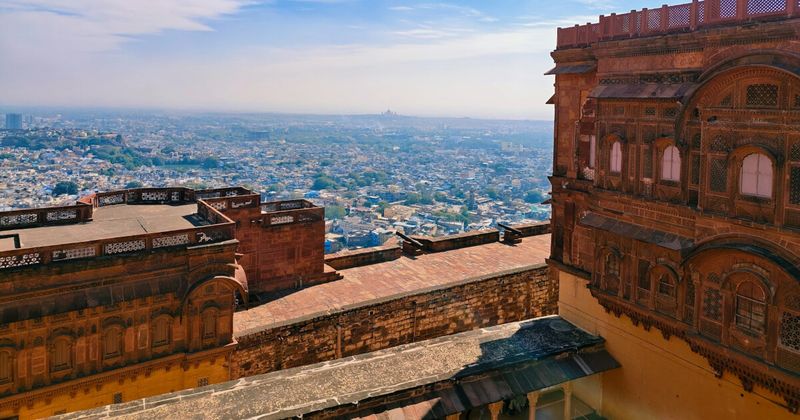
Mehrangarh Fort was built on a geological formation so distinctive that the Geological Survey of India designated the underlying hill itself as a National Geological Monument — the fort does not sit on the rock, it grows from it.
Spend the afternoon of Day 5 in the old city clocktower market (Ghanta Ghar) — one of Rajasthan's most genuine bazaar experiences. The kachori stalls near the clock tower base serve a mirchi kachori (a deep-fried pastry stuffed with spiced green chilli) that is specific to Jodhpur, made in no other city quite the same way, and costs ₹15–₹25 ($0.16–$0.27 USD) per piece. The spice market behind the clock tower sells Jodhpur's particular blend of ker sangri (desert berries and beans) dried and packaged — take some home.
Day 6: Spend the morning at Jaswant Thada (₹50 foreigners), a white marble cenotaph built in 1899 for Maharaja Jaswant Singh II, set on a hilltop with Mehrangarh visible behind it. It's called the "Taj Mahal of Marwar" in every tourism brochure, which oversells it, but the translucent marble panels glow in morning light in a way that earns at least 45 minutes. Then the Umaid Bhawan Palace Museum (₹100 foreigners) — part palace, part Taj Hotels property, part private royal residence, built between 1929 and 1943 using Art Deco styling with Rajput detailing. The vintage car collection in the basement is genuinely remarkable.
Day 7: Jodhpur to Jaisalmer — The Desert Train
The train from Jodhpur to Jaisalmer is 298 kilometres and takes 5–6 hours, running through the Thar Desert with a landscape that shifts from Marwar scrubland to deep desert over the course of the journey. The Swarna Nagari Express (12249) is the fastest — departs Jodhpur at 4:00am, arrives Jaisalmer at 9:00am, Sleeper from ₹215 ($2.29 USD), 3AC from ₹575 ($6.11 USD). The early departure is genuinely inconvenient, but arriving in Jaisalmer at 9am gives you a full day rather than a late arrival. Alternatively, the Ranikhet Express (15014) departs Jodhpur around 11am and arrives Jaisalmer at approximately 6pm — easier departure time, but loses half the day. Book through 12Go Asia.
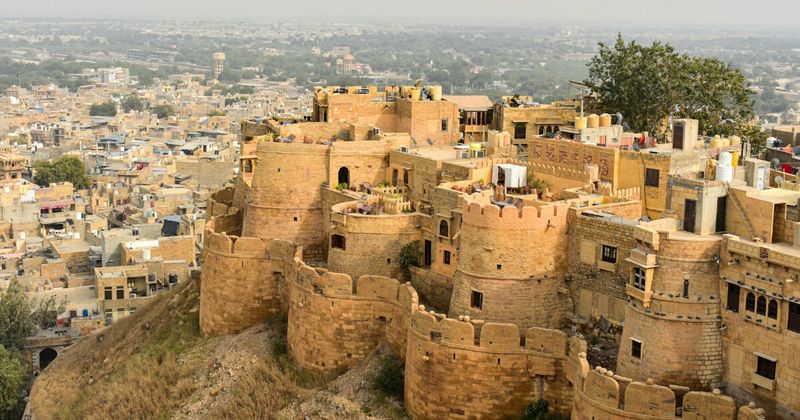
Jaisalmer Fort is built from local Jurassic-era dolomite limestone that contains fossilised marine shells — visible in polished cross-sections on some of the carved columns inside the Jain temple complex, evidence that this desert was once a shallow ocean.
Use Intui.travel for the Jodhpur day transfers — the Jaswant Thada and Umaid Bhawan are not walkable from central Jodhpur and local autos quote tourist rates. A pre-booked intercity transfer vehicle with driver for the full day (₹800–₹1,500 / $8.51–$15.96 USD) gives you a flexible schedule without negotiating at every stop.
The desert train is not the Konkan Railway. The views are flat, arid, and quietly compelling — the occasional desert village, a camel caravan far off the track, the light changing on the sand as the sun climbs. By the last hour before Jaisalmer, the golden sandstone of the fort is visible from the train window, rising from the flat plain. That's the arrival worth waiting for.
Book the Jodhpur-to-Jaisalmer transfer if you're not taking the train — Intui.travel covers the road route (290 km, approximately 5 hours by private car) — better for groups of three or four, where the per-person road cost approaches the train price but gives you flexibility to stop at Osian's ancient Jain temples (about 65km from Jodhpur, off the Jodhpur-Jaisalmer road, entry free, one of the most under visited archaeological sites in the state).
Arrive in Jaisalmer, check in to your guesthouse or haveli hotel in or near the fort, and do nothing else that evening except walk the fort. The late afternoon light on golden sandstone is what the "Golden City" name actually refers to — 5pm to sunset is when the fort walls glow most intensely. No photograph captures it. Be there.
Days 8–9: Jaisalmer — The Living Fort, the Havelis and the Desert Night
Day 8 in Jaisalmer follows a precise order that matters.
Start at the Jain Temples inside the fort complex, 7:30am, before the heat and before the tourists. There are seven interconnected Jain temples inside Jaisalmer Fort, built between the 12th and 15th centuries in white marble and yellowish sandstone. The level of carving — every column, every bracket, every ceiling panel covered in individual figures and narrative scenes — is comparable to anything in Rajasthan's more famous temples and is almost unknown to most first-time visitors. Entry to the Jain temples is free; the donation box at the entrance is not mandatory but worth ₹50–₹100 if you spend any real time inside.
Then walk the fort's lanes. This is not a structured activity — it is just walking. The lanes are narrow enough that two people can barely pass each other. The overhang design creates deep pools of shadow between 9am and 3pm. Residents are going about actual daily life: children heading to school through a 12th-century gate, a woman hanging laundry from a balcony carved with lotus flowers, a chai stall serving the same clay cup chai that the merchants on the Silk Road would have bought. The fort has approximately 3,000–4,000 permanent residents. One quarter of Jaisalmer's old city still lives inside the walls. This is what "living fort" means in practice.
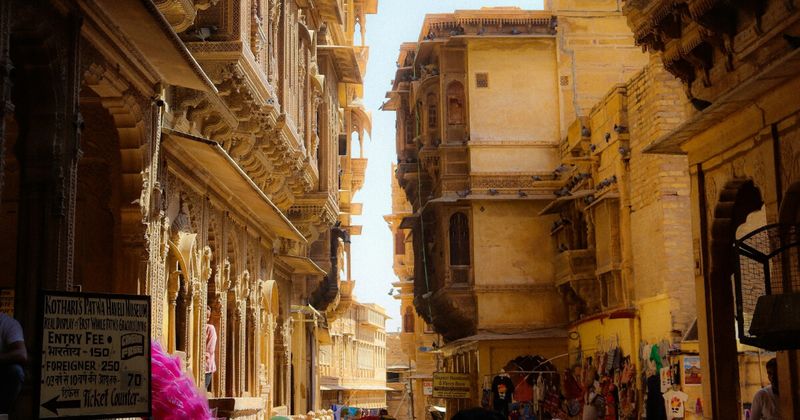
The permanent residential population of Jaisalmer Fort has fallen from around 10,000 in the mid-20th century to approximately 3,500–4,000 today, as families seek space and car access unavailable inside the ancient walls — yet it remains the only major fort in India where a significant portion of the old city's population still lives within the ramparts.
Patwon Ki Haveli (outside the fort, 9am–6pm, ₹200 foreigners) is the most elaborate of Jaisalmer's havelis — a complex of five interconnected mansions built by the Patwa family of silk and brocade merchants between 1800 and 1860. The facades carry 60 distinct jharokas (projecting bay windows) on the street elevation alone. Each window is unique. The ornamentation on the exterior took 55 years to complete, which is four years more than it took to build Mehrangarh Fort. Book a heritage walk through the Jaisalmer lanes and Patwon Ki Haveli via Klook — local guides add context that the ASI plaques don't, including the real reason the Patwa family abandoned the havelis mid-construction and never returned.
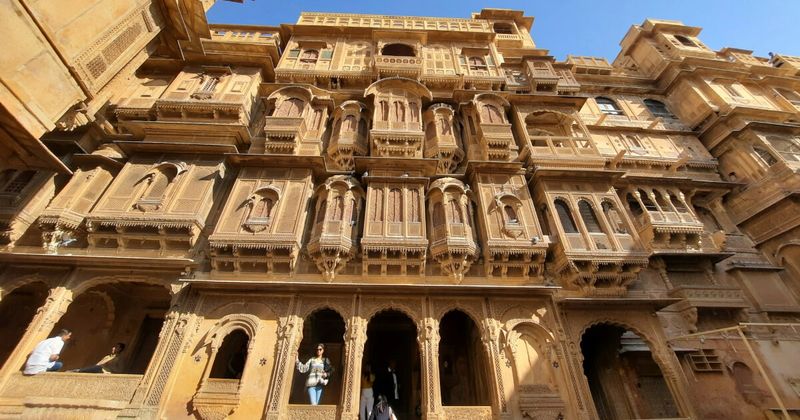
The five Patwa mansions were built by a family of silk and brocade merchants who traded across Central Asia and made Jaisalmer their base during the city's 18th-century commercial peak — the same trade routes that enriched the Patwas declined with the rise of Bombay's port and the end of overland Silk Road commerce.
Gadisar Lake (free entry, no time restriction) is the man-made reservoir at the city's edge, created by the first Maharawal of Jaisalmer in the 14th century specifically to supply water to the fort during sieges. Walk there for sunset — the ghats around the lake have several small temples and cenotaphs, and the fort visible above the water line turns the colour of fire in the last 20 minutes before dark.
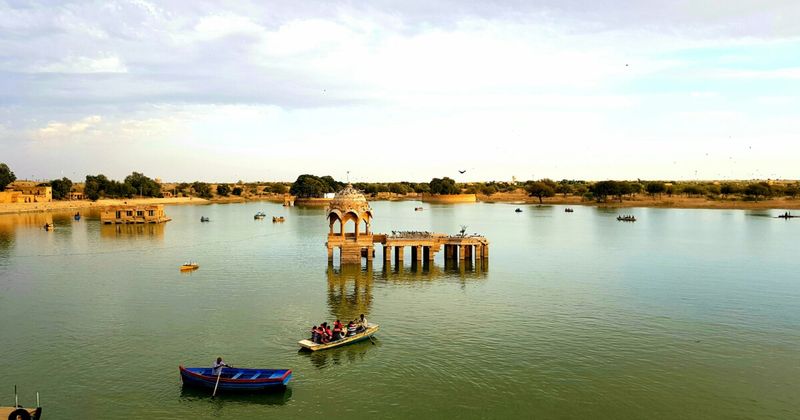
Gadisar Lake was dug by Maharawal Gadsi Singh in the 14th century specifically as a water security measure for the fort during sieges — the Indira Gandhi Canal now feeds it through a 400-mile channel, ensuring it never dries in the Thar Desert summer.
Day 9: The Thar Desert overnight camp.
The Sam Sand Dunes are 45 kilometres west of Jaisalmer, accessed by the NH-11. The Khuri dunes are 50 kilometres southwest — smaller, less commercial, more authentic. The honest choice: if you want camel rides, folk music, and a desert camp with service, Sam is better-organised. If you want genuine quiet and a longer actual camel trek through village territory, Khuri is worth the extra consideration.
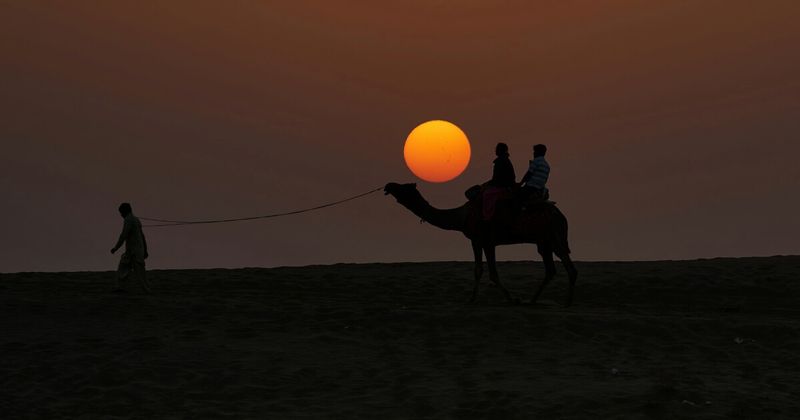
The camels used for Thar Desert safaris are dromedary (Camelus dromedarius), not the two-humped Bactrian camel — they are the same breed that formed the camel caravans of the medieval Silk Road, which passed through Jaisalmer Fort on the route from India to Central Asia.
Book the overnight desert experience through Klook — vetted operators, cancellation policy upfront, English-speaking guides. Prices for 2026: budget non-AC tent with dinner, breakfast, camel ride, and cultural performance from ₹2,500–₹3,500 ($26.60–$37.23 USD) per person. Mid-range AC Swiss tents ₹4,000–₹6,000 ($42.55–$63.83 USD). Luxury glamping ₹8,000–₹15,000+ ($85.11–$159.57 USD). For the Sam route, Intui.travel does the Jaisalmer-to-Sam transfer — pre-booked is cleaner than negotiating with waiting drivers at the fort gate, who serve the same route at roughly double the correct rate.
The camel ride itself is 45–60 minutes. A longer 2-hour trek costs ₹500–₹800 ($5.32–$8.51 USD) more. The camels used for tourist rides are dromedary (single hump) — the same breed that made the Silk Road function. The gait is rhythmic and deeply unglamorous for the first fifteen minutes, then becomes strangely meditative. The sunset from the dune ridge at Sam, on a clear November evening, is the thing postcards have been failing to capture for 40 years.
At night: the desert is cold after October. Bring a warm layer. The stars above the Thar are among the clearest in India — no city within 80 kilometres in any direction. The Milky Way is visible to the naked eye. The camp usually does a Rajasthani folk music and dance performance around the fire at around 9pm, with Manganiyar and Langa musicians who have been making this music for 30 generations. Sleep in the tent or sleep on a cot outside under the stars. The cot is colder. It's worth it.
Data drops to zero in the deep dune areas. Drimsim handles the patchy Thar Desert signal better than standard roaming SIMs — it auto-switches to whichever of the three Indian networks has coverage in any given spot. For Jaisalmer city and the fort area, Saily 5G eSIM is fine and has solid coverage. If Rajasthan is part of a longer multi-country trip through Pakistan border areas or continuing to Nepal, Yesim handles the broader data.
Day 10: Morning in the Desert, Return and Depart
Wake before the camp starts breakfast — 5:30am, before sunrise. The desert at this hour has a silence that the daytime doesn't. The sand is cool. The horizon is a deep blue-purple that transitions through orange to gold in about 20 minutes as the sun clears the dune line. No camel required. Just walk 200 metres from the camp to the dune ridge and sit down.
After breakfast, return to Jaisalmer by 9am. Most departures from Jaisalmer are by air (Jaisalmer Airport, JLR, has flights to Delhi and Jaipur via IndiGo and Air India), by overnight train back to Jodhpur, or by continuing south toward Udaipur if you're doing a longer Rajasthan circuit. Search the full return routing on FlyFlick — open-jaw options (fly into Jaipur, fly out of Jaisalmer) save you the return trip and are often the same price as round-trip from Delhi.
The Jaisalmer to Delhi overnight trains are practical — the Delhi Sarai Rohilla–Jaisalmer SF Express route returns via Jodhpur and Jaipur. If you're extending into our 2 Weeks in India itinerary, the Rajasthan circuit connects cleanly into Agra, Delhi, and Varanasi from Jaipur. For the wider India context — how Rajasthan fits into a North-South circuit — our 3 Weeks in India guide builds this route into a complete loop that ends in Goa.
Set Compensair for the return flight — Jaisalmer–Delhi and Jaipur–Delhi routes are among those most commonly delayed in December–January fog season.
What to Skip on This Rajasthan Route
The elephant ride at Amber Fort. The mahouts run these rides at the lower fort entry path, and the animals are visibly distressed in peak-season conditions. Since 2018, the Supreme Court of India and multiple NGOs have documented welfare concerns at Amber specifically. Jeeps cover the same route in less time and no ethical conflict. Pre-book the jeep through Klook if you want to avoid the walk.
The ghost town of Kuldhara. Every Jaisalmer tour operator will offer this — a "haunted abandoned village" 18 kilometres from the city. The ghost story was invented by the tourist board in the 2000s. The actual ruins are fairly minimal, and the 45-minute round trip leaves you with 45 fewer minutes in Jaisalmer Fort, which is where you should be.
The Sam Sand Dunes at peak tourist time (3pm–5pm on weekends). This is when every Jaisalmer hotel organises a sunset jeep safari. The dunes fill with music, smoke from generators, and 400 tourists simultaneously attempting the camel silhouette photograph. Go earlier (arrive by 2pm) or later (after 6pm when most tour groups have left for dinner) and the same dunes are a different experience entirely.
Jaisalmer in May or June. The Thar Desert in summer reaches 48–50°C. The fort lanes provide shade but no real relief above 40°C. The desert camp experience is not recommended when the ground temperature at night is still 35°C. The ideal window is October to February. March and early April are still manageable. May is genuinely dangerous for outdoor activity.
The fake gem shops around Amber Fort. A consistent Rajasthan scam targets tourists in the Amber area with offers to "invest in gems" that can be resold at profit in your home country. They can't. Our India travel scams guide covers the exact script used and the right response. Read it before you land.
Pace and Burnout: Managing 10 Days in the Desert Heat
Rajasthan in peak season (November–January) is not hot — daytime temperatures run 15–25°C, evenings require a light jacket, and mornings at Amber Fort are genuinely cold at 8am. This is the easy time.
Rajasthan in shoulder season (March–April) is warm to hot — 28–38°C — and requires earlier starts (7am instead of 8am) and midday breaks of 90 minutes minimum. The forts are better in this window because the crowds thin dramatically.
The most physically demanding day on this itinerary is Day 9 — the overnight desert camp has a 5:30am wakeup, a full previous day of Jaisalmer sightseeing, and the camp's evening activities running until 10:30pm. Don't plan anything strenuous on Day 10 morning.
Three nights minimum per city is the right allocation. Two nights in Jodhpur or Jaisalmer feels rushed — you spend the first afternoon recovering from travel, leaving only one full day, which isn't enough for either Mehrangarh or the combination of fort-plus-Gadisar-plus-desert. The budget-focused instinct to move faster to "see more" actively reduces what you experience in each place.
If you have 12 days instead of 10, the extra two nights split between Jodhpur (Day 6 extension: the Osian temples, 65 km north, and Mandore Gardens) and Jaisalmer (an extra fort morning plus a longer non-touristic camel trek via Khuri). If you have 8 days, cut one Jaipur day — Day 3 can be compressed or removed if you've already seen City Palace and Jantar Mantar elsewhere in India.
Check Live Flight Prices
10-Day Rajasthan Budget Breakdown
| Expense | Budget | Mid-Range | Splurge |
|---|---|---|---|
| Accommodation (10 nights) | ₹8,000–₹14,000 ($85–$149) | ₹25,000–₹50,000 ($266–$532) | ₹80,000+ ($851+) |
| Food (10 days) | ₹4,000–₹7,000 ($43–$74) | ₹12,000–₹20,000 ($128–$213) | ₹30,000+ ($319+) |
| Airport transfers (both ends) | ₹1,500–₹2,500 ($16–$27) via GetTransfer | ₹3,000–₹5,000 ($32–$53) | ₹8,000+ ($85+) |
| Jaipur → Jodhpur train | ₹160 Sleeper ($1.70) | ₹535 3AC ($5.69) | ₹1,390 2AC ($14.79) |
| Jodhpur → Jaisalmer train | ₹215 Sleeper ($2.29) | ₹575 3AC ($6.12) | ₹1,190 2AC ($12.66) |
| Amber Fort entry (foreigner) | ₹1,000 ($10.64) | ₹1,000 ($10.64) | Composite ₹1,500 ($15.96) |
| Mehrangarh Fort entry (foreigner) | ₹800 ($8.51) | ₹800 ($8.51) | ₹800 ($8.51) |
| Patwon Ki Haveli (foreigner) | ₹200 ($2.13) | ₹200 ($2.13) | ₹200 ($2.13) |
| Overnight desert camp (per person) | ₹2,500–₹3,500 ($26.60–$37.23) | ₹4,000–₹6,000 ($42.55–$63.83) | ₹10,000+ ($106.38+) |
| Day transfers (Intui.travel) | ₹4,000–₹6,000 ($43–$64) | ₹8,000–₹12,000 ($85–$128) | ₹15,000+ ($160+) |
| Experiences via Klook | ₹1,000–₹2,000 ($10.64–$21.28) | ₹3,000–₹6,000 ($31.91–$63.83) | ₹10,000+ ($106.38+) |
| Travel insurance | Visitors Coverage from ~$15 | Visitors Coverage from ~$15 | Visitors Coverage from ~$15 |
| 10-day total per person (approx) | ₹23,000–₹39,000 ($245–$415) | ₹58,000–₹1,00,000 ($617–$1,064) | ₹1,60,000+ ($1,702+) |
Prices verified March 2026. INR/USD at ₹94 = $1 USD. Excludes international flights. All INR prices are the reliable figures; USD equivalents are approximate — check current exchange rate before budgeting. Prices in India can vary. Add a note to your itinerary: exchange rates move, and the INR prices here are what matter.
The Bottom Line
Rajasthan rewards slowness. The Sheesh Mahal at 8am, before it becomes a corridor of selfie sticks. The Mehrangarh view at 4pm when the light catches the blue city at precisely the right angle and you understand, for the first time, why someone built a fort on this exact hill. The desert at 5:30am when you walk to the dune ridge in the cold and watch the sun arrive. These are all things that require you to be in the right place at the right time, which requires planning specific enough to get you there and loose enough to let you stay.
Ten days is the right length for this route. Not because it fits the itinerary — any itinerary fits whatever you give it. Because Jaipur, Jodhpur, and Jaisalmer each have something that can only be reached on the second or third day: the museum room you missed, the lane you didn't turn into, the morning light you slept through the first time. You need three nights per city to have one genuinely unhurried day in each one.
Go to the fort. Wake up early. Stay later than you planned. Come back with more questions than when you arrived.
Your Rajasthan Trip Planning Checklist
Every item on this list is easier to sort at home than inside a 12th-century fort. Sort it before you board.
🛡️ Travel Insurance — First, Always: VisitorsCoverage — Compare plans; minimum $100K USD medical + emergency evacuation cover; 10-day Rajasthan policies from $15–40 USD depending on age and plan. Medical costs in India for a motorbike accident or dehydration hospitalisation run ₹30,000–₹2,00,000 before a specialist sees you. Non-negotiable. Sort before flights, accommodation, or anything else.
✈️ Flights & Delay Protection: FlyFlick — Compare flights into Jaipur (JAI) and search open-jaw options flying out of Jaisalmer (JLR) or Jodhpur (JDH) — saves returning to Jaipur and often prices the same | Compensair — Claim up to €600 for delayed or cancelled flights; Rajasthan winter routes via Delhi are among the most fog-affected in India; December–January EU-connected legs are especially worth protecting.
🚖 Airport & City Transfers: GetTransfer — Pre-booked fixed-fare transfers at Jaipur airport on arrival and Jaisalmer/Jodhpur airport on departure; vehicle class and driver confirmed before payment, zero arrival-hall negotiation with touts | Intui.travel — All within-Rajasthan intercity road transfers: Jodhpur day sightseeing vehicle, Jaisalmer to Sam Sand Dunes desert camp (45 km), Jaisalmer day transfers; fixed rates, professional drivers.
🚂 Trains — Book 30–45 Days Ahead: 12Go Asia — Book all internal Rajasthan train journeys in English with your international card; Jaipur → Jodhpur Sleeper from ₹160 (4h 15min Vande Bharat), Jodhpur → Jaisalmer Sleeper from ₹215 (5 hrs). Book 30–45 days ahead for peak season (October–February). Tatkal (last-minute) adds 30–50% to base fare.
🎟️ Experiences to Pre-Book: Klook — Amber Fort skip-the-line entry ₹1,000 (saves 45-minute queues on peak weekends); jeep ride replacement for elephant at Amber ₹250–₹400; Mehrangarh Fort skip-the-line ₹800; Sam Sand Dunes overnight desert camp from ₹2,500/person all-in including camel ride, folk music, dinner and breakfast; Jaisalmer heritage walking tour including Patwon Ki Haveli. All with cancellation policies visible before booking.
📱 Connectivity: Saily — City 5G eSIM; activate before boarding, covers Jaipur, Jodhpur, and Jaisalmer city and fort area well | Drimsim — Off-grid eSIM; auto-switches between networks in Sam Sand Dunes and Khuri desert areas where standard SIMs lose signal entirely | Yesim — Unlimited data eSIM for multi-country trips continuing beyond India from Rajasthan.
Go to the fort. Wake up early. The Sheesh Mahal at 8am waits for no one.