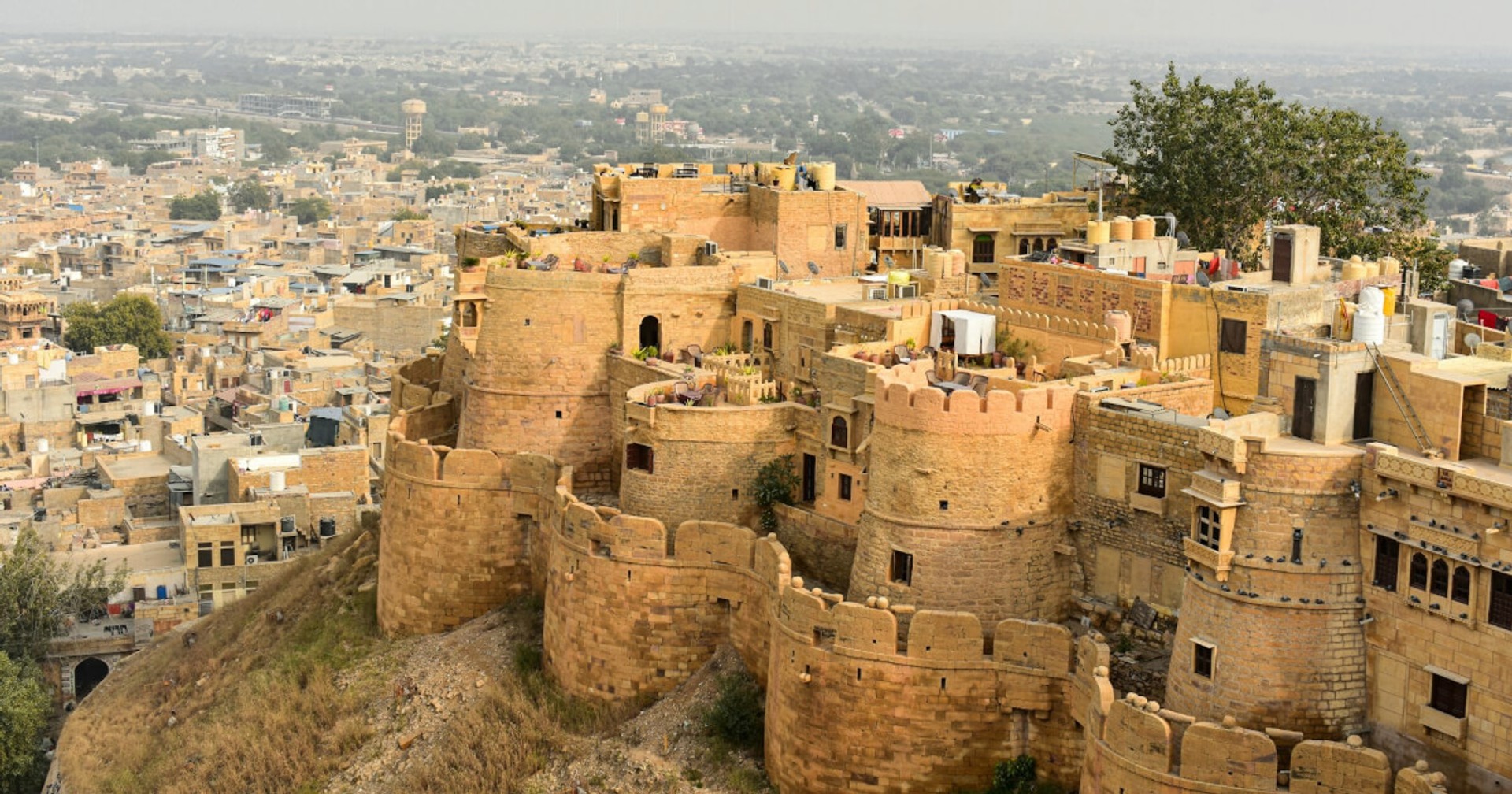

Every India travel forum has a variation of the same thread. Someone is going to India for the first time. They have 10 days. They want to do Delhi, Agra, Jaipur, Varanasi, Kerala, and Goa. They've already booked the international flights. The replies are 40 comments of politely worded collective panic from people who have done all six of those places separately and cannot imagine doing them in a sequence.
The panic is earned. Delhi to Goa is 2,000 kilometres. Delhi to Kerala is 2,800. A 10-day trip that attempts both requires four internal flights, seven hotel check-ins, and a daily pace that turns India into an airport with occasional monuments. You will arrive home having seen the front of six things and remembered none of them in particular.
Ten days in India is genuinely enough time for a complete and deeply satisfying trip. It is enough for one of India's best circuits — enough to slow down in the right cities, eat the food that requires more than 45 minutes to appreciate, and leave the country understanding something real about it. It is not enough to feel India in six different climatic zones across four cultural regions.
This guide makes one argument: pick one circuit and do it fully. Then it explains which circuit deserves those 10 days and exactly how to run it.
Sort VisitorsCoverage travel insurance before anything else on this page. Ten days in India across multiple states and transport modes — train, auto, walking in heat — makes medical coverage non-negotiable. Policies from approximately $18–35 USD. EKTA offers a second comparison option from $0.99/day at ektatraveling.com — fully digital, 24/7 multilingual support, worldwide coverage. Compare both and choose before booking your international flights.
The Problem With Most 10-Day India Itineraries
The standard problem isn't bad taste. It's ambition meeting arithmetic.
Ten days in India, honestly counted: you arrive on Day 1 and lose the afternoon. You depart on Day 10 and lose the morning. That leaves 8 full days — approximately 64 hours of actual sightseeing time, minus meals, minus transit, minus the half-day Agra takes longer than expected. Factor in one delayed train (statistically guaranteed) and one day where the heat or the pace requires you to simply sit somewhere and drink chai and not look at another fort. You have 7 good days.
Seven good days is enough for five cities if those cities are on a coherent geographic circuit with no backtracking, connected by direct trains, and each offering 1.5–2 full days of genuine content. It is not enough for five cities in three different regions of a country the size of Europe.
The secondary problem is that most 10-day India itineraries are written by aggregators padding word count with cities rather than by people who have planned these trips and watched tourists miss their trains. The itinerary that lists "Delhi–Agra–Jaipur–Udaipur–Mumbai–Goa" in 10 days has not accounted for the fact that Mumbai to Udaipur requires either a 14-hour train or an internal flight, and that Udaipur to the Rajasthan circuit requires a 3-hour drive, and that none of this is possible if your Jaipur connection was delayed.
The route that handles all of this is the one that goes in one direction, uses one transport mode, and never requires you to backtrack.
The 10-Day Decision Framework
Before the recommended route, here are the three honest options for 10 days in India. Choose based on what you actually want — not what sounds most impressive to describe afterward.
Option A: The North India Rajasthan Circuit (Delhi → Agra → Jaipur → Jodhpur → Jaisalmer). Best for: first-time visitors who want India's landmark monuments, historical architecture, desert landscape, and maximum landmark density per day. All connected by direct trains. One climate zone. No internal flights required.
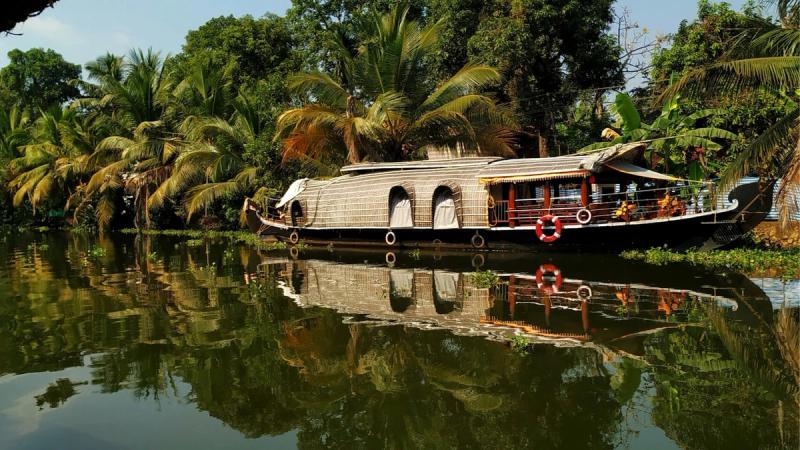
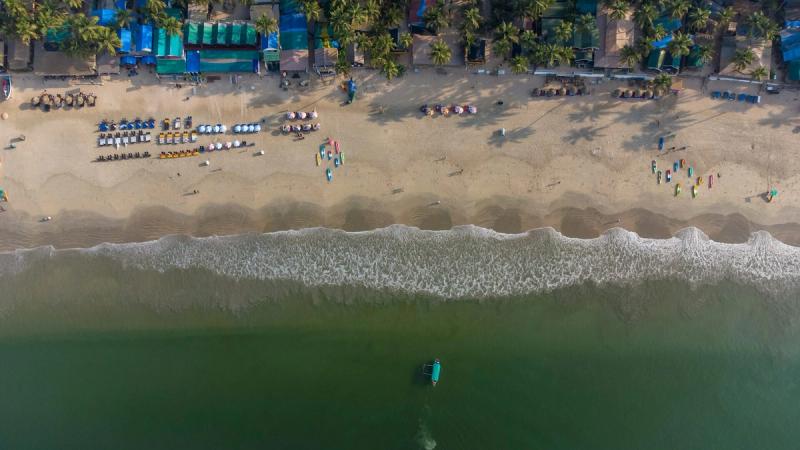
Option B: South India (Kerala + Goa). Best for: travellers who want beaches, backwaters, temples, and a gentler introduction to India. Fly into Kochi, spend 5 days in Kerala, fly or train to Goa for 4 days, fly home from Goa. Two flights total. Requires less logistical intensity than the Rajasthan circuit. Our Kerala 7-Day guide and Goa Beyond the Beach guide together form the South India reference.
Option C: The Split (North India 5 days + South India 5 days, connected by an internal flight). This is theoretically possible. It requires one internal flight, two completely different pace adjustments, and accepts that you'll see both regions shallowly rather than either one properly. Not recommended for a first India trip. Recommended for people on their third or fourth visit who specifically want to compare.
The rest of this post focuses on Option A. Not because it's the only answer, but because for most international first-timers on a 10-day window, the Rajasthan circuit delivers more complete experiences per day than any other route in India.
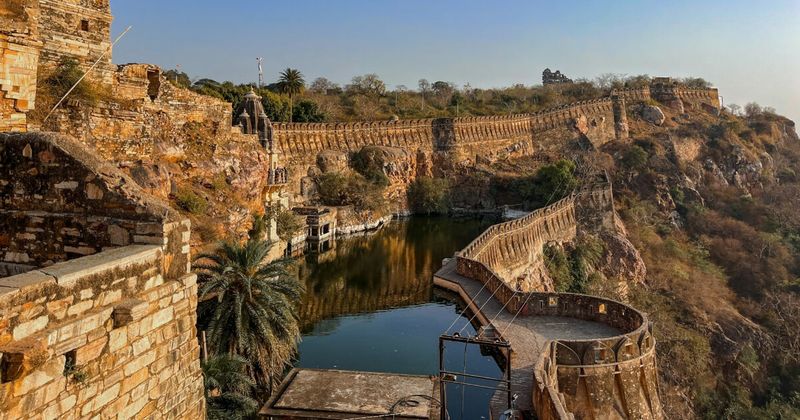
Rajasthan covers 342,000 square kilometres — larger than Germany — and is the largest state in India by area; the circuit from Delhi to Jaisalmer traverses only the eastern and central portion of the state, which means even the "complete" Rajasthan circuit described in this guide represents less than half of the state's total territory and leaves Udaipur, Jodhpur's western reaches, and Bikaner entirely for a return trip.
The Recommended Route: Delhi → Agra → Jaipur → Jodhpur → Jaisalmer
This is not a novel itinerary. It has been the standard North India circuit for 40 years, and it became standard for good reasons: the five cities are connected in a geographic straight line from northeast to southwest, each city is architecturally and culturally distinct, the train connections are reliable and bookable in advance, and the sequence builds logically — each stop is a slightly different version of Rajasthan, progressively more desert and less city.
What this guide adds is the honest calibration: how many days each city actually deserves, where most 10-day itineraries compress too much or extend too long, and what to cut if something falls behind schedule.
| Day | City | Focus | Train |
|---|---|---|---|
| 1 | Delhi | Arrive, Old Delhi, rest | — |
| 2 | Delhi | New Delhi monuments | — |
| 3 | Agra | Gatimaan Express, Taj Mahal, Agra Fort | 8:10am DEL→AGC, 1h 40min |
| 4 | Jaipur | Arrive + afternoon | Agra→Jaipur, 3.5–4h |
| 5 | Jaipur | Amber Fort, Old City full day | — |
| 6 | Jodhpur | Arrive + Mehrangarh afternoon | Jaipur→Jodhpur, 4h 15min–5h |
| 7 | Jodhpur | Blue City lanes, Mandore | — |
| 8 | Jaisalmer | Arrive + Golden Fort afternoon | Jodhpur→Jaisalmer, 5–6h |
| 9 | Jaisalmer | Sam dunes overnight camp | — |
| 10 | Depart | Fly Jaisalmer (JSA) or Jodhpur (JDH) → Delhi → home | — |
Getting In and Getting Around
Fly into Delhi Indira Gandhi International Airport (DEL). Search and book on FlyFlick — Delhi receives direct connections from London, New York, Toronto, Sydney, Singapore, Dubai, and Doha. Set a Compensair alert before departure — Delhi in December–January fog season produces some of India's most delayed flights, and EU-connected return legs carry €600 compensation eligibility.
Book your DEL arrival airport transfer through GetTransfer or KiwiTaxi — both confirmed for Delhi IGI with fixed-fare pre-booked vehicles. KiwiTaxi specifically covers the Delhi Airport → Agra and Delhi ↔ Jaipur routes if you prefer road over rail for the first or last leg. Neither option requires negotiation at the airport exit — which in Delhi at 2am after a 12-hour flight is worth considerably more than the marginal cost.
All intercity trains on this route: book through 12Go Asia using your international card. Book 3–4 weeks ahead — the Gatimaan Express to Agra and the Vande Bharat to Jodhpur fill quickly, particularly October–February. Tatkal (last-minute) booking as of July 2025 requires Aadhaar authentication, which foreign nationals cannot complete — planning ahead is not optional.
Activate Saily 5G eSIM before boarding. It covers Delhi, Agra, Jaipur, and Jodhpur city areas well. For Jaisalmer and the Sam dunes area, signal drops to near-zero — Drimsim auto-switches between networks and handles Rajasthan's patchy desert coverage better than single-carrier roaming. In the desert, don't count on maps. Ask your camp driver.
Days 1–2: Delhi — The Entry Point That Doesn't Ask to Be Rushed
Two nights in Delhi is the right allocation for this circuit. One night is too little — you arrive exhausted on Day 1 and attempt too much. Three nights begins to feel like a separate Delhi trip competing with the Rajasthan circuit you came for.
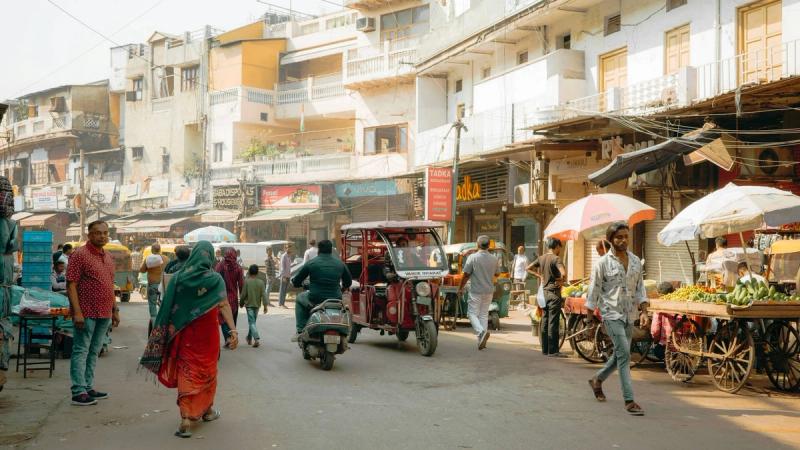
Day 1 evening: Arrive, transfer to your hotel, and do only one thing — walk to Chandni Chowk in Old Delhi at dusk. The 17th-century market district requires no planning and no booking. Take the metro from your hotel to Chandni Chowk station (Yellow Line). Walk the market lane from the station toward the Red Fort gate. Eat at Karim's (in a lane directly opposite Jama Masjid — Mughal-recipe seekh kebab since 1913, ₹200–350/$2.13–3.72 USD per dish). Return to the hotel. Sleep.
Day 2: The Red Fort (₹550/$5.85 USD for foreigners — closed Mondays, 9:30am–4:30pm), Jama Masjid (free courtyard, ₹300/$3.19 USD minaret climb), and Humayun's Tomb (₹600/$6.38 USD — open daily) form the essential Delhi sequence. These three, done in order from morning to afternoon, cover the Mughal architectural arc from 1638 (Red Fort) to 1656 (Jama Masjid) to 1562 (Humayun's Tomb, which preceded both the Red Fort and Taj Mahal as the template for Mughal garden-tomb architecture). They're each 2 kilometres apart. Pre-book through Klook.
Evening: Lodhi Garden — the 90-acre park where 15th-century Mughal tombs stand in flowerbeds between jogging tracks, free, open from 6am. The cognitive whiplash of ancient royal mausoleums next to a café selling avocado toast is peak Delhi.
Delhi airport transfer to Hazrat Nizamuddin station for Day 3: Book in advance with GetTransfer or Intui.travel. The Gatimaan departs at 8:10am — leave your hotel by 7:00am at the latest. Nizamuddin station is in South Delhi, not near most tourist accommodation. Build in time.
Our full Delhi in 3 Days guide covers the city in depth if you have extra time before or after this circuit.
Day 3: Agra — The Alarm You Set at 5am Is the Reason You're Here
The Gatimaan Express (train 12050) departs Hazrat Nizamuddin at 8:10am and arrives Agra Cantonment at 9:50am. The fastest domestic train in India. Chair Car (CC) from ₹690–750 ($7.34–7.98 USD); Executive Class with included meals from ₹1,125–1,365 ($11.97–14.52 USD). Book on 12Go Asia. Not on Fridays.
Critical note: The Gatimaan departs from Hazrat Nizamuddin station, not New Delhi or Old Delhi station. These are different stations 10 kilometres apart. Write it down. Tell your taxi driver "Nizamuddin station," not "New Delhi station." This distinction has destroyed more Agra mornings than any other single logistical failure.
From Agra Cantonment, book your station-to-hotel transfer in advance through KiwiTaxi — confirmed for Agra Cantt arrivals, with pre-booked fixed fare. Agra station exits are negotiation-heavy; a pre-confirmed driver is worth it.
The Taj Mahal — arrive at the gate by 10am. Foreign nationals: ₹1,100 garden entry + ₹200 mausoleum interior access = ₹1,300 total ($13.83 USD). Children under 15: free. The Taj is closed on Fridays — plan your Agra day accordingly. Buy sunrise-slot tickets in advance through Klook; they sell out 48–72 hours ahead in October–February. If you cannot get a morning slot, the afternoon (3pm–5pm) in angled light is the second-best option.
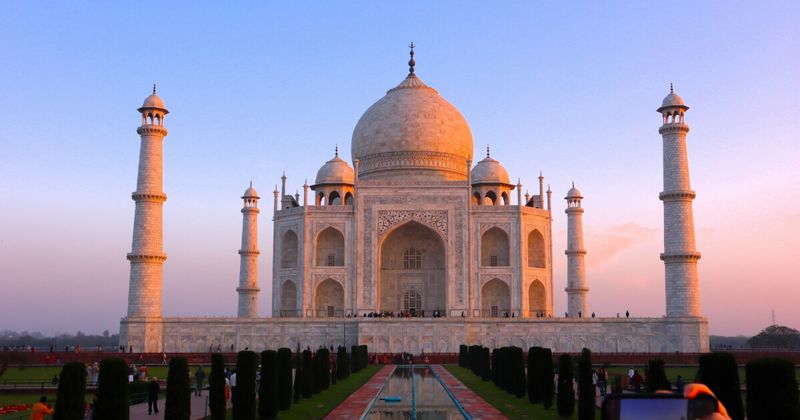
The Taj Mahal's white marble was quarried from Makrana in Rajasthan, 400 kilometres from Agra, and transported by a purpose-built 15-kilometre ramp of packed earth; the marble panels are not pure white but change colour with the light — ivory at dawn, white at noon, pale gold at sunset, and silver under a full moon — a property the Mughal architects understood and designed the monument around.
The specific detail most guides miss about the Taj Mahal: the four minarets lean slightly outward, not inward. This was deliberate structural engineering — if any minaret ever fell, the lean ensures it falls away from the main tomb. The 17th-century architects solved a structural engineering problem with a solution so subtle it went unnoticed for 350 years.
Agra Fort (₹650/$6.91 USD, 2.3km from the Taj) in the afternoon. The fort's Musamman Burj tower has a direct sightline to the Taj Mahal — Shah Jahan is said to have spent his last years imprisoned here by his own son Aurangzeb, gazing at the mausoleum he built for his wife from across the river.
Overnight in Agra. Budget hotels near the Taj: ₹2,000–3,500 ($21.28–37.23 USD). Midrange: ₹4,000–8,000 ($42.55–85.11 USD).
Days 4–5: Jaipur — Two Nights Is the Minimum, Not the Maximum
Agra to Jaipur: approximately 240 kilometres, 3.5–4.5 hours by train or road. Several express trains run daily — the SF Express (12983, departs Agra 13:00, arrives Jaipur ~17:00), with Chair Car from ₹300–₅00 ($3.19–₅.32 USD). Alternatively, road via KiwiTaxi for the confirmed Agra→Jaipur fixed-fare intercity route — useful if your Agra sightseeing runs into the afternoon and you'd prefer flexibility. Book trains on 12Go Asia.
Day 4 afternoon: Check in, walk the Hawa Mahal at golden hour (₹200/$2.13 USD, the five-storey Palace of Winds with 953 latticed windows — best photographed from the rooftop café across Sirideori Bazaar Road at 5pm). Dinner at LMB (Laxmi Misthan Bhandar) on Johri Bazaar — vegetarian Rajasthani thali including dal baati churma and pyaaz kachori, the best regional food introduction in the city, ₹200–₄00 ($2.13–₄.26 USD) per person.
Day 5: Amber Fort, 8am. Be at the gate when it opens. Foreign nationals: ₹1,000 ($10.64 USD, January 2026 revised rate). The Jaipur Composite Ticket (₹1,500/$15.96 USD) covers Amber plus Jantar Mantar, Hawa Mahal, Albert Hall Museum, and three additional sites over two consecutive days — worth it if you're spending more than one full day. Pre-book through Klook.
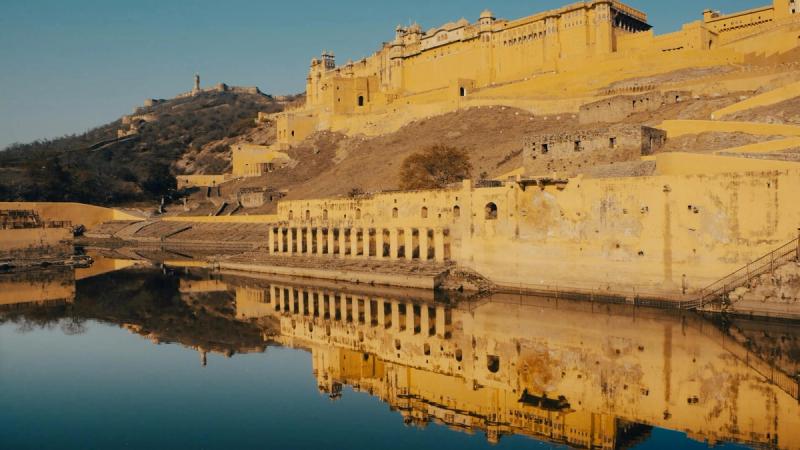
Amber Fort contains what many architecture historians consider the single most technically complex stone surface in Rajasthan — the Sheesh Mahal ceiling, composed of thousands of individually cut mirror-glass pieces set into plaster, was designed to reflect a single candle flame into the illusion of a sky full of stars; the effect was intended for the Maharaja's private audience chamber and has never been replicated at comparable scale anywhere in India.
Amber Fort at 8am — the Maota Lake below the fort is still, the honey-gold walls reflecting in the water, the first tourists not yet arriving from their hotels. By 10am, the Sheesh Mahal corridor (the mirror palace interior — arguably the most extraordinary single room in Rajasthan) becomes a 400-person queue. At 8am, you walk through it with a handful of people. This is not a minor difference. It changes the visit entirely.
After Amber: Jaigarh Fort (₹120/$1.28 USD) on the hill above — the Jaivana cannon, the largest wheeled cannon ever manufactured, never fired in battle. Jantar Mantar (₹200/$2.13 USD) — the 18th-century astronomical observatory with instruments accurate to within 2 seconds, including a 27-metre sundial. City Palace (₹700/$7.45 USD including museum). These three are walkable or auto-accessible from each other in the afternoon.
Book Day 5's Jaipur sightseeing vehicle through Intui.travel — a full-day fixed-fare driver for the Amber–Jaigarh–old city circuit removes the auto-negotiation overhead that adds 30 minutes to every stop.
Days 6–7: Jodhpur — The Blue City That Was Blue Before It Was a Photograph
Jaipur to Jodhpur: the Vande Bharat Express (26482) departs Jaipur at 19:05, arrives Jodhpur at 23:20 — 4 hours 15 minutes, Chair Car from ₹800–1,200 ($8.51–12.77 USD). The JP JU Express (22977) departs 06:00, arrives 11:10 — 5 hours 10 minutes, Sleeper from ₹160 ($1.70 USD). Book on 12Go Asia. The morning express gives you a full Day 6 afternoon in Jodhpur; the evening Vande Bharat is faster but arrives late, meaning Day 6 is a hotel check-in.
Either works for this itinerary. The morning train is marginally better because it gives you Mehrangarh Fort in the afternoon of Day 6 — which is the correct order to see Jodhpur (fort first, then the city below makes sense, which is the opposite of most visitor sequences).
Mehrangarh Fort. Entry for foreigners: ₹800 ($8.51 USD) — confirmed 2026 rate, includes museum access and audio guide. Open 9am–5pm daily. Built in 1459 by Rao Jodha on a sheer 125-metre cliff above the city, Mehrangarh is by most reasonable assessments the most dramatic fort in India. The walls in places reach 36 metres. The rampart views over the old city — the blue-painted rooftops of Jodhpur spreading to the horizon below — are the most photographed urban vista in Rajasthan. Pre-book through Klook.
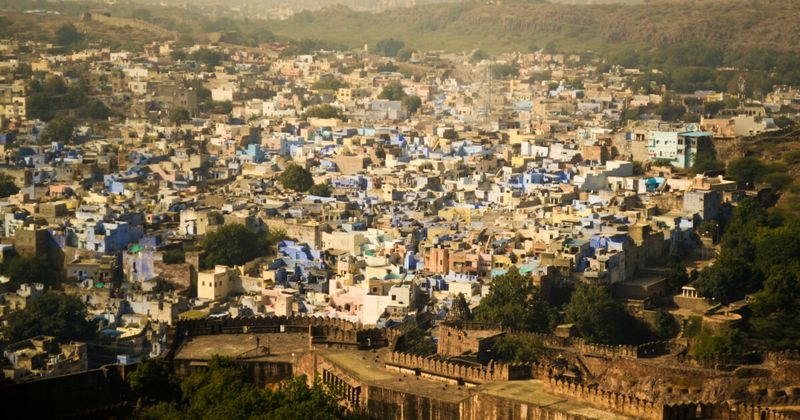
The 1,200-acre Mehrangarh Fort is run by the Mehrangarh Museum Trust headed by Maharaja Gaj Singh II, the current head of the Rathore dynasty — the fort is privately managed rather than by the Archaeological Survey of India, which is partly why its restoration and museum are considered among the best-maintained heritage presentations in Rajasthan; the trust has received a UNESCO Asia-Pacific Award for Cultural Heritage Conservation.
The blue houses. Here is what most guides get wrong: the popular explanation is that blue paint repels mosquitoes and keeps buildings cool. Both are partially true. What they miss is that the blue was historically the colour of the Brahmin caste in Jodhpur — indigo-painted houses indicated Brahmin status in the old city. When Maharaja Hanwant Singh encouraged the whole old city to paint blue in the 1960s to enhance the city's visual identity for tourism, the colour spread city-wide regardless of caste, erasing the original social signal entirely. What you're looking at from Mehrangarh's ramparts is a city-wide colour-coding whose original meaning was abolished by the act of making it universal.
Day 7: The Blue City lanes and Mandore. The lanes of Jodhpur's old city below Mehrangarh are denser, narrower, and quieter than Jaipur's. The Clocktower Market (Sardar Market) is a genuinely functional market rather than a tourist bazaar — spices, textiles, silver jewellery, and the most fragrant agarbatti (incense) stalls in Rajasthan. The Jaswant Thada (₹50–30 for foreigners/Indians respectively — verify at gate) is a white marble cenotaph built in 1899 for Maharaja Jaswant Singh II, adjacent to the fort, and consistently undervisited relative to its beauty.
Mandore Gardens (free) — the pre-Jodhpur capital 9 kilometres north, home to the cenotaphs of the Rathore kings in a garden of carved sandstone structures. The Hall of Heroes contains 16 life-size sculptures of local deities and folk heroes carved directly from the rock. No queue. No entry fee. Frequently empty.
Book Jodhpur city transfers through Intui.travel for the Day 7 Mandore circuit with a fixed-fare driver.
Days 8–9: Jaisalmer — The City That Is Still the Same City
Jodhpur to Jaisalmer: 295 kilometres, 5–6 hours by train. Several services run daily — the Jodhpur–Jaisalmer Express is the standard connection. Sleeper from approximately ₹200–₃50 ($2.13–₃.72 USD); AC 3-Tier from ₹500–₇00 ($5.32–₇.45 USD). Book on 12Go Asia. An overnight train from Jodhpur is also an option — depart late evening, arrive Jaisalmer early morning, maximising daylight in the city.
Jaisalmer Fort (Sonar Qila — the Golden Fort). Entry: ₹250 ($2.66 USD) for foreigners. Open daily. The fort was founded in 1156 CE by Rawal Jaisal — making it 12th century, older than Amber Fort by 300 years. What makes Jaisalmer Fort categorically different from every other major Indian fort: 4,000 people still live permanently inside its walls. The fort is not a museum — it is a functioning urban neighbourhood. The lanes inside contain guesthouses, restaurants, tailors, spice shops, temples in daily use, and families who have lived there for generations. This is the only living fort at this scale anywhere in the world. The honey-coloured Jaisalmer sandstone (a type of sandstone quarried locally that changes colour with the light — pale ivory at dawn, gold in the afternoon, deep orange-red at sunset) gives the structure its nickname. Pre-book through Klook.
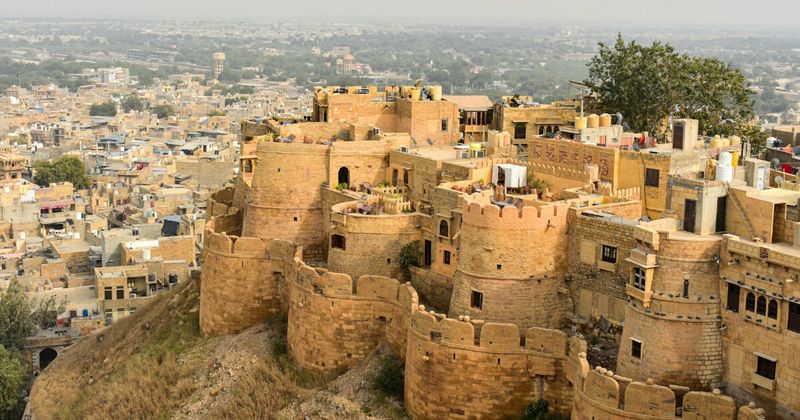
The Jaisalmer sandstone that gives the city its colour is a local sedimentary deposit formed 150 million years ago when the Thar Desert was the floor of a shallow ocean — the yellow-gold mineral colour comes from iron oxide in the rock, and the stone is soft enough to carve into the extraordinary filigree work visible on the havelis but hard enough to have withstood 900 years of desert weather without significant structural degradation.
Day 8 afternoon: Arrive, check into your Jaisalmer guesthouse (midrange inside the fort walls or just outside: ₹2,000–₄,000/$21.28–₄2.55 USD), and walk the fort. The interior is a street-level revelation — the Jain temples inside the fort (the Jain Temple Complex, 12th–15th century, largely free to enter) contain 600+ years of continuous devotional sculpture, yellow sandstone carved to a delicacy you wouldn't expect from the fort's military exterior. Patwon ki Haveli (₹50–₁00 outside the fort, foreigner price at gate — verify) — a 19th-century merchant's mansion of five connected havelis, the most elaborate private residence in the city.
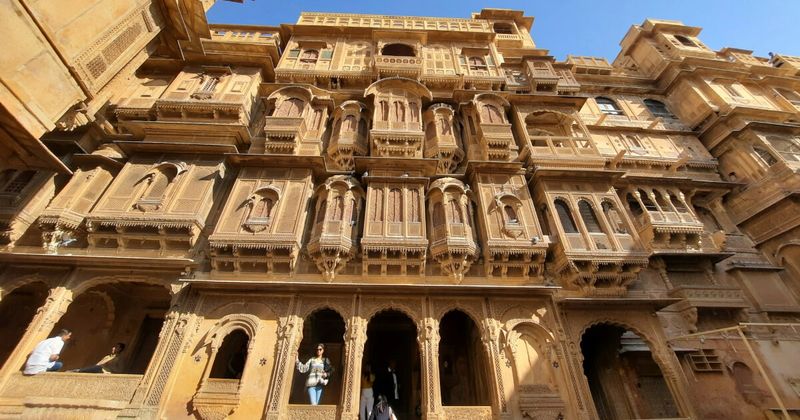
The craftsmen who carved Jaisalmer's havelis and the fort's Jain temples belong to the Silawat caste, hereditary stone-carvers who have worked in Jaisalmer sandstone for at least 800 years; the same families' descendants still work in the city, maintaining and carving new sections of heritage buildings — one of the few traditional architectural crafts in Rajasthan still practised at scale.
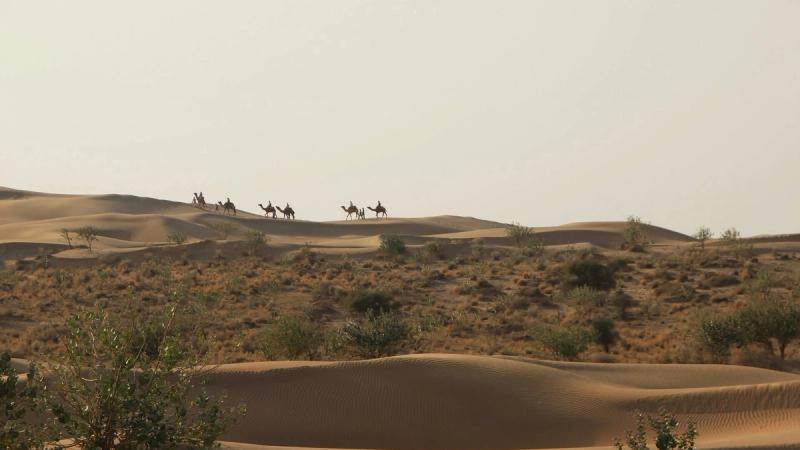
Day 9: Sam Sand Dunes. 42 kilometres southwest of Jaisalmer city. Book an overnight camp through Klook. Budget camps: from ₹2,500/person; midrange with folk music, dinner, and breakfast: ₹4,750/person ($25.53/$50.53 USD) — prices are for October–March peak season. All standard camps include camel ride, sunset over the dunes, folk music performance, dinner, and breakfast. The camp fire under the desert sky at 10pm — no light pollution, the Milky Way genuinely visible in a way it isn't from most cities — is worth the night away from a hotel.
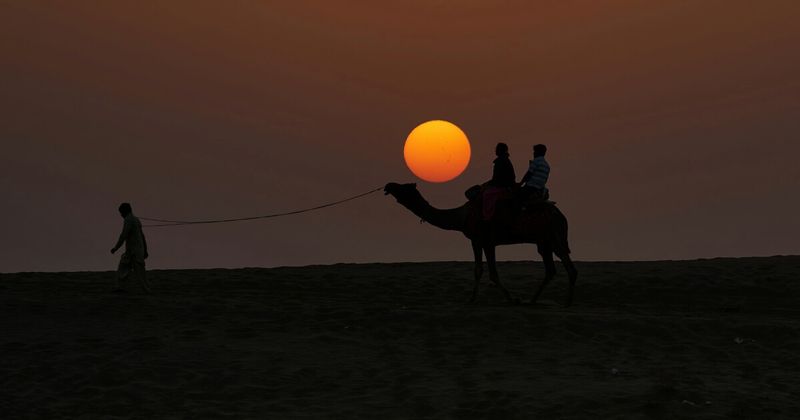
The Thar Desert covers 200,000 square kilometres across the India-Pakistan border and is one of the world's most populated deserts — 83 people per square kilometre on the Indian side — because the monsoon, though insufficient for agriculture everywhere, reaches enough of the eastern Thar to support farming; the Sam dunes area, in the western extreme, sits in the zone that receives almost none of the monsoon moisture, producing the classic empty dune landscape.
Depart the dunes before 10am on Day 10 to catch your return flight.
Day 10: Getting Out of Jaisalmer
The return logistics are the one structural challenge of this circuit. Jaisalmer is the most remote city on the route, and getting back to Delhi for an international flight requires planning one of two ways.
Option 1: Fly from Jaisalmer (JSA). IndiGo operates limited direct Jaisalmer to Delhi flights. Not daily; check availability. Search on FlyFlick. If available on your dates: fly directly, problem solved.
Option 2: Take the overnight train back to Jodhpur and fly from there. The Jodhpur Airport (JDH) has significantly more frequent connections to Delhi (IndiGo, SpiceJet, Air India, daily). The Jaisalmer–Jodhpur overnight train departs evening, arrives Jodhpur early morning. Book the Jodhpur–Delhi flight for mid-morning departure. This adds a logistical hop but guarantees your connection.
Option 3: Take the overnight train Jaisalmer → Jodhpur → Delhi (Jodhpur is on the Delhi trunk line). A 12–14 hour overnight train gets you to Delhi early morning in time for an evening international departure. Sleeper from ₹400–600 ($4.26–6.38 USD), AC 3-Tier from ₹1,000–1,200 ($10.64–12.77 USD). Book on 12Go Asia.
Book your Day 10 Jaisalmer or Jodhpur airport transfer through KiwiTaxi — confirmed for both airport routes. Set a Compensair alert for the return flight, particularly if connecting through a European hub.
What to Cut If You're Behind Schedule
Travel disruptions happen on every India trip. A delayed train, a missed connection, a day where the heat or pace demands an unscheduled rest. Here is the ruthlessly honest version of what to drop from each city.
Delhi: Cut Lodhi Garden and keep the Red Fort and Humayun's Tomb. Chandni Chowk at dusk is non-negotiable — it's the introduction to India that all subsequent cities will be measured against.
Agra: If you're pressed, skip Agra Fort and do only the Taj Mahal. Agra Fort is genuinely excellent, but a 2-hour Taj Mahal visit at sunrise beats a 4-hour Agra Fort + Taj Mahal rush by a wide margin. Do the Taj properly. Do it once.
Jaipur: Cut City Palace if you need time. Keep Amber Fort and Jantar Mantar. City Palace (₹700) is good; the other two are better. If you only have one morning, spend it entirely at Amber and Jaigarh.
Jodhpur: If you arrive on the evening Vande Bharat and have only one full day, the answer is simple — Mehrangarh Fort takes all of Day 6, and that's fine. The Blue City lanes can be walked after the fort closes. Mandore is the drop if time is short.
Jaisalmer: Do not cut the overnight desert camp. If something has to give, shorten your time inside the fort or skip Patwon ki Haveli. The desert camp is the experience most people remember longest from this entire circuit. A museum in a haveli is not a substitute.
What Not to Add
Pushkar. 11 kilometres west of Ajmer, between Jaipur and Jodhpur on the map. Adding a night in Pushkar adds a bus connection, a hotel change, and a half-day of transit each direction for a small lakeside pilgrimage town that deserves three days to appreciate. It is excellent. It does not fit a 10-day Rajasthan sprint.
Udaipur. The most genuinely beautiful city in Rajasthan — the lake palaces, the City Palace above Lake Pichola, the cooler climate. On the standard route, it requires a detour south from Jodhpur (240km) and then back north to Jaisalmer (500km), adding two days minimum and a logistical double-back. Save Udaipur for the 14-day Rajasthan Royal Circuit or a dedicated second India trip.
Ranthambore. The tiger reserve is between Jaipur and Jodhpur. Adding it requires an overnight (you cannot guarantee a tiger sighting in less than two safaris) and breaks the momentum of the circuit. Our Ranthambore safari guide covers it as a standalone trip.
Varanasi. The most common addition request. Adding Varanasi to this circuit requires either an overnight train from Agra (11 hours) or an internal flight from Jaipur, plus losing 2 days to the round-trip. Varanasi is one of the most extraordinary cities in the world. It also requires 3 proper days to experience meaningfully. Our Varanasi in 3 Days guide exists for exactly this reason — do it as a separate trip, before or after this circuit, not as an add-on.
Pace and Burnout: Managing 10 Days Across Five Cities
The Rajasthan circuit has a specific burnout pattern: most first-timers over-pack Days 4–5 (Jaipur) trying to see everything before Jodhpur, arrive at Jodhpur tired, and then under-experience Days 6–7 because they're running on empty. The antidote is counter-intuitive: be more selective in Jaipur, not less.
The correct Jaipur approach is: Amber Fort (half day), one afternoon in the old city (Johri Bazaar + Hawa Mahal at golden hour), one evening at LMB. That's your Jaipur. Jantar Mantar and City Palace are additions if you have energy, not obligations. Jaipur rewards slow attention more than comprehensive coverage.
Build one unscheduled half-day into the circuit. Not a rest day — a flex day. Use it wherever you're running behind: an extra morning in Agra before the Jaipur train, an extra afternoon in Jodhpur if you want to explore lanes you missed, an extra hour at Jaisalmer Fort before the Sam dunes departure. The circuit has enough capacity to absorb a half-day of flexibility without losing anything essential.
Train transit time is not dead time. The Jaipur–Jodhpur train passes through western Rajasthan — barren, flat, extraordinary landscape under a blue sky. The Jodhpur–Jaisalmer train approaches the Thar through increasingly dramatic desert terrain. Sit by the window. Order chai from the vendor at the next stop. This is part of the trip, not a gap between parts.
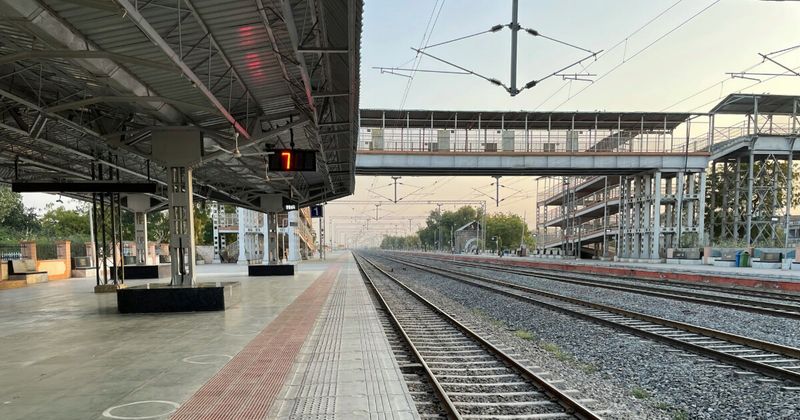
India's railway network carries approximately 25 million passengers per day — more than the entire population of Australia — making it the world's largest single daily human movement; the Jaipur–Jodhpur–Jaisalmer section runs through some of the network's most scenic territory, tracking the geological transition from the Aravalli Hills to the Thar Desert across a single train journey.
When to visit: October–March is the comfortable window. November–February is peak (book accommodation and trains 4–6 weeks ahead). March has good light and thinning crowds. April–June is extreme heat (40–48°C in Rajasthan) — technically possible but demands 7am starts and 1pm retreats. Jaisalmer in summer is functionally hostile. Monsoon (July–September) is off-season — reduced prices, dramatic light, and monsoon roads. Not recommended for a first Rajasthan trip.
10-Day India Budget Breakdown
| Expense | Budget | Mid-Range | Splurge |
|---|---|---|---|
| International flights (return DEL) | Search FlyFlick | varies | varies |
| Accommodation (10 nights avg) | ₹1,500–2,500 ($15.96–$26.60)/night | ₹4,000–8,000 ($42.55–$85.11)/night | ₹12,000+ ($127.66+)/night |
| DEL airport transfers | ₹600–1,000 ($6.38–$10.64) metro | ₹1,500–3,000 KiwiTaxi/GetTransfer | ₹4,000+ |
| Gatimaan Express Delhi→Agra | ₹690 CC ($7.34) | ₹1,365 EC ($14.52) | — |
| Agra→Jaipur train | ₹300–500 ($3.19–$5.32) | ₹1,000 CC ($10.64) | ₹3,000 road KiwiTaxi |
| Jaipur→Jodhpur train | ₹160 Sleeper ($1.70) | ₹800–1,200 Vande Bharat ($8.51–$12.77) | — |
| Jodhpur→Jaisalmer train | ₹200–350 Sleeper ($2.13–$3.72) | ₹500–700 AC 3-tier ($5.32–$7.45) | — |
| Taj Mahal (foreigners) | ₹1,300 ($13.83) | ₹1,300 ($13.83) | — |
| Agra Fort | ₹650 ($6.91) | ₹650 ($6.91) | — |
| Amber Fort Jaipur | ₹1,000 ($10.64) | ₹1,500 Composite ($15.96) | — |
| Mehrangarh Fort Jodhpur | ₹800 ($8.51) | ₹800 ($8.51) | — |
| Jaisalmer Fort | ₹250 ($2.66) | ₹250 ($2.66) | — |
| Red Fort, Humayun's Tomb Delhi | ₹1,150 total ($12.23) | ₹1,150 total ($12.23) | — |
| Sam dunes desert camp (1 night) | ₹2,500 ($26.60) | ₹4,750 ($50.53) | ₹8,000+ ($85.11+) |
| Klook experiences + guides | ₹1,000–2,000 ($10.64–$21.28) | ₹5,000–10,000 ($53.19–$106.38) | — |
| Jaipur sightseeing vehicle Intui.travel | ₹2,500 ($26.60) | ₹4,000–5,000 ($42.55–$53.19) | — |
| Food (10 days) | ₹500–800 ($5.32–$8.51)/day | ₹1,500–2,500 ($15.96–$26.60)/day | ₹4,000+ ($42.55+)/day |
| Travel insurance | VisitorsCoverage/EKTA from ~$18 | from ~$18 | from ~$18 |
| 10-day total per person (excl. flights) | ₹35,000–₅0,000 ($372–$532) | ₹80,000–₁,30,000 ($851–$1,383) | ₹2,00,000+ ($2,128+) |
All prices INR. USD at ₹94 = $1. INR prices reliable; USD approximate — check current rate before budgeting.
Check Live Flight Prices
The Bottom Line
The reason most 10-day India itineraries fail is the same reason any plan fails when it tries to do too much: the aspiration exceeds the arithmetic. Ten days across six regions is not ambitious — it's expensive transit and undercooked cities.
Ten days across five cities in a single coherent circuit, connected by direct trains, each city architecturally distinct from the last — that's a trip. Delhi's Mughal density. Agra's single extraordinary monument in the right morning light. Jaipur's fort-and-bazaar rhythm. Jodhpur's blue improbability seen from 125 metres of sandstone cliff. Jaisalmer's 12th-century city where people still live inside the walls, where the evening light turns the stone the colour of it was made from.
The cut is not a compromise. The cut is what makes the rest of it real.
Your 10-Day India Trip Planning Checklist
🛡️ Travel Insurance — First, Always: VisitorsCoverage — Compare plans; minimum $100K USD medical + emergency evacuation; 10-day Rajasthan circuit policies from ~$18–35 USD; sort before flights, accommodation, or anything else | EKTA — Affordable second option from $0.99/day at ektatraveling.com; worldwide coverage, fully digital claims, 24/7 multilingual support. Compare quotes from both.
✈️ Flights & Delay Protection: FlyFlick — Search all routes into Delhi (DEL); check open-jaw options into DEL, out of Jodhpur (JDH) or Jaisalmer (JSA) — often saves ₹8,000–₁5,000 vs returning to Delhi | Compensair — Claim up to €600 for delayed/cancelled flights; EU-connected return legs especially worth protecting; Delhi fog season (Dec–Jan) produces frequent cascading delays.
🚖 Airport & City Transfers: GetTransfer — Pre-booked fixed-fare DEL airport arrival and departure; eliminates the arrivals-hall negotiation | KiwiTaxi — Confirmed for: Delhi Airport → city, Delhi → Agra, Agra → Jaipur, Jaipur → Delhi, Jodhpur Airport, Jaisalmer Airport; all at fixed pre-booked rates across 105+ countries | Intui.travel — Full-day sightseeing vehicles in Jaipur (Amber Fort circuit) and city transfers in Jodhpur.
🚂 Trains — Book 3–4 Weeks Ahead: 12Go Asia — Book all circuit trains in English with your international card: Gatimaan Express Delhi→Agra (1h 40min, CC from ₹690 — departs Hazrat Nizamuddin not New Delhi Station); Agra→Jaipur SF Express (3.5h, from ₹300); Jaipur→Jodhpur Vande Bharat (4h 15min, CC from ₹800); Jodhpur→Jaisalmer express (5–6h, from ₹200 Sleeper). Tatkal booking now requires Aadhaar — foreign nationals cannot use it. Book in advance.
🎟️ Experiences to Pre-Book: Klook — Taj Mahal sunrise entry (limited, 48–72hrs advance minimum; peak season 1 week); Taj Mahal licensed guide; Agra Fort ₹650; Amber Fort skip-the-queue ₹1,000; Mehrangarh Fort ₹800; Jaisalmer Fort ₹250; Jaisalmer Jain temples; Sam dunes overnight desert camp.
📱 Connectivity: Saily — City 5G eSIM; works across Delhi, Agra, Jaipur, and Jodhpur main areas; activate before boarding | Drimsim — Off-grid eSIM; essential for Jaisalmer old city and especially Sam dunes where standard SIMs drop; auto-switches between all available Rajasthan networks.
Five cities. One rail line. No backtracking. Do it right.