
At a train station in India at 5:45 AM, before the platform floods, there's a chai vendor who doesn't announce himself. He just appears, a dented aluminium flask in one hand and a stack of small clay cups — kulhads — in the other. The chai costs ₹10. You drink it in about four sips. Then, because this is what you do, you drop the cup on the platform and it shatters. The vendor is already gone. The train is pulling in. And you've just participated in something that has been happening on this platform, in this exact form, for a very long time.
That's the India a one-month itinerary gets you. Not the India of a two-week sprint, where the Taj Mahal is ticked off and the overnight train to Jaipur is endured rather than enjoyed. A month gives you time to stop being a tourist in the transactional sense and start being a person who is somewhere specific, learning what it feels like.
This itinerary is for people who understand that distinction. It covers eight cities in four weeks, moves at a pace that never requires you to pack and unpack on consecutive days, and builds in rest so deliberate it's scheduled. It's not slow travel as a hashtag. It's slow travel as a method — fewer cities, deeper stays, more of what you actually came for. Search flights on FlyFlick while you plan — open-jaw tickets into Delhi and out of Kochi save $150–250 USD over a return, and a month is exactly the right length to justify the open-jaw.
One Month in India: Who This Itinerary Is Actually For
Not everyone should do a month in India. That needs saying upfront, because some people will read this, book the flights, and discover on Day 4 that they're overwhelmed and out of their depth — and they'd have been perfectly happy with two well-planned weeks.
This itinerary is for you if: you've taken at least one previous trip to Asia or another high-intensity travel destination and handled it well; you're comfortable with logistical uncertainty on a day-to-day level (trains delayed, restaurants closed, plans changing); you're not expecting India to meet you halfway on noise, pace, or personal space; and you have a genuine curiosity about Indian culture, food, and history rather than a list of things to photograph.
If you're newer to India and want the foundational briefing first, read our First Time in India guide before going any further. It covers the airport, the scams, the stomach, the SIM card — everything that will make or break the first week of a month-long trip if you don't have it sorted.
If you have two weeks rather than four, our 2 Weeks in India itinerary and India in 3 Weeks guide cover the same region with a tighter pace.
The Slow Travel Logic: Why Fewer Cities Means More India
Every month-long India itinerary written by someone who hasn't done it tries to fit 14 cities in 30 days. The maths appears to work. The experience doesn't.
Here's what actually happens: you spend Day 1 of each stop figuring out the neighbourhood. Day 2 doing the main sights. Day 3 wondering if you've missed something. Day 4 you leave. After two weeks of this, every city starts to feel like a version of the previous city. Your notes from Jaipur and Jodhpur blur into each other. You can't remember which fort had the better view.
This itinerary gives every stop a minimum of three nights. Most get four. Two get five. The logic is simple: Day 1 is orientation. Day 2 is structured. Day 3 is when you find the thing that wasn't in any guide. Day 4 and 5 are when the place actually makes sense.
The other structural rule: one complete rest day every five days. Not a light-touring day — a genuine rest day where the only obligation is food and recovery. This isn't indulgence. After Week 2 in India, your nervous system is processing more sensory information per hour than it does in a month at home. A rest day isn't time off from the trip. It's what makes Weeks 3 and 4 possible.
Before You Leave: The Month-Long India Logistics Checklist
A month in India requires more upfront preparation than two weeks, not because India gets harder, but because you have more moving parts and less tolerance for mid-trip logistics failures when you're tired on Day 19.
Travel insurance — non-negotiable and urgent. A month in India is four weeks of exposure to unfamiliar bacteria, mountain roads, monsoon-season travel risks, and the possibility of needing medical care far from a city. Get covered on Visitors Coverage before anything else — compare plans with minimum $100,000 USD emergency medical and evacuation coverage. Monthly India travel policies typically run $50–120 USD depending on age and coverage level. Do this before flights, before accommodation, before anything.
The visa most people don't apply for. Most travellers apply for the standard 30-day Indian e-Tourist Visa. For a month-long trip, this is technically adequate — but if you want any flexibility (extensions, delays, a spontaneous extra week in Kerala), apply for the 1-year multiple-entry e-Tourist Visa instead. It costs approximately $80 USD for most nationalities and gives you 180 days per visit across multiple entries for 12 months. The 30-day visa cannot be extended once you're in India. The 1-year one means a single-day Bhutan trip or Nepal excursion doesn't eat into your India allowance. Apply through the official portal at least 3 weeks before travel.
Book trains 120 days ahead. Indian Railways opens reservations exactly 120 days before the travel date. For peak season (October–March) trains on popular routes — Delhi to Varanasi, Varanasi to Jaipur, Jaipur to Jaisalmer — the best classes (1AC, 2AC) sell out within hours of opening. Set a reminder. Book every train through 12Go Asia — English interface, international card accepted, instant confirmation. The IRCTC portal requires an Indian number and payment method that rejects most foreign cards.
eSIM before boarding. Saily provides 5G across all eight cities on this itinerary and activates before your flight lands — you walk out of Indian immigration with working data, which means maps, translation, and the ability to call your hotel without asking a stranger. If this trip extends into Nepal, Sri Lanka, or Southeast Asia before or after, Yesim gives you unlimited data across all those countries on one plan without swapping anything.
Airport transfer on arrival. Book your Delhi (DEL) arrival transfer in advance through Get Transfer — fixed fare, driver with name board, no arrivals-hall negotiation after a 10-hour flight. At the departure end, same rule applies for Kochi (COK).
The 30-Day Itinerary at a Glance
| Week | Cities | Nights | Regional Mood |
|---|---|---|---|
| Week 1 | Delhi → Varanasi → Agra | 8 nights | North India intensity — monuments, ghats, sensory overload |
| Week 2 | Udaipur → Jaisalmer | 8 nights | Rajasthan depth — lakes, desert, actual decompression |
| Week 3 | Hampi → Mysore → Pondicherry | 7 nights | South India pivot — ruins, palaces, colonial quiet |
| Week 4 | Kochi → Munnar → Alleppey | 7 nights | Kerala pace — backwaters, tea highlands, end slow |
Week 1: Delhi, Varanasi, and Agra — The North India That Gets Under Your Skin
Days 1–3: Delhi — Three Days, Not One
Give Delhi three nights. Not because you'll run out of things to do in less — you won't — but because Delhi at a sprint produces the wrong first impression of India. It produces overwhelm without context.
Book your arrival transfer from Indira Gandhi International Airport (DEL) through Get Transfer before you land. Traffic from the airport to central Delhi ranges from 45 minutes at midnight to 2 hours at 5 PM on a weekday. A fixed-fare pre-booked transfer removes that variable entirely.
Day 1: Land, settle, do nothing strategic. Find one meal near your accommodation. The best acclimatisation meal in Delhi is dal makhani — slow-cooked black lentils with cream and butter, ₹180–280 (about $2.15–3.35 USD) at any decent North Indian restaurant — because it's rich enough to feel like a proper meal and mild enough not to upset a jetlagged stomach. Sleep.
Day 2 — Old Delhi: Jama Masjid at 7 AM (India's largest mosque, free entry outside prayer times). Walk north through Chandni Chowk. At Paranthe Wali Gali — a lane of breakfast shops that has been serving stuffed flatbreads since the 1870s — a paratha with four chutneys costs ₹80–120 (about $0.95–1.45 USD). Book a morning food walk through Klook (₹1,500–2,500 / about $18–30 USD for a 3-hour guided walk). Afternoon: Humayun's Tomb (₹600 / about $7.20 USD for foreigners) — architecturally the direct precursor to the Taj Mahal, built 62 years earlier, and dramatically less crowded.
Day 3 — New Delhi: Qutb Minar (₹600 / about $7.20 USD for foreigners), India Gate at dusk (free), Lodhi Garden for a morning walk. Dinner at Karim's in Nizamuddin — a restaurant operating since 1913, where the mutton korma costs ₹280 (about $3.35 USD) and the queue at 7 PM is its own kind of honesty about what the food is.
Read our India Travel Scams 2026 guide before Day 2 — Connaught Place and the areas around major Delhi monuments are where the most predictable scam patterns run.
Days 4–6: Varanasi — Three Nights Minimum, No Exceptions
Varanasi (Uttar Pradesh state, North India) is the oldest continuously inhabited city on earth. Every guide says this. What fewer guides say is that Varanasi is also the most emotionally demanding city on this itinerary — not because it's unsafe, but because it confronts you with things (death, ritual, the Ganges as a living entity rather than a river) that require time to process. Three nights is the minimum. Some people want five.
Day 4 — The ghats at dawn: Get to Dashashwamedh Ghat by 6 AM. Hire a rowboat for ₹300–500 (about $3.60–6 USD) — agree the price before you step in, ask specifically for the stretch from Dashashwamedh to Manikarnika (the main cremation ghat). One hour. The smoke, the light, the sound of bells, the funeral processions descending the steps — nothing in India is like this, and nothing in India prepares you for it. Evening: Ganga Aarti ceremony. Pre-book a front-row seated platform through Klook — ₹500–800 (about $6–9.60 USD). The standing view is free and fine. The seated platform view is the one people describe five years later.
Day 5 — The lanes: Varanasi's old city is a maze of galis (lanes) between the ghats and the temples. Kashi Vishwanath Temple — one of the holiest Shiva temples in India — is at the centre. Walk slowly. Get deliberately lost. The best thing I ever ate in Varanasi was a kachori (a fried bread stuffed with spiced lentils) from a stall near Godaulia Crossing at 8 AM for ₹25 (about $0.30 USD), eaten standing on a step, with a group of schoolchildren staring at me with the calm curiosity only Indian schoolchildren have.
Getting there: Overnight train from New Delhi station to Varanasi Junction — Kashi Express or Poorva Express, departing 6–7 PM, arriving 7–9 AM. 12–14 hours in 3AC sleeper (air-conditioned, three-tier berths), ₹485–1,500 (about $5.80–18 USD). Book through 12Go Asia. The overnight train saves a night's accommodation and delivers you at dawn, which is the correct time to arrive in Varanasi.
Day 6 — Rest or Sarnath: Sarnath (10 km north of Varanasi, about ₹200 / about $2.40 USD by auto) is the deer park where the historical Buddha delivered his first sermon after his enlightenment — one of the four holiest sites in Buddhism, in the process of being nominated for UNESCO inscription as of 2026. The Dhamek Stupa (entry ₹40 / about $0.50 USD for foreigners) is where the sermon is said to have occurred. It takes two hours and feels like a completely different India from the ghats 10 km south.
Days 7–8: Agra — Taj Mahal Done Right
Getting there: Train from Varanasi to Agra Cantt — 3AC sleeper, 9–11 hours, ₹400–1,200 (about $4.80–14.50 USD) via 12Go Asia.
Pre-book your Taj Mahal entry through Klook before this trip. Entry for foreigners: ₹1,300 (about $15.60 USD) for the complex plus ₹200 (about $2.40 USD) for the mausoleum itself — ₹1,500 total. Arrive East Gate by 6:00 AM. You have roughly 40 minutes of soft light and manageable crowds before the tour buses transform the experience. By 8:30 AM it's a different place.
Agra Fort in the afternoon (₹650 / about $7.80 USD for foreigners). Day 8: Fatehpur Sikri (40 km west, entry ₹610 / about $7.30 USD) — the fully intact Mughal ghost city abandoned in 1580, one of the most undervisited UNESCO sites in India. Book your Agra city transfers — station to hotel, hotel to Taj East Gate, Taj to Fatehpur Sikri — through Intui.travel for fixed-fare pre-booked private legs. Agra's transport situation around the Taj Mahal perimeter is aggressive; a confirmed transfer removes that.
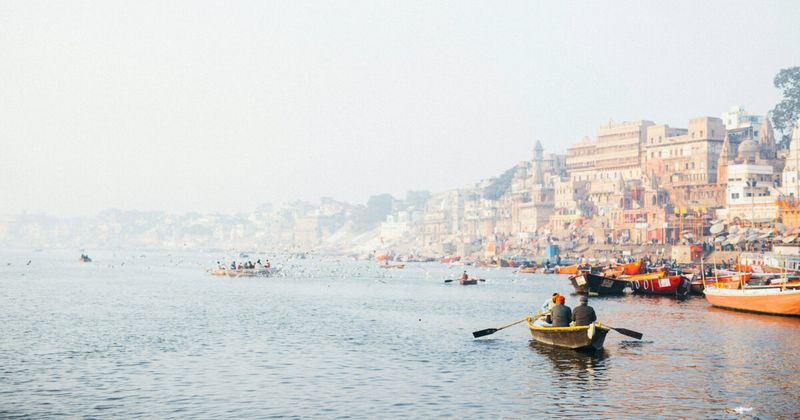
The Varanasi rowboat at dawn runs on a negotiated price — ₹300–500 for an hour is the fair range; anything above ₹600 means someone saw you coming.
Check Live Flight Prices
Week 2: Rajasthan Done Slowly — Udaipur and Jaisalmer at Actual Pace
Days 9–12: Udaipur — Four Nights in the City of Lakes
Udaipur (Rajasthan state, West India — about 620 km southwest of Agra) is the most liveable city in Rajasthan. It's built around Lake Pichola, dominated by the City Palace complex, and has a scale that rewards walking rather than taxi-hopping. Four nights here is not excessive — it's the first stop on this itinerary where the pace genuinely slows and you feel it.
Getting there: Overnight train from Agra Cantt to Udaipur City — 11–12 hours in 3AC, ₹450–1,300 (about $5.40–15.60 USD) via 12Go Asia.
Day 9: Arrive, walk Lake Pichola at sunset. Boat ride (₹400 / about $4.80 USD per person, 45 minutes from Rameshwar Ghat) — the view of City Palace and the Lake Palace hotel from the water at golden hour is the Udaipur photograph. Dinner on a Lal Ghat rooftop, where a full meal with views runs ₹350–600 (about $4.20–7.20 USD).
Day 10 — City Palace and Jagdish Temple: City Palace entry ₹300 (about $3.60 USD) for foreigners — a 400-year layered palace still partly inhabited by the Mewar royal family, with rooms that span Mughal and Rajput architectural eras in the same corridor. Jagdish Temple (free, 5 minutes from the palace) has been operating continuously since 1651. Afternoon: Fateh Sagar Lake (different from Pichola, 2 km north) for a quieter version of the same landscape.
Day 11 — Ranakpur and Kumbhalgarh: Ranakpur Jain Temple is 96 km north of Udaipur — a 15th-century temple with 1,444 individually carved marble pillars, none of them identical, built over 65 years. Entry ₹200 (about $2.40 USD) for foreigners. Kumbhalgarh Fort (another 35 km north, entry ₹600 / about $7.20 USD) has the second-longest wall in the world after the Great Wall of China — 36 km of ramparts through the Aravalli hills, almost entirely unknown outside India. Book a private day transfer for both through Intui.travel — 200 km of Rajasthan mountain road is not a shared-taxi day.
Day 12 — Rest day: Udaipur's old city lanes in the morning. A tuk-tuk to Bagore ki Haveli (₹40 / about $0.50 USD entry, a converted 18th-century mansion overlooking the lake with a museum of Rajasthani folk costumes and puppet collections). Afternoon: genuinely nothing. This is the rest day. Take it.
Days 13–16: Jaisalmer — The Desert City That Is Also a Living Fort
Jaisalmer (western Rajasthan, 570 km northwest of Udaipur — about 6 hours by train) is the most specific city on this itinerary. It rises out of the Thar Desert as a completely intact medieval sandstone fort — the only fully inhabited fort in India — glowing amber in the afternoon light like it was carved from the same dune it sits on. Approximately 3,000 people still live inside it. You can rent a room inside the fort walls, eat breakfast overlooking the desert from a rooftop that is somebody's home, and walk lanes where goats have right of way.
Getting there: Overnight train from Udaipur to Jaisalmer — the Ranakpur Express, 9–10 hours, ₹400–1,100 (about $4.80–13.20 USD) via 12Go Asia. Arrives early morning — exactly right.
Day 13: Arrive, check into a haveli inside or near the fort. Walk the fort immediately. Patwon ki Haveli (₹100 / about $1.20 USD entry) — five interconnected 19th-century merchant mansions with carved sandstone facades so intricate they look like golden lace. Jain temples inside the fort (free for non-photography entry) date to the 12th century and are the quietest, most ornate rooms in Rajasthan.
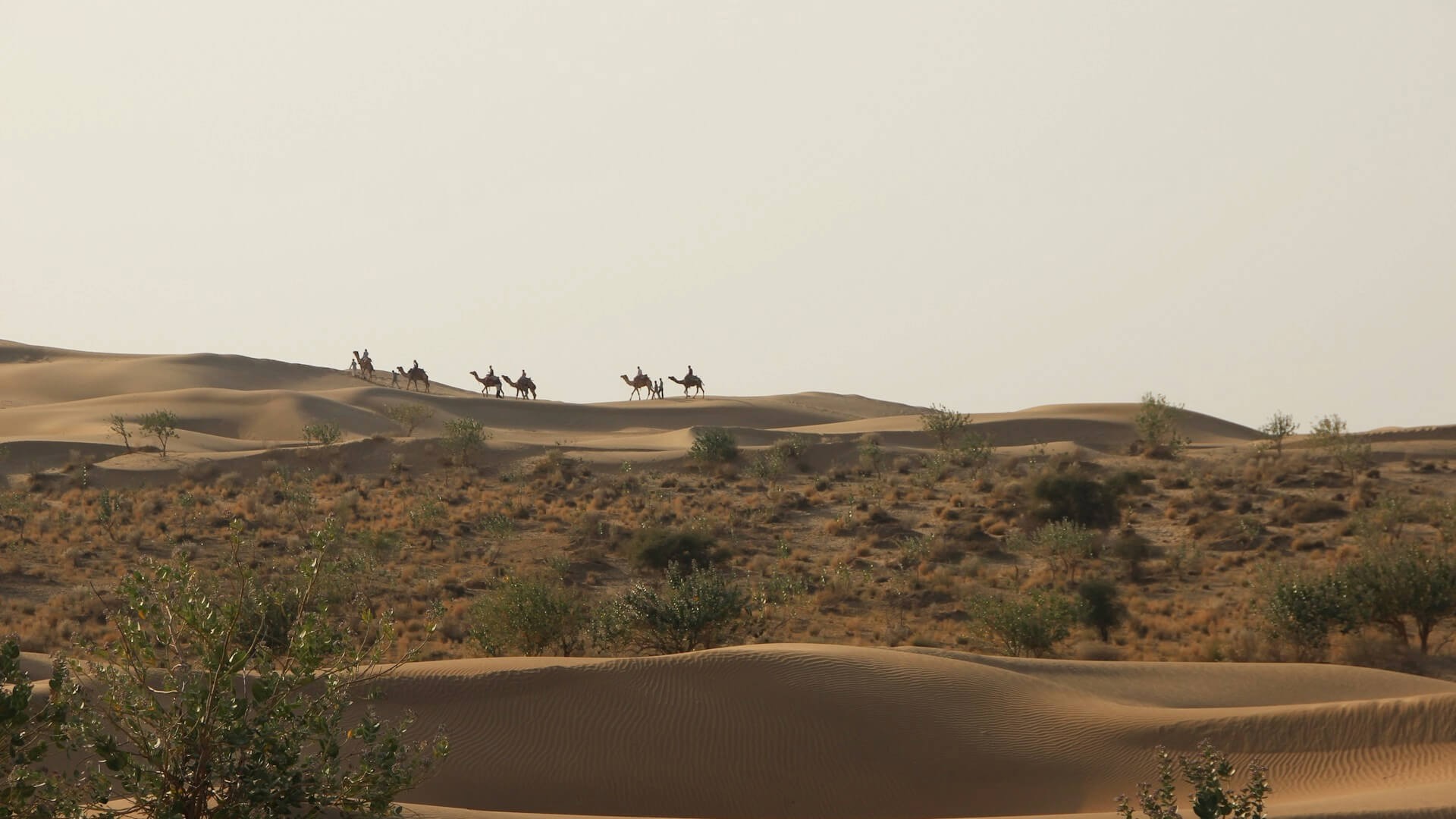
Day 14 — The desert: Sam Sand Dunes, 42 km west of Jaisalmer — the Thar Desert's most accessible dune system. A camel safari to the dunes and back runs ₹600–900 (about $7.20–10.80 USD) per person for a 2-hour sunset ride. Overnight desert camping is ₹2,500–6,000 (about $30–72 USD) per person including dinner, folk music, and a sleeping mat under a completely unobstructed sky that contains more stars than most people have seen in their lives.
Day 15 — Kuldhara and Gadisar Lake: Kuldhara is an abandoned village 18 km west of Jaisalmer — an entire settlement of 84 Paliwal Brahmin villages that was mysteriously emptied overnight in 1825 and never reoccupied. Entry ₹50 (about $0.60 USD). The Archaeological Survey of India maintains it, and walking through the perfectly preserved but completely empty stone houses in the silence of the desert is genuinely unlike anything else on this itinerary. Gadisar Lake in Jaisalmer town — a 14th-century reservoir lined with temples and ghats, free to walk, best at dawn.
Day 16 — Rest and departure prep: Morning in Jaisalmer fort. Afternoon: book your overnight train to your Week 3 starting point. This is the itinerary's longest transit day — Jaisalmer to Hampi requires Jaisalmer → Jodhpur (3.5 hrs) then Jodhpur → Bengaluru overnight (22 hrs) or Jaisalmer → Jodhpur → fly to Bengaluru. The flight option (search on FlyFlick) saves 18 hours and costs ₹3,500–7,000 (about $42–84 USD) — the right trade for a 30-day trip where your energy in Week 3 matters.

The Sam Dunes at sunset cost ₹600–900 for a camel ride and nothing at all if you just walk to the ridge and watch the light change — both are correct choices.
Week 3: Hampi, Mysore, and Pondicherry — The South India Nobody Plans For
Week 3 is where this itinerary diverges most sharply from every competitor. Most month-long India guides go straight from Rajasthan to Goa to Kerala. This one goes through Karnataka and Tamil Nadu first — through Hampi's surreal ruins, Mysore's underrated palace city, and Pondicherry's French-quarter streets where the buildings are painted the specific yellow of old Dijon mustard and the cafés serve filter coffee in steel tumblers next to croque monsieurs.
Days 17–18: Hampi — Two Days in the UNESCO Ruins
Hampi (Karnataka state, South India — 340 km from Bengaluru) is the ruined capital of the Vijayanagara Empire, abandoned in 1565 and now a UNESCO World Heritage Site covering 26 square kilometres of boulder-strewn landscape with 1,600 surviving monuments.
Getting there from Bengaluru: Overnight bus from Bengaluru (Majestic Bus Stand) to Hampi/Hospet — 8–9 hours, ₹500–900 (about $6–10.80 USD). Book through 12Go Asia. Alternatively, train to Hospet Junction (25 km from Hampi) and auto the last stretch (₹250 / about $3 USD).
Day 17: Rent a bicycle from Hampi Bazaar (₹100–150 / about $1.20–1.80 USD per day) — the only sensible way to cover the main circuit at your own pace. Virupaksha Temple (entry ₹50 / about $0.60 USD) at sunrise, then east to Vittala Temple complex (entry ₹600 / about $7.20 USD for foreigners) for the Stone Chariot and the musical pillars that produce different tones when tapped. Coracle ride across the Tungabhadra River at sunset (₹30–50 / about $0.35–0.60 USD per person) to Virupapur Gaddi — the "Hippie Island" of Hampi, where the guesthouses are cheaper and the noise level after 8 PM is approximately zero.
Day 18: Hampi's secondary circuit — Lotus Mahal, the Elephant Stables, the Zenana Enclosure — all in one compound, entry ₹600 (already included in Day 17 ticket if bought as a combined pass). Afternoon: departure to Mysore.
Days 19–21: Mysore — Three Nights in Karnataka's Palace City
Mysore (Karnataka state — 139 km southwest of Bengaluru, about 3 hours by road from Hampi) is the most underestimated city in South India. It's clean, well-organised, and home to Mysore Palace — a 1912 Indo-Saracenic structure that, on Sunday evenings from 7 to 7:45 PM, is illuminated by 97,000 light bulbs simultaneously. Standing in the palace grounds watching this happen is one of those experiences that no photograph accurately conveys.
Getting there: Bus from Hospet/Hampi to Mysore via Bengaluru — approximately 5–7 hours depending on the connection. Book through 12Go Asia. Alternatively, fly Bengaluru to Mysore (there's a regional airstrip) or take the Shatabdi Express from Bengaluru to Mysore (2 hours, ₹225 / about $2.70 USD in chair car).
Critical planning note: Mysore Palace is closed every Monday. Build this into your arrival day. The illumination happens on Sundays, national holidays, and during the Dasara festival (September/October). If you arrive Tuesday, you have Wednesday, Thursday, Saturday, and Sunday in your three-night stay — the illumination is achievable. If you arrive Sunday, Day 19 evening is your illumination night.
Day 19: Arrive and orient. Mysore's Devaraja Market — a covered market near the palace that has been operating for centuries — sells jasmine flowers by weight (₹20 per long string, enough to fill a room with scent), silk sarees, and sandalwood products. The sandalwood soap available at the Government Sandalwood Oil Factory store (fixed prices, no negotiation required) is ₹95 (about $1.15 USD) for a bar and is genuinely made from Mysore sandal oil — not the tourist-facing version.
Day 20 — Mysore Palace: Entry ₹200 (about $2.40 USD) for foreigners on non-Sunday days; free to the grounds on Sunday illumination evening. The palace interior — 12 durbar halls, carved teak ceilings, stained glass from Glasgow, Belgian crystal chandeliers — is open from 10 AM to 5:30 PM. The audio guide is worth the ₹100 (about $1.20 USD). Chamundi Hill (12 km from the palace, accessible by bus or auto for ₹150–200 / about $1.80–2.40 USD) has a 1,000-step descent path with a 5-metre stone Nandi bull carved in 1659 at the midpoint.
Day 21 — Rest and Srirangapatna: Srirangapatna is a fortified island town 16 km north of Mysore — the former capital of Tipu Sultan, the 18th-century ruler who held the British East India Company to a standstill for two decades. Tipu's Summer Palace (entry ₹15 / about $0.18 USD) and the Ranganathaswamy Temple (free) take 2 hours. Auto return ₹400 (about $4.80 USD) round trip. Afternoon: rest in Mysore.
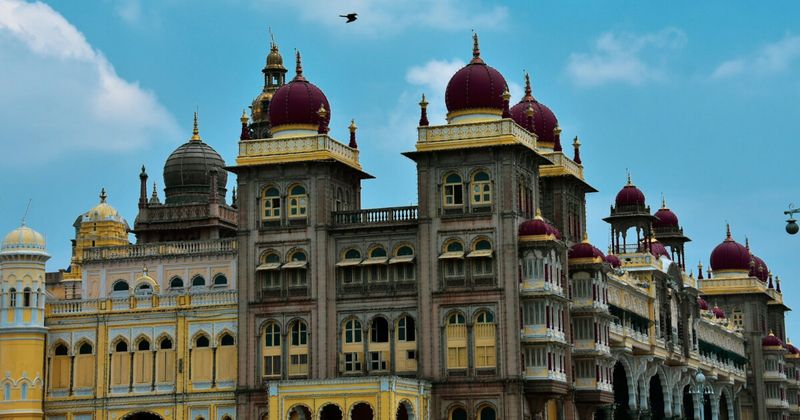
On Sunday evenings, 97,000 light bulbs illuminate Mysore Palace simultaneously from 7 to 7:45 PM — it's free to watch from the grounds and genuinely one of the most theatrical things India does.
Days 22–23: Pondicherry — The French Quarter That Shouldn't Exist But Does
Pondicherry (now officially Puducherry — Tamil Nadu/Union Territory, South India — about 6 hours by bus from Mysore or 3 hours from Chennai) is one of those places that takes 24 hours to understand why everyone who comes here stays longer than planned.
It was a French colonial territory until 1954, and the French Quarter — a 2 square kilometre grid of streets east of the canal — looks nothing like any other Indian city. The buildings are painted the specific mustard-yellow, terracotta, and pale blue of old French colonial architecture. The streets have French names on bilingual signs. There are proper boulangeries (Surguru Hotel on Mission Street, croissant ₹60 / about $0.72 USD, better than 70% of Paris airport bakeries). The Tamil Quarter west of the canal is a completely different city — busy, colourful, normal-Indian — which makes the French side feel even more improbable in contrast.
Getting there: Bus from Mysore to Pondicherry via Bengaluru — 6–7 hours, ₹400–700 (about $4.80–8.40 USD). Or train from Mysore to Chennai (7 hours via Shatabdi Express, ₹800–1,200 / about $9.60–14.50 USD) and bus/taxi to Pondicherry (3 hours, ₹200–400 / about $2.40–4.80 USD). Book train legs through 12Go Asia.
Day 22: Rent a bicycle from any of the dozen shops near the French Quarter (₹100–150 / about $1.20–1.80 USD per day) — Pondicherry is flat, perfectly cyclable, and best explored this way. Promenade Beach (the French seafront road) at 6 AM before it gets busy. Sri Aurobindo Ashram (free, silent zone, no photography) — a genuine working spiritual community founded in 1926 that still operates on the same principles. The French Quarter lanes in the afternoon, when the buildings go amber in the light.
Day 23: Auroville — 8 km north of Pondicherry, a planned intentional community founded in 1968 with residents from 50+ countries, built around the Matrimandir (a golden sphere meditation space). Day visitor entry is free; Matrimandir meditation hall requires advance online reservation (free). This is either the most interesting alternative community in India or a very well-kept garden with an unusual gift shop, depending on your tolerance for utopian architecture. Most people find it somewhere in the middle. Afternoon: departure to Kochi.
Week 4: Kerala End-to-End — Kochi, Munnar, and the Backwaters at Actual Pace
Kerala is where this itinerary exhales. After three weeks of temples, forts, ghats, deserts, ruins, and palaces, Kerala's pace — slower, greener, cooler, quieter — lands exactly when your body is ready for it.
Getting there from Pondicherry: Fly from Chennai (MAA, 3 hours from Pondicherry by bus) to Kochi (COK) — 1.5 hours, ₹2,500–6,000 (about $30–72 USD) on FlyFlick. Book your Kochi airport transfer in advance through GetTransfer — 30 km to Fort Kochi, about 45 minutes, fixed fare, no arrivals-hall negotiation.
Days 24–25: Fort Kochi — Two Nights in the Colonial Quarter
Fort Kochi is 500 years of Portuguese, Dutch, and British architecture layered over a working fishing waterfront, with the iconic Chinese fishing nets (Cheena vala) operating at the edge of the Arabian Sea since the 14th century. It's the most atmospheric colonial remnant in India — more intact than Goa's, less touristed than Pondicherry's.
Day 24: Chinese fishing nets at dawn (free, operational from around 6 AM). Mattancherry Palace/Dutch Palace (entry ₹5 / about $0.06 USD — yes, five rupees) — extraordinary Kerala mural paintings covering entire rooms in a style that's completely different from anything in North India. Jewish Town and Paradesi Synagogue (entry ₹5) — one of the oldest functioning synagogues in the Commonwealth, built in 1568.
Day 25 — Kerala Kathakali: Fort Kochi has several Kathakali performance venues running 45-minute introductory shows nightly — tickets ₹350–500 (about $4.20–6 USD). Kathakali is Kerala's classical dance-drama form, performed in elaborate face paint (the full makeup process takes 3–4 hours before a show). The pre-show makeup demonstration is worth arriving early for. Spice Quarter in Mattancherry for shopping — cardamom, black pepper, vanilla — at prices that are roughly 30% of what you'd pay elsewhere.
Days 26–27: Munnar — Tea Highlands at 1,600 Metres
Munnar (Kerala — 130 km northeast of Kochi, about 4 hours by road through the Western Ghats) sits at 1,600 metres and is covered in tea estates established during the British colonial period in the 1870s. The temperature difference between Kochi (30°C) and Munnar (18–22°C) hits you within the first hour of climbing and feels like a gift.
Book the Kochi to Munnar transfer through Intui.travel — the mountain road is best done in a private vehicle where you can stop when the view demands it, which is roughly every 15 minutes from the halfway point.
Day 26: Kolukkumalai Tea Estate — 30 km from Munnar, the world's highest tea estate at 2,100 metres, producing single-estate orthodox tea that gets sold to premium buyers in the UK and Japan. A guided estate walk and factory visit costs ₹200 (about $2.40 USD) and takes 90 minutes. The tea you drink at the factory costs ₹30 (about $0.36 USD) per cup and tastes completely different from anything in a supermarket — the altitude creates a muscatel note that lower-elevation tea doesn't have. Eravikulam National Park (entry ₹125 / about $1.50 USD for foreigners) — home to the highest density of Nilgiri tahr in the world, a mountain goat found only in the Western Ghats.
Day 27: Rest in Munnar. Morning walk through any of the estate paths that criss-cross the hillsides — no guide needed, no entry fee for the walking paths, just the smell of tea leaves at 7 AM in the mist.
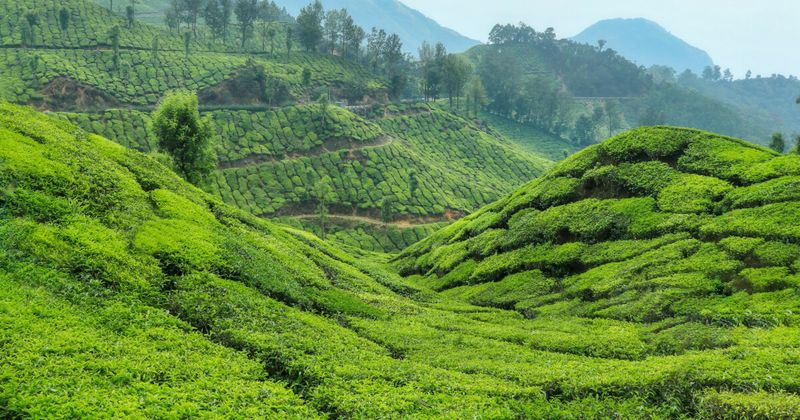
The Kolukkumalai estate at 2,100 metres produces tea that ends up in premium UK and Japanese buyers — the cup you drink at the factory for ₹30 is the same batch.
Days 28–30: Alleppey — The Backwaters as a Final Act
Alleppey (Alappuzha — Kerala, 85 km south of Kochi, about 1.5 hours) is where this itinerary ends. The backwaters — 900 km of interconnected lakes, rivers, and lagoons lined with coconut palms — at a slow travel pace mean two nights, not one day.
Getting there: Bus or private transfer from Munnar to Alleppey via Kochi. Book through Intui.travel for a direct private vehicle — the route passes through Kochi's outskirts and then down into the flat backwater zone, which feels like the land is gradually trading altitude for water.
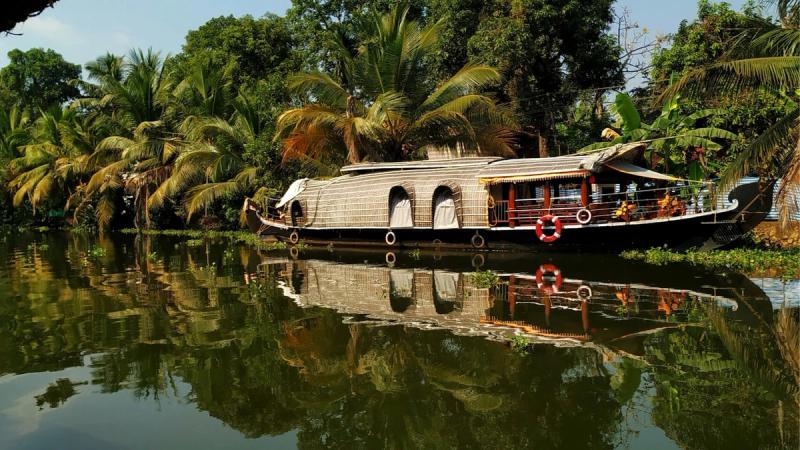
Day 28: Check into a houseboat. An overnight kettuvallam (traditional Kerala rice barge converted into a floating guesthouse) costs ₹8,000–15,000 (about $96–180 USD) for the whole boat, including a cook. Book through Klook — peak season (October–March) fills up 3–4 weeks ahead, and the good ones — the ones where the cook makes fish curry from the morning catch and the engine shuts off at 9 PM for silence — are gone first. The route drifts through narrow canals where the coconut palms overhead almost touch, past small fishing settlements where children wave from the bank, past the occasional cormorant sitting on a pole in the exact attitude of someone who has nowhere to be.
Day 29: Munroe Island day trip — a cluster of eight small islands 25 km south of Alleppey, accessible by canoe through narrow waterways too small for houseboats. This is the backwaters at actual local scale — no tour groups, no floating restaurants, just paddy fields and palm groves and the sound of water. A local canoe guide runs ₹600–900 (about $7.20–10.80 USD) for a half-day. Book through your houseboat operator or the Alleppey Tourism Office directly.
Day 30: Last morning on the water. Departure to Kochi airport (COK) — 1.5 hours by road, book through GetTransfer for the return transfer. Flight home. Protect it with Compensair — Kochi routes transit through Bengaluru and Dubai where disruptions compound quickly; claims up to €600 filed from your phone at the gate.
For connectivity in Kerala's remote backwater channels and the Munnar highland areas — where standard city eSIMs drop signal between towers — Drimsim automatically switches to the strongest available network. At 2,100 metres on the Kolukkumalai estate, it's the only eSIM worth trusting.
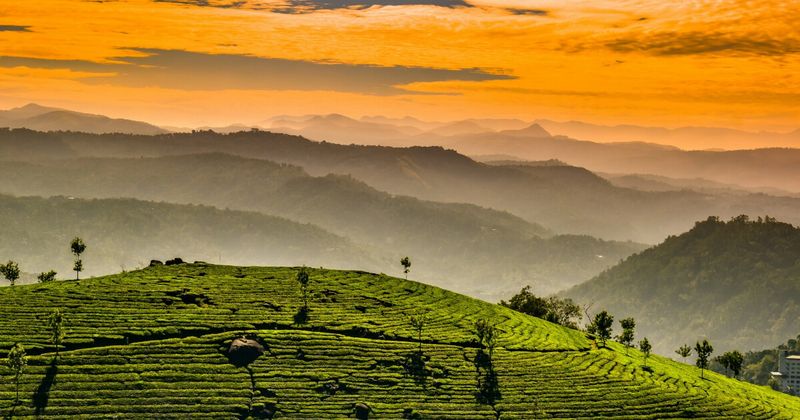
Munnar sits at 1,600 metres — the temperature difference between Kochi at the coast and the estate road on the climb up is usually 10–12°C and happens within 90 minutes of driving.
Money in India in 2026: Cash, Cards, and the UPI Question for Foreign Tourists
This section doesn't exist in any competitor guide. It should, because UPI — India's instant digital payment system — changed significantly for foreign tourists in 2025–2026, and not knowing about it means either carrying too much cash or getting caught short at vendors who no longer accept international cards.
The situation in 2026: Foreign tourists from G20 countries (US, UK, EU, Canada, Australia, Japan, and others) can now use UPI through the UPI One World prepaid wallet system — without an Indian bank account or SIM card. The process: visit an authorised onboarding point at major airports (Delhi, Mumbai, Bengaluru, Kochi all have them), present your passport and visa, complete a simple KYC process, load INR from your international debit or credit card, and receive a UPI-linked wallet. You can then scan QR codes at any of India's millions of UPI-accepting merchants. Loading fees are minimal; most transactions themselves are free. Daily limit is ₹1 lakh (about $1,200 USD).
Why this matters for a month-long trip: India is 70% digital payments by transaction volume in 2026. Market stalls, auto-rickshaws, street food vendors, temple donation boxes — all have QR codes. A UPI wallet lets you pay without hunting for exact change or withdrawing cash at an ATM in a location where the machine may or may not have notes. It also means lower cash dependency, which reduces theft risk.
What you still need cash for: Remote areas (Jaisalmer camel safaris, Hampi bicycle rentals, Varanasi boatmen), tipping, small temples, and any vendor who hasn't yet set up a QR code (more common in rural areas of Rajasthan and Kerala's backwaters).
ATM strategy for a month: Use ATMs inside bank branches (HDFC, ICICI, SBI) during banking hours where staff are present — these have lower skimming risk than standalone tourist-area ATMs. Withdraw ₹10,000–15,000 (about $120–180 USD) at a time to reduce transaction fees. Notify your bank before travel that you'll be in India for 30 days.
QR code scam alert: A known 2026 pattern — a vendor shows you a QR code and the amount silently changes between your scan and your payment confirmation. Always verify the rupee amount displayed on your payment screen before confirming. Our India Travel Scams 2026 guide covers this and every other active scam pattern in detail.
One Month in India: What This Actually Costs
| Category | Budget ($45/day) | Mid-Range ($90/day) | Comfortable ($160/day) |
|---|---|---|---|
| Accommodation (29 nights) | $400–600 USD | $900–1,500 USD | $2,000–3,500 USD |
| Internal trains (7 journeys) | $60–100 USD | $100–160 USD | $160–250 USD |
| Domestic flights (2 legs) | $80–150 USD | $130–220 USD | $220–400 USD |
| Food (30 days) | $180–280 USD | $320–540 USD | $540–900 USD |
| All entrance fees | $90–110 USD | $90–110 USD | $90–110 USD |
| Experiences + pre-booked | $120–180 USD | $200–320 USD | $320–600 USD |
| Airport + city transfers | $80–120 USD | $130–200 USD | $200–380 USD |
| Total (excl. intl flights + insurance) | $1,010–1,540 USD | $1,870–3,050 USD | $3,530–6,140 USD |
Note on the budget tier: $45/day in India is genuinely comfortable — dorm or cheap private room, local dhabas, public transport. It is not roughing it. India's price ceiling compresses downward faster than almost any other destination.
The Bottom Line
A month in India is the first amount of time where you stop managing the country and start living in it. The first week you're managing — figuring out the trains, the food, the money, the noise. By Week 2 in Jaisalmer you're eating breakfast on a haveli rooftop in a fort that is also somebody's neighbourhood and it doesn't feel strange. By Week 3 in Pondicherry you're on a bicycle in a French colonial lane eating a croissant that is genuinely good, in Tamil Nadu, having just come from the most surreal ruins in Asia, and it all makes complete sense. By Week 4 on the backwaters, you've stopped checking the time.
Sort the logistics before you land — VisitorsCoverage first, then your 1-year e-Visa, then trains through 12Go Asia, then airport transfers through GetTransfer, then your eSIM through Saily. Pre-book the Taj Mahal, the Ganga Aarti, and the Alleppey houseboat on Klook. Search flights on FlyFlick.
Then let go of the rest. India fills in the gaps better than any itinerary can.
That chai at the railway station at 5:45 AM — the kulhad you smash on the ground — will happen again on Day 7, Day 14, Day 22. By the third time, you won't think about it. You'll just drink the chai
Check Live Flight Prices
Your One Month in India Planning Checklist
Thirty days in India is the best version of this trip. Here's everything to sort before you board.
🛡️ Travel Insurance — Do This Before Anything Else: VisitorsCoverage — Compare plans; minimum $100K USD medical + evacuation + trip cancellation; 30-day India policies run $50–120 USD. A month of travel means more exposure to every risk — medical, logistical, natural. Non-negotiable.
✈️ Flights & Delay Protection: FlyFlick — Compare international flights into Delhi (DEL) and domestic legs (Jodhpur/Jaisalmer → Bengaluru, Chennai → Kochi); open-jaw tickets save $150–250 USD | Compensair — Claim up to €600 for disrupted flights; file from your phone at the gate; India domestic and hub routes have above-average disruption rates.
🚖 Airport & City Transfers: GetTransfer — Pre-booked fixed-fare transfers at Delhi (DEL) arrival, Kochi (COK) departure, and Bengaluru (BLR) as transit hub; choose vehicle class before confirming, zero arrivals-hall negotiation | Intui.travel — Pre-booked private transfers for Agra city legs, Udaipur day trips (Ranakpur + Kumbhalgarh), Kochi–Munnar–Alleppey chain, Pondicherry–Chennai; fixed fares, English-speaking drivers.
🚂 Trains — Book 120 Days Ahead: 12Go Asia — Book all 7 internal train and overnight bus journeys in English with your international card: New Delhi → Varanasi, Varanasi → Agra, Agra → Udaipur, Udaipur → Jaisalmer, Bengaluru → Hampi (overnight bus), Hampi → Mysore, Mysore → Pondicherry/Chennai.
📱 Connectivity: Saily — City 5G eSIM; activate before boarding; covers all 8 cities on this itinerary from landing | Yesim — Unlimited data for multi-country trips including Nepal, Sri Lanka, or Southeast Asia extensions | Drimsim — Off-grid eSIM; auto-switches networks in Kolukkumalai tea estate highlands, Alleppey backwater channels, Hampi's patchy zones, and Jaisalmer desert areas where city eSIMs drop.
🎟️ Experiences to Pre-Book: Klook — Taj Mahal sunrise entry (₹1,500 for foreigners, books out in peak season), Ganga Aarti front-row Varanasi, Delhi food walk, Alleppey overnight houseboat (3–4 weeks ahead Oct–Mar), Kathakali performance Fort Kochi.
📋 Visa & Practical Prep:
- Apply for 1-year multiple-entry e-Tourist Visa (not 30-day) at indianvisaonline.gov.in — allow 3 weeks
- Set up UPI One World wallet at your arrival airport — bring passport, visa, and international card
- Download Google Maps offline for all 8 cities before you fly
- Save India emergency numbers: Police 100, Ambulance 108, Tourist Helpline 1363
- Notify your bank of 30-day India travel dates to prevent fraud blocks on legitimate transactions
- Pack ORS sachets for stomach emergencies — also available at every Indian pharmacy for ₹10
Stay longer. Understand more. Come back changed.