
The first thing you notice is the smell. Not bad, not good — just completely specific, like the air itself has been marinated in cardamom and diesel and something flowering that you can't name. Then the sound hits: horns, hawkers, the grind of an auto-rickshaw engine that sounds medically unwell. Then someone is standing 30 centimeters from your face asking if you need a taxi, and you haven't even made it through the arrivals door yet.
First time in India is not a travel experience. It's a recalibration. Everything you know about how cities work — the unwritten rules of queuing, personal space, negotiation, road logic — gets quietly retired and replaced with something entirely different. Most first-timers either love it immediately or spend the first 48 hours trying to leave. Very few are indifferent.
This guide is for people who are genuinely going — who've booked or are about to book, who have real fears about getting sick or getting scammed or simply not coping — and want an honest briefing, not a highlight reel. The prices are real. The advice is field-tested. And yes, there is a section on your stomach, because you need it. Start your flight search on FlyFlick before you do anything else — India flight prices shift significantly week to week.
Part 1: The Thing You Must Sort Before You Book Anything Else — Travel Insurance
Let's do the uncomfortable thing first. Before SIM cards, before scams, before packing lists — travel insurance. Not because India is uniquely dangerous. Because India's private health care system is genuinely world-class, and genuinely expensive for foreigners without coverage.
A standard hospitalisation at a reputable private hospital in Delhi or Mumbai runs ₹15,000–₹80,000 per day (roughly $180–$960 USD). A serious case requiring surgery or medical evacuation to your home country? Think $30,000–$150,000 USD. These aren't worst-case hypotheticals. They happen to uninsured travellers every month.
Get covered before you fly. VisitorsCoverage is a travel insurance marketplace that compares policies from multiple providers specifically for international visitors — you enter your trip dates, nationality, and destination, and it surfaces plans with medical, evacuation, trip cancellation, and baggage coverage side by side. Most comprehensive plans for a 2-week India trip run $30–$80 USD depending on your age and coverage level. That's less than one night in a mid-range hotel. Do it before you book anything else.
What to make sure your policy actually covers: emergency medical including hospitalisation (minimum $100,000 USD), medical evacuation, trip cancellation, and baggage loss. If you're trekking in the Himalayas, white-water rafting in Rishikesh, or renting a motorbike in Goa, check for an adventure activities rider most standard policies exclude these without it. One thing that catches people out: many credit card travel insurance policies have lower coverage limits for India or exclude it entirely. Read yours carefully before relying on it.
India's official Ministry of Tourism visitor resources.
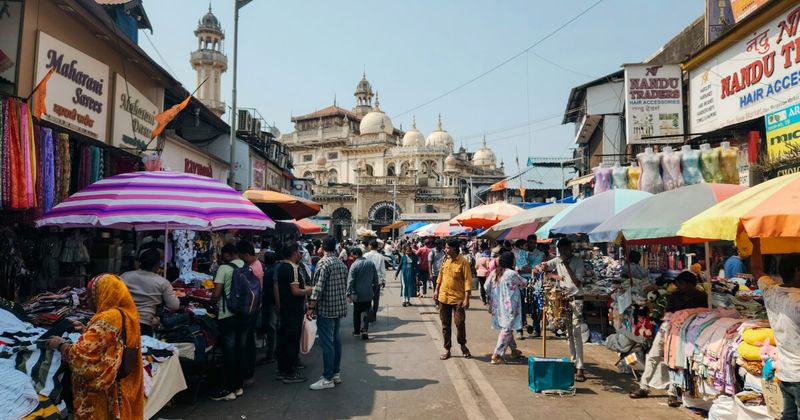
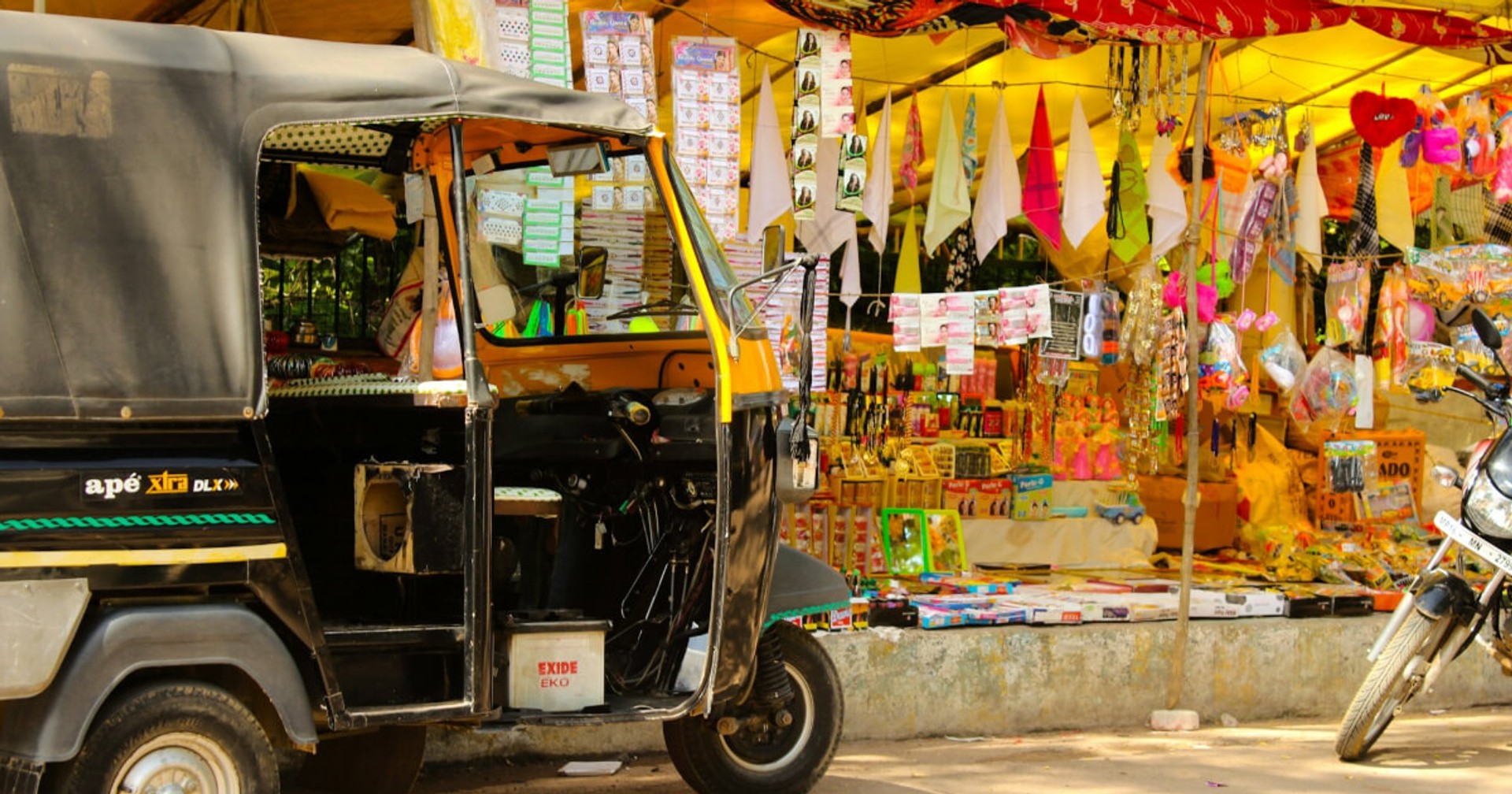
Every Indian city has a version of this lane — narrow, loud, absolutely overwhelming for the first five minutes, and completely normal by day three.
Part 2: Surviving Your First 30 Minutes — The Airport Arrival Playbook
Every major Indian airport — Indira Gandhi International in Delhi (DEL), Chhatrapati Shivaji Maharaj in Mumbai (BOM), Kempegowda in Bengaluru (BLR) — follows the same arrival pattern. Move through it in the right order and your first night will be fine. Get it wrong and you'll be standing outside at midnight getting aggressively quoted ₹2,500 for a ₹600 cab.
Step one: immigration. Have your e-Visa printed or screenshotted and clearly visible — not buried in an email thread. The queue for foreign nationals moves at roughly 25–35 people per hour at peak times. Budget 45 minutes and don't panic.
Step two: the SIM counter. It's inside the terminal, before you exit arrivals. Do not walk past it. Getting a SIM after you're outside the airport means finding a shop, handing over your passport and visa copy, and waiting up to 24 hours for activation — useless if you need navigation immediately. Airtel and Jio both have counters; bring a passport photo (take one on your phone, print it at any airport shop for ₹10). The smarter move: activate a travel eSIM from Saily before you board at home, so you have working 5G the moment you clear immigration — no counter, no queue, no waiting.
Step three: your transfer. The exit from Indian airport arrivals is where the first real pressure hits. Unofficial taxi touts will be on you within three steps of the door. The correct move is to ignore everyone and use one of two options: the official prepaid taxi counter inside the terminal (all major airports have one, fixed fares, paid upfront), or — the better option — book a fixed-price transfer in advance through Welcome Pickups. You'll have a driver waiting with your name on a board, fare agreed and paid upfront, zero negotiation required at midnight after a 10-hour flight. Delhi airport to Connaught Place is roughly ₹600–900 (about $7–11 USD) via the official counter. Welcome Pickups runs at a similar or slightly higher rate in exchange for a guaranteed, trackable pickup.
Do not accept any offer from someone who approaches you. Not a hotel, not a taxi, not a 'tourism office' inside the terminal. The only legitimate services are the prepaid counters and the app-based cabs (Uber and Ola both work at Indian airports — you need a working SIM or pre-booked transfer to use them).
Honestly, the first 30 minutes in India is not the moment for spontaneity. Lock down your transfer before you land, every time.
Check Live Flight Prices
Part 3: The Scam Landscape — What's Real, What's Overblown, and How to Stay Ahead
India gets an unfair reputation as a scam minefield. The reality: the scams that exist are predictable, mostly low-stakes, and entirely avoidable once you know the pattern. You are not going to get robbed walking down a street in Jaipur. What you might lose is $15 and 40 minutes of your time to a rickshaw driver with an interesting story about a gem export business.
The closed attraction scam. A friendly local informs you that your destination — the Taj Mahal, Amber Fort, a specific temple — is "closed today" due to a government function, religious festival, or fire. He knows a better alternative. He has a cousin with a car. This scam is specifically calibrated for the first 48 hours when you're disoriented and more likely to trust a helpful stranger. The fix is simple: check opening hours before you leave your hotel, every morning, without exception.
The rickshaw meter "broken" opener. Every Indian city. Every time. The meter doesn't work, so he'll suggest a fixed price — usually 2–4x the correct fare. The solution: negotiate before you get in, know the ballpark rate (ask your hotel reception the night before), or use InDrive for city rides instead. InDrive is a bid-based app where you propose a price, drivers accept or counter — it removes the negotiation theatre entirely and consistently comes in 20–40% cheaper than tourist-quoted rates in cities across India.
The commission route. Your auto driver offers a "free city tour" or insists on taking you to a "government-approved" fixed-price shop. There are no government-approved fixed-price shops for tourists. Every shop he takes you to pays him 30–40% commission, which is invisibly baked into your purchase price.
The art student / carpet setup. A young, well-spoken person near a monument strikes up a conversation about their art school. This always ends in a showroom. The textiles are genuinely beautiful. The prices are 10x what they should be. The social pressure to buy something after 25 minutes of hospitality is real. Be friendly, be firm, keep walking.
If you've ever stood at a train station in India with a backpack and zero Hindi and someone's already asked you three questions before you've spotted your platform — you know exactly the kind of ambient pressure I mean. It's manageable. Just don't make decisions while you're disoriented.

The single most useful thing you can do before getting into any Indian rickshaw: ask your hotel the ballpark fare, then open InDrive and compare.
Part 4: The Food Reality — What to Eat, What to Skip, and the Stomach Situation
Let's address this directly because everyone is thinking it. Your stomach will adjust. That's not a scare tactic — it's biology. Switching environments means encountering different bacteria, water treatment levels, spice loads, and oil types that your gut hasn't processed before. Most first-timers experience some version of digestive disruption between days 2 and 5 regardless of how careful they are. It typically passes in 24–48 hours. The preparation below reduces the severity significantly.
The rules that actually work:
The single most important one: only drink bottled water. Not tap, not ice from a random stall, not fresh juice unless it's made in front of you with peeled, washed fruit. A 1-litre bottle costs ₹20–30 (about $0.25–0.35 USD) everywhere. Buy them constantly.
Eat where locals eat, specifically at busy places. A dhaba (roadside restaurant) with 40 Indians eating their lunch is safer than a tourist-facing "hygienic" restaurant with empty tables. High turnover means food is cooked fresh. Street food from a high-traffic vendor during peak meal times — 12–2 PM, 7–9 PM — is generally fine. Deep-fried and freshly cooked items (samosas, pakoras, vadas, dosas from a cast-iron griddle) are among the safest street options because they go from boiling oil or screaming-hot tawa directly to your hand.
Avoid: pre-cut fruit left in the open air, raw salads (washed in tap water), buffet items in lukewarm chafing dishes, and ice in any beverage from a non-hotel vendor.
Pack ORS (Oral Rehydration Salts) from day one. They're available at every Indian pharmacy for ₹10 (literally $0.12) and are the fastest recovery tool if your stomach does protest. Also worth bringing from home: a prescribed course of ciprofloxacin or azithromycin for genuine bacterial cases — ask your GP before travel.
The good news, which these lists make easy to forget: a masala dosa in Chennai costs ₹50–80 ($0.60–1 USD) and is one of the best things you will eat in your life. A mutton biryani from a specialist restaurant in Hyderabad — slow-cooked for 6 hours in a sealed vessel — costs ₹280–350 (about $3.50–4.25 USD) and has no equivalent anywhere on earth. A thali in Rajasthan, with five different vegetable preparations, dal, bread, rice, pickle, and dessert, costs ₹120–200 (about $1.50–2.50 USD). The food is the reason people come back. Don't let fear make you miss it.
If you want a structured introduction to Indian food before navigating independently, book a guided street food walk in Delhi, Mumbai, or Varanasi in your first 2–3 days. Klook has vetted operators with fixed pricing — a 3-hour Delhi street food tour typically runs ₹1,500–2,500 (about $18–30 USD) per person and covers 8–12 dishes. It's also the best way to identify which vendor types to trust on your own afterwards.
Part 5: Flights, Trains, SIMs — Logistics That Will Make or Break Your Trip
Getting to India
Main international entry points: Delhi (DEL), Mumbai (BOM), Bengaluru (BLR), and Chennai (MAA). Compare fares across all four on FlyFlick before deciding — sometimes flying into Mumbai and out of Delhi on an open-jaw ticket saves $100–200 USD over a return to one city, especially from the UK and Europe. India routes have above-average disruption rates — monsoon season (June–September) creates frequent delays, as does Delhi winter fog (December–January). If your flight gets disrupted, Compensair lets you claim up to €600 in compensation with minimal paperwork. File the claim from your phone while you're still at the gate.
Getting Around India: Trains
The Indian Railways network is the backbone of independent travel here and one of the most atmospheric ways to move between cities. Delhi to Agra (where the Taj Mahal is, 200 km south in Uttar Pradesh state) takes 2 hours on the Gatimaan Express — ₹755 (about $9 USD) in chair car. Delhi to Jaipur takes 4–5 hours on the Shatabdi Express, ₹715 (about $8.50 USD). Book through 12Go Asia, which surfaces availability in English and accepts international cards. The official IRCTC site requires an Indian phone number and a payment method that rejects most foreign cards — it's a miserable experience for first-timers, and 12Go solves it entirely.
Connectivity: SIM Cards and eSIMs
You have two options. Option one: get a local SIM at the airport. Airtel and Jio both have counters at major airports. You'll need your passport, visa copy, and a passport photo. Activation takes 2–4 hours. Option two — the smarter move for most international visitors — activate a travel eSIM before you board. Saily provides fast 5G coverage across Srinagar, Delhi, Mumbai, Jaipur, Goa, Bengaluru, and all major tourist circuits; it's live the moment you land without touching a SIM counter. If India is part of a longer trip — Nepal, Sri Lanka, Southeast Asia — Yesim gives you unlimited data across multiple countries on one plan, which works out significantly cheaper than buying individual SIMs per country.
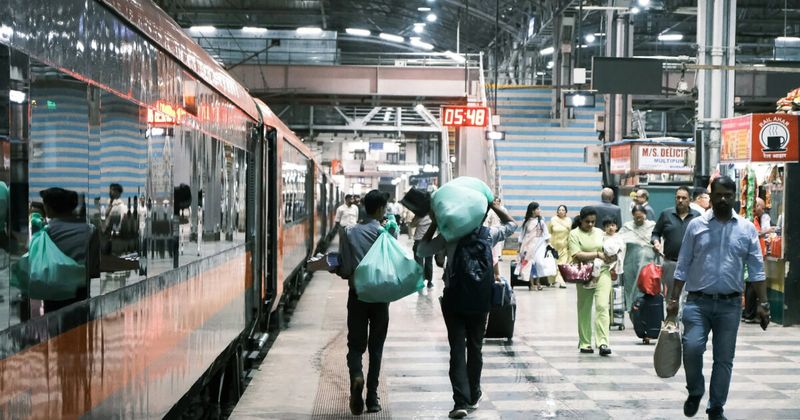
Mumbai Central at 7 AM is every Indian railway station in miniature — find the right platform, watch the board, and don't stand on the yellow line.
Part 6: Beyond the Golden Triangle — Where to Go When You're Ready for More
Most first-timers do the Golden Triangle: Delhi, Agra (the Taj Mahal, Uttar Pradesh state, about 200 km south of Delhi), and Jaipur (Rajasthan state, about 280 km southwest of Delhi). It's logical — these three cities are close together, well-connected, and cover Mughal history, Rajput architecture, and North Indian street life. It's also visited by approximately 3 million tourists annually, which means you'll never be far from a menu in English and a hotel owner who speaks fluent WhatsApp.
If you have more than 10 days, here's what most first-timer guides leave out:
Varanasi (Uttar Pradesh state, North India) — the oldest continuously inhabited city on earth, built on the banks of the Ganges river. The morning Ganga Aarti ceremony at Dashashwamedh Ghat at dawn is unlike anything else I've witnessed in 15 years of travel journalism. About 8–9 hours by overnight train from Delhi; book the sleeper class and save a night of accommodation.
Hampi (Karnataka state, South India) — a UNESCO World Heritage Site, the ruined capital of the Vijayanagara Empire, spread across a boulder-strewn landscape that looks like it was designed by someone who had never seen a normal landscape. About 9–10 hours by overnight bus from Bengaluru (BLR).
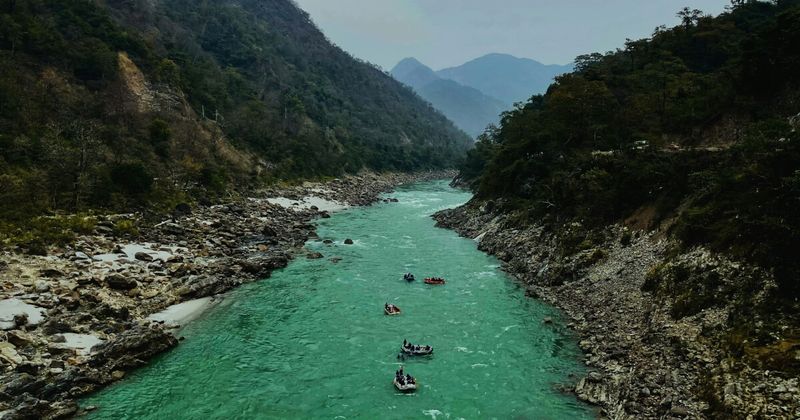
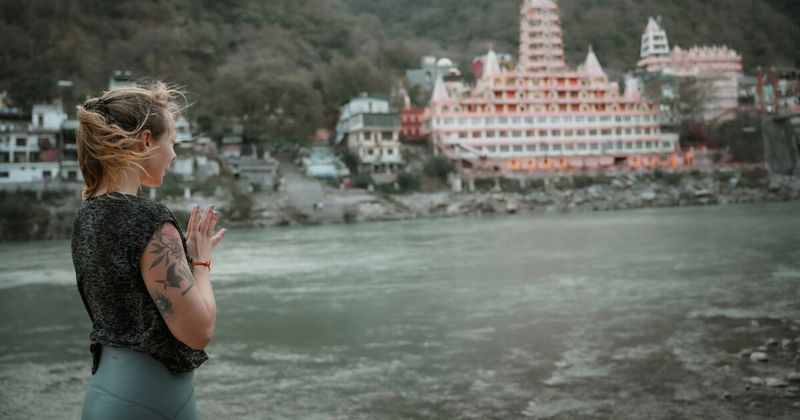
Rishikesh (Uttarakhand state, North India) — a town on the Ganges in the foothills of the Himalayas, about 6 hours by road from Delhi. Drop-in yoga classes at local ashrams run ₹300–500 (about $3.50–6 USD). White-water rafting on the Ganges runs ₹600–900 (about $7–11 USD) per person for a half-day Grade III–IV run.
Once you get outside the Golden Triangle's well-trodden circuit — into the Rajasthan desert villages, the Himalayan foothills, or Spiti Valley in Himachal Pradesh — mobile signal becomes genuinely unreliable. A city eSIM won't cut it at altitude or in remote scrubland. Drimsim automatically switches to the strongest available network regardless of provider, which matters when you're between towers in the Thar Desert at sunset with a dying Google Maps session.
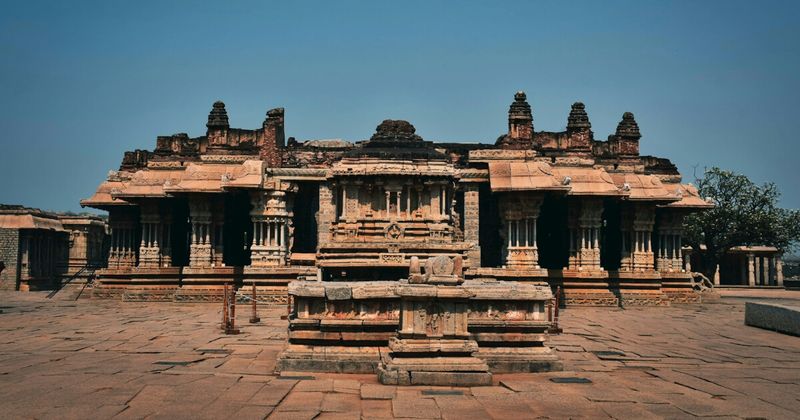
Hampi at 6 AM, before the tour groups arrive, gives you the stone chariot entirely to yourself — the overnight bus from Bengaluru gets you there in time.
Check Live Flight Prices
The Bottom Line
India doesn't meet you halfway. It doesn't adjust to you, it doesn't soften its edges, it doesn't turn down the volume. What it does — if you give it enough time — is completely rearrange your sense of what a city, a meal, a conversation, or a morning can be. Permanently.
The preparation is simple and it matters: sort your travel insurance on Visitors Coverage before you book anything else. Activate a travel eSIM through Saily so you're not navigating blind on arrival. Book your first airport transfer through Welcome Pickups so the first 30 minutes aren't a negotiation. Pre-book the Taj Mahal and the Ganga Aarti on Klook. Search flights on FlyFlick — open-jaw tickets between Delhi and Mumbai often save $100–200 USD over a straight return. That's it. Everything else you'll figure out on the ground.
The smell will hit you the moment the arrivals doors open — cardamom and diesel and something you can't name. By day five, you'll have stopped noticing it. By day ten, you'll realise you're going to miss it when it's gone.
Your First India Survival Checklist
Lock down these logistics before you land, not after.
🛡️ Travel Insurance — Non-Negotiable: VisitorsCoverage — Compare plans for India; minimum $100K USD medical + evacuation; most 2-week plans run $30–80 USD. Add adventure rider if trekking, rafting, or motorbiking.
✈️ Flights & Delay Protection: FlyFlick — Compare flights to Delhi, Mumbai, Bengaluru, Chennai; open-jaw tickets often save $100–200 USD | Compensair — Claim up to €600 for delayed or cancelled India flights; file from your phone at the gate.
🚖 Airport Transfer: Welcome Pickups — Pre-booked, fixed-price, English-speaking driver waiting with your name on a board; skip the tout pressure entirely on your first Indian night.
📱 Connectivity: Saily — City 5G eSIM; activate at home, works from the moment you land | Yesim — Unlimited data eSIM for multi-country trips covering India, Nepal, Sri Lanka, and beyond | Drimsim — Off-grid eSIM that auto-switches networks; essential for Himalayan foothills, Rajasthan desert, and rural India.
🚂 Getting Around: 12Go Asia — Book Indian train tickets in English with an international card; skip the IRCTC login nightmare entirely | InDrive — Bid-based ride app for Indian cities; propose your price, driver accepts or counters; consistently 20–40% cheaper than tourist-quoted auto rates.
🎟️ Experiences Worth Pre-Booking: Klook — Taj Mahal sunrise entry, Ganga Aarti front-row spots, street food walks, Kerala houseboat stays, cooking classes, fixed pricing, free cancellation, instant confirmation.
Land curious. Leave changed.