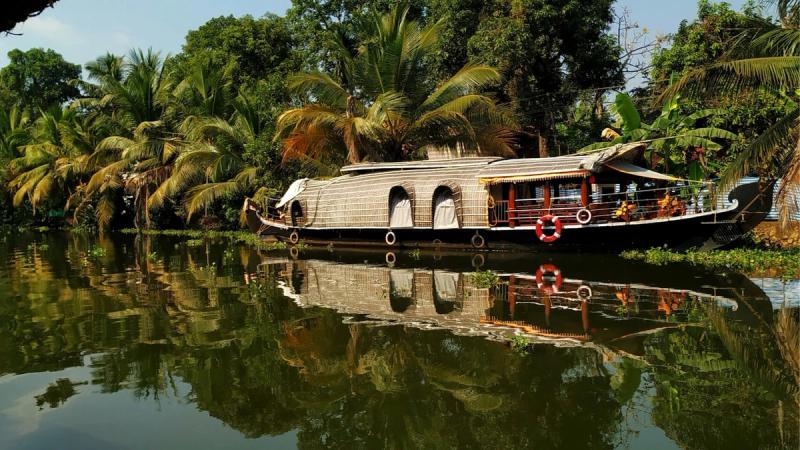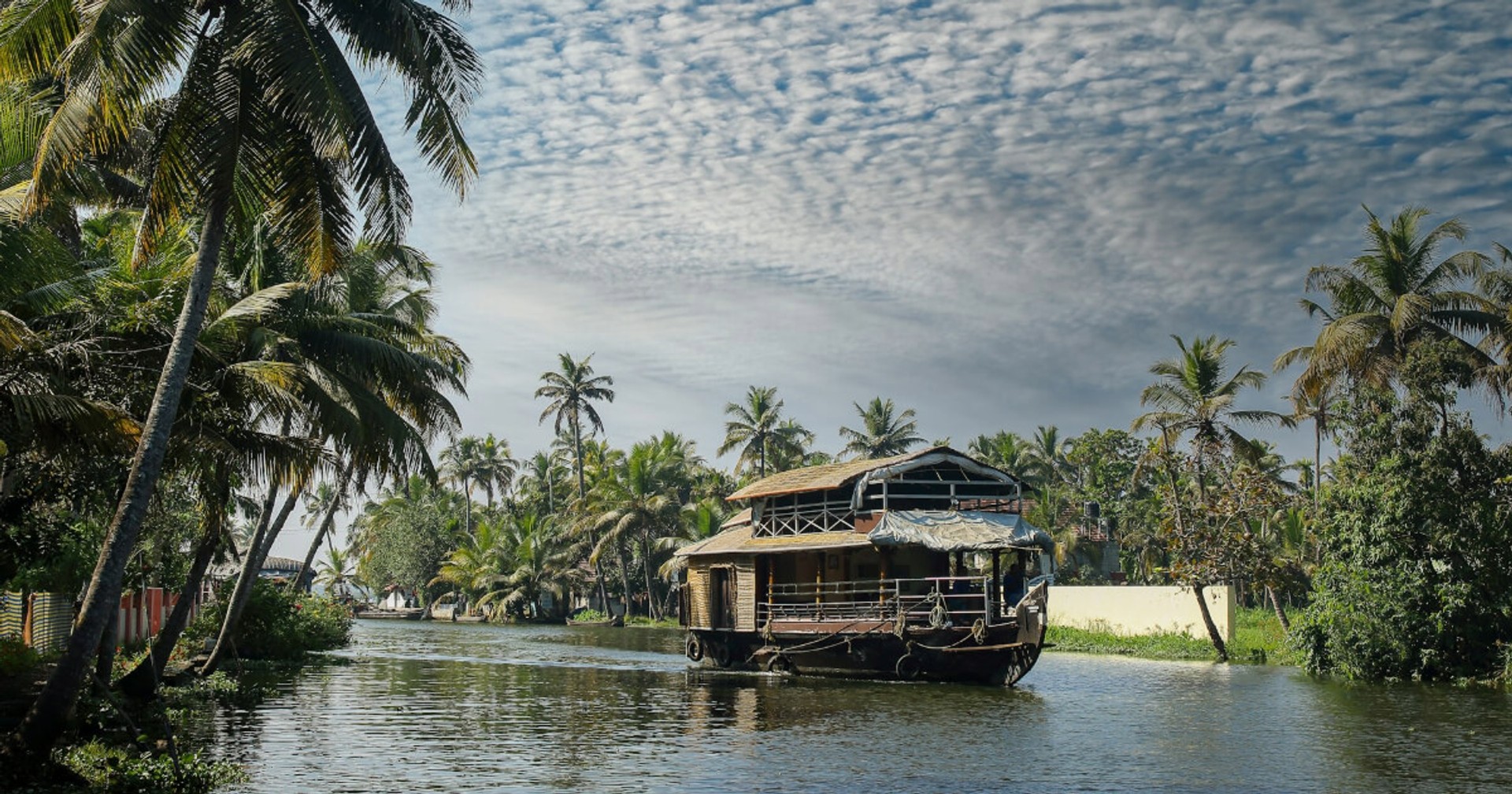

Every houseboat on the Kerala backwaters stops at 5:30pm. Not because the operator feels like it, and not because there's a schedule. It's the law — houseboats on Vembanad Lake and the main backwater channels are legally prohibited from anchoring in open water overnight. So at dusk they moor alongside the canal banks in the villages, cut the engine, and go completely still. The cook lights the stove. The smell of coconut oil and cumin comes up from the kitchen hull below. Across the canal, there's a reasonable chance a toddy tapper is halfway up a 60-foot coconut palm with nothing but the calluses on his feet to grip the bark — because that's how fresh toddy reaches the table in Kerala, tapped before sunrise and consumed the same day, every day, by law.
That moment — the engine off, the water glass, the palms silhouetted — is the reason seven days in Kerala is worth every hour of the flight to get here.
This Kerala 7-day itinerary loops from Kochi up into Munnar's tea estates at 2,000 metres, cuts across to Thekkady's spice forest on the Kerala–Tamil Nadu border, drops into the Alleppey backwaters for an overnight houseboat, then ends at Varkala's red sandstone cliffs before closing the circle back to Kochi. You arrive and depart from the same airport. The route is anticlockwise. The logic is airtight.
Before any of this: sort VisitorsCoverage the moment you confirm your flight. Kerala is a state where a single motorbike injury or an unexpected appendicitis admission can cost ₹30,000–₹1,50,000 ($360–$1,800 USD) before you've even been assessed by a specialist. Your domestic health policy from the UK, US, Australia, or Europe will not cover this. VisitorsCoverage takes ten minutes, costs from about $12 for a week's cover, and means the rest of this itinerary is the only thing you have to think about.
At a Glance: 7-Day Kerala Loop
| Day | Route | Distance / Time | Overnight Base |
|---|---|---|---|
| Day 1 | Arrive Kochi — Fort Kochi exploration | — | Kochi (Fort Kochi area) |
| Day 2 | Kochi → Munnar | 130 km / 4.5 hrs | Munnar |
| Day 3 | Munnar — tea estates, Eravikulam, Kolukkumalai | Local day | Munnar |
| Day 4 | Munnar → Thekkady | 85 km / 2.5 hrs | Thekkady |
| Day 5 | Thekkady → Alleppey — houseboat check-in | 165 km / 4 hrs | Overnight houseboat |
| Day 6 | Alleppey → Varkala | 120 km / 2.5 hrs | Varkala |
| Day 7 | Varkala → Kochi (depart) | 170 km / 3 hrs | — |
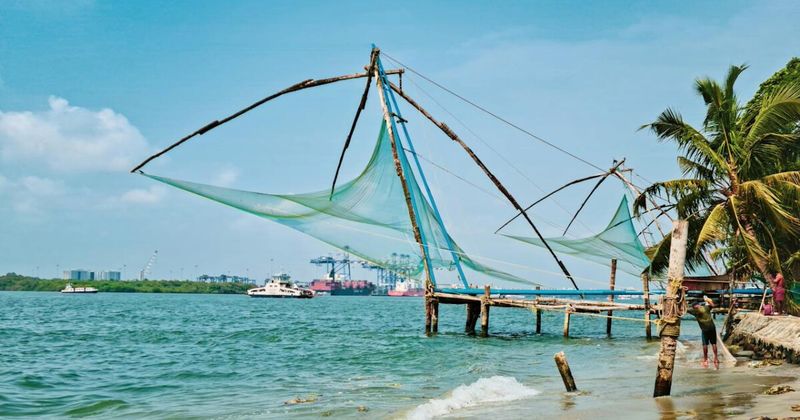
The Chinese fishing nets of Fort Kochi were introduced between 1350 and 1450 AD by traders from the court of Chinese explorer Zheng He — each structure stands 10 metres tall, spans 20 metres over the water, and requires a team of up to six fishermen to operate.
Day 1: Arrive Kochi — Fort Kochi, Kathakali and the First Kerala Meal
Kochi (Cochin) International Airport — airport code COK — is in Nedumbassery, about 30 kilometres northeast of the city centre and 40 kilometres from Fort Kochi on the western peninsula. Search and book your flights to Kochi with FlyFlick — and before you board, set a Compensair alert for the return leg. Kochi is well-served from most international hubs via Dubai, Doha, Colombo, and Singapore, with frequent onward connections to every major European and US gateway.
Pre-book your airport-to-hotel transfer through GetTransfer fixed-fare airport transfer, vehicle confirmed before payment — the fare from COK to Fort Kochi is fixed in advance, the vehicle class is confirmed before you pay, and you don't negotiate on arrival with a driver who saw you come through the international terminal. The drive to Fort Kochi takes 45–60 minutes without traffic, up to 90 minutes during Kochi's afternoon rush.
Fort Kochi — the old colonial peninsula on the western edge of the city — is where to stay for Day 1. Most good guesthouses here are in converted Portuguese and Dutch colonial buildings. Midrange rooms run ₹2,500–₹6,000 ($30–$72 USD) per night; budget homestays start from ₹1,000 ($12 USD). Stay in Fort Kochi itself, not Ernakulam (the modern mainland) — the geography matters for walking to the fishing nets at sunset without a taxi.
The Chinese fishing nets (Cheena Vala) are a 10-minute walk from most Fort Kochi guesthouses along the seafront. The best time to see them is sunset: the nets are silhouetted against the Arabian Sea and local fishermen occasionally run demonstrations — for a small tip, ₹50–₹100 ($0.60–$1.20 USD), they'll show you how the counterweight system lowers the net into the water. The whole contraption runs on balance alone: the weight of a man walking the main beam is enough to tip it.
For dinner, eat Malabar. Fort Kochi's best casual option is Fusion Bay on Burger Street or Kashi Art Café on Burgher Street — the Kashi serves Kerala-Portuguese fusion in a courtyard that was once a warehouse. Order the karimeen pollichathu (pearl spot fish wrapped in banana leaf and grilled with shallots and coconut paste) — ₹350–₹500 ($4.20–$6.00 USD) per main. It is the definitive Kerala meal and most menus outside Kerala try and fail to replicate it.
If you're arriving in the evening and want to add a cultural experience, Kerala Kathakali — the highly stylised classical dance-theatre form using elaborate makeup, costumes, and hand gestures — has a ticketed performance at Kerala Kathakali Centre near the fishing nets most evenings at 6:30pm. Entry ₹350 ($4.20 USD). Arrive 30 minutes early to watch the performers apply their makeup, which is the more interesting half of the event. Book in advance through Klook | Kochi Kathakali performance — pre-bookable, cancellation policy included.
Get your data sorted before you leave your room. Saily | city 5G eSIM — activate before you board covers Kochi and all major Kerala destinations on 5G. Activate it before landing — you'll need working maps the moment you're through arrivals.
Day 2: Kochi to Munnar — The Most Scenic Drive in South India
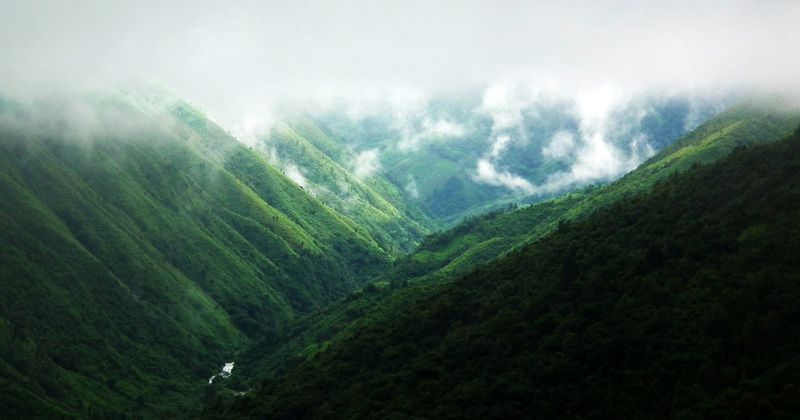
Munnar is a hill station in the Idukki district of Kerala, in the Western Ghats, at about 1,600–2,000 metres above sea level — roughly 130 kilometres east of Kochi. It is the largest tea-growing region in South India, with an estimated 30,000 hectares of tea cultivation across the surrounding hills. The drive from Kochi to Munnar takes approximately 4–4.5 hours by road and is genuinely one of the most photogenic drives in the country.
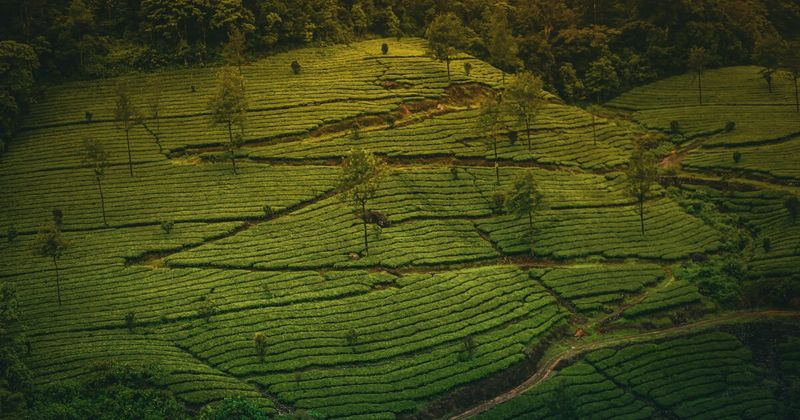
Most of Munnar's tea estates are owned by KDHP — the Kanan Devan Hills Plantations Company, a subsidiary of Tata Consumer Products — whose tea factory in Munnar town runs public tours where you can taste the same tea that was picked on the hillside that morning.
Book your Kochi-to-Munnar transfer through Intui.travel | private Kochi to Munnar intercity transfer — the drive involves ghat sections (steep mountain curves) after Adimali, and a professional driver familiar with the route is worth every rupee. Alternatively, state-run KSRTC buses run from Ernakulam's central bus stand to Munnar for approximately ₹120–₹200 ($1.45–$2.40 USD) and take 5–5.5 hours including stops — book on 12Go Asia | KSRTC Kerala buses, English interface for the English interface and international card support.
Leave Kochi by 7am to avoid the city traffic and reach the Cheeyappara Waterfalls (about 65 km from Kochi) before the late-morning coach groups arrive. Cheeyappara is a seven-tiered waterfall on the Periyar River visible directly from the NH183 highway — no entry fee, a 5-minute walk from the road. Stop for 15 minutes and keep moving. The better stop is Valara Waterfalls, 3 km further, which is less photographed and more dramatic.
The final 30 kilometres into Munnar are through Kanan Devan Hills tea estates — the private land of Tata Consumer Products (formerly Tata Tea), whose KDHP company manages most of the commercial cultivation in the area. The rows of tea bushes run from the valley floor to the ridge line on both sides of the road. At road level, you're driving through the same altitude as the workers — almost entirely women from the Muthuvan hill community — who harvest tea in the mornings. Watch the road signs for the Munnar town entry junction and follow them rather than a mapping app, which will occasionally route you through unmarked estate roads.
Check into your Munnar accommodation by early afternoon. Midrange guesthouses start from ₹1,800 ($21.70 USD) per night for a garden room; proper hill-view properties run ₹3,500–₹7,000 ($42.20–$84.35 USD).
Day 3: Munnar — Eravikulam National Park, Tea Factory Tour and Kolukkumalai Sunrise
This is Munnar's full day. Do not waste it sleeping in.
Set an alarm for 5:30am if you're doing Kolukkumalai — the highest tea estate in the world at 2,100 metres, on the Munnar–Tamil Nadu border. The estate sits above the cloud line on most mornings, which means arriving before 7am gives you a sunrise above the clouds with nothing but the mountain ridge and the Arabian Sea visible on a clear day, 200 kilometres to the west. The drive from Munnar to Kolukkumalai takes about 1.5 hours on an unsealed road requiring a 4WD jeep — rent locally in Munnar for ₹2,500–₹3,500 ($30.15–$42.20 USD) including driver for the half-day, or book a guided jeep tour through Klook | Munnar Kolukkumalai jeep and sunrise tour, pre-bookable. The estate's tea factory there still uses machinery from the 1930s — a wood-fired tea roller that produces an orthodox-grade tea sold almost entirely to domestic auction. You can buy it directly from the estate at ₹200–₹400 ($2.40–$4.80 USD) per 250 grams, which is a fraction of what it costs exported.
Return from Kolukkumalai by 11am. Then: Eravikulam National Park.
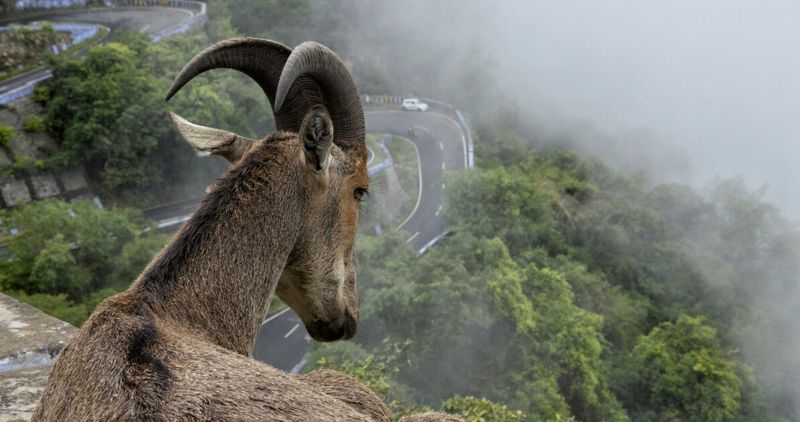
Eravikulam National Park holds the largest viable population of Nilgiri Tahr in the world — estimated at over 800 animals in the Rajamala zone alone, a number that represents a remarkable conservation recovery from fewer than 100 individuals recorded in the late 1970s.
Eravikulam, 15 kilometres from Munnar, is Kerala's first national park (established 1978) and home to the world's largest single population of Nilgiri Tahr — an endangered mountain ungulate that looks somewhere between a goat and an ibex, and which wanders the Rajamala grasslands with a calm indifference to tourists that suggests it knows it's protected. Foreign national entry is ₹500 ($6 USD) per person. Indian adult entry is ₹200 ($2.40 USD). Entry time 7:30am–4pm daily. The park closes every year from February to April for the Tahr calving season — if your Kerala trip falls in this window, you cannot enter Eravikulam. Check the official schedule before you plan. Eravikulam National Park official site.
Private vehicles are prohibited inside the park. You board a Forest Department safari bus from the entrance gate — a 15-minute ride up a mountain road that earns its reputation. Book your park entry online in advance during November–January peak season; walk-up queues can run 2–3 hours on weekend mornings. The Rajamala tourism zone at the top has a cafeteria, an information centre, and a 1.5-kilometre walking path through open grassland where the Tahr graze. Allow 2–3 hours total. Take a light jacket — at 2,000 metres, Eravikulam can be 10–12°C cooler than Munnar town.
After Eravikulam, spend the afternoon at the KDHP Tea Museum in Munnar town (entry ₹100, about $1.20 USD) — the Tata Tea factory tour runs through the full production process from fresh leaf to packed packet. The rolling, withering, and sorting rooms smell extraordinary. The tasting at the end is the most honest tea you'll drink in South India, because it's the same batch that came off the estate that week.
For dinner in Munnar, eat at Saravana Bhavan on the main market road — it's a no-nonsense South Indian vegetarian restaurant, ₹100–₹200 ($1.20–$2.40 USD) per person for a full meal. The Kerala meals (sadhya format) served on banana leaf are what you should order. The five-star hotel restaurants in Munnar are fine; this is better.
Check Live Flight Prices
Day 4: Munnar to Thekkady — Periyar Wildlife Sanctuary and the Spice Farm Walk
Thekkady is in Idukki district, about 85 kilometres southeast of Munnar on the Kerala–Tamil Nadu border. The drive takes 2.5–3 hours via Bison Valley — a ghat road through private spice farms and cardamom forest that is, on most mornings, very foggy and very quiet. Book the Munnar-to-Thekkady transfer through Intui.travel | private Munnar to Thekkady road transfer or, if you're comfortable sharing, the KSRTC bus via Kumily (the town adjacent to Thekkady) runs twice daily and costs ₹80–₹120 ($0.96–$1.45 USD) on 12Go Asia | KSRTC Kerala bus routes, international cards accepted.
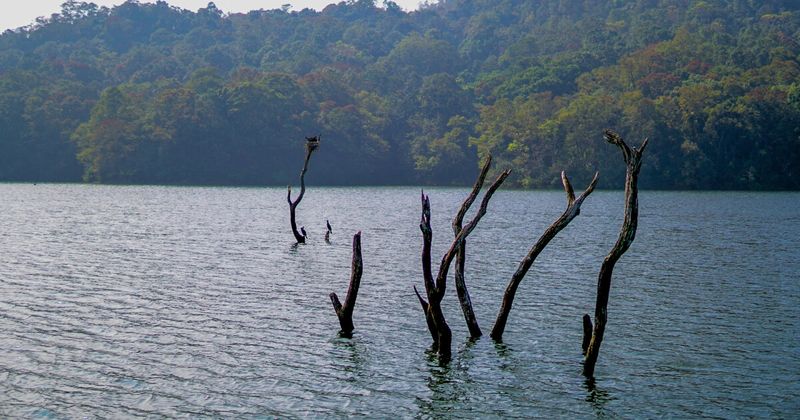
Periyar Lake was created in 1895 when the British colonial government dammed the Periyar River to supply irrigation water to the Madurai plains in Tamil Nadu — the submerged forest trunks still visible above the waterline are the original trees that stood before the valley flooded.
The Bison Valley route is the better choice over the Rajakkad route for anyone doing the drive in a private vehicle — the road quality is similar, but the spice estate stretches between Rajakkad and Kumily are more dramatic.
Thekkady is the entry point for Periyar Wildlife Sanctuary — 925 square kilometres of protected forest surrounding Periyar Lake in the Kerala highlands. The lake itself was formed in 1895 when the British dammed the Periyar River to irrigate the Madurai plains in Tamil Nadu. The result is a reservoir in the middle of a rainforest, with the stumps of submerged trees still visible above the waterline at low water, and wild elephants, gaur, sambar deer, and occasional leopards using the lake shore.
The standard activity is a boat safari on Periyar Lake — two-hour trips on government-operated KTDC boats costing ₹200–₹350 ($2.40–$4.20 USD) per person. Book through Klook | Periyar Lake boat safari, pre-book to avoid walk-up queues at least a day ahead in peak season (November–February). Elephant sightings from the boat are not guaranteed but common in the early morning on the south shore. The 6:30am boat has the best sighting probability.
The more interesting activity — and the one almost nobody on a package tour does — is the spice farm walk in the private cardamom and pepper estates surrounding Kumily. These are working farms, not theme parks. A 90-minute guided walk through a 20-acre mixed spice estate — cardamom plants under shade trees, black pepper vines climbing jackfruit trunks, cloves drying on bamboo mats, nutmeg trees with their split orange fruits — costs ₹300–₹500 ($3.60–$6.00 USD) per person, typically including a glass of cardamom-ginger tea at the end. The operators along Bypass Road in Kumily are mostly owner-operated and vetted by the state tourism board; ask your guesthouse owner for their preferred contact rather than booking through a tout on the main street.
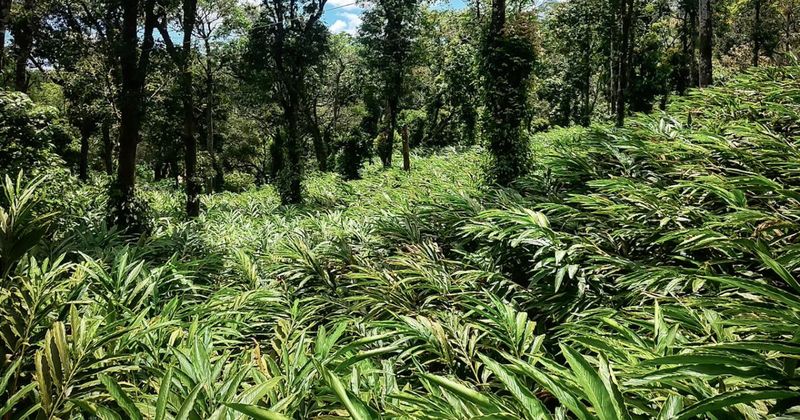
Cardamom (Elettaria cardamomum) grows under the shade of taller trees in the Kerala highlands at 600–1,500 metres altitude — the pods grow directly from the plant's base stem rather than from its branches, which is why you have to look down rather than up to spot them on a farm walk.
Kerala is the source of almost 97% of India's cardamom production. The Thekkady-Kumily region accounts for a significant share of that. This context — tasting a cardamom pod off the plant in the same region where it's been grown for centuries — is the kind of thing you can't replicate at a hotel spice buffet.
If you have a particular interest in Ayurveda treatments, Thekkady and the surrounding Kerala hill country is one of the most legitimate regions in the state for authentic Panchakarma retreats — not the commercial 2-hour "Ayurveda massage" experiences marketed to tourists in Kochi, but actual clinical treatment programs. Our Kerala Panchakarma guide covers how to identify the real thing and what to avoid when booking.
Day 5: Thekkady to Alleppey — Check into Your Overnight Houseboat
Today is the logistical centrepiece of the entire loop. Get it right and everything flows.
Thekkady to Alleppey (Alappuzha) is approximately 165 kilometres by road via Kottayam — about 3.5–4 hours in a private vehicle. Leave Thekkady by 8am to reach Alleppey for houseboat check-in at noon, which is the standard time across all operators. Book the transfer through Intui.travel — private Thekkady to Alleppey road transfer — the Kottayam section is on NH183 and the drive is comfortable; it's the stretch from Kottayam to Alleppey across the flat backwater region that can be slow on weekends. There are no train connections that serve this route conveniently.
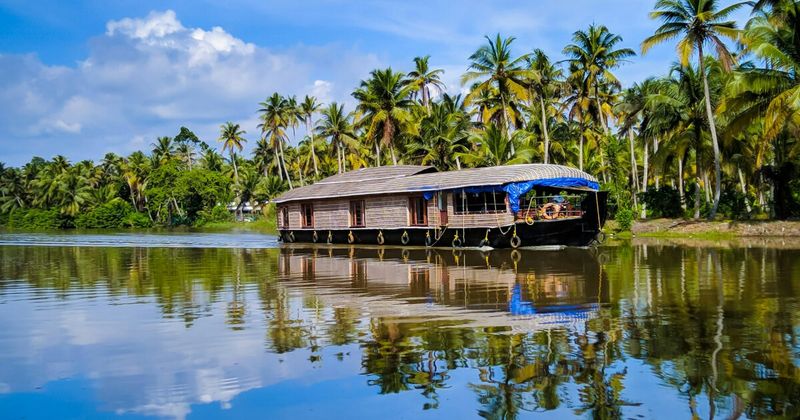
Kerala houseboats — called kettuvallam in Malayalam, meaning "boat with knots" — are built from bamboo and coconut wood tied with coir rope, using no nails in the traditional method; the material makes them both flexible in the water and naturally buoyant without requiring a fibreglass hull.
Alleppey — or Alappuzha, its official name — is a small city in Kerala about 65 kilometres south of Kochi, built on a narrow strip of land between the Arabian Sea and the Vembanad Lake backwater system. The houseboat jetty district starts along VNCP Road near the bus stand. Most operators have their own jetties within a 2-kilometre radius of the main bridge.
Houseboat categories and 2026 prices:
Deluxe (basic AC, 1 bedroom, 2 guests, crew of 3, all Kerala meals included): ₹8,500–₹9,500 ($102–$114 USD) per night, per boat, all-in. This is the right category for most first-timers — it's clean, the food is excellent, and the experience of being on the water is identical at every price point.
Premium (full-time AC, glass deck, upgraded meals): ₹12,000–₹18,000 ($144.60–$216.90 USD) per night.
Luxury (Jacuzzi, upper deck lounge, 2+ bedrooms, superior crew): ₹25,000–₹45,000+ ($301.20–$542.20 USD).
Weekend and peak-season (October–January) rates run 30–50% above these base prices. Book at least 3–7 days ahead for peak season; a week in advance for shoulder season. Pre-book through Klook — Alleppey overnight houseboat, pre-book with cancellation policy for vetted operators with transparent cancellation policies — the unvetted walk-up market at the Alleppey jetty has real quality variation, and the difference between a clean, well-crewed boat and a poorly maintained one isn't visible from the bank. On 12Go Asia — Alleppey houseboat and backwater tours, you'll also find shikara (small open canoe) day tours as an alternative if the houseboat price point doesn't fit.
The route your houseboat takes matters more than most first-timers realise. The main Vembanad Lake channel is wide and beautiful but feels like a marina compared to the narrow village canals. Ask your operator specifically to include at least 2 hours in the narrow kuttanad canals — the ones where the boat slows to a walking pace, coconut palms meet overhead, and village life happens three metres from your deck. You'll see women washing clothes at stone ghats, children crossing on rope bridges, and the occasional kingfisher doing exactly what a kingfisher does.
The crew will moor by 5:30pm alongside a canal bank. The cook — typically a trained Kerala home cook, not a chef — plates dinner on the lower hull table: fish curry, rice, stir-fried vegetables, pappadum, pickle, and fish fry. Everything was cooked on the boat that day. The prawns were probably bought from a canal-side vendor that afternoon. Eat everything.
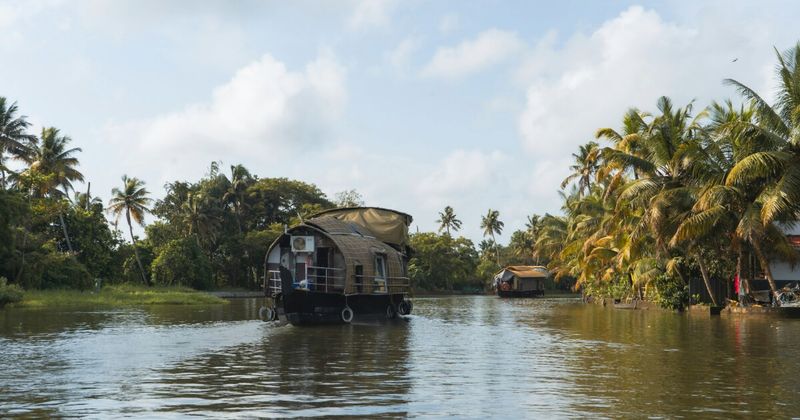
Vembanad Lake, the main waterway of the Kerala backwaters, stretches 96 kilometres from Alappuzha in the south to Kochi in the north — making it the longest lake in India and the widest section of the backwater network that houseboat routes traverse.
Day 6: Backwaters to Varkala — Kerala's Best Beach for Everyone Who Hates Beach Towns
Check out of your houseboat at 9am. The boat moors back at the Alleppey jetty and you continue by road.
Varkala is 120 kilometres south of Alleppey in Thiruvananthapuram district — about 2.5 hours by road via NH66. Book the Alleppey-to-Varkala transfer through Intui.travel — private Alleppey to Varkala transfer or catch a train from Alappuzha Railway Station to Varkala-Sivagiri station — the Alappuzha-Thiruvananthapuram Intercity Express (16381) covers the route in about 2 hours, with fares from ₹60–₹250 ($0.72–$3.00 USD) depending on class. Book on 12Go Asia — Kerala train routes, international card support for the English interface.
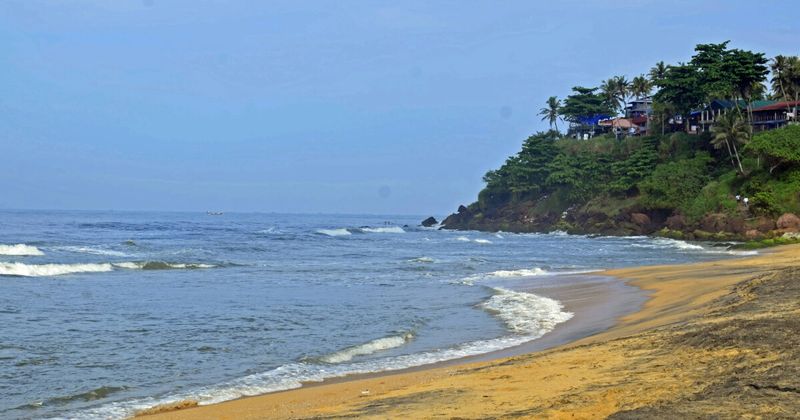
Varkala's North Cliff is geologically distinct from most of Kerala's otherwise flat coastal landscape — the red laterite rock formation is part of the same ancient geological belt that runs along the southwestern tip of India and extends under the Indian Ocean toward Sri Lanka.
Varkala is where most Kerala itineraries get lazy. They tell you it's a "cliff beach" with yoga and a hippie scene and some good seafood, all of which is accurate and none of which explains why Varkala beats every other beach in Kerala for a single overnight stay on this loop.
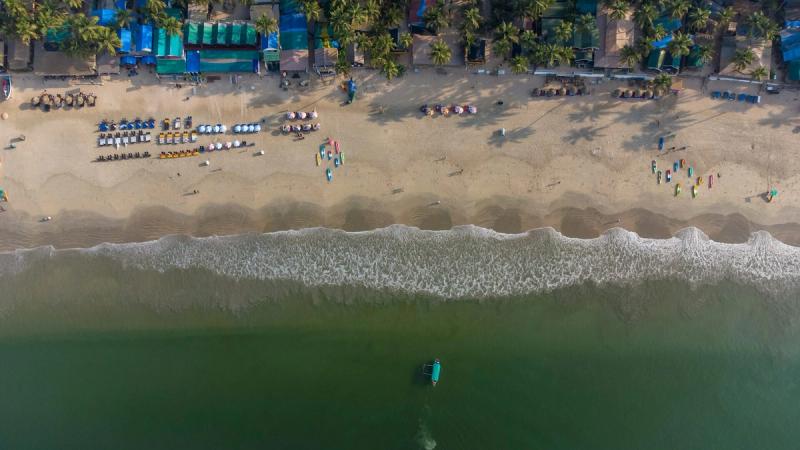
The cliff itself is the answer. Varkala's North Cliff is a 15-metre-high red laterite escarpment that runs for about 500 metres along the Arabian Sea coast. The beach (Papanasam Beach) sits at the base; the restaurants, guesthouses, and cafés sit along the cliff top. The result is a beach you can watch from above while eating lunch, which is a completely different relationship to the coast than any flat beach town offers. The sunset from the cliff edge is genuinely spectacular — a clear western horizon over the Arabian Sea with no obstruction.
Here is the thing nobody's beach guide tells you about Varkala: the cliffs are eroding. Sections of the cliff-top path have collapsed into the sea in recent years, particularly during and after monsoon season. In 2026, some walkways along the northern section of the cliff are either fenced off or considerably narrower than the photos suggest. Stay behind any roped barriers — they exist for solid geological reasons, not for aesthetic effect.
For dinner on the cliff, Abba Restaurant is the most reliable long-running option for fresh-catch grilled fish (₹350–₹600 per main, $4.20–$7.20 USD). It's not fancy. The view from the terrace seats makes it feel fancier than it is. Book a cliff-facing room at any of the guesthouses along the north cliff for ₹1,500–₹3,500 ($18.10–$42.20 USD) per night — the best value rooms fill first, so book at least 5–7 days ahead in peak season.
Kerala is a state with far more to discover than any single loop can cover — the far southern tip of India at Kanyakumari, the spice trade heritage of Kozhikode (Calicut), the entirely different landscape of Wayanad. Our Kerala Hidden Gems guide covers the places most 7-day itineraries skip entirely.
Day 7: Varkala to Kochi — Closing the Loop
The drive from Varkala to Kochi International Airport (COK) is approximately 170 kilometres, taking 3–3.5 hours via NH66 and NH544. Leave Varkala by 9am for an afternoon flight; by 7am for a morning flight. Book the final transfer through GetTransfer — Varkala to Kochi airport transfer, fixed fare confirmed before booking — this is the most important pre-booked transfer on the loop because Varkala is a beach town with limited taxi options, and arriving at the airport for an international flight having spent 30 minutes negotiating with an uncooperative driver is a poor use of the last morning in Kerala.
If your flight is evening and you have time, stop at Kochi Backwaters (the Mattancherry area) for one final hour — the Dutch Palace at Mattancherry (entry ₹5 for Indians, ₹20 for foreigners, and worth every rupee for the 16th-century Portuguese-to-Dutch mural paintings inside) and the Jew Town spice market just beyond it are two of the most concentrated areas of Kerala's trade history in a walkable 400-metre stretch.
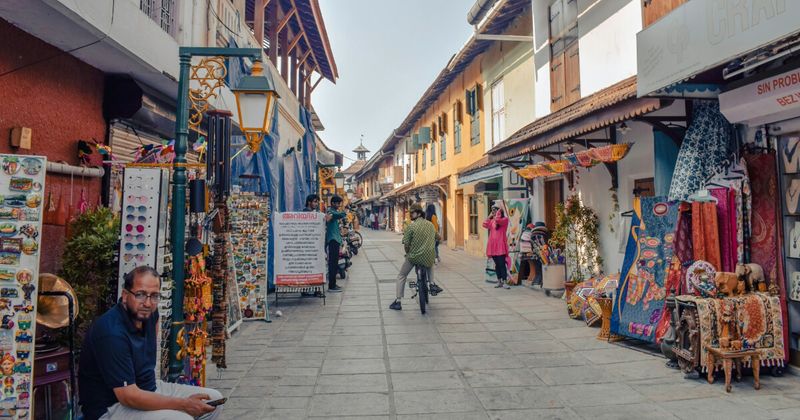
Mattancherry's Jew Town takes its name from the Paradesi Synagogue at the lane's end — built in 1568 and still active, it is the oldest active synagogue in the Commonwealth and houses hand-painted Chinese floor tiles brought from Canton in the 18th century, each one unique.
For the flight itself: search and book through FlyFlick — flights from Kochi international airport — and if you're continuing to another destination (Goa, Delhi, Mumbai) rather than flying home directly, our India in 3 Weeks itinerary connects Kerala into the broader north-south circuit for travellers with more time. If connectivity issues arise on the way to the airport, Yesim — unlimited data eSIM for multi-country trips covers the international leg better than Saily for trips continuing outside India.
Kerala Pace and Burnout: Managing 7 Days on This Loop
The single biggest mistake on this itinerary is treating Day 3 and Day 5 as back-to-back heavy days with a light day in between. They're not — Day 3 (Kolukkumalai at 5:30am + Eravikulam + tea museum) is exhausting, and Day 5 (an early transfer + houseboat check-in + afternoon on the water) feels slow until it doesn't. Plan accordingly.
If you have 8 days instead of 7, the extra day belongs in Alleppey — spend it on a shikara day trip into the narrow kuttanad village canals rather than the main lake. The shikara (small open canoe) can access waterways the houseboat can't reach and costs ₹1,000–₹2,000 ($12–$24 USD) for a half day, paddled by a single operator.
If you have 6 days, cut Varkala and return directly to Kochi from Alleppey (about 85 kilometres, 2 hours). Varkala is the most replaceable stop on this loop — the cliff is beautiful but Kochi's backwaters have their own quieter beach options near Fort Kochi. Thekkady, Munnar, and the houseboat are the core.
The Munnar–Thekkady–Alleppey section of this loop has virtually no flat road. Every transfer involves ghat sections, slower speeds, and stops at viewpoints that add 20–30 minutes you didn't budget. Build in 30% more time than any mapping app suggests for every leg between Day 2 and Day 5.
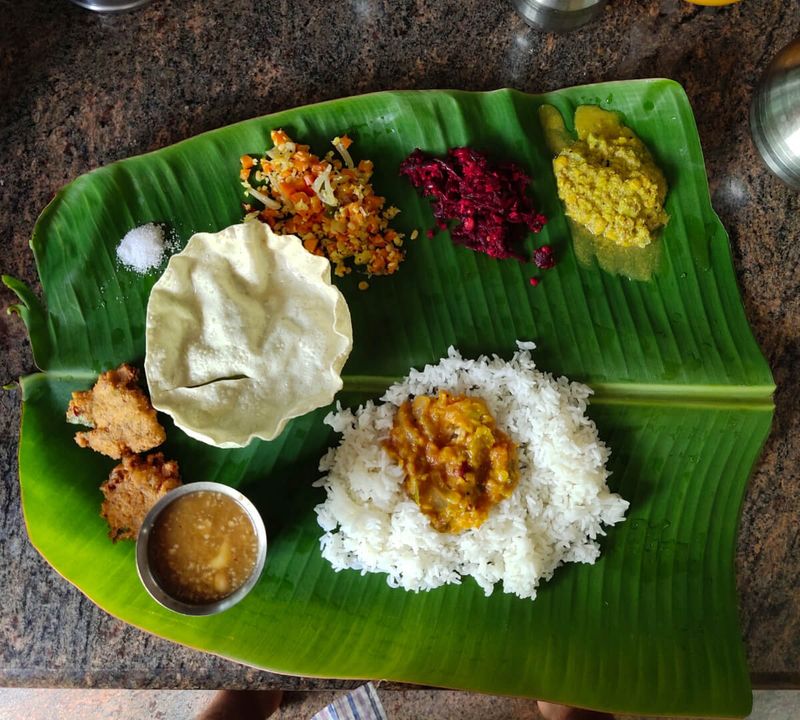
A proper Kerala sadhya includes 26 or more dishes served in a specific order on a banana leaf — the leaf is placed with its tip pointing left for a living person and right for a funeral feast, a distinction that every server in Kerala knows and that most tourists don't.
What to Skip on the Kerala 7-Day Loop
The Kochi sunset cruise packages. Every guesthouse in Fort Kochi will offer you a "Chinese fishing nets sunset cruise" for ₹500–₹1,500 per person. The view from the cruise is materially worse than the view from the Vasco da Gama Square promenade on foot. Save the money and walk.
The elephant camp near Munnar or Thekkady. These are not wildlife sanctuaries. They are captive elephant operations where the training methods are not publicly audited. No ethical wildlife operator in 2026 includes captive elephant rides or performances. If you want to see wild elephants, book a morning boat safari at Periyar Lake — sightings are common and the animals are genuinely free. Our Ranthambore ethical safari guide covers the framework for ethical wildlife tourism in India in full, and the same principles apply in Kerala.
"Spice garden" tours from Munnar touts. Touts on Munnar's main market road offer spice garden tours for ₹200–₹300 per person. These are 30-minute commercial garden stops that sell overpriced spice packets at the exit. The real spice farm walk experience is in Thekkady/Kumily, lasts 90 minutes, and is run by farmers, not tour operators.
Kovalam Beach instead of Varkala. Kovalam, near Thiruvananthapuram, is more developed, more tourist-facing, and significantly more expensive than Varkala for equivalent quality. The beach itself is fine. The value comparison favours Varkala. If you're flying out of Trivandrum International Airport (TRV) instead of Kochi and need to be in the area, Kovalam is a practical last-night choice — but as a destination on the loop, Varkala wins.
The Alleppey houseboat operators who approach you at the bus stand. They'll quote ₹4,000–₹6,000 and describe it as a "deluxe" boat. A legitimate deluxe overnight houseboat for two people costs ₹8,500–₹9,500 all-in. The ₹4,000 boats exist; they're not what you want after four days of travelling. Pre-book on Klook — Alleppey houseboat — pre-book with vetted operators and cancellation terms.
Eravikulam in February or March. The park closes annually for the Nilgiri Tahr calving season — typically 45–60 days between February and early April, exact dates variable. If your trip falls in this window, you cannot enter. Check the official Eravikulam National Park website before booking Munnar dates specifically for the park.
When to Visit Kerala on This 7-Day Loop
October to February is the peak season and the best weather window — temperatures of 22–34°C (72–93°F), low humidity, the backwaters are calm, Eravikulam is open, and the houseboat experience is at its best. Prices are highest in December and early January, when Alleppey houseboats can be double the base rate.
March to May is the pre-monsoon — hot (35–40°C / 95–104°F) in Kochi and the coast, but Munnar and Thekkady are genuinely pleasant at altitude (20–28°C) and prices drop across the board. Eravikulam may be closed (check dates). Varkala is still good. The most underrated time for this loop.
June to September (monsoon) brings heavy rain across all of Kerala — the backwaters flood, the ghat roads to Munnar and Thekkady can close without warning, and the Periyar Lake boat safaris operate on a reduced schedule. Kerala in monsoon is extraordinary if you know what you're signing up for: the spice plantations are lush green, the waterfalls are at full volume, and the houseboat experience has a particular intimacy in the rain. Do not attempt the NH183 ghat sections from Kochi to Munnar after dark during monsoon without checking for landslide alerts that morning.
7-Day Kerala Loop Budget Breakdown
| Expense | Budget | Mid-Range | Splurge |
|---|---|---|---|
| Accommodation (6 nights) | ₹6,000–₹12,000 ($72–$144) | ₹18,000–₹36,000 ($217–$433) | ₹60,000+ ($722+) |
| Food (7 days) | ₹3,500–₹6,000 ($42–$72) | ₹9,000–₹16,000 ($108–$193) | ₹25,000+ ($301+) |
| Airport transfers (both ends) | ₹1,500–₹2,500 ($18–$30) | ₹3,000–₹5,000 ($36–$60) | ₹8,000+ ($96+) |
| All intercity road transfers | ₹4,000–₹7,000 via bus ($48–$84) | ₹9,000–₹16,000 private ($108–$193) | ₹20,000+ ($241+) |
| All intercity road transfers | ₹4,000–₹7,000 via bus ($48–$84) | ₹9,000–₹16,000 private ($108–$193) | ₹20,000+ ($241+) |
| Alleppey overnight houseboat | ₹8,500 deluxe ($102) | ₹12,000–₹18,000 ($144–$217) | ₹30,000+ ($361+) |
| Eravikulam entry (foreigner) | ₹500 ($6) | ₹500 ($6) | ₹500 ($6) |
| Kolukkumalai jeep tour | ₹2,500 self-arranged ($30) | ₹3,500 guided ($42) | ₹5,000 private ($60) |
| Periyar Lake boat safari | ₹200 ($2.40) | ₹350 ($4.20) | ₹2,500 private ($30) |
| Spice farm walk (Thekkady) | ₹300 ($3.60) | ₹500 ($6) | Included in some packages |
| Experiences via Klook | ₹700–₹1,200 ($8.45–$14.45) | ₹2,500–₹5,000 ($30–$60) | ₹10,000+ ($120+) |
| Travel insurance | VisitorsCoverage from ~$12 | VisitorsCoverage from ~$12 | VisitorsCoverage from ~$12 |
| 7-day total per person (approx) | ₹27,000–₹38,000 ($325–$458) | ₹58,000–₹98,000 ($699–$1,181) | ₹1,60,000+ ($1,927+) |
Check Live Flight Prices
The Bottom Line
Kerala doesn't reward rushing. The whole state — the hills, the backwaters, the coast — operates on a pace that punishes anyone who tries to see it the way you'd see Paris or Rome, where you move fast and accumulate landmarks. The backwater canal goes still at 5:30pm whether or not you're ready to slow down. The tea-picker has been working since 6am whether or not you've had breakfast. The cardamom grows at 900 metres regardless of your itinerary.
This loop — Kochi to Munnar to Thekkady to Alleppey to Varkala and back — is the minimum viable version of Kerala that captures all four of its distinct landscapes without turning into a list of things you can say you've seen. Do the sunrise at Kolukkumalai once in your life. Eat the fish off the houseboat deck before it goes cold. Stand at the Varkala cliff edge at the exact moment the sun touches the water and forgive yourself for not coming sooner.
Seven days in Kerala. One loop. All of it worth it.
Your Kerala Loop Planning Checklist
🛡️ Insurance — non-negotiable, book before you fly: VisitorsCoverage travel insurance — medical costs in Kerala are not covered by international domestic policies
✈️ Flights and delay protection: Search and book Kochi flights on FlyFlick | flights to Kochi COK | Compensair delay alert before departure — covers up to €600 on EU-connected legs
🚗 Transfers — book all legs before arriving: Kochi airport → Fort Kochi: GetTransfer fixed fare | COK airport to Fort Kochi, vehicle confirmed before payment | Kochi → Munnar (130km): Intui.travel private transfer| Kochi to Munnar intercity transfer | Munnar → Thekkady (85km): Intui.travel | Munnar to Thekkady private transfer | Thekkady → Alleppey (165km): Intui.travel | Thekkady to Alleppey road transfer | Alleppey → Varkala (120km): Intui.travel or train | Alleppey to Varkala transfer | Varkala → Kochi airport: GetTransfer fixed fare | Varkala to Kochi airport, pre-booked
🚆 Trains and buses (budget alternative): All Kerala KSRTC bus routes bookable on 12Go Asia | Kerala bus and train routes, international cards | Alleppey to Varkala Sivagiri — Intercity Express, 2 hrs, from ₹60 — also on 12Go Asia
🎟️ Experiences — pre-book these: Kochi Kathakali performance (6:30pm, Fort Kochi): Klook | Munnar Kolukkumalai jeep + sunrise tour: Klook | Periyar Lake boat safari, Thekkady: Klook | Alleppey overnight houseboat: Klook Alleppey overnight houseboat — pre-book to avoid walk-up overcharging
📱 Data and connectivity: Saily 5G eSIM — activate before landing, covers Kochi, Munnar town, Alleppey, Varkala well | Drimsim off-grid eSIM — for Kolukkumalai summit (signal drops near zero above 2,000m) and Thekkady forest stretches | Yesim unlimited eSIM — for multi-country trips continuing beyond India after Kerala
Seven days. One loop. Go slow enough to mean it.