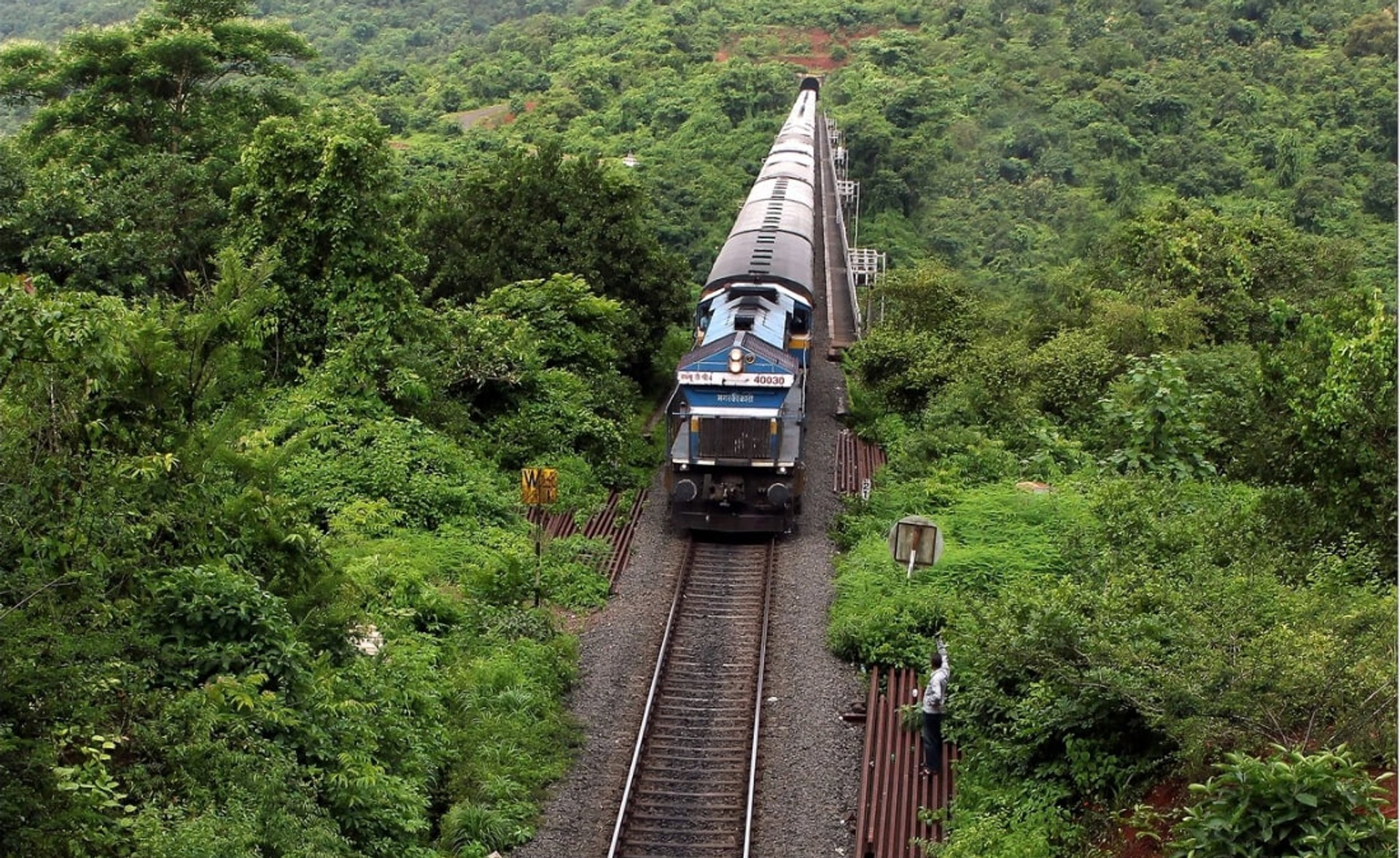

Ask ten people how to get from Mumbai to Goa and you'll get four different arguments and one person who insists there's a ferry. There isn't a ferry, not anymore, but the arguments are all legitimate — because the honest answer to "what's the best way" depends entirely on what you're optimising for. Time. Money. The experience of getting there. How much you're carrying. Whether you care that the Konkan Railway passes through 92 tunnels and more than 2,000 bridges and that there's a stretch between Ratnagiri and Sangameshwar where the train emerges from a tunnel mouth directly onto a bridge above a river gorge and you have roughly six seconds to see the Western Ghats on one side and a river estuary on the other before the jungle swallows the view again.
If you care about that, take the train.
If you're spending three nights in Goa for a work anniversary and need to be at the resort by dinner, take the flight.
If you're 24, travelling solo, have nowhere to be until noon, and the idea of waking up in Goa after a night on a moving bus sounds like a story worth telling — take the overnight bus, at ₹900 (about $10.85 USD), and save yourself a hotel night on both ends.
This guide doesn't pick a single winner, because there isn't one. It gives you the verified 2026 prices, the real door-to-door times, the things no booking site tells you, and a clear verdict for each type of traveller. Before any of that: sort your travel insurance. VisitorsCoverage needs to be the first thing you book on any India trip — hospital bills for even a minor incident in India can hit ₹20,000–₹80,000 ($240–$965 USD) and no domestic policy in the UK, US, Australia or Europe will reliably cover this. Do it before you board anything.
At a Glance: Mumbai to Goa — All Four Options
| Mode | Door-to-Door Time | Price Range (per person) | Best For |
|---|---|---|---|
| Train (Konkan Railway) | 10–14 hrs | ₹490–₹3,500 ($5.90–$42.20) | Scenery, budget, comfort in 3AC/2AC |
| Overnight Bus | 12–15 hrs | ₹600–₹5,000 ($7.25–$60.25) | Budget, saving a hotel night |
| Flight | 3.5–4.5 hrs door-to-door | ₹2,400–₹15,000+ ($28.90–$180.75) | Short trips, time-critical travel |
| Self-Drive / Road | 10–14 hrs | ₹5,500–₹12,000 ($66.30–$144.60) total car cost | Groups, road trip enthusiasts, Konkan stops |
All prices 2026. INR/USD at ₹83 = $1 USD. Actual prices may vary based on real-time market fluctuations, bank conversion fees, and service charges at the time of your transaction.
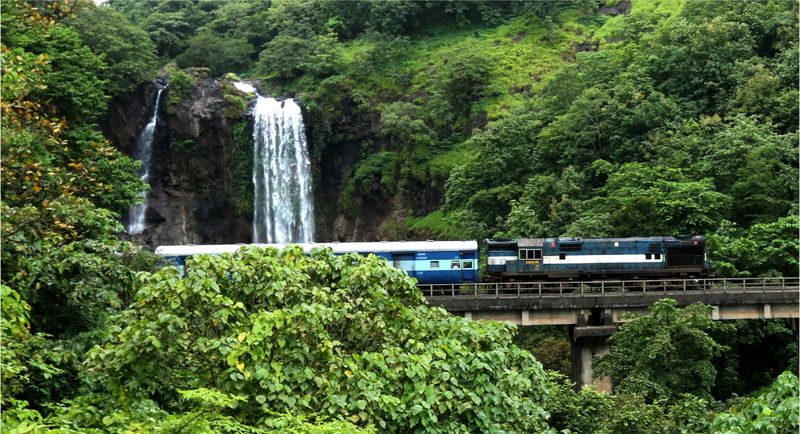
The Konkan Railway, opened in 1998 after 10 years of construction through some of India's most geologically complex terrain, is widely considered one of the great engineering achievements of post-independence India — and one of its most beautiful train journeys.
Mumbai to Goa by Train: Konkan Railway Routes, Classes and What to Book
The Konkan Railway line — connecting Mumbai to Goa and continuing down to Mangaluru and Thiruvananthapuram — is one of India's most spectacular stretches of track. It was carved through the Western Ghats in the 1990s over a decade of construction, crossing 146 rivers and 2,000 bridges, threading through 92 tunnels, and solving problems of terrain that engineers initially considered unfeasible. The result is a 756-kilometre coastal-mountain route where every half-hour of travel looks different from the last.
For international travellers, the train is the right choice for one specific reason: it drops you at Madgaon (Margao) station in South Goa, from which you can continue by local taxi or pre-booked transfer to virtually anywhere in the state. No additional domestic airport transfer, no second journey. The Goa rail network has two main passenger stations — Madgaon (South Goa, Margao) and Thivim or Karmali (both North Goa, depending on the train). Choosing the right one matters: getting off at Madgaon when your hotel is in Calangute adds 45 minutes and ₹600 ($7.25 USD) of taxi.
North Goa destinations (Calangute, Baga, Anjuna, Vagator, Arambol): get off at Thivim or Karmali station. Taxi to Calangute/Baga from Thivim is about 20 km, ₹400–₹600 ($4.80–$7.25 USD), 40–50 minutes.
South Goa destinations (Palolem, Agonda, Margao, Panjim): get off at Madgaon (Margao) station. Taxi to Palolem from Madgaon is 30 km, ₹600–₹900 ($7.25–$10.85 USD), 40 minutes.
Panjim (the capital): closest station is Karmali — about 18 km, ₹350–₹500 ($4.20–$6.00 USD) by taxi. Book your onward transfer in advance through Intui.travel to avoid negotiating at the station exit.
Which Mumbai to Goa Train is Actually Worth Taking
There are roughly 40+ trains on this route each week. Most of them are long-haul expresses from north India passing through Mumbai and terminating further south — fine for a seat, not great for the experience. These are the five trains that actually matter:
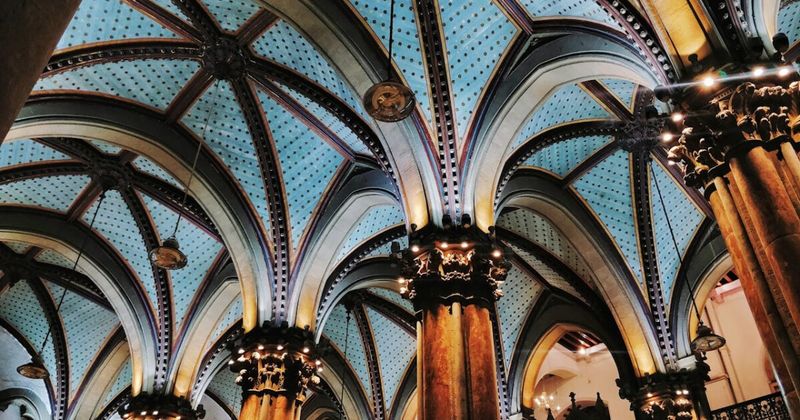
CST (Chhatrapati Shivaji Maharaj Terminus) was designated a UNESCO World Heritage Site in 2004; it serves over three million passengers daily, making it one of the busiest railway stations in Asia.
Mandovi Express (10103) — The one to book if you want the views. Departs CSMT (Chhatrapati Shivaji Maharaj Terminus) at 7:10am, arrives Madgaon around 7:00pm. The scenic Ratnagiri-to-Sangameshwar stretch falls perfectly in afternoon light, roughly 1pm–5pm. This is the train where you'll actually see what the fuss about the Konkan Railway is about. Sleeper class ₹490 ($5.90 USD); 3AC ₹1,350 ($16.25 USD); 2AC ₹1,900 ($22.90 USD).
Jan Shatabdi Express (12051) with Vistadome coach — The best daytime option for travellers who want panoramic glass-roof views. Departs Dadar at around 5:50am. Journey time approximately 8–9 hours. The Vistadome (EV class) coach has a glass roof, panoramic side windows, and a limited number of rotating chairs. Fare ₹1,600–₹3,500 ($19.30–$42.20 USD) depending on seat type and booking window. Here's the detail most guides miss: the Vistadome coach is positioned at the front of the train on the Mumbai-to-Goa direction, which means its panoramic roof windows get the first unobstructed view of every tunnel entrance and bridge approach before the rest of the carriages enter. Book well in advance — EV class sells out on weekends within hours of the 60-day booking window opening on IRCTC.
Vande Bharat Express (22229) — The fastest option, completing the run in approximately 7h 36min. Chair Car (CC) fares run ₹1,200–₹1,500 ($14.45–$18.10 USD); Executive Class higher. Terminates at Madgaon, which is convenient for South Goa. The trade-off: no sleeping option, all-day sitting, and dynamic pricing means weekend fares push toward ₹2,500–₹3,000 ($30.15–$36.15 USD) for the same seats.
Konkan Kanya Express (10111) — The classic overnight option. Departs CSMT at 11:05pm, arrives Madgaon at approximately 10:45am. You sleep through the dark, wake up for the last coastal hour of greenery before Madgaon. Sleeper ₹545 ($6.55 USD); 3AC ₹1,450 ($17.50 USD); 2AC ₹2,050 ($24.70 USD). The tradeoff: you miss every view. The advantage: you don't lose a travel day.
Netravati Express (16345) — Departs CSMT around 11:40am, arrives Madgaon in the evening. Budget sleeper class at ₹490 ($5.90 USD). Best last-minute option since it consistently has more available seats than the Mandovi or Konkan Kanya closer to departure.
Book all trains on 12Go Asia — it accepts international cards, shows live seat availability in English, and doesn't require an IRCTC account, which saves 30 minutes of bureaucracy. The alternative is IRCTC directly, which works fine but requires an Indian mobile number for OTP verification.
Signal drops to near-zero inside the longest tunnels and in several remote sections between Ratnagiri and Sawantwadi. A Drimsim eSIM won't solve signal in a tunnel (nothing will), but it handles the patchy stretches between stations better than most standard roaming SIMs. For city use, Saily is better — activate before you board at Mumbai.
Verdict on the train: Best overall option for first-time international travellers. The scenery is real, the prices are fair, the AC classes are comfortable, and the Mandovi Express delivers one of the most memorable travel days available on any route in India. Book 45–60 days out for 3AC or 2AC on peak-season weekends.
Check Live Flight Prices
Mumbai to Goa by Overnight Bus: What the Booking Sites Don't Tell You
The overnight bus from Mumbai to Goa is, in budget travel terms, genuinely elegant. You board in the evening — most departures run between 4:30pm and 10pm from Dadar, Borivali, Andheri, or Bandra depending on the operator — you sleep (or don't), and you arrive in Goa between 7am and noon. Two cities, zero hotel nights. The cheapest seats start at ₹600 ($7.25 USD) for a non-AC seater. A decent AC sleeper berth (2+1 configuration, individual curtain, charging point) runs ₹1,200–₹2,500 ($14.45–$30.15 USD). Premium Volvo multi-axle sleepers with wider berths and extra legroom go up to ₹3,500–₹5,000 ($42.20–$60.25 USD).
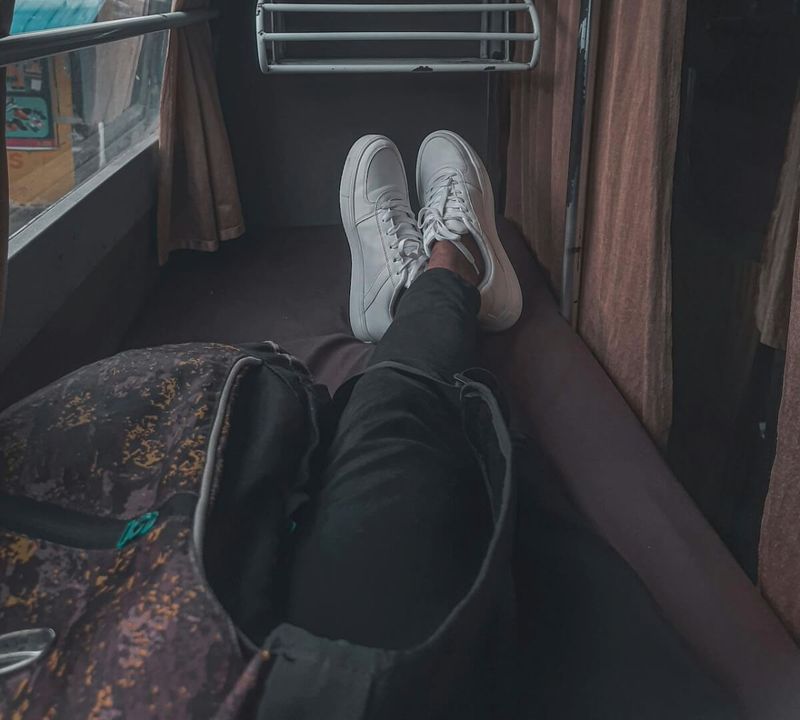
The Mumbai to Goa route is served by over 80 daily bus services from 30+ operators — making it one of the busiest intercity bus corridors in India and one of the rare routes where premium and budget travellers share the same road in wildly different conditions of comfort.
The journey is about 12–15 hours by road, covering 440–590 km depending on the route taken. Budget 15 hours door-to-door including the boarding point pickup time and the Goa drop point to your accommodation.
Book on 12Go Asia for the most reliable English interface, full seat maps visible before booking, and international card acceptance. The operators worth knowing: VRL Travels and Dolphin Travel House have the strongest reputations on this route for punctuality and bus quality. IntrCity SmartBus is the premium operator — slightly higher prices, GPS-tracked buses, real-time seat notifications, and a stricter no-party policy on the vehicle.
The things the booking sites leave out:
Boarding points matter more than you think. The bus picks up from multiple points across Mumbai over 45–90 minutes before leaving the city, which means your stated departure time and your actual departure time can differ by up to an hour. If you're boarding at Dadar (central Mumbai) and someone else is boarding at Borivali (north Mumbai), the bus hasn't "left" until it clears the last stop. Factor this into your night.
The drop points in Goa are not your hotel. Standard drops are at Panjim Bus Stand, Mapusa, Madgaon, or Calangute junction. From any of these, you still need a local taxi or auto-rickshaw to your accommodation. Pre-book a GetTransfer for the final leg — arriving in Goa at 8am with no onward transport arranged, standing at Mapusa bus stand with luggage, is one of the more unpleasant ways to start a Goa trip.
Comfort at the top end is genuinely good. The premium 2+1 sleeper buses from VRL or Dolphin have semi-flat berths, individual USB ports, a pillow, and a bottle of water. At ₹1,800–₹2,500 ($21.70–$30.15 USD), they compare favourably with a budget hotel room. At the bottom end — non-AC seater buses at ₹600 — it is 14 hours on a firm seat in a vehicle with questionable suspension and no individual climate control. Worth exactly once, at age 24, as a story.
Verdict on the bus: The best option for solo budget travellers who want to maximise Goa days without paying for an extra hotel night. The price is unbeatable. The sleep quality is adequate on a premium sleeper, actively bad on a budget seat. Don't book the ₹600 seat for a trip with more than 5 people travelling together — the train becomes better value per person above that number. For a full breakdown of how to travel India on tight margins, our India on $20 a day guide has the complete budget accommodation and transport section.
Mumbai to Goa by Flight: When It Makes Sense and When It Doesn't
The flight from Mumbai to Goa is 1 hour and 15 minutes in the air. That number is accurate, useful, and almost completely misleading if you're making a decision about how to get there.
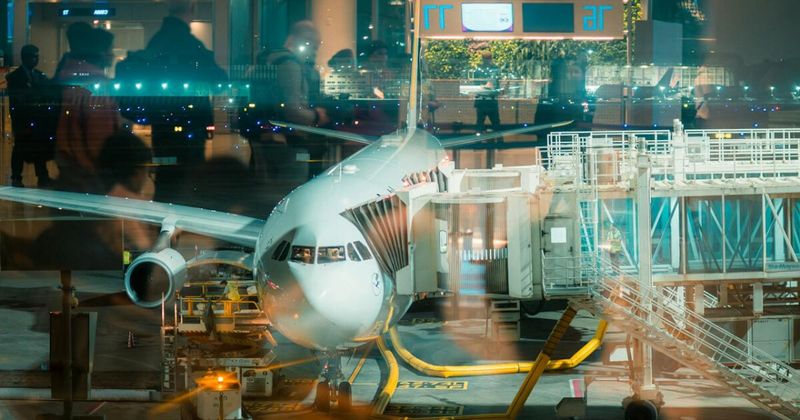
Mumbai's Chhatrapati Shivaji Maharaj International Airport handles over 50 million passengers annually and is India's second-busiest — domestic check-in lines during peak Goa travel weekends (late December, Holi week) can add 30–45 minutes beyond the standard 90-minute pre-departure recommendation.
Here's what the air time doesn't include: getting to Mumbai's Chhatrapati Shivaji Maharaj International Airport (BOM) from anywhere in the city (30–75 minutes depending on traffic and your starting point), arriving 75–90 minutes before a domestic departure, the flight, deplaning and baggage reclaim at Dabolim Airport (GOI) or the newer Manohar International Airport (GOX) in North Goa, and the taxi to your accommodation — about 30–50 minutes to North Goa beaches from Dabolim, or 30–60 minutes from Manohar Airport depending on destination. Add it up: 3.5–5 hours door-to-door is the realistic range.
Against an 11-hour Mandovi Express, that's still a clear win. Against a well-timed overnight bus where you board at 9pm and wake up in Goa, it's a much closer call once you factor in the flight price.
What flights cost in 2026:
Budget carriers (IndiGo, Akasa Air) on weekdays with 2–4 weeks advance booking: ₹3,000–₹5,000 ($28.90–$60.25 USD). The same seats on a Friday evening in December: ₹8,000–₹15,000+ ($96.40–$180.75 USD). Price volatility on this route is extreme — it's one of India's top domestic leisure corridors and fares respond aggressively to demand. Book at least three weeks ahead for anything resembling a sensible price.
Search and book flights on FlyFlick — the price comparison pulls from all carriers on the route including Air India Express and Akasa Air, which often have competitive fares not prominently displayed on the Indian aggregator sites. Set a Compensair alert at the same time: Mumbai–Goa is a domestic route but if you're connecting through a European hub (Frankfurt, London, Dubai), flight delay compensation of up to €600 applies to the connecting international leg.
Airport transfers: Pre-book both ends. For the Mumbai departure, GetTransfer offers fixed-fare pickups with vehicle class confirmed before payment — the difference between a pre-booked airport transfer and a negotiated Mumbai taxi during evening rush hour is approximately ₹400 in money and 20 minutes in patience. For the Goa arrival, Goa airport taxis are metered but meters are frequently "unavailable" — pre-booking through GetTransfer for the Goa end eliminates this entirely. Airport taxi scams are among the most common targeting new arrivals in Goa; our India travel scams guide covers the exact script used and how to respond.
Two Goa airports: Dabolim (GOI) is the older airport near Vasco, South Goa — closer to South Goa beaches, 30–45 minutes from North Goa. Manohar International (GOX) is the new airport near Mopa in North Goa — much closer to the Anjuna/Vagator/Calangute belt (20–25 minutes), but further from South Goa. When booking, check which airport your flight uses before assuming the transfer time.
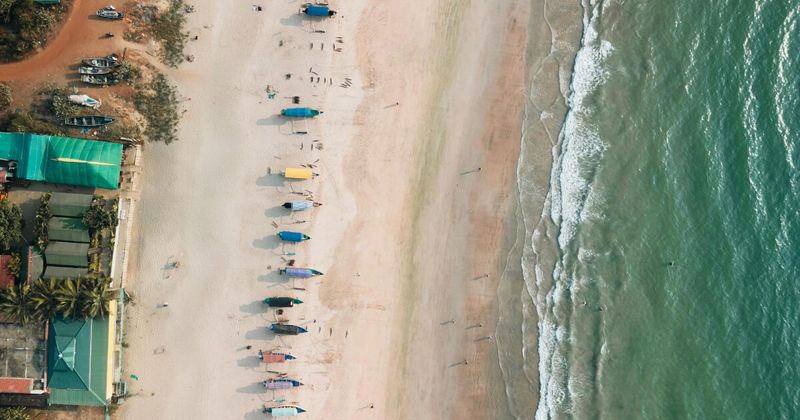
Goa has two operational airports as of 2026: the older Dabolim Airport (GOI) near Vasco, convenient for South Goa, and the newer Manohar International Airport (GOX) near Mopa in North Goa, which significantly reduces transfer time for travellers headed to Anjuna, Calangute, or Vagator.
Verdict on the flight: The right choice for trips of 4 nights or fewer where the travel experience is not the point. Also the right choice if you're flying in from outside India anyway and can connect through Goa rather than routing via Mumbai. For trips of 5+ nights, the price premium over the train only makes sense if your time in Mumbai is genuinely limited. If you're spending more than ₹5,000 ($60.25 USD) per person on the flight and could have taken a 3AC train seat for ₹1,350 ($16.25 USD), do the maths before you hit confirm.
Mumbai to Goa by Road: Self-Drive on NH66 vs NH48
The road trip from Mumbai to Goa is one of the most mythologised journeys in Indian travel. It genuinely is one of India's best drives. It genuinely is not for everyone.
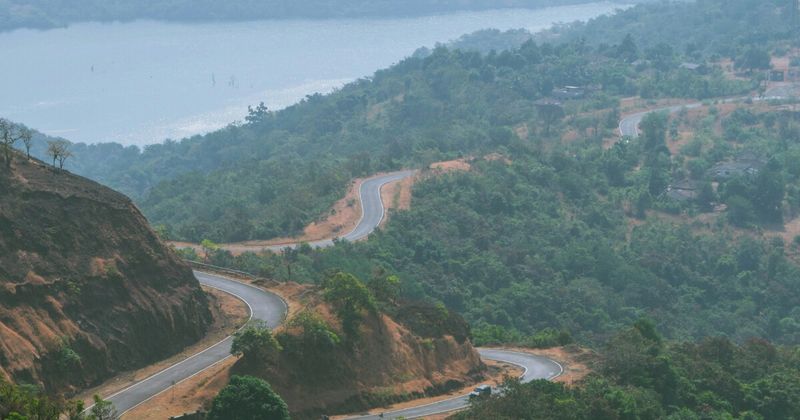
NH66 (formerly NH17) follows the Konkan coast for the majority of the Mumbai–Goa road trip, passing through the same river-estuary and Western Ghats landscape visible from the Konkan Railway — but at a pace you control, with the option to stop at Ganpatipule Beach or Ratnagiri's Alphonso mango markets en route.
The route choice:
NH66 (the Konkan coastal highway) — Mumbai to Goa via Panvel, Pen, Kolad, Chiplun, Ratnagiri, Kudal, Sawantwadi. Distance: approximately 570–600 km. Journey time: 10–13 hours door-to-door including two fuel and food stops. The route tracks the western coastline of India, passing through the Konkan region — the narrow coastal strip between the Western Ghats and the Arabian Sea. You'll cross river estuaries on low bridges, pass through small Konkan market towns, see the same river-and-jungle-and-ghat landscape that makes the Konkan Railway famous, and navigate sections of narrow two-lane road where trucks move slowly and overtaking requires patience rather than speed. The road surface varies: excellent between Panvel and Mangaon, patchy in sections around Khed, good again from Chiplun south. Don't drive NH66 at night — the ghat sections have no street lighting and the curves are unforgiving.
NH48 via Pune and Kolhapur — Mumbai to Goa via the Mumbai–Pune Expressway, Kolhapur, Belgaum (Belagavi), and into Goa from the east. Distance: approximately 590–610 km. Journey time: 9–11 hours, faster because the highway infrastructure is better throughout. The trade-off: far less scenic. You're mostly on expressway and national highway through interior Maharashtra and Karnataka. Use NH48 if you're in a genuine hurry, driving at night (it's significantly safer), or travelling during monsoon when NH66's ghat sections can have landslide-related delays.
The costs of driving:
A standard car doing Mumbai–Goa on NH66 covers roughly 570 km. Fuel economy at highway speed for most cars: 14–18 km/litre. At ₹95/litre (petrol, March 2026), that's approximately ₹3,000–₹4,100 ($36.15–$49.40 USD) in fuel. Add tolls — there are multiple toll plazas on both routes — totaling approximately ₹800–₹1,200 ($9.65–$14.45 USD) each way. Total vehicle cost one way: ₹3,800–₹5,300 ($45.80–$63.85 USD). Divided across four people, that's ₹950–₹1,325 ($11.45–$15.95 USD) per person — competitive with 3AC train or a mid-range bus.
If you don't have your own car, Intui.travel offers private transfer options for the full Mumbai–Goa route with a professional driver — prices typically start at ₹8,000–₹12,000 ($96.40–$144.60 USD) for the vehicle (not per person), which makes it excellent value for groups of 3–5. This is the cleanest option for families or groups who want door-to-door private transport without the stress of driving unfamiliar roads.
The honest assessment of NH66:
Leave by 5:30–6:00am from Mumbai to clear the city before the expressway fills. The Panvel junction is the first potential bottleneck — once you're through Panvel and on NH66 proper, the road opens up. The Kolad stretch (around 100 km from Mumbai) is where most people stop for breakfast: Kolad is a river town with good local food and a clean petrol station. Chiplun, at around 230 km, is a natural lunch stop. The section from Chiplun to Sawantwadi is the most scenic and also the most variable in road quality — allow more time per kilometre here than on any other section. Crossing into Goa via the Patradevi check-post adds 10–20 minutes on weekends when the queue for tourist vehicles backs up.
Don't attempt the Kashedi Ghat section after dark. Don't attempt any ghat section in monsoon without checking for landslide warnings that morning.
Verdict on the road: Best for groups of 3–5 who want to stop at their own pace, anyone doing a Konkan road trip itinerary (Ganpatipule, Ratnagiri, Murud-Janjira are all en route or nearby), and travellers who fundamentally enjoy the act of driving. Poor value for solo travellers (the per-person cost is higher than the train) and a bad choice for anyone who needs to arrive fresh for a same-day activity.
Mumbai to Goa Travel Time: Door to Door, Not Just the Journey
This is the table no booking site shows you. Everything above is the official journey time. This is the actual elapsed time from your Mumbai front door to your Goa accommodation:
| Mode | Mumbai prep + transit to depart | Journey | Goa arrival + transfer to hotel | Total door-to-door |
|---|---|---|---|---|
| Mandovi Express (3AC, morning) | 45 min to CSMT + 20 min buffer | 11h 50min | 30–50 min taxi to North Goa | ~13.5–14.5 hrs |
| Konkan Kanya (overnight sleeper) | 45 min to CSMT + 20 min | 11h 40min (overnight) | 30–50 min taxi | ~13.5 hrs (night travel) |
| Vande Bharat Express | 45 min to Dadar + 20 min | 7h 36min | 30–50 min taxi | ~9–9.5 hrs |
| Overnight bus (AC sleeper) | 30 min to boarding point | 12–15 hrs (overnight) | 15–30 min local taxi | ~13–16 hrs (night travel) |
| Flight (weekday, direct) | 60 min to Mumbai airport + 90 min pre-board | 1h 15min | 30–50 min from Dabolim | ~3.5–4.5 hrs |
| Self-drive NH66 | 0 (leaves from door) | 10–13 hrs | 0 (arrives at door) | ~10–13 hrs |
The Vande Bharat is the only train that competes meaningfully with the flight on door-to-door time — and at a fraction of the cost. The gap between flying and overnight bus/overnight train is primarily about what happens to the hours in between, not about arrival freshness: both the overnight bus and overnight train get you to Goa in the morning with a travel day "saved," whereas the flight consumes a half-day of your Goa trip in the mechanics of getting to an airport.
Mumbai to Goa Cost Comparison 2026
| Mode | Budget | Mid-Range | Splurge |
|---|---|---|---|
| Train | ₹490 Sleeper ($5.90) | ₹1,350 3AC ($16.25) | ₹3,500 Vistadome EV ($42.20) |
| Bus | ₹600 Non-AC seater ($7.25) | ₹1,800 AC 2+1 sleeper ($21.70) | ₹4,500 Premium Volvo multi-axle ($54.20) |
| Flight | ₹2,400 weekday advance ($28.90) | ₹5,000–6,000 standard advance ($60.25–$72.30) | ₹12,000–15,000 peak season ($144.60–$180.75) |
| Road (per vehicle) | ₹4,600 fuel+toll NH66 ($55.45) | ₹8,000 private driver Intui.travel ($96.40) | ₹12,000+ chauffeur sedan ($144.60) |
| Airport/station transfer | ₹200–400 local auto ($2.40–$4.80) | ₹500–700 pre-booked GetTransfer ($6.00–$8.45) | ₹1,500+ private car ($18.10) |
| Travel insurance | VisitorsCoverage from ~$12 | VisitorsCoverage from ~$12 | VisitorsCoverage from ~$12 |
Prices verified March 2026. Train fares are base (pre-Tatkal premium). Flight fares based on 2–4 weeks advance booking, weekday travel. Road costs for a standard petrol car on NH66.
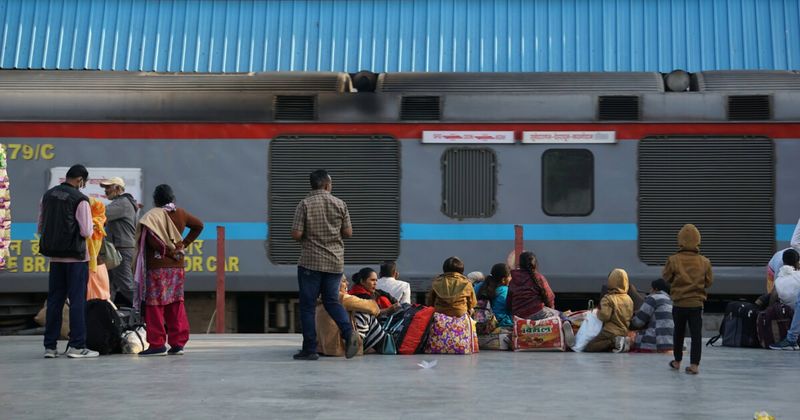
Indian Railways opens its standard booking window at exactly 60 days before departure at midnight — and for popular routes like Mumbai to Goa on the Mandovi Express, peak-season 3AC and 2AC seats can sell out within hours of that window opening.
The cheapest possible Mumbai–Goa trip is a ₹490 Sleeper class train seat, booked 60 days out. The most convenient is the Vande Bharat in Chair Car at ₹1,200–₹1,500, booked the same way. Neither requires an airport. Both beat the flight on price at every booking window. For the complete framework on managing India transport costs across a longer trip, our India budget hacks guide has a state-by-state transport cost breakdown.
Check Live Flight Prices
What to Skip: Transport Mistakes Tourists Make on This Route
Don't assume "1 hour flight" means 1 hour of travel. The fully loaded door-to-door time for a flight is 3.5–5 hours. If you're spending 5+ nights in Goa, take the train. If your Goa trip is 3 nights and you're flying in from Europe or Australia, take the flight — you're already in transit mode.
Don't book a bus without checking the boarding point. Several operators list their first departure point as Dadar or CSMT but the bus actually fills from a second or third point in the suburbs before reaching you. If you book a seat at a Mumbai central boarding point and the bus is running 45 minutes late, that's because it's still working through its pickup schedule in Navi Mumbai. Check the full itinerary of stops on the 12Go Asia booking page before confirming.
Don't book Tatkal train tickets without understanding the premium. Tatkal (last-minute) tickets for the Konkan Railway sell from one day before departure, but they're priced 30–50% above base fare and there are quantity limits. A Tatkal Sleeper seat on the Mandovi Express that would normally cost ₹490 can cost ₹710–₹780 ($8.55–$9.40 USD). Not ruinous — but if you're planning at all in advance, the base fare window at 60 days is always better.
Don't book a sleeper class train seat if you've never done Indian sleeper class before. Sleeper class on the Konkan Railway is not Third Class in the European sense — it's an open-berthed carriage with upper/middle/lower bunks, no air conditioning, and windows that open. In November–February, this is completely comfortable. In May, it is not. If you're travelling in warm months or are uncertain, book 3AC: air-conditioned, lockable side compartments, cleaner linen, and still a fraction of the flight price at ₹1,350 ($16.25 USD).
Don't take a walk-in taxi from Goa airport. This is documented in our India travel scams guide — the Dabolim airport taxi stand operates on a pre-paid system that is legitimate, but operators outside the pre-paid counter (approaching you in the arrivals hall before you exit) are not, and will quote 2–3x the correct rate. Either use the official pre-paid counter or pre-book GetTransfer with a confirmed rate before landing.
Don't drive NH66 during monsoon without checking conditions that morning. The Western Ghats receive some of the heaviest rainfall in India between June and September. Landslides can close sections of NH66 for hours or days, sometimes with no advance warning. NH48 via Kolhapur is significantly more reliable in monsoon because it avoids the coastal ghat sections. If your road trip is in monsoon, plan the route accordingly.
Don't confuse Goa's two airports. Dabolim (GOI) is the older airport near Vasco da Gama in South Goa. Manohar International (GOX) is the new airport near Mopa in North Goa, opened in 2022. Some airlines serve GOI, some serve GOX, some serve both on different flights. If your hotel is in Calangute and your flight lands at Dabolim, you're looking at 40–50 minutes by taxi rather than 20. Check before booking.
When to Book Mumbai to Goa Travel (And Why Timing Matters More Than Mode)
Train: The 60-day booking window opens at exactly midnight on the departure date minus 60 days. For peak season travel (October–February, especially December and Holi weekend in March), set an alarm and book at 12:01am on that day. 3AC and 2AC on the Mandovi Express and Konkan Kanya sell out fastest. Sleeper has more availability. The Vistadome EV class coach is smallest in capacity and goes first.
Bus: Book 3–7 days ahead for weekday travel, 7–14 days ahead for Friday/weekend departures. Unlike trains, bus prices tend to be relatively stable until the final 48 hours, when last-minute availability on premium buses disappears and only the budget seats are left.
Flight: Book 3–6 weeks out for reasonable prices on IndiGo or Akasa Air. Friday evening and Sunday evening departures are the most expensive slots on this route — business and leisure demand overlap. Tuesday and Wednesday midday departures are typically the cheapest. Prices during Diwali, Christmas/New Year, and Holi week are in a different category entirely — book those 8–12 weeks ahead or expect to pay ₹8,000–₹15,000 ($96.40–$180.75 USD) each way.
Road (pre-booked driver): Book through Intui.travel at least 48–72 hours ahead for weekdays, a week ahead for weekends. Driver availability for the full Mumbai–Goa leg is more limited than city transfers — the driver needs the return journey arranged as well, which affects pricing.
Planning Goa as part of a longer India circuit? If you're doing two weeks or a month in India with Goa as one leg, the train is almost always the right call — it connects Goa directly to Mumbai, and through services continue to Kerala, Karnataka, and beyond. Our 2 Weeks in India itinerary and India in 3 Weeks guide both build the Konkan Railway into the route architecture for exactly this reason.
For longer multi-country trips where you're managing data across India and beyond, a Yesim unlimited eSIM handles the multi-country side cleanly — it's better than Saily for trips that continue outside India after Goa.
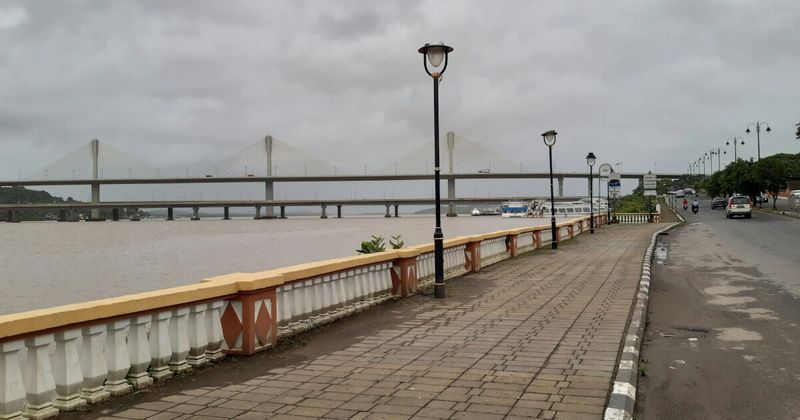
Panjim (Panaji) sits on the south bank of the Mandovi River in central Goa and serves as the practical base for Days 1–2 of the Goa itinerary regardless of how you arrive — it's equidistant from North Goa beach areas and the Old Goa church circuit.
The Bottom Line
There's no single right answer to Mumbai to Goa — but there are several wrong ones, and most of them involve choosing purely on one number (flight time, bus price, train duration) without accounting for the full picture.
The Konkan Railway is the most complete option: reasonable price, reliable logistics, a journey that earns its hours. The Mandovi Express in a 3AC window seat, mid-morning departure, passing through the Western Ghats in afternoon light — that's not just transport. That's part of the trip. If you're on your first visit to Goa and you're flying in from outside India anyway, take the train between Mumbai and Goa rather than flying. You'll spend slightly more time in transit and arrive having seen something you'd otherwise have missed entirely.
Take the flight if your time is the constraint and your trip is short. Take the overnight bus if your budget is the constraint and your back is young. Drive NH66 if you have a group, a car, and nowhere specific to be by nightfall.
Whatever you take to get there: once you arrive, resist the reflex to spend every hour on the beach. The Goa that most tourists leave without seeing is the one built over four and a half centuries — the churches, the Latin Quarter, the forts, the food that doesn't come on a beach shack menu. It's all there, 10 minutes from the coast.
Your Mumbai to Goa Journey Checklist
🛡️ Insurance — sort this before you book anything else: VisitorsCoverage travel insurance — medical costs in India are not covered by most international policies; book before departure
✈️ Flights (if flying): Search Mumbai to Goa flights on FlyFlick — compares IndiGo, Akasa Air, Air India Express in one place — Book a Compensair delay alert before any flight — covers up to €600 on connecting international legs
🚗 Transfers: Pre-book Mumbai airport pickup (fixed fare, no negotiation) with GetTransfer — Pre-book Goa airport/station drop to accommodation via GetTransfer — Full Mumbai–Goa private car (groups 3–5) via Intui.travel
🚆 Train and bus: Mumbai to Goa train (Mandovi Express / Vande Bharat / Konkan Kanya) — book on 12Go Asia, international cards accepted, e-ticket on phone — Mumbai to Goa overnight bus (VRL / IntrCity / Dolphin Travel House) — also on 12Go Asia, book 7–14 days ahead for weekends — Tip: open the 60-day booking window for the Mandovi Express at midnight exactly — 3AC sells out on peak weekends within hours
📱 Connectivity: Saily 5G eSIM — activate before boarding in Mumbai, covers Goa cities and beach areas well | Drimsim off-grid eSIM — for Konkan Railway tunnel stretches and NH66 forest sections where regular signal drops | Yesim unlimited data eSIM — for multi-country trips continuing beyond India after Goa
The journey is already Goa. Choose accordingly.