
When you land at Kushok Bakula Rimpochee Airport in Leh, the first thing you notice isn't the mountains. It's that breathing is harder than usual. Not dramatically so — you're not gasping. Just subtly, noticeably effortful, like the air is thinner than your body expects. Because it is. Leh sits at 3,524 metres above sea level. Your body arrived here by plane in 1 hour and 20 minutes from Delhi, which is at 216 metres. You've gained 3,300 metres of altitude in the time it takes to watch a film. Your cardiovascular system has not yet agreed to this arrangement.
The most important instruction for Ladakh is not about permits or taxis or monasteries. It's this: the day you land, you do nothing. You go to your guesthouse, drink water, eat lightly, lie down, and rest. Not "see one or two things and then rest." Rest. The guides and the drivers and the travel agents will try to sell you on a "gentle" afternoon sightseeing trip. There is no such thing as a gentle first afternoon in Leh. Acute Mountain Sickness (AMS) doesn't care how fit you are, how young you are, or how many other mountains you've climbed. It hits without warning, worsens rapidly if you push through it, and has hospitalised experienced trekkers who thought they could manage one more kilometre. The rule in Ladakh is non-negotiable: two full days in Leh before any high-altitude driving.
Everything after that is extraordinary. Ladakh — the high-altitude cold desert of India's northernmost Union Territory — is one of the most visually singular landscapes on earth. The mountains are bare, ancient, and in colours that don't appear in other mountain ranges: dusty ochre, blood red, smoky grey, and a particular shade of pale gold that appears only in certain conditions of afternoon light. The lakes are turquoise with a specific intensity that photographs fail to capture. The monasteries have been on these clifftops since the 14th century and look precisely like they belong there. The sand dunes of Nubra Valley have two-humped Bactrian camels that trace their lineage to the Silk Road caravans.
You do not need a motorcycle to see any of it. You need a shared taxi, a hired car, two days of genuine rest, a Protected Area Permit, and the patience to let Ladakh operate on its own terms.
Get VisitorsCoverage travel insurance before you do anything else. Altitude-related hospitalisation in Leh can cost ₹25,000–₹1,50,000 ($266–$1,596 USD) depending on severity and whether evacuation is required. Your domestic health policy doesn't cover this. Sort it before you book the flight — 10-day Ladakh policies from roughly $18–40 USD. At altitude, this is the least optional item on the entire packing list.
At a Glance: The 10-Day Ladakh Route
| Day | Location | Focus | Notes |
|---|---|---|---|
| Day 1 | Arrive Leh | Rest. No sightseeing. | Non-negotiable acclimatization |
| Day 2 | Leh | Gentle town exploration | Permit application Day 1 or 2 |
| Day 3 | Leh — Indus Valley | Thiksey, Hemis, Shey monasteries | Local taxi day |
| Day 4 | Leh → Nubra Valley | Khardung La, Diskit, Hunder dunes | 120km, 4–5hrs |
| Day 5 | Nubra — Turtuk | Turtuk village and return to Hunder | 100km round trip |
| Day 6 | Nubra → Pangong Tso | Via Shyok Valley or back to Leh | 320km, 10–12hrs |
| Day 7 | Pangong Tso | Sunrise, full day lakeside | Stay overnight at Pangong |
| Day 8 | Pangong → Leh | Via Chang La, stop at Thiksey | 160km, 5–6hrs |
| Day 9 | Sham Valley | Lamayuru, Magnetic Hill, Gurudwara | 120km west loop |
| Day 10 | Leh — Depart | Morning flight to Delhi |
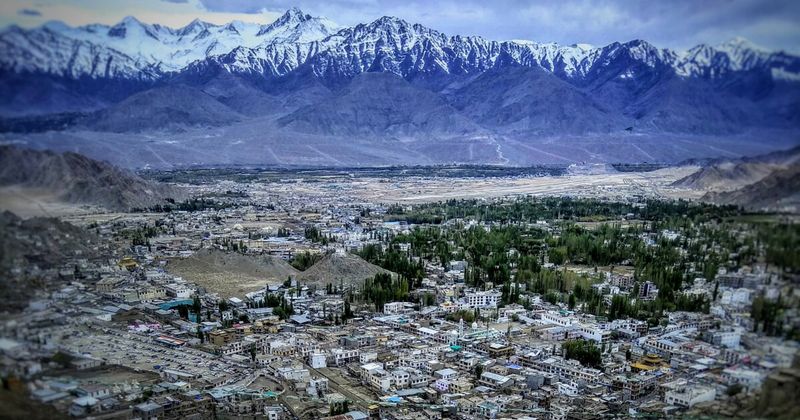
Leh Palace — the 17th-century nine-storey fort-palace visible on the ridge above town — was built by King Sengge Namgyal and modelled on the Potala Palace in Lhasa, Tibet; it predates Thiksey and Hemis monasteries as the dominant structure of the Leh skyline.
The Permit You Must Sort Before Anything Else
Foreign nationals visiting Ladakh need a Protected Area Permit (PAP) — also called an Inner Line Permit when issued to Indian nationals but called PAP when issued to foreigners. Without it, you cannot visit Nubra Valley, Pangong Tso, Khardung La, Tso Moriri, Turtuk, or Hanle. These are most of the places this itinerary is built around.
What it covers: Nubra Valley (via Khardung La), Pangong Tso (via Chang La), Tso Moriri, Hanle, Turtuk, and Chushul.
What does NOT need a permit: Leh town and local sightseeing, Thiksey, Hemis, Shey, Stakna — all the monasteries in the Indus Valley near Leh are accessible without a permit.
How to get it as a foreigner:
- Apply through a registered travel agent in Leh. Foreign nationals cannot always process the PAP independently — the requirement for a minimum group of 2 foreigners applies, and agents handle this by pairing solo travellers with other solo travellers on the same dates. If you're travelling in a pair or group, the process is straightforward.
- You can also apply online through the LAHDC portal at lahdclehpermit.in — bring passport photocopies (carry at least 10 copies — you submit one at every checkpoint on every route).
- The environment/ecology fee is ₹400 ($4.26 USD) per person, paid once per season.
- The PAP itself is issued for a maximum of 15 days for foreign nationals.
- Chinese and Pakistani nationals require clearance from the Ministry of Home Affairs in New Delhi — this takes weeks to obtain and must be arranged before travel.
Practical timing: Apply on Day 1 or Day 2 in Leh. Most registered travel agents process it same-day or within 24 hours. The Leh District Collector's (DC) office also issues them directly — queues can be 1–2 hours in peak season (June–August), so the agent route is faster and costs negligibly more. LAHDC Permit Portal. India eVisa for Ladakh visit.
Book your Leh arrival transfer through GetTransfer — fixed fare from the airport to your Leh guesthouse, vehicle confirmed before you land. This eliminates the negotiation at the airport exit where drivers target just-arrived, altitude-disoriented international tourists.
Days 1–2: Leh Acclimatization — The Days That Make the Whole Trip Work
Leh's Kushok Bakula Rimpochee Airport (IXL) receives direct flights from Delhi (1h 20min) and Mumbai, with IndiGo, SpiceJet, and Air India all operating daily services. Search and book with FlyFlick — Delhi to Leh fares run ₹6,000–₹15,000 ($64–$160 USD) one way depending on advance booking and season. Peak season (June–August) fares can exceed ₹12,000. Book 4–6 weeks ahead. Set a Compensair delay alert before departure — Leh flights are highly weather-dependent; fog, wind, and Himalayan cloud cover cause frequent disruptions.
Critical note for international travellers: Foreign nationals cannot complete online check-in for Leh flights. You must check in at the airport counter. Arrive at least 90 minutes before departure.
Day 1: Land and rest. Walk from your guesthouse to the Leh market in the evening if you feel well. That's it. Eat dal and rice. Drink 3–4 litres of water. Sleep early. The altitude makes the body work harder even at rest — your heart rate will be noticeably elevated, your sleep lighter than normal, and your appetite reduced. All of this is normal. Pushing through it isn't brave; it's how AMS becomes dangerous.
Apply for your Protected Area Permit on Day 1 through your guesthouse or a registered Leh travel agent. Most guesthouses have an affiliated agent contact and can handle this for a nominal service fee (₹200–₹500 per person, $2.13–$5.32 USD). Hand over your passport photocopies, specify your intended routes (Nubra + Pangong + anything else on this itinerary), and the permit arrives the same or following day.
Day 2: Gentle Leh exploration. The town itself is walkable within the old bazaar area. Leh Palace (entry ₹50 for domestic, ₹150 for foreigners, $1.59 USD) — the 17th-century nine-storey royal residence — is a 15-minute uphill walk from the main market. Don't rush it. At this altitude, any incline takes more energy than at sea level. Shanti Stupa — a white Buddhist peace pagoda on a hilltop west of town built in 1991 — requires either a walk up 500 steps or a taxi from the main road. The view from the top over Leh and the Indus Valley at dusk is outstanding and worth the effort now that your body has had a day to adjust.
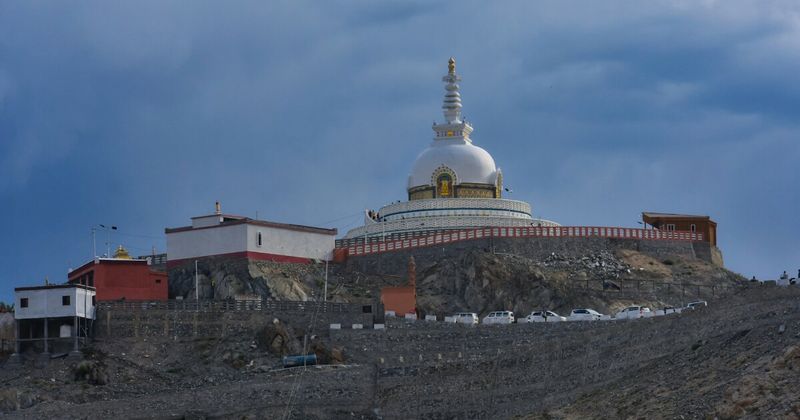
Shanti Stupa was built in a joint Japanese-Indian Buddhist effort by Japanese monk Nagazomi Bhikkhu and inaugurated by the 14th Dalai Lama in 1991 — it houses relics of the Buddha in its dome and enshrines images depicting events from the life of the Buddha on its lower tier.
The Leh Market — Main Bazaar Road — has everything you'll need for the next eight days: warm layers (nights in Nubra and Pangong drop to 0–5°C even in summer), sunscreen (UV radiation at altitude is severe), and a supply of bottled water. Ladakh's water sources are glacier-fed and clean by Indian standards, but your stomach hasn't adjusted. Stick to bottled water for the first three days. Saily 5G eSIM covers Leh town and main roads reliably — activate before landing. For Nubra Valley, Pangong's shoreline, and Turtuk village, signal drops to zero or near-zero; Drimsim auto-switches between networks and handles Ladakh's patchy coverage better than any single-carrier SIM.
Day 3: Indus Valley Monasteries — Thiksey, Hemis and Shey Palace
By Day 3 your body has adjusted enough for a low-altitude day trip — and the Indus Valley monastery circuit, which stays below 3,600 metres, is exactly the right choice. Book a local sightseeing taxi through Intui.travel or arrange through your guesthouse; the standard Indus Valley circuit (Shey, Thiksey, Hemis, Stakna) runs ₹2,500–₹3,500 ($26.60–$37.23 USD) for the vehicle and takes a full day.
Thiksey Monastery is 19 kilometres from Leh on the Manali highway — 12 storeys of whitewashed buildings stacked up a rocky hillside, which is why Lonely Planet and every other guidebook describes it as resembling the Potala Palace in Lhasa. The resemblance is genuine. Inside the Maitreya Temple is a 15-metre-high seated statue of the Future Buddha that spans two floors and was commissioned in 1970 to mark the Dalai Lama's visit. Entry ₹30–₹50 ($0.32–$0.53 USD). Arrive by 7am if possible for the morning prayer ceremony — monks in burgundy robes chanting to the sound of drums and horns, incense smoke rising through window slots, butter lamps flickering in front of ancient thangka paintings. Nothing in this monastery is for show.
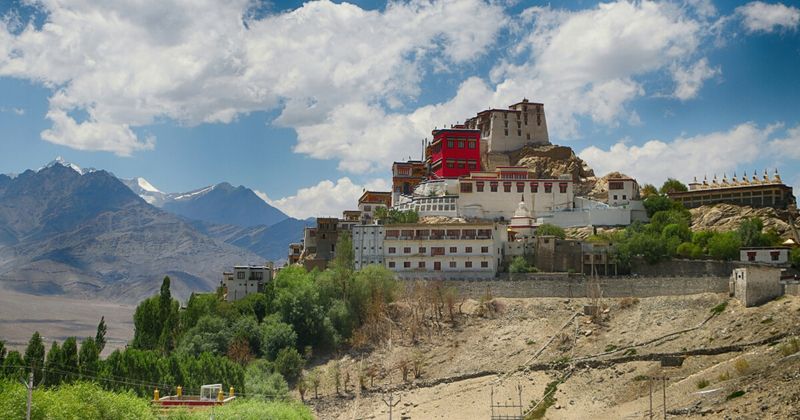
Thiksey Monastery's resemblance to the Potala Palace in Lhasa is not coincidence — Palden Zangpo, who founded Thiksey in the 15th century, studied at monasteries in Tibet and incorporated the hillside-stacking architectural tradition deliberately; the monastery currently houses approximately 60 monks of the Gelugpa order.
Hemis Monastery is 45 kilometres from Leh, further along the Manali highway past Thiksey — the largest and wealthiest monastery in Ladakh, belonging to the Drukpa sect of Tibetan Buddhism. The annual Hemis Festival (July) is the biggest religious celebration in Ladakh, involving masked dances that represent the triumph of Buddhism over evil and draw thousands of Ladakhi pilgrims and foreign visitors. If your 10 days don't coincide with the festival, the monastery is worth visiting regardless — the museum has one of the finest collections of ancient thangkas, copper statues, and weapons in the region. Entry approximately ₹100 ($1.06 USD). Pre-book a Hemis-Thiksey monastery guided tour through Klook for the context that the ASI plaques entirely lack.
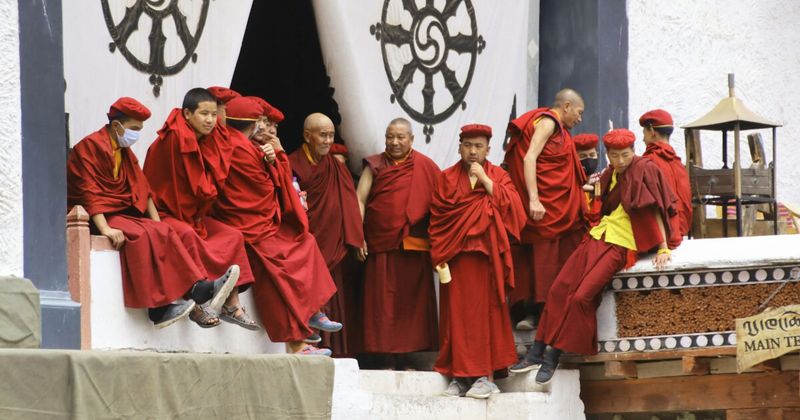
Hemis Monastery is believed to hold the largest collection of ancient Buddhist artifacts in Ladakh — including rare 17th-century thangkas, copper statues gilded in gold, and a collection of ancient weapons from the Drukpa sect's warrior-monk tradition; the museum inside is one of the finest in the Himalayan region and is consistently undervisited relative to its importance.
Shey Palace, between Thiksey and Leh, is the former summer residence of the Ladakhi kings — mostly in ruins now but housing a 12-metre-high gilded copper Buddha statue that is the second largest in Ladakh after Diskit's Maitreya. Entry ₹50 ($0.53 USD).
The hyper-specific detail that makes Thiksey actually extraordinary: the monastery was founded in the 15th century by Palden Zangpo, but the Maitreya statue inside was commissioned in 1970 — and the artisans who built it used a technique of pressing gold leaf into every convex curve of the copper base by hand, a process that took four years of daily work by a single family of craftsmen from Lhasa.
Check Live Flight Prices
Days 4–5: Nubra Valley — Bactrian Camels, Sand Dunes and the World's Most Misrepresented Road Sign
Nubra Valley is approximately 120 kilometres north of Leh — but to get there, you drive over Khardung La Pass. This is where the signage claims things. The large yellow sign at the top reads "World's Highest Motorable Road." It is a compelling claim, widely repeated, and technically incorrect. Khardung La sits at approximately 5,359 metres — genuinely extraordinary and the highest road most people will ever drive on. But Umling La, further east in Ladakh, reaches 5,883 metres, and several other roads in the region exceed Khardung La's elevation. The sign stays up because it has been there for 40 years and because the actual view — the Karakoram range spread across the horizon in every direction, snow-covered and vast — needs no exaggeration at all.
Book your Nubra Valley taxi through your Leh guesthouse or agent. The official Ladakh Taxi Union rate for a private vehicle (Innova or Xylo, seats up to 6 passengers) for the 2-day Nubra overnight circuit is ₹16,000–₹20,000 ($170–$213 USD) per vehicle. For solo travellers or small groups, shared taxis organised by Leh travel agents bring the per-person cost to approximately ₹3,000–₹4,500 ($31.91–$47.87 USD) depending on group size. For the Leh-to-Sam transfer and other Ladakh logistics, Intui.travel can also arrange fixed-fare intercity vehicle hire.
The drive from Leh to Khardung La summit takes about 1.5–2 hours. The road is sealed, but narrow in switchback sections, and drops abruptly at the edges with no barriers in places. At the summit, temperatures drop to 0°C even in July. Spend 20 minutes maximum — at 5,359 metres, exertion is difficult, altitude sickness risk spikes, and the wind is relentless. Take your photo, buy the official certificate from the small booth, and start descending toward Nubra.
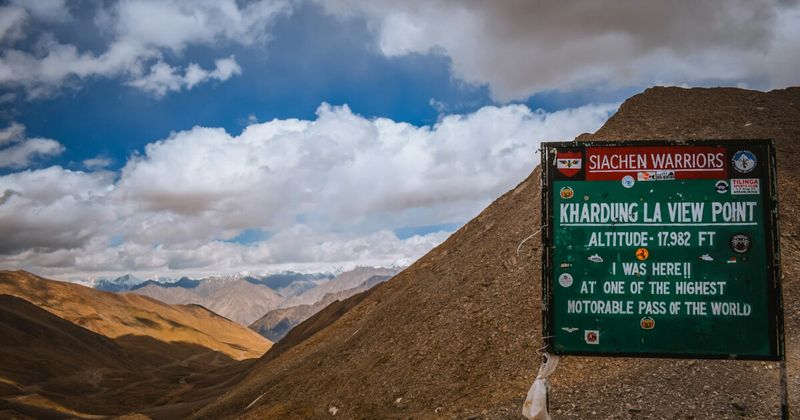
The famous sign at Khardung La declaring it the "World's Highest Motorable Road" has been there for 40 years and is technically incorrect — Umling La in eastern Ladakh sits over 500 metres higher at 5,883 metres — but the view of the Karakoram from Khardung La at 5,359 metres requires no exaggeration.
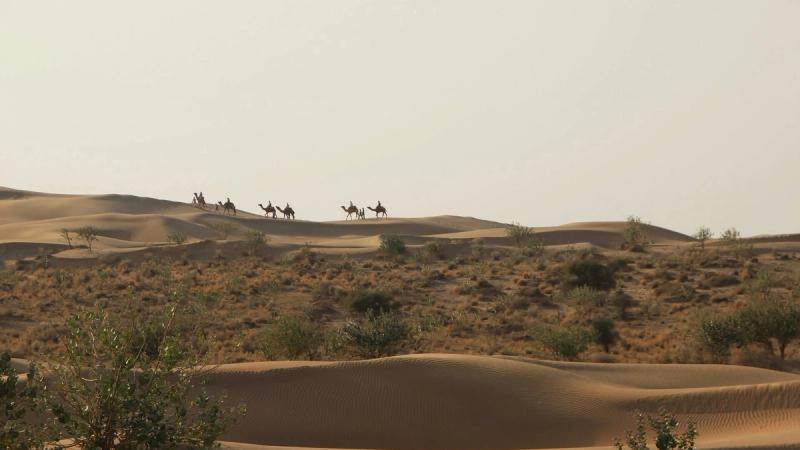
Nubra Valley is an arid high-altitude desert valley carved by the Shyok and Nubra rivers between the Karakoram and Ladakh ranges. It should not look the way it does. The valley floor at 3,048 metres is far lower than surrounding passes, creating a climate warm enough to grow apricots, and — improbably — to host sand dunes. The Hunder Sand Dunes are a 2-kilometre stretch of pale sand between the Shyok River and the barren rocky slopes, and the Bactrian camels that roam here are not a tourist installation. They are descended from the working camels of the Silk Road caravans that traded between Ladakh, Central Asia, and China from the 1st to the 19th centuries. After the trade route closed following Indian independence and Partition in 1947, the camels were abandoned. They stayed.
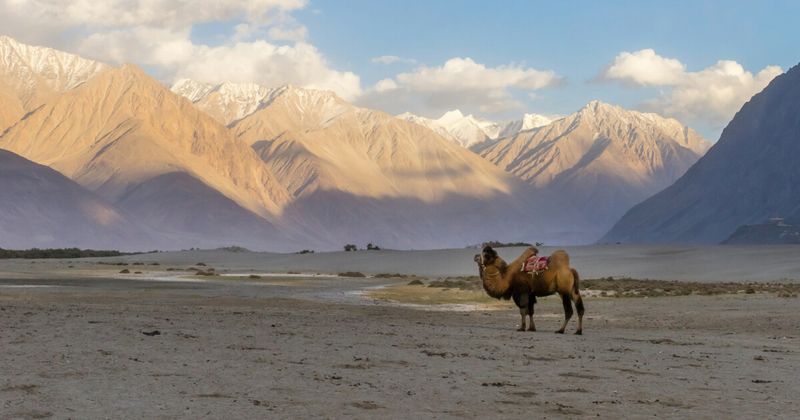
Nubra Valley sits at approximately 3,048 metres — significantly lower than the surrounding passes — which creates a warmer microclimate allowing apricot cultivation and the existence of sand dunes at high altitude; the Shyok River that carved the valley originates from the Rimo Glacier in the Karakoram range to the north.
Diskit Monastery (entry free, donations welcome) in the Nubra Valley's main settlement is the oldest monastery in the valley, founded in the 14th century and home to approximately 70 monks. Above it, visible from 10 kilometres away in either direction, is a 100-foot Maitreya Buddha statue completed in 2010 — the Future Buddha gazing north toward the Siachen Glacier, an expression that local monks describe as watching over the valley and warding off threats from the border direction. Pre-book a Nubra Valley experience package through Klook for guided monastery access and optional camel ride arrangements at Hunder.
Stay overnight in Hunder or Deskit — guesthouses and simple camps run ₹800–₹2,500 ($8.51–$26.60 USD) per room. Nights in Nubra in peak season are cold (8–12°C) and require a warm layer you'll be glad you packed.
Day 5: Turtuk — The Village Most Itineraries Skip
Turtuk is 100 kilometres from Hunder, along the Shyok Valley road toward the Pakistani border. It is the northernmost village in India accessible to tourists, captured from Pakistan in the 1971 war and opened to civilian visitors only in 2010. Until then, the Balti-speaking residents of Turtuk — ethnically and culturally connected to Baltistan on the Pakistani side — had been separated from their relatives across the Line of Control for over 60 years.
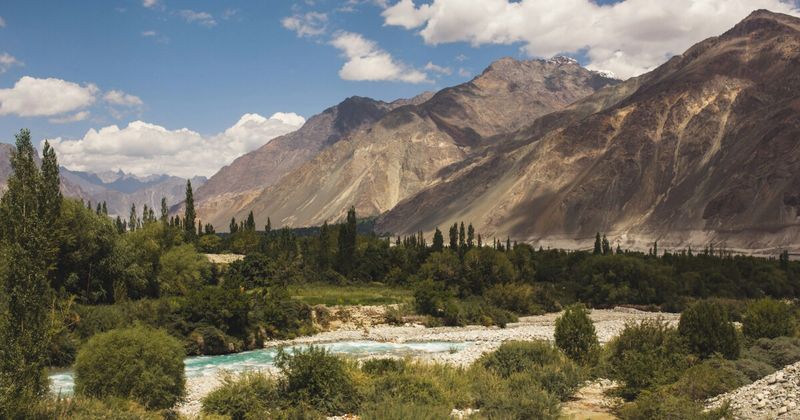
The residents of Turtuk were separated from family members in Baltistan, Pakistan by the Line of Control for over 60 years — some families on opposite sides of the border are reportedly still in contact by phone but have not physically met since 1971.
The village itself is extraordinary: narrow stone lanes between traditional Balti houses, terraced apricot and walnut orchards climbing the steep valley sides, a cultural tradition that is neither entirely Ladakhi nor entirely Pakistani but something distinct produced by 50 years of isolation. The Turtuk Museum is run by a local family and displays Balti cultural artifacts — textiles, agricultural tools, weapons, photographs of the village pre-1971. Entry is a small donation. No monument. No queue. No coach.
The drive from Hunder to Turtuk takes 2.5–3 hours each way on an unsealed road that requires a capable 4WD vehicle — this is not the drive to attempt in an underpowered city SUV. Your Ladakhi taxi driver will know the road; trust their vehicle assessment. Leave Hunder by 7am, spend 3–4 hours in Turtuk, and return to Diskit or Hunder for the evening.
Days 6–7: Pangong Tso — The Lake That Changes Colour While You Watch
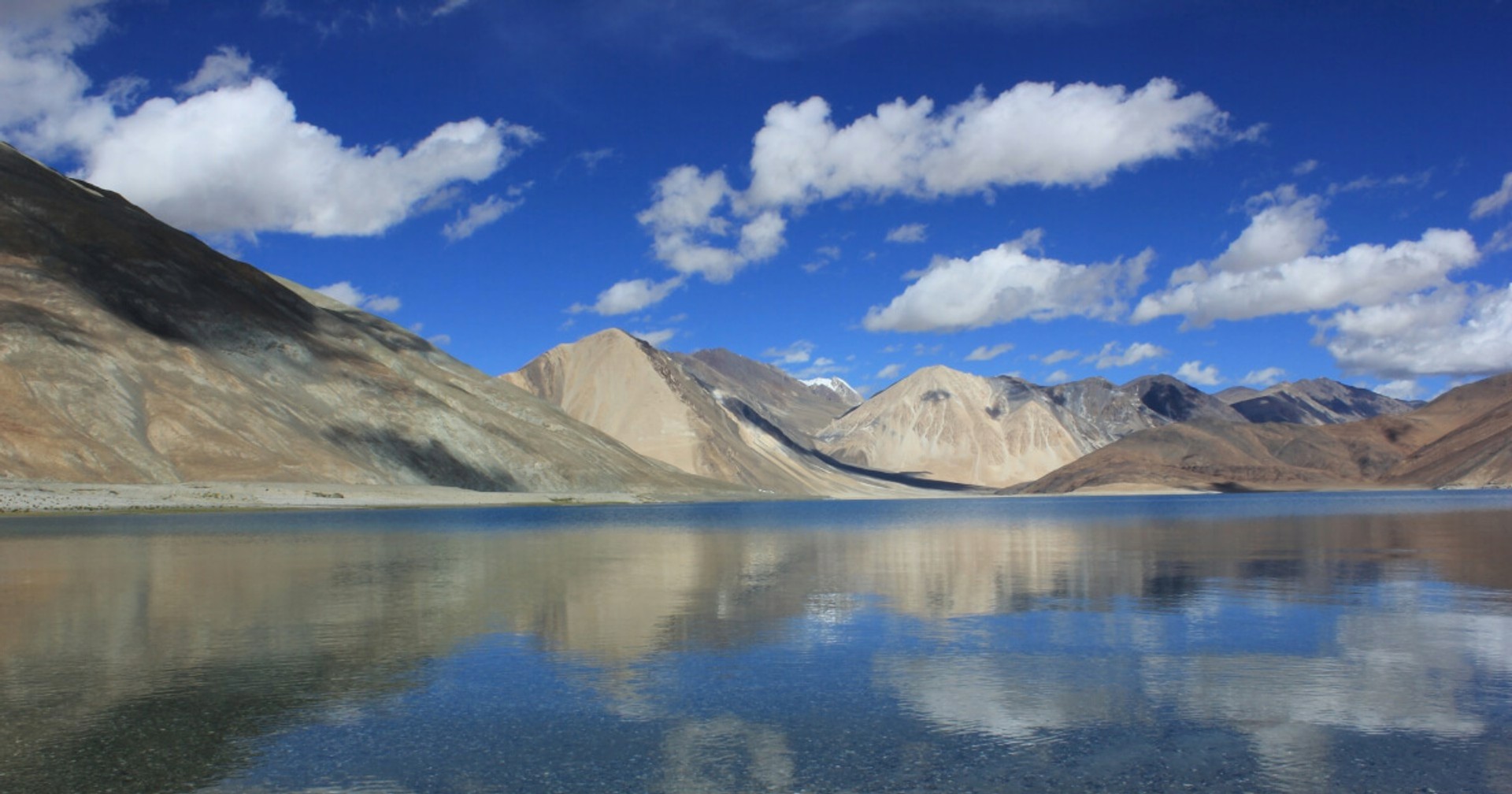
Pangong Tso is why you came to Ladakh. It sits at 4,350 metres above sea level, stretches 134 kilometres along the Line of Actual Control between India and China (only about 45 kilometres are on the Indian side), and changes colour — literally, visibly, while you stand at the shoreline — from pre-dawn silver to pale teal to the electric blue that appears in every photograph of Ladakh, all before 9am. The colour is real. It's caused by the specific mineral composition of the lake bottom combined with the angle of high-altitude light. No filter is applied to the photographs you've seen.
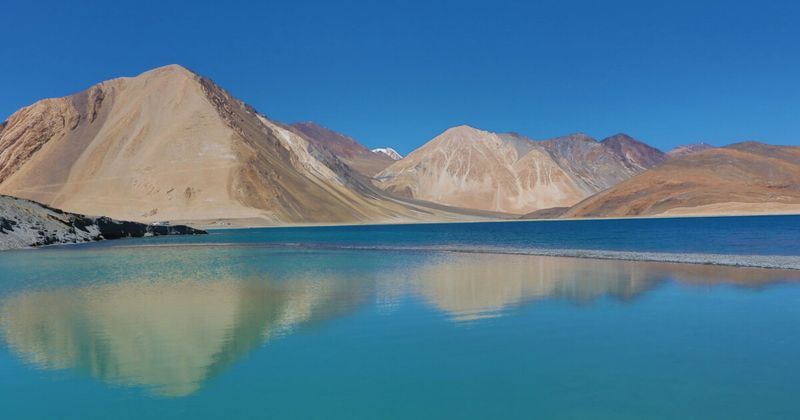
The unusual colour of Pangong Tso is caused by the lake's extreme clarity — at 4,350 metres, the water contains minimal suspended sediment and the high-altitude sunlight hits the lake bed at an angle that selectively scatters blue wavelengths; the colour intensifies noticeably between 7am and 9am as the sun angle changes.
From Nubra Valley to Pangong, you have two route options: the classic route back to Leh and then on to Pangong via Chang La (approximately 310 kilometres, 10–12 hours total), or the Shyok Valley shortcut via Wari La or the newer Nubra-Pangong direct road (approximately 250 kilometres, 8–10 hours) — check current road status with your driver, as this route has sections that are periodically closed for military movement or road repair. Your Ladakhi driver will know the current condition. The classic route via Leh is safer, more reliable, and allows for a Leh resupply before Pangong.
The Pangong Tso camp area — along the Indian shoreline near Spangmik — has dozens of registered tent camps and simple guesthouses. Overnight camps cost ₹2,000–₹5,000 ($21.28–$53.19 USD) per person including dinner and breakfast. The accommodation is basic: heated tents, shared bathrooms, generator power that cuts at 10pm. None of it matters when you walk out of your tent at 5:30am and find the lake surface perfectly still, reflecting the dark ridgelines, the sky not yet light, and the silence so complete that you can hear your own heartbeat.
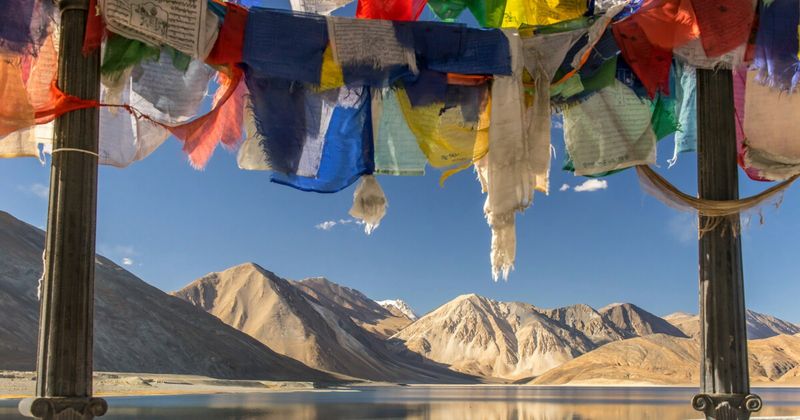
The Line of Actual Control between India and China runs directly through Pangong Tso — the far mountains visible from the Indian shore at Spangmik are Chinese-controlled territory, and the lake itself was the site of a military standoff between Indian and Chinese forces in 2020 that led to increased security restrictions in the eastern sectors of the lake.
The sunrise sequence at Pangong is what the guides rarely prepare you for: the lake is grey before dawn, then briefly gold at first light, then transitions to the saturated turquoise-blue within 20 minutes of full sunrise as the angle of light hits the water directly. Stay for it. Don't be on a taxi back to Leh at 6am.
Book your Pangong taxi from Leh through your hotel or Intui.travel — the official Ladakh Taxi Union rate for a private Leh-to-Pangong-and-return vehicle is ₹9,500–₹11,500 ($101–$122 USD) per vehicle (not per person). For shared taxi, per-person cost is approximately ₹2,000–₹3,500 ($21.28–$37.23 USD). Book in advance during peak season when vehicles fill early.
Day 8: Pangong Back to Leh — Via Chang La and Thiksey at Sunset
Return from Pangong to Leh via Chang La Pass (5,360 metres) — a drive of approximately 160 kilometres taking 5–6 hours. The Chang La road is well-maintained but high, and the pass summit has a small army canteen where chai and Maggi noodles are sold — have both, because at 5,360 metres the wind is fierce and the warmth helps. Submit your permit copy at the Chang La checkpoint and keep moving; the descent from Chang La into the Indus Valley is one of the most dramatic landscape transitions in India — from high-altitude desert to green valley in 45 minutes.
Stop at Thiksey on the return leg for sunset. The monastery from the valley floor, with the warm light turning the white walls amber and the Himalayas behind going purple and red, is the photograph you came to Ladakh for. You've already been inside — this is purely the external view from the highway.
Check back into your Leh accommodation. Have a proper dinner. Your body has done the high-altitude work. Tonight is the first night in five days where you sleep below 4,000 metres, and you'll notice it immediately — deeper sleep, easier breathing, appetite returning.
Day 9: Sham Valley — The Monasteries Most Itineraries Skip
The Sham Valley is the section of Ladakh west of Leh toward the Zanskar range — a different Ladakh from the high-altitude lakes circuit, gentler, greener, and almost completely bypassed by first-time visitors who allocate all their driving days to Nubra and Pangong.
The highlight is Lamayuru Monastery — 125 kilometres west of Leh on the Leh-Srinagar highway, approximately 3 hours by car. Lamayuru is Ladakh's oldest monastery, believed to date from the 10th century, and its setting is frankly absurd: perched on a cliff above a valley of eroded clay formations called the "moonland" — pale grey and ochre pillars of sediment that look like something between a Dali painting and a lunar surface. There is no equivalent landscape anywhere else in India. Entry free; donations welcomed.
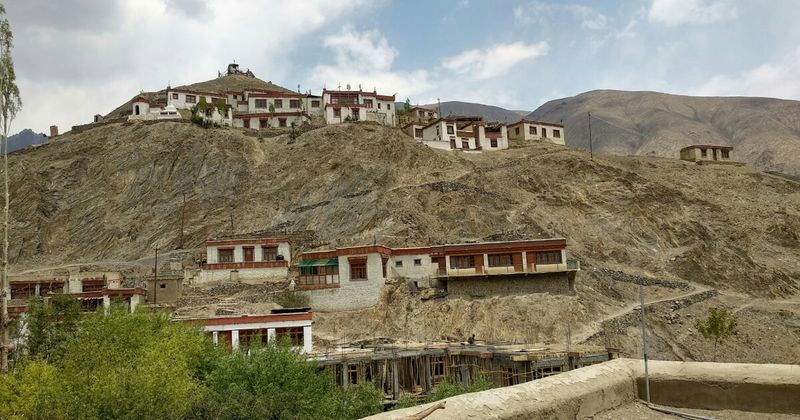
The "moonland" at Lamayuru is the result of lakebeds exposed by tectonic uplift over millions of years — the pale grey and ochre clay formations are composed of compressed ancient sediment that erodes into pillars and ridges as snowmelt and rain cut through the soft material each season.
Arrange the Sham Valley drive through Intui.travel — the full Lamayuru circuit with stops at Alchi Monastery (entry ₹30), Basgo Fort, and the roadside Magnetic Hill (where the optical illusion makes vehicles appear to roll uphill) costs approximately ₹3,500–₹4,500 ($37.23–$47.87 USD) for a private vehicle from Leh.
Gurudwara Patthar Sahib, 25 kilometres west of Leh on the Srinagar highway, is a Sikh shrine built in 1517 to mark a site associated with Guru Nanak's legendary visit to Ladakh. It's maintained by the Indian Army, open to all visitors, and free. The langar (community meal) served daily is free to everyone and is genuinely one of the best meals you'll eat in Ladakh. Pull in. Have lunch. Talk to the soldiers. This is one of those places that doesn't appear on most itineraries and should.
Day 10: Depart Leh
Early morning flights to Delhi depart Leh from approximately 5:30am — check your schedule. Most flights leave before 9am because Leh's mountain-surrounded airport becomes increasingly difficult to navigate as daytime thermal winds build over the Himalayan peaks by mid-morning. The earlier the flight, the smoother the departure.
Pre-book your airport transfer through GetTransfer — the airport is 4 kilometres south of Leh town, a 10-minute drive, and your pre-arranged driver will be outside at whatever hour you need. At 4am in Ladakh, the temperature is below 5°C regardless of season, so dress accordingly for the transfer.
Set a Compensair delay alert for the return Delhi flight if it's connecting to an international leg — Leh delays can cascade into missed international connections at Delhi, and EU-routed legs carry €600 compensation eligibility.
If your onward travel connects Ladakh into a longer India circuit, our India in 3 Weeks itinerary builds the North India forts and South India coast circuit around a Ladakh northern anchor. If this is a standalone Ladakh trip and you want to plan the rest of India separately, the North India vs South India comparison guide covers which direction to go next.
What to Skip on This Ladakh Itinerary
The Manali–Leh road trip. Beautiful, iconic, and not this itinerary. The Manali–Leh Highway is a 479-kilometre, 2-day drive through some of the most dramatic mountain scenery in Asia — but it requires at least 4–5 additional days, a capable 4WD vehicle, and a very specific kind of traveller who is comfortable with no infrastructure, cold nights at altitude, and roads that disappear in sections. If this is your first time in the Himalayas, fly to Leh, do 10 days, and save the Manali highway for the return trip on a future visit.
Rushing Day 1 and 2. Every year, first-time visitors to Ladakh cut their acclimatization short by one day and spend Day 3 in a guesthouse with a headache, vomiting, and a rapidly deteriorating trip. Two days rest is not a conservative suggestion — it's the minimum the Indian medical community and the Leh District administration itself recommend. The DC office's official guidance (updated 2025) states that all tourists arriving by air should undergo a minimum 48-hour acclimatization before travelling to high-altitude areas.
The Pangong–Tso Moriri Chushul route without extra time. The direct route from Pangong Tso to Tso Moriri via Chushul requires a separate permit section and adds 2–3 days minimum to this itinerary. In 10 days, choose one major lake and do it properly. Pangong Tso is the right choice for a first trip; Tso Moriri is the choice for a second trip when you know what you're doing.
Helicopter packages from Srinagar. Several operators advertise helicopter transfers from Srinagar to Leh as an "acclimatization solution." They are not. Arriving by helicopter instead of road doesn't change the fact that your body has gone from sea level to 3,524 metres in an hour. You still need two days rest. The helicopter saves road travel time, not acclimatization time.
Khardung La in a rented Scooty. Technically possible. Not advisable. The Khardung La road has genuine death drops on the unfenced outer edge of switchback curves, frequent military convoys that take the entire road width, and at the summit, near-zero oxygen for engine cooling on a small scooter. If you want the pass experience without the motorcycle, hire a 4WD taxi. Your driver knows this road and has driven it 200 times.
Altitude, Health and the Non-Negotiables
Acute Mountain Sickness (AMS) occurs when your body can't acclimatize fast enough to reduced oxygen at altitude. Symptoms: persistent headache, dizziness, nausea, fatigue, loss of appetite, poor sleep. They typically appear 6–12 hours after arrival and can worsen over 24–48 hours if you keep ascending or exerting yourself. Mild AMS is common and manageable with rest and hydration. Severe AMS (confusion, difficulty walking, fluid in lungs or brain) is a medical emergency requiring immediate descent.
Diamox (Acetazolamide) is a prescription medication that accelerates acclimatization. Consult your doctor before travel — dosage is typically 125–250mg twice daily, starting 24 hours before arrival in Leh. Not everyone needs it; not everyone tolerates it (it causes increased urination and tingling in fingers). It is not a substitute for acclimatization days — it's an accelerant, not a bypass.
Oxygen cans (portable, aerosol) are available in every pharmacy in Leh for ₹500–₹800 ($5.32–$8.51 USD). Carry one for the high passes. Use it if someone in your group is showing AMS symptoms while you're above 4,500 metres.
Golden rule: If symptoms worsen, descend. Nothing in Ladakh is worth severe AMS. Pangong Tso will be there next year. Your brain under oedema will not recover by willpower.
Pace and Burnout: Managing 10 Days at Altitude
This itinerary is deliberately structured so the highest-altitude days (Nubra via Khardung La at 5,359m, Pangong at 4,350m, Chang La at 5,360m) fall in the middle of the trip — Days 4–8 — after the body has had two days to adjust and before the final Sham Valley day at lower altitude.
The mistake most first-timers make is front-loading the dramatic locations before the body is ready. The structure of this itinerary is not arbitrary; it follows the acclimatization curve that experienced Ladakhi guides and the Leh District administration recommend.
If you're showing any AMS symptoms by Day 3, push the Indus Valley monastery circuit to Day 3 and Day 4, and push Nubra to Days 5–6. The itinerary is designed to flex; the acclimatization minimum is not.
Nights at altitude are cold year-round in Ladakh. June–August daytime temperatures in Leh reach 25–30°C ($77–86°F) but nights drop to 5–10°C ($41–50°F). At Pangong (4,350m) nights can hit 0°C even in peak July. At the Nubra camp, 8–12°C nights. Pack a proper warm layer — a down jacket or thermal base layer — regardless of what season you travel in.
When to Visit Ladakh
June–August is peak season. Roads are all open, temperatures are manageable, permits are fully operational, and every camp, guesthouse, and taxi service is running. Pangong is at its most vivid blue. The Hemis Festival falls in July. Book flights 6–8 weeks ahead; prices peak in July.
September–October is the ideal window. Crowds thin dramatically after mid-September, the air is crystal clear with no monsoon haze, and the light is exceptional for photography. Mornings are cold but afternoons are warm. Some passes may close with early snowfall by late October.
November–May is either inaccessible (December–March) or transitional (April–May). Khardung La, Chang La, and Nubra are usually snow-blocked December–April. Pangong freezes by mid-December and thaws in April–May. The Manali–Leh road opens late May. This is Ladakh's tourist dead season — some guesthouses stay open in Leh town, very little else functions.
Check Live Flight Prices
10-Day Ladakh Budget Breakdown
| Expense | Budget | Mid-Range | Splurge |
|---|---|---|---|
| Delhi → Leh flight (one way) | ₹6,000–₹8,000 ($64–$85) | ₹9,000–₹12,000 ($96–$128) | ₹15,000+ ($160+) |
| Leh → Delhi return flight | ₹6,000–₹8,000 ($64–$85) | ₹9,000–₹12,000 ($96–$128) | ₹15,000+ ($160+) |
| Accommodation Leh (6 nights) | ₹800–₹1,500 ($8.51–$15.96) per night | ₹2,500–₹5,000 ($26.60–$53.19) | ₹8,000+ ($85.11+) |
| Nubra Valley accommodation (2 nights) | ₹800–₹1,500 ($8.51–$15.96) per night | ₹2,500–₹4,000 ($26.60–$42.55) | ₹6,000+ ($63.83+) |
| Pangong camp (1 night) | ₹2,000–₹3,000 ($21.28–$31.91) | ₹3,500–₹5,000 ($37.23–$53.19) | ₹8,000+ ($85.11+) |
| Nubra Valley taxi (private, per vehicle) | ₹16,000–₹20,000 ($170–$213) | shared ₹3,000–₹4,500 pp ($31.91–$47.87) | — |
| Pangong taxi (private, per vehicle) | ₹9,500–₹11,500 ($101–$122) | shared ₹2,000–₹3,500 pp ($21.28–$37.23) | — |
| Indus Valley monasteries taxi (Day 3) | ₹2,500–₹3,500 ($26.60–$37.23) | ₹3,500–₹5,000 ($37.23–$53.19) | — |
| Sham Valley taxi (Day 9) | ₹3,500–₹4,500 ($37.23–$47.87) | ₹5,000–₹7,000 ($53.19–$74.47) | — |
| Environment fee (PAP, per person) | ₹400 ($4.26) | ₹400 ($4.26) | ₹400 ($4.26) |
| Food (10 days) | ₹500–₹800 ($5.32–$8.51) per day | ₹1,200–₹2,000 ($12.77–$21.28) per day | ₹3,000+ ($31.91+) per day |
| Monument entry fees total | ₹500–₹800 ($5.32–$8.51) | ₹1,000–₹1,500 ($10.64–$15.96) | — |
| Travel insurance (VisitorsCoverage) | From ~$18–40 | From ~$18–40 | From ~$18–40 |
| 10-day per person total (approx) | ₹55,000–₹75,000 ($585–$798) | ₹95,000–₹1,40,000 ($1,011–$1,489) | ₹2,00,000+ ($2,128+) |
All prices INR. USD at ₹94 = $1. Approximate — check current exchange rate before budgeting. Taxi prices are for full vehicle (typically fits 4–6 passengers).
The Bottom Line
Ladakh has been doing this to people for a very long time. They arrive disoriented and slightly breathless. They rest for two days feeling guilty about doing nothing. Then they drive over a 5,000-metre pass and find themselves looking at a valley with sand dunes and Silk Road camels and monastery bells echoing off rock walls and they understand, all at once, why this place has no equivalent anywhere else in India.
The motorcycle is not the point. The altitude is the point. The silence is the point. The light at Pangong at 6am, when the water is changing colour and there is nobody else on the shore, is the point.
Two days rest. Get your permit. Trust your driver. Go slow.
Your Ladakh Trip Planning Checklist
Every item on this list is easier to sort at home than at 3,500 metres. Do it before you board.
🛡️ Travel Insurance — First, Always: VisitorsCoverage — Compare plans; minimum $100K USD medical + emergency evacuation cover; 10-day Ladakh policies from $18–40 USD. Altitude-related hospitalisation or evacuation in Leh costs ₹25,000–₹1,50,000 before treatment begins. Medical evacuation from Pangong Tso to Leh can exceed ₹1,00,000. This is the single most non-negotiable item in this checklist. Sort before flights, permits, or anything else.
✈️ Flights & Delay Protection: FlyFlick — Compare Delhi to Leh (DEL–IXL) direct flights; IndiGo, SpiceJet, Air India all operate daily; fares from ₹6,000 ($64 USD) booked 4–6 weeks ahead | Compensair — Claim up to €600 for delayed or cancelled flights; Leh is highly weather-dependent and cancellations cascade into international connections; set alert before departure.
🚖 Airport & City Transfers: GetTransfer — Pre-booked fixed-fare transfers at Leh airport (IXL) arrival and departure; Leh airport exits can be chaotic with competing taxi offers targeting just-arrived altitude-affected travellers | Intui.travel — All within-Ladakh intercity vehicle hire: Indus Valley monastery circuit (Day 3), Sham Valley full-day (Day 9), Pangong return-to-Leh leg (Day 8); fixed rates, professional Ladakhi drivers.
📱 Connectivity: Saily — City 5G eSIM; works well in Leh town, main Leh–Manali highway, and the approach roads to Nubra and Pangong — activate before boarding | Drimsim — Off-grid eSIM; essential for Nubra Valley villages, Turtuk, the Pangong shoreline, Chang La summit, and Sham Valley where standard SIMs and single-carrier roaming drop to zero — auto-switches between all available Indian networks | Yesim — Unlimited data eSIM if Ladakh is part of a longer multi-country trip extending to Nepal or Tibet.
🎟️ Experiences to Pre-Book: Klook — Thiksey + Hemis monastery guided circuit (Day 3), Diskit Monastery + Hunder camel ride (Nubra, Day 4), Pangong Tso overnight camp including dinner and breakfast. All with cancellation policies visible before booking.
Two days rest. One extraordinary lake. No motorcycle required.