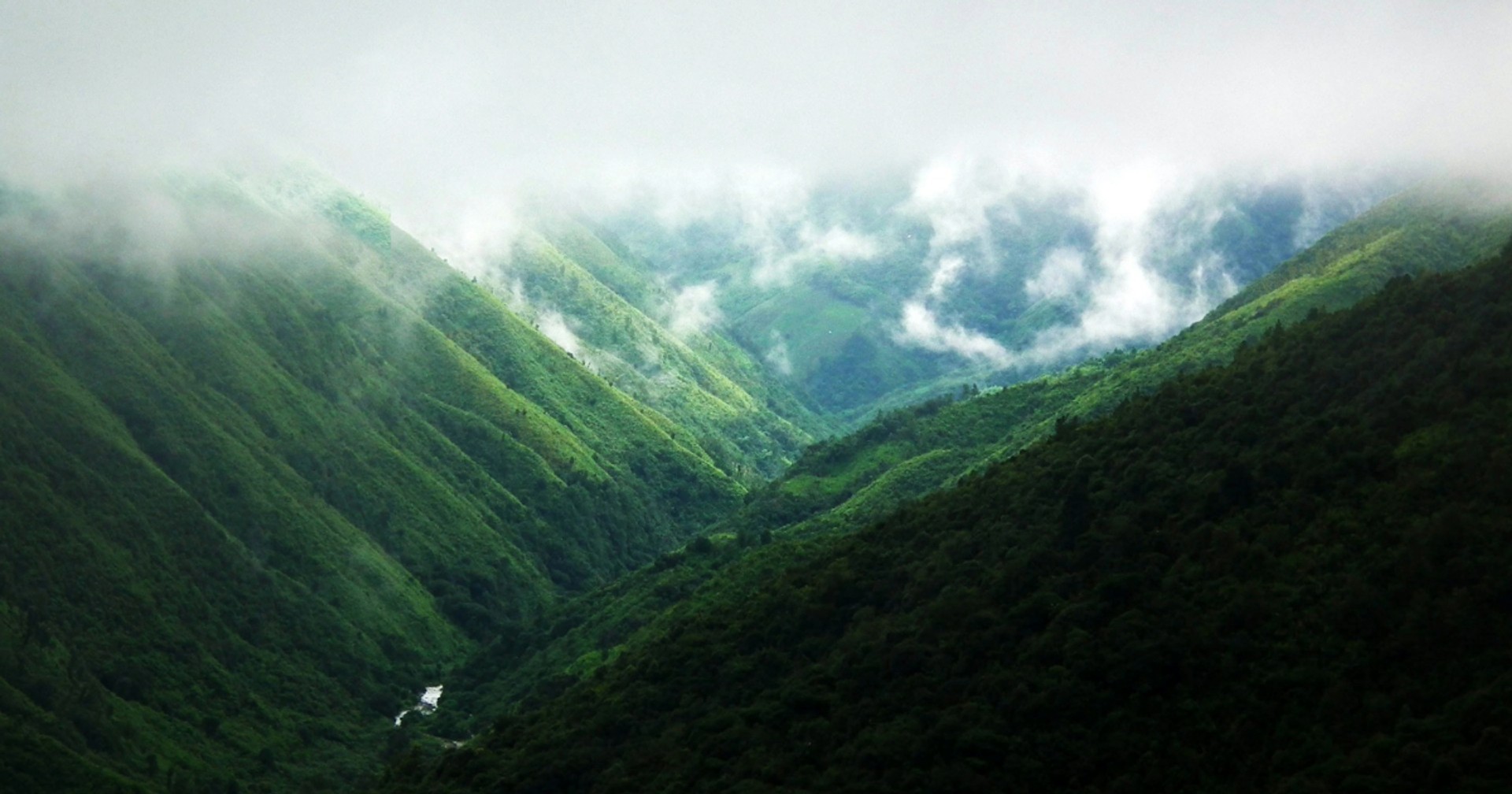

The Brahmaputra river at dawn in Assam is the widest thing you'll see in India. Not the most famous, not the most photographed — just genuinely, disarmingly wide. You stand on the ghats in Guwahati and the far bank is so distant it disappears into haze, and it occurs to you that this is the India that doesn't make the covers of travel magazines. Yet.
Northeast India — the seven states connected to the rest of the country by a sliver of land 22 kilometres wide called the Siliguri Corridor, or the "Chicken's Neck" — holds roughly 70% of India's biodiversity, 25% of its tribal cultures, and almost none of its international tourist crowds. Assam has the world's largest population of one-horned rhinos. Meghalaya is the wettest region on earth and grows bridges from living tree roots. Arunachal Pradesh shares a border with China, requires government permission to enter, and contains a 17th-century Buddhist monastery at 10,000 feet that most Indians have never seen either.
This is the 10-day itinerary that covers all three — with complete permit logistics for foreign tourists, real costs in USD and INR, safari booking details, trek guides, and every transport connection spelled out. If you're newer to India and want the full first-timer groundwork first, read our First Time in India guide before this one — Northeast India is a specific kind of travel that rewards preparation. Search flights to Guwahati (GAU) on FlyFlick while you plan — open-jaw tickets flying into Guwahati and out of Guwahati or Dibrugarh are the right approach for this itinerary.
Arunachal Pradesh Tourism official permit info
Before You Leave Home: Permits, Insurance, and What Can't Wait
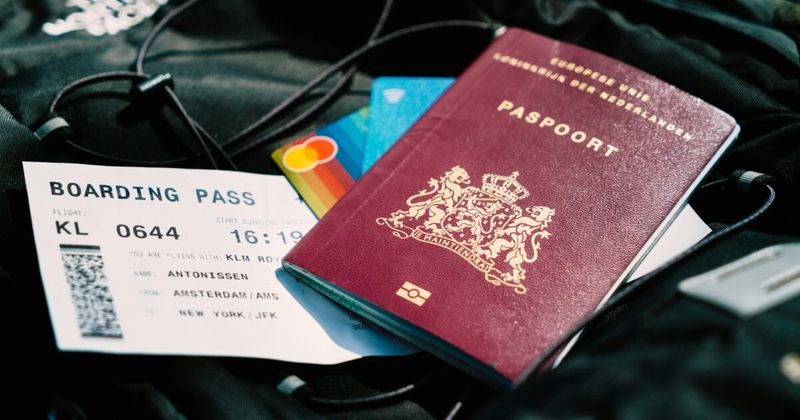
Northeast India has one non-negotiable that no other Indian itinerary has: the Protected Area Permit (PAP) for Arunachal Pradesh. Foreign tourists — regardless of nationality — cannot enter Arunachal Pradesh without one. This is not an ILP (Inner Line Permit), which is for Indian citizens. The PAP is a separate document issued under the Foreigners (Protected Areas) Order, 1958.
Here's exactly how it works in 2026: you cannot apply for a PAP individually. It must be obtained through a registered local tour operator in Arunachal Pradesh. The process takes a minimum of 4 weeks — apply well before your flight is booked. The government royalty fee is $30 USD per person. The permit is valid for specific circuits only; for this itinerary the relevant circuit is Bhalukpong–Bomdila–Tawang. Citizens of China (including those from Taiwan or Hong Kong) are not granted PAPs under current Indian government regulations.
One important note our India Travel Scams guide covers in detail: third-party websites offer to "process your PAP online" for a fee. The only legitimate PAP process goes through a registered Arunachal tour operator or through the Resident Commissioner's offices. Don't pay for what doesn't exist.
Travel insurance is more critical here than anywhere else in India. Northeast India is remote. The road from Bomdila to Tawang crosses the Sela Pass at 4,170 metres and is occasionally closed by snow and landslides. Evacuation from Tawang is not quick. Get covered before you fly on Visitors Coverage — compare plans with at minimum $100,000 USD emergency medical and evacuation coverage. Most comprehensive 2-week India policies run $30–80 USD. Do this before any other booking.
Connectivity prep: Northeast India's remote stretches — Tawang, the Meghalaya jungle gorges, the road between Kaziranga and Shillong — are exactly where standard city eSIMs lose signal. Get Saily for fast 5G in Guwahati, Shillong, and the larger towns. Add Drimsim specifically for this trip — it auto-selects the strongest available network wherever you are and is the only eSIM worth trusting at 4,000 metres on the Sela Pass or in the gorges below Nongriat village in Meghalaya. If Northeast India is part of a longer multi-country Asia trip, Yesim provides unlimited data across India, Nepal, Bhutan, and Southeast Asia on one plan.
| Days | Location | State | Key Experience |
|---|---|---|---|
| 1 | Guwahati | Assam | Arrival, Kamakhya Temple |
| 2-3 | Kaziranga National Park | Assam | One-horned rhino jeep + elephant safaris |
| 4 | Shillong | Meghalaya | Laitlum Canyon, Ward's Lake, Police Bazaar |
| 5 | Cherrapunji (Sohra) | Meghalaya | Nohkalikai Falls, Seven Sisters Falls, Mawsmai Cave |
| 6 | Nongriat / Cherrapunji | Meghalaya | Double Decker Living Root Bridge full-day trek |
| 7 | Mawlynnong + Dawki | Meghalaya | Asia's cleanest village, crystal Dawki River |
| 8 | Guwahati → Tezpur → Bhalukpong | Assam → Arunachal | Enter Arunachal Pradesh (PAP checkpoint) |
| 9 | Bomdila → Tawang | Arunachal Pradesh | Sela Pass 4,170m, Tawang Monastery |
| 10 | Tawang → Return | Arunachal Pradesh | War Memorial, Shungatser Lake, depart |
Days 1: Guwahati — Gateway to the Northeast
Every Northeast India itinerary starts in Guwahati, the region's largest city and its only major international flight hub. Fly into Lokpriya Gopinath Bordoloi International Airport (GAU). Book your airport transfer in advance through GetTransfer — the drive to central Guwahati takes 20–30 minutes, fixed fare confirmed before you land, no negotiation required after a long flight.
Guwahati is a transit city, not a destination — but it has one thing worth your afternoon: Kamakhya Temple, one of the most important Shakti temples in India, perched on Nilachal Hill with views over the Brahmaputra. Entry is free; the walk through the temple complex takes 1.5 hours. The crowds and the smoke from incense and the sound of bells are exactly the kind of sensory recalibration that prepares you for what's ahead.
Dinner recommendation: Khorika, a Northeast Indian restaurant near GS Road — grilled pork with bamboo shoot costs ₹280 (about $3.40 USD) and introduces you immediately to the fact that Assamese food has almost nothing in common with what most people think of as "Indian food."
Stay the night in Guwahati. Your morning departure for Kaziranga is early.
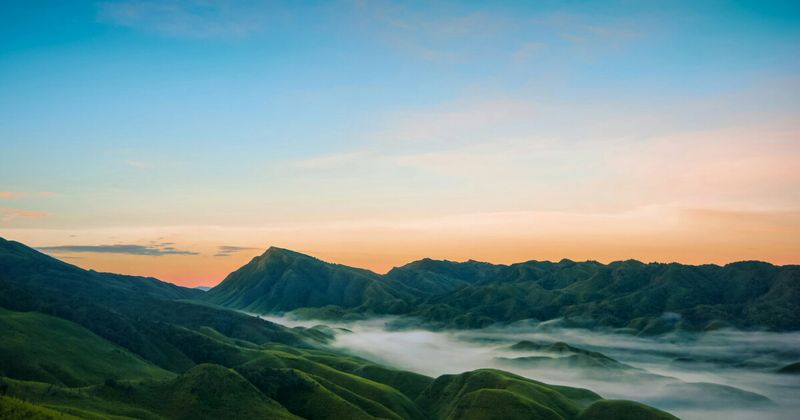
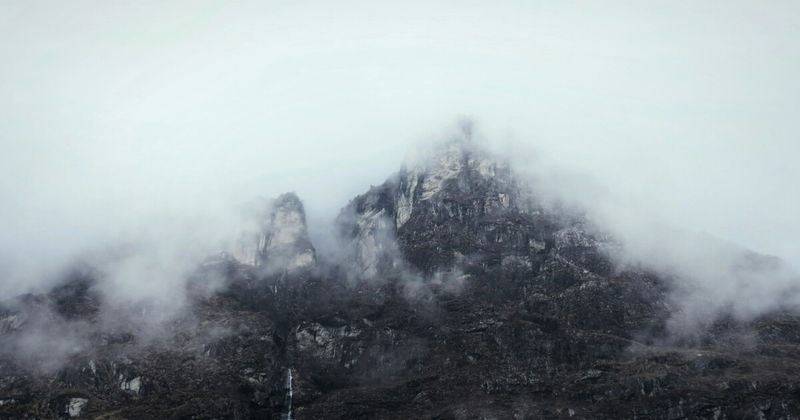
Northeast India's landscapes are mostly unrecorded — the places that look like this are still two hours from the nearest town with a proper road.
Days 2–3: Kaziranga National Park — The Rhino Safari That Changes Your India Trip
Kaziranga National Park in Assam is a UNESCO World Heritage Site and home to approximately 2,600 Indian one-horned rhinoceroses — the largest single population on earth. It also has wild elephants, tigers (one of the highest tiger densities in India), water buffalo, and swamp deer. Most first-time visitors to India have no idea it exists. That is genuinely their loss.
Getting there: Kaziranga is 217 km from Guwahati — about 4.5–5 hours by road. Depart by 6 AM from Guwahati. Book a private transfer through Intui.travel — fixed fare, English-speaking driver, door-to-door, no shared-taxi overcrowding on a 5-hour road journey.
The safari logistics: Kaziranga is divided into four ranges — Central (Kohora), Western (Bagori), Eastern (Agoratoli), and Burapahar. The Central Range is the most wildlife-dense and the best starting point. Jeep safaris run twice daily: morning (6:30–9:30 AM) and afternoon (3:30–5:30 PM). Entry and safari fees for foreign nationals: ₹2,650 (about $32 USD) for the morning jeep safari including park entry. Book jeep safaris through Klook — fixed pricing, verified operators, instant confirmation — or through your hotel if they have a trusted arrangement.
Day 2: Morning jeep safari in the Central Range. This is where most rhino sightings happen. Afternoon rest at camp or lodge — the heat between 11 AM and 3 PM is significant. Afternoon safari in Western Range for different terrain.
Day 3: Elephant safari at dawn (6 AM, ₹1,450 / about $17.50 USD for foreigners) this is the closest you'll get to a rhino on foot, with mahouts guiding elephants silently through tall grass at eye level with the animals. Book this at the Forest Department counter the afternoon before — it fills up. Afternoon: drive toward Shillong, stopping at Umiam Lake (30 km from Shillong) for the sunset view over the reservoir.
Honestly, Kaziranga deserves more than 2 days — but 10 days across three states means you move. If Northeast India becomes a return trip (and it will), spend 3 nights here.
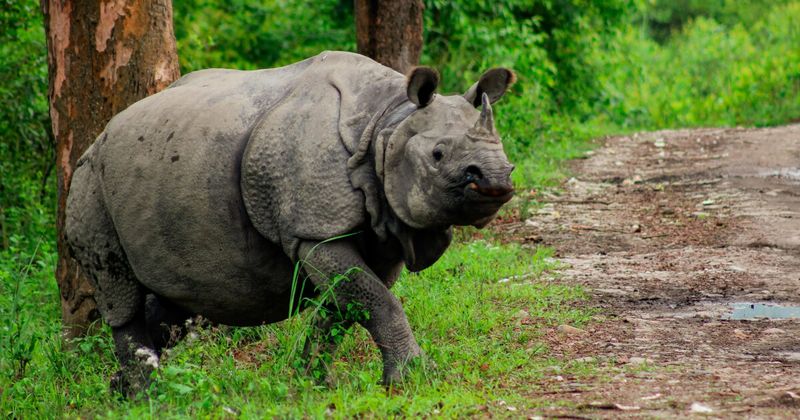
Kaziranga's Central Range has the highest rhino density on earth — the morning safari at 6:30 AM in low mist is the version of this that stays with you.
Days 4–7: Meghalaya — The State That Grows Its Own Bridges
Meghalaya ("Abode of Clouds" in Sanskrit) is where this itinerary makes its most dramatic turn. From Assam's flat floodplains and grasslands, you climb into the Khasi Hills — a plateau averaging 1,500 metres above sea level, covered in subtropical forest, cut through by gorges hundreds of metres deep, and receiving more rainfall than almost anywhere on earth.
Getting there: Shillong is approximately 4–5 hours from Kaziranga by road. Book through Intui.travel for a private fixed-fare transfer — shared sumo taxis run this route but pack six passengers into five seats and make stops that extend a 4-hour journey to 6.
Day 4: Shillong
Shillong is Meghalaya's capital and a genuinely pleasant base city — cool at 1,500 metres, relatively clean, with a music and café culture that surprises most visitors. Called the "Scotland of the East" by British settlers in the 1800s for its rolling pine-covered hills, a comparison that mostly holds on grey mornings.
The must-do: Laitlum Canyon, 15 km east of Shillong — a dramatic gorge of layered sandstone cliffs dropping 600 metres to the valley floor, almost entirely unknown outside Northeast India. Entry free. Best at 8 AM before clouds fill the gorge. Ward's Lake in the city centre is pleasant for a 45-minute walk. Police Bazaar in the evening for street food — jadoh (Khasi rice cooked with pork blood, the local staple, ₹80–120 / about $1–1.50 USD) and tungrymbai (fermented soybean, an acquired taste worth acquiring).
Day 5: Cherrapunji (Sohra)
Cherrapunji — officially named Sohra — is 54 km southwest of Shillong, about 1.5 hours by road. It held the world record for highest annual rainfall for most of the 20th century and still holds the record for highest rainfall in a calendar month (9,300 mm in July 1861). The landscape is extraordinary in any season — layered cliffs, plunging waterfalls, and the plains of Bangladesh visible in the distance on clear days.
Nohkalikai Falls: India's tallest plunge waterfall at 340 metres, free to view from the dedicated viewpoint 1 km from the main road. Best visited after monsoon (October–December) when the flow is maximum. Seven Sisters Falls: Seven parallel streams dropping down a single limestone cliff — visible from the road but dramatically better on foot via the 20-minute trail. Mawsmai Cave: A 150-metre limestone cave system, entry ₹30 (about $0.40 USD) — small, completely accessible, and worth the hour. Book a full-day Cherrapunji tour through Klook for a guide who knows which viewpoints are worth the detour and which are just roadside parking spots with placards.
Day 6: The Double Decker Living Root Bridge Trek — Full Day
This is the centerpiece of the Meghalaya leg and one of the most genuinely extraordinary experiences in India. The Double Decker Living Root Bridge in Nongriat village, near Cherrapunji, is exactly what it sounds like: two bridges stacked one above the other, grown — not constructed — from the aerial roots of rubber fig trees by the Khasi tribe over the last 500+ years. The roots were guided across the river using hollowed betel nut trunks as channels. What grew is now strong enough to hold 50 people simultaneously and self-strengthens every year.
The logistics: The trek starts at Tyrna village, about 20 minutes past Cherrapunji by road. From Tyrna: 3,500 stone steps descending 300 metres into the gorge, taking 1.5–2.5 hours depending on fitness. The bridge is in Nongriat village at the bottom. Total round trip: 5–7 hours. Start by 7 AM — the gorge heats up by midday, and the steps are steep enough that afternoon heat matters.
What to bring: 2 liters of water minimum, good grip shoes (the steps are worn smooth and slippery in patches), a packed lunch (food is available at a small stall near the bridge but limited), and your full camera battery. There's a natural swimming pool 5 minutes past the Double Decker where most trekkers stop for 30 minutes on the return.
Wear breathable clothes. The descent will have you sweating within 15 minutes regardless of the air temperature. Hire a local guide from Tyrna village — ₹500–800 (about $6–9.60 USD) for a full-day guide is money well spent.
Day 7: Mawlynnong and the Dawki River
Mawlynnong (70 km east of Shillong) was declared Asia's cleanest village in 2003 and has maintained the reputation. It's a small Khasi village where every path is swept daily, bamboo dustbins are on every corner, and the community operates on a genuine collective cleanliness ethic that puts most cities to shame. There's a single accessible root bridge here — smaller than the Double Decker, easier to reach, worth seeing. Entry free.
Dawki is 4 km from Mawlynnong on the Bangladesh border. The Umngot River here is the clearest river in India — in the dry season (November–March), you can see every rock on the riverbed from a boat. The water is so transparent that boats appear to float in mid-air when photographed from above. A boat ride on the Umngot costs ₹700–1,000 (about $8.50–12 USD) per boat for 1 hour. Book it for 8 AM before tour groups arrive.
Return to Guwahati in the evening for the overnight stay before the Arunachal leg. This is a long driving day — approximately 5–6 hours total. Book the private return transfer through Intui.travel so you're not managing shared taxis with bags across three stops.
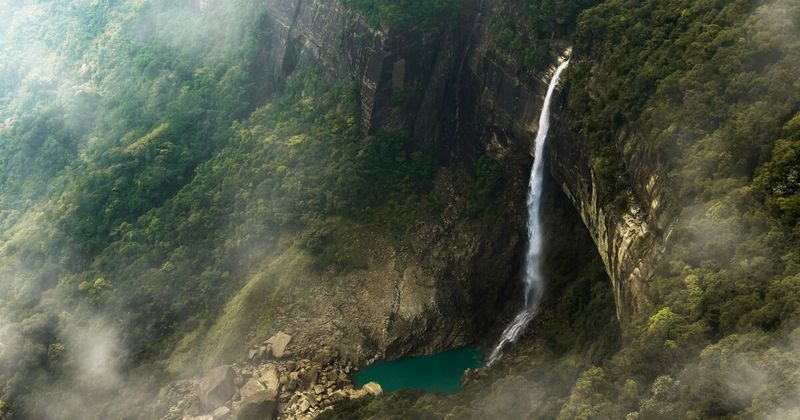
The gorge below Nongriat village in Meghalaya receives over 12,000 mm of rain per year — the root bridges grew because the Khasi people needed crossings that the monsoon couldn't wash away.
Days 8–10: Arunachal Pradesh — The Himalayan Permit Zone
No other part of this itinerary requires the advance planning that Arunachal does. Get your Protected Area Permit sorted at least 4 weeks before you travel, through a registered Arunachal Pradesh tour operator. The $30 USD royalty fee is paid directly to the Arunachal Pradesh government. Your PAP specifies your entry and exit dates and your approved circuit — for this itinerary: Bhalukpong → Bomdila → Tawang.
Without a PAP, you will not pass the Bhalukpong checkpoint into Arunachal Pradesh. There is no workaround, no on-arrival processing, no exceptions.
Day 8: Guwahati to Tezpur to Bhalukpong — Entry into Arunachal
Depart Guwahati early. Drive to Tezpur (175 km, about 3.5 hours) — book through Get Transfer for a direct, fixed-fare vehicle. Tezpur is a pleasant Assamese town on the Brahmaputra with the Agnigarh Hill viewpoint (free, 15 minutes) worth a stop if you're ahead of schedule.
From Tezpur, continue 60 km to Bhalukpong (about 1.5 hours) — the entry checkpoint into Arunachal Pradesh. Present your PAP, passport, and Indian visa here. The crossing is straightforward if your documents are in order.
Stay the night at Bhalukpong or continue 95 km to Bomdila (about 3 hours on mountain roads). Bomdila sits at 2,500 metres and has a small Tibetan monastery worth a 45-minute visit. Most travellers overnight here before the Tawang drive.
Day 9: Bomdila to Tawang via Sela Pass — The Mountain Drive
The Bomdila–Tawang drive is 175 km and takes 6–8 hours depending on road conditions. It crosses the Sela Pass at 4,170 metres — one of the highest motorable passes in the world, usually snow-covered from November to March. The road is spectacular and occasionally terrifying. Landslides happen. Carry warm layers regardless of departure temperature.
Sela Pass Lake: A glacial lake at 4,170 metres, usually half-frozen from November to April. Worth stopping for 20 minutes. Temperature at the pass can be -5°C to +10°C even in April. The descent from Sela into the Tawang Valley is one of the most visually dramatic road sections in India.
Tawang Monastery: Founded in the 17th century, Tawang Gompa is the largest Buddhist monastery in India and the second-largest in the world after Lhasa's Potala Palace. It sits at 3,048 metres overlooking the Tawang Valley. Entry: ₹50 (about $0.60 USD). The main prayer hall is open to visitors; evening prayers (around 6 PM) are worth staying for if your schedule allows. Photography inside the main hall requires a separate ₹100 permit from the monastery office.
Day 10: Tawang — War Memorial, Shungatser Lake, Departure
Tawang War Memorial (10 minutes from the monastery) commemorates the 1962 Sino-Indian War, when Indian soldiers held the Sela Pass against Chinese forces. It's one of the most quietly moving military memorials in India. Entry free.
Shungatser Lake (Madhuri Lake): 35 km from Tawang, through landscape that looks like it was lifted from a Tibetan plateau — rolling grasslands, yak herders, Himalayan peaks. Entry ₹50 (about $0.60 USD). A half-day excursion. Tawang local guides (₹1,200–1,800 / about $14.50–21.70 USD per day) are strongly recommended for this leg — road conditions, military checkpoints, and local context are all easier to navigate with someone who lives here.
Depart Tawang by noon on Day 10 for Bomdila overnight or Guwahati (very long day — 10+ hours of mountain driving). Most travellers fly out of Guwahati (GAU). Search return flights on FlyFlick. The Tawang–Guwahati drive done in two days is far better than one. If you need to compress it: Guwahati has a direct Tawang-bound helicopter service operated by Pawan Hans — ₹4,500–6,000 (about $54–72 USD) one way, available on specific days, worth checking as a return option.
If your adventure extends beyond just flights to Guwahati and involves planning trains through Assam or connecting buses across Northeast India's state borders, book all overland connections through 12Go Asia — it covers Northeast India's rail and bus network in English with international card acceptance. Protect your entire flight booking with Compensair — Northeast India flights route through Kolkata and Delhi hubs where delays cascade quickly.
The Sela Pass at 4,170 metres is usually at least partially snow-covered until May — carry warm layers even if Guwahati was 32°C when you left that morning.
Check Live Flight Prices
The Full Budget Breakdown (Per Person)
| Category | Budget | Mid-Range |
|---|---|---|
| Accommodation (9 nights) | $180–300 USD | $380–650 USD |
| Internal transfers (road, all legs) | $120–180 USD | $200–320 USD |
| Kaziranga safaris (jeep + elephant) | $55–75 USD | $55–75 USD |
| PAP fee Arunachal (mandatory) | $30 USD | $30 USD |
| Klook experiences + entry fees | $60–90 USD | $90–140 USD |
| Food (10 days, Northeast cuisine) | $80–130 USD | $150–250 USD |
| Airport transfers (arrival + departure) | $20–35 USD | $35–60 USD |
| Total (excl. international flights + insurance) | $545–840 USD | $940–1,525 USD |
Note: Northeast India is significantly cheaper than Rajasthan or Kerala once you're in-region. The cost driver is internal transfers — the distances are real and the roads are mountain roads.
The Bottom Line
Northeast India doesn't have a PR problem. It has an awareness problem. The people who go come back changed and slightly evangelical about it, and the people who skip it never quite know what they missed. Kaziranga in the morning mist. The gorge below Nongriat when you finally see the root bridge. The silence at Sela Pass at 4,170 metres. These are not supplementary India experiences — they're the real thing, just harder to reach.
Sort the PAP early, cover yourself with Visitors Coverage, book your transfers through Get Transfer and Intui.travel, lock in your Kaziranga safaris and Cherrapunji tours on Klook, activate Drimsim before you leave — and then let a region that genuinely doesn't care about being Instagrammed do what it does.
Ten days is enough to see it. A lifetime won't be enough to stop thinking about it.
Your Northeast India Trip Planning Checklist
Northeast India is remote enough that every item below is harder to sort once you're there. Do it all from home.
🛡️ Travel Insurance — Critical Here: Visitors Coverage — Compare plans; minimum $100K USD medical + evacuation. Medical evacuation from Tawang or Kaziranga is expensive without it. Most 10-day India policies run $30–80 USD. Book before anything else.
✈️ Flights & Delay Protection: FlyFlick — Compare flights into Guwahati (GAU); consider open-jaw if combining with South India | Compensair — Claim up to €600 for disrupted flights; Northeast India routes hub through Delhi and Kolkata where delays cascade.
🚖 Airport & Intercity Transfers: Get Transfer — Pre-booked fixed-fare transfers at Guwahati Airport (GAU), Tezpur; choose your vehicle before confirming, zero negotiation on arrival | Intui.travel — Pre-booked private transfers for Guwahati–Kaziranga, Kaziranga–Shillong, Shillong–Cherrapunji–Guwahati, and Guwahati–Tezpur–Bhalukpong legs; fixed fares, English-speaking drivers, no shared-taxi overcrowding.
📱 Connectivity — All Three Required for This Trip: Saily — City 5G eSIM; activate before boarding; covers Guwahati, Shillong, Tezpur, Bomdila | Drimsim — Off-grid eSIM that auto-switches networks; non-negotiable for Sela Pass, Tawang, Nongriat gorge, and remote Kaziranga zones where standard eSIMs lose signal entirely | Yesim — Unlimited data for multi-country trips including Bhutan or Nepal extensions.
🚂 Overland Connections: 12Go Asia — Book trains from Guwahati to Tezpur, Dibrugarh, or Jorhat in English with international cards; also covers Northeast India state buses.
🎟️ Experiences to Pre-Book: Klook — Kaziranga jeep safari (Central Range), elephant safari at dawn, full-day Cherrapunji tour with guide, Nongriat root bridge trek with local guide. Book at least 2 weeks ahead for Kaziranga safaris in peak season.
📋 Permits (Do This First, 4+ Weeks Before Travel):
- Arunachal Pradesh PAP for foreigners: apply through registered local tour operator ONLY
- PAP cost: $30 USD government royalty per person
- Official info: arunachaltourism.com/protected-area-permit
- Bring 3 passport photos and passport copies to all Arunachal checkpoints
Go northeast. The rest of India will still be there when you get back.