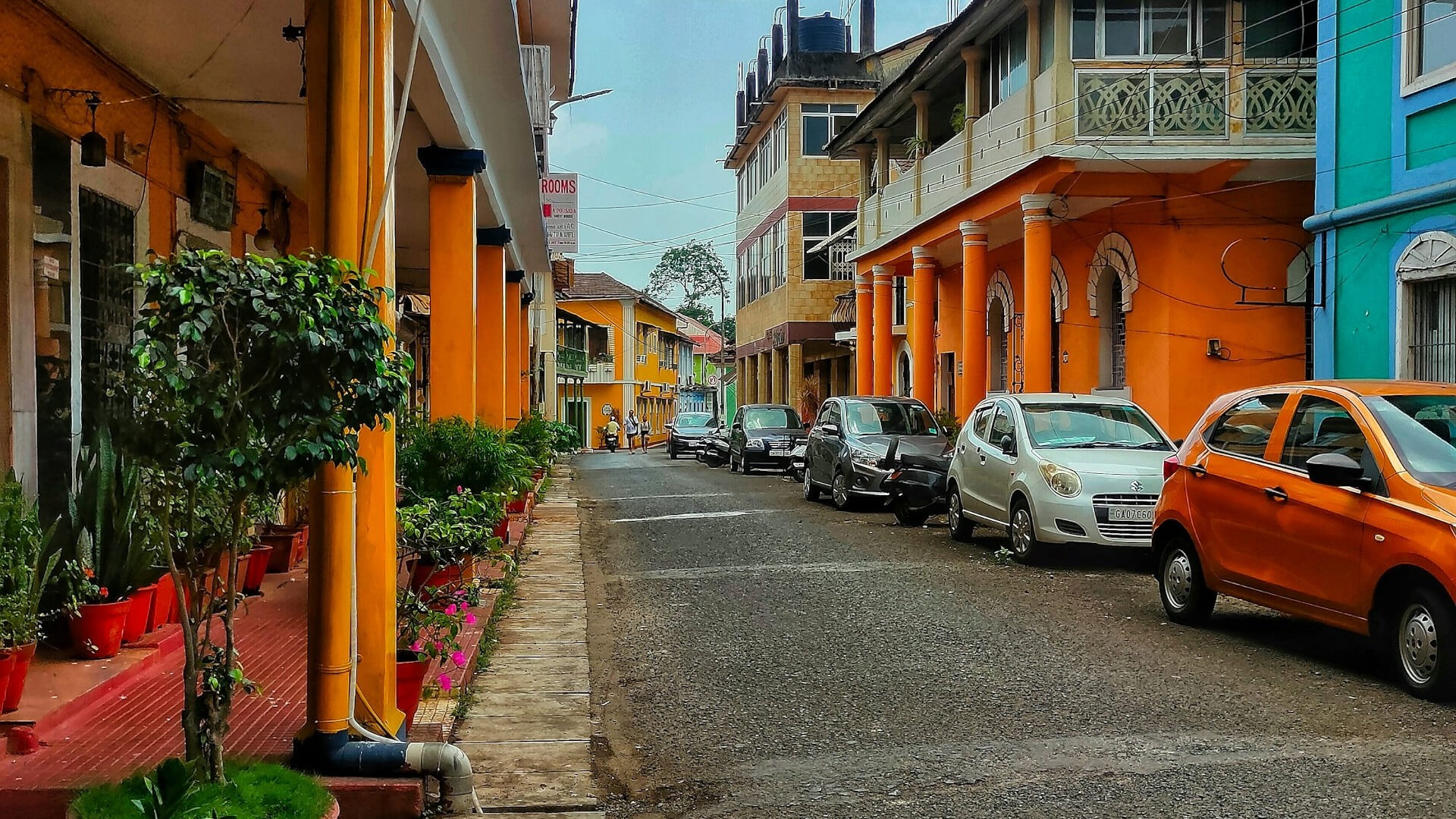

Walking into Fontainhas from Panjim's main road feels like putting on noise-cancelling headphones. The traffic falls away. The touts disappear. You're standing in a lane so narrow a scooter barely fits, flanked by yellow and blue Portuguese colonial houses with red-tiled roofs and frangipani climbing the garden walls. The place smells of old stone and jasmine and, faintly, of the fresh pao bread being baked somewhere behind a green door. This is Goa's capital city — and most visitors to Goa never find it.
They're too busy at Baga Beach.
The Goa beyond the beach itinerary that most travel sites push is a soft-focus lie: cocktails at sunset, a scooter through rice paddies, a yoga class and a fish thali and a certificate confirming that you "got the real Goa." You didn't. The real Goa has a crucifix in a 19th-century chapel that came directly from the Palace of the Portuguese Inquisition, where Christ's eyes are deliberately open — because that was the point. It has a 450-year-old church complex where you can stand in front of the preserved body of a Catholic saint. It has a waterfall that plunges 310 metres (1,017 feet) through the Western Ghats, accessible only by a 45-minute jeep ride through Bhagwan Mahaveer Wildlife Sanctuary. And it has a dessert — bebinca, Goa's 16-layer coconut milk and egg yolk cake — that takes a baker three hours to make and costs ₹80 (under $1 USD) at a century-old patisserie in the Latin Quarter.
This is your 5-day Goa itinerary. No parties required.
At a Glance: 5-Day Goa Itinerary
| Day | Focus | Base | Effort Level |
|---|---|---|---|
| Day 1 | Fontainhas, Panjim, first Goan dinner | Panjim or North Goa | Easy |
| Day 2 | Old Goa UNESCO churches, Portuguese history | Panjim or North Goa | Easy–Medium |
| Day 3 | Dudhsagar Falls jeep safari + spice plantation | Panjim or North Goa | Full day, high effort |
| Day 4 | South Goa — Cabo de Rama, Agonda, village life | South Goa (overnight) | Medium |
| Day 5 | Chapora Fort, Vagator, North Goa markets | North Goa | Easy |
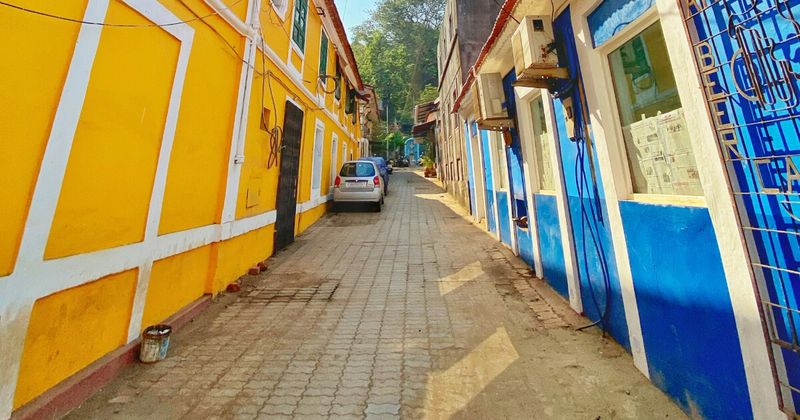
Fontainhas was designated a UNESCO Heritage Zone in 1984 and remains the only neighbourhood in Goa where Portuguese is still spoken as a daily language by some residents.
Day 1: Fontainhas, Panjim and Your First Goan Meal
Fly into Goa — the Manohar International Airport (code: GOX) replaced the old Dabolim airport for most long-haul and international traffic, and is located near Mopa in North Goa. Book your flights with FlyFlick and set a Compensair alert before departure — Goa routes via Mumbai and Delhi can delay and the EU compensation rules cover connecting flights if you're routing through Europe.
Before you land, sort two things: travel insurance and your data connection. VisitorsCoverage is the first thing to book on any trip to India — medical costs for even a minor hospital visit can hit ₹20,000–₹80,000 ($240–$960 USD), and no, your home country policy almost certainly doesn't cover this. Do it before you board. For connectivity, Saily covers Goa well on 5G in the cities and beach areas — activate before landing. If you're doing the Dudhsagar jungle day (Day 3), signal disappears entirely in the sanctuary, so grab a Drimsim eSIM as a backup for the off-grid stretches.
Get a pre-booked airport transfer from GetTransfer — fixed fare, vehicle confirmed before you confirm the booking. Goa taxis from the airport rank have been notorious for overcharging, and this is one of the most common scams targeting incoming tourists. If you want the full picture on how that works, read our guide to India travel scams in 2026 — the auto-redirect to "better hotels" trick starts at the airport.
Check into your accommodation — most first-timers base in Panjim or Calangute for the first few nights, which keeps you close to Day 2's church circuit and Day 3's early departure — and spend the afternoon in Fontainhas.
Fontainhas occupies the western bank of the Ourem Creek in central Panjim (Panaji), Goa's small and under-visited capital city. The Latin Quarter is a 10–15 minute walk from the Panjim Bus Stand. Walk it: a cab will drop you at the edge and the whole point of Fontainhas is the lanes, not the destination.
Stop at the Chapel of St. Sebastian, a whitewashed 19th-century chapel at the southern end of the quarter. Step inside. The main altar holds a large wooden crucifix — and if you look closely, you'll notice something that makes most visitors stop mid-sentence: Christ's eyes are open. This crucifix was moved here from the Palace of the Inquisition in Old Goa, where open eyes were an explicit design choice intended to intimidate people being questioned. The Inquisition is 400 years gone. The eyes remain. Fontainhas heritage history.
From the chapel, walk the lanes north. There's nothing in particular to rush toward. The houses here are painted every year before the Fontainhas Festival in February — tradition says the colour indicates the family's social affiliation, though today most just paint what they like. The street names on the tilework are still Portuguese: Rua 31 de Janeiro, named after the day Portugal gained independence from Spain in 1640.
Before you leave, stop at Confeitaria 31 de Janeiro on 18th June Road — one of the oldest bakeries in the quarter. Order bebinca. This is Goa's traditional layered dessert: alternating baked layers of coconut milk, egg yolk, sugar, and flour, with each layer cooked individually before the next is poured on top. A properly made bebinca has 16 layers and takes a baker close to three hours. A slice costs about ₹80 (under $1 USD). The fact that you can buy this for less than a bus fare is one of Goa's quiet miracles.
For dinner, walk to Viva Panjim on 31 de Janeiro Road — a heritage Goan restaurant that does fish recheado (a sharp, tangy red paste made with chillies and vinegar), prawn balchão, and pork sorpotel in a space that feels like someone's grandmother's dining room, because it more or less is. Budget ₹600–₹1,200 ($7–$14 USD) for two with drinks. Don't eat on the beach tonight. You have five days — let Fontainhas set the tone.
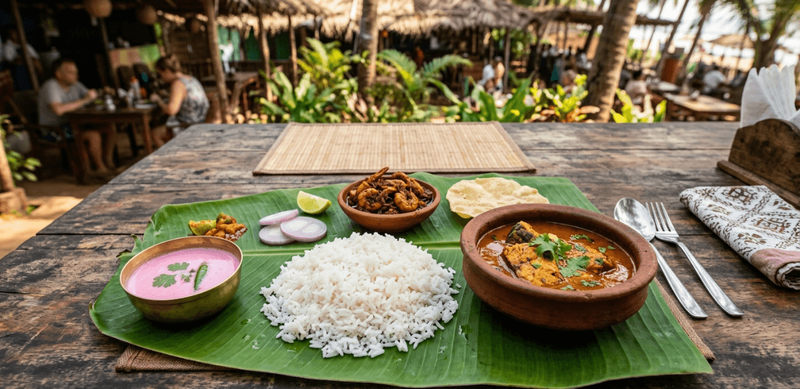
Goan cuisine is built on centuries of cross-pollination between Portuguese, Hindu, and Konkani cooking traditions — the vinegar-based marinades like recheado and balchão are a direct Portuguese inheritance.
Day 2: Old Goa Churches and 450 Years of Portuguese History
Goa, the small coastal state on India's west coast, was a Portuguese colony from 1510 to 1961 — 451 years, longer than almost any other colonial period in the world. The physical evidence of that is concentrated in one place: Old Goa, a 10-kilometre drive east of Panjim along the banks of the Mandovi River.
Start early. By 9am the coach groups arrive. You want the churches before the coach groups.
The centerpiece is the Basilica of Bom Jesus, a UNESCO World Heritage Site completed in 1605 and home to the preserved remains of St. Francis Xavier — the Jesuit missionary who spent his life in Asia and whose body, according to the Catholic church, is considered incorrupt. Entry is free. The exterior is laterite stone that has darkened to near-black over four centuries. The interior is all gilded wood and Baroque excess and a mausoleum in the right transept that looks nothing like the rest of India and everything like 17th-century Portugal. Spend at least 45 minutes here.
Walk 200 metres east to the Sé Cathedral, the largest church in Asia when it was built in 1619 and still genuinely enormous by any standard. It has one tower; the second collapsed in 1776. Entry is free. The Golden Bell inside the southern tower is the largest bell in Goa and one of the largest in Asia — locals call it the "Golden Bell" for the quality of its tone.
Also in the complex: the Church of St. Francis of Assisi, a convent now partly converted into the Archaeological Museum of Goa (entry ₹20 per person, about $0.25 USD), which holds Portuguese tombstone inscriptions and a portrait gallery of Goa's Viceroys. It is, frankly, one of the most overlooked museums in India.
Old Goa churches are free to enter, dress modestly — no sleeveless tops or shorts inside any of them, regardless of the heat. The whole complex is about a 2-kilometre walk end to end. Allow a full morning: 9am to 1pm.
For lunch, return toward Panjim and stop at Ritz Classic near the Church Square — it's unglamorous, cash-only, and serves the best Goan prawn curry rice in the area for ₹200–₹350 ($2.40–$4.20 USD) per plate. This is where local Panjim office workers eat, which is the only endorsement that matters.
The afternoon is yours. The Archeological Museum, the Church of St. Cajetan (modelled on St. Peter's Basilica in Rome), or simply a slow walk along the Mandovi River watching the casino boats drift by — Goa has floating casinos that operate from the river, which is genuinely as surreal as it sounds and requires no participation on your part.
Back at Panjim in the evening, consider a stroll along the Campal promenade along the Mandovi, or spend the golden hour at Miramar Beach — not for swimming, but for the light on the river and the sight of the Ambassador Hotel, Goa's most photographed colonial building, lit orange at dusk.
Check Live Flight Prices
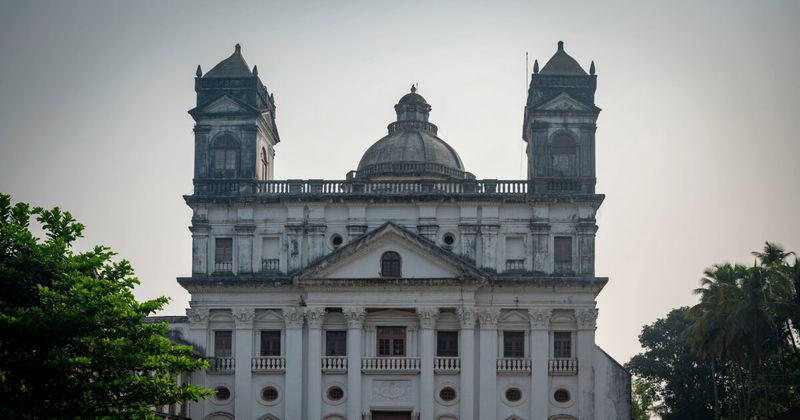
St. Francis Xavier's body has been housed at the Basilica of Bom Jesus since 1613; every ten years it is publicly displayed in an event that draws hundreds of thousands of pilgrims — the next Exposition is scheduled for 2034.
Day 3: Dudhsagar Falls Jeep Safari and Spice Plantation Lunch
Set your alarm for 6am. Today is the most physically demanding day of this itinerary and the one that most people — even veteran Goa visitors — have never done properly.
Dudhsagar Falls — whose name translates as "sea of milk" — is a 310-metre (1,017-foot) four-tiered waterfall on the Mandovi River, located on the Goa–Karnataka border inside the Bhagwan Mahaveer Wildlife Sanctuary in Sanguem Taluka, South Goa. It is the fifth tallest waterfall in India. From North Goa beach areas, the drive to the jeep departure point at Kulem/Mollem takes about 2.5 hours.
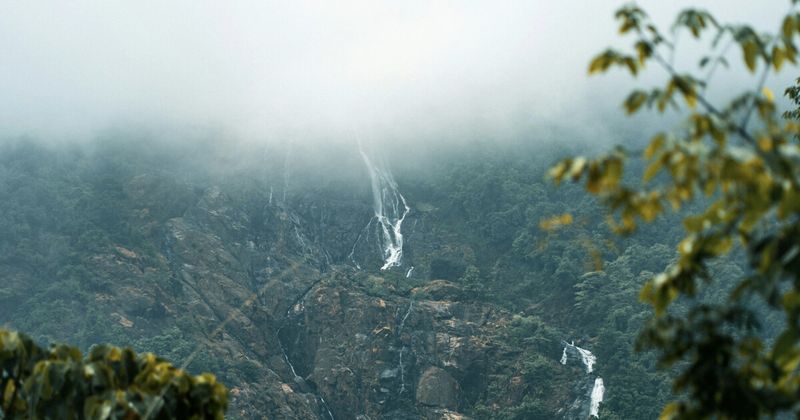
Dudhsagar sits on the Goa–Karnataka border and straddles two protected areas — the Bhagwan Mahaveer Wildlife Sanctuary and Mollem National Park — which means the trail condition and access schedule is controlled by the Goa Forest Department, not private operators.
Two options:
Book a full-day group tour from your hotel area (Calangute, Baga, Candolim, Panjim) — these run ₹1,999–₹2,499 ($24–$30 USD) per person and include pickup, the jeep safari, Dudhsagar entry fees, spice plantation stop, and Goan lunch. Klook lists several vetted operators for this exact route with cancellation policies and English-speaking guides — worth booking 24–48 hours ahead in peak season (November to March).
Or go independently: arrange transport to Kulem via Intui.travel or take the train on 12Go Asia — the Vasco–Londa passenger train stops at Kulem (Colem), from where the DTOA jeep counter operates. The official government-run jeep safari costs ₹700 ($8.40 USD) per person on a shared basis (7 passengers per jeep, you may need to wait for a full group) plus a mandatory ₹40 life jacket rental. The official jeep stand is at Kulem — book directly at the DTOA counter, do not pay anyone approaching you in the car park.
The jeep ride through the sanctuary takes 45 minutes to an hour each way, crossing several river streams en route. You get 90 minutes at the base of the falls. Swim if you want — the water is cold and clean, and the pool at the base is deep enough to jump into from the rocks. Do not feed the monkeys.
After Dudhsagar, virtually every tour stops at a spice plantation for lunch. The most well-regarded is Sahakari Spice Farm at Curti, Ponda — about 130 acres of commercial spice cultivation with a guided walking tour through cardamom, cinnamon, nutmeg, cloves, and black pepper, followed by a Goan buffet lunch served on banana leaves with a shot of cashew feni. Entry is ₹500 ($6 USD) per person, which includes the tour and the lunch. The feni shot is free, which is bold before 3pm but entirely Goan. Book the Sahakari spice plantation tour through Klook if you want a vetted guide in advance.
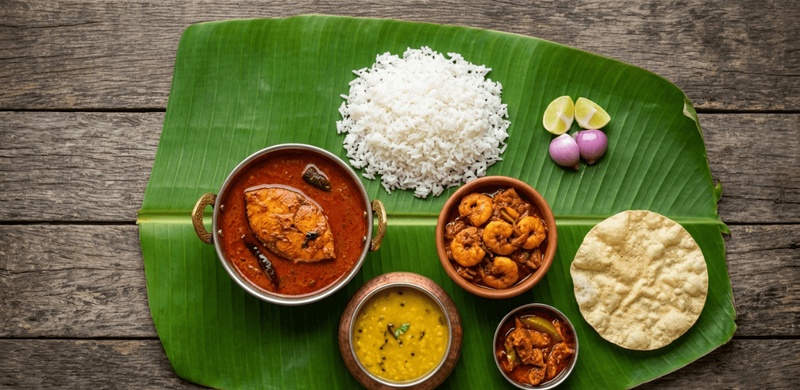
Sahakari Spice Farm in Ponda serves its lunch with a complimentary shot of cashew feni — Goa's indigenous spirit made from fermented cashew apple juice, which is entirely different from the cashew nut and has a taste best described as "acquired, then beloved."
One honest note: Dudhsagar is magnificent, but the logistics are exhausting. The jeep is genuinely bumpy, the wait for groups at the DTOA counter can be 30–60 minutes on weekends, and there are no food or water facilities inside the sanctuary once you've departed. Carry a water bottle, snacks, and cash — the jeep counter is cash only.
You'll be back at your base by 6–7pm. Eat lightly and sleep.
Day 4: South Goa's Quiet Beaches and Cabo de Rama Fort
South Goa is everything North Goa used to be before the clubs moved in. The beaches are wider, emptier, and backed by casuarina trees instead of beach shacks stacked four deep. The villages between Margao and Canacona — Agonda, Palolem, Cabo de Rama — feel like a different India entirely.
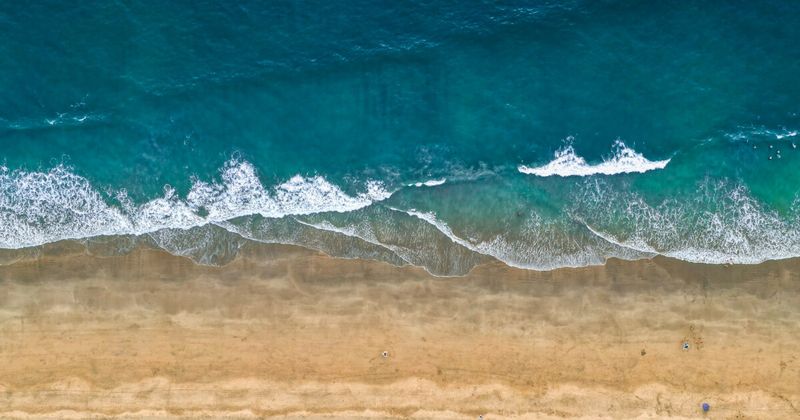
Agonda falls under Canacona Taluka in South Goa district — about 35 kilometres south of Margao (Madgaon), which is the main railway junction for travel connections to Goa from Mumbai, Pune, and Bengaluru.
Arrange transport to South Goa via Intui.travel for a private transfer from your Panjim or North Goa base. The drive is about 1.5–2 hours to Palolem. Alternatively, the Konkan Railway connects Madgaon (Margao) to stations near Canacona — book on 12Go Asia for the English interface and international card support. If you're continuing the trip into Kerala or Karnataka after Goa, the train connection from Margao is the cleanest way to do it — which is exactly the kind of multi-week planning our India in 3 Weeks itinerary covers in full.
Stop first at Cabo de Rama Fort, a Portuguese-era fortress on a headland above the Arabian Sea, about 40 kilometres north of Palolem. Entry is free. The fort itself is ruined — crumbling bastions, overgrown barracks, a small chapel still standing inside — but the view from the ramparts is worth every kilometre of the drive: a 180-degree panorama of the South Goa coastline, with the Salaulim River estuary to the north and an entirely empty beach (Cabo de Rama Beach) directly below, accessible by a steep path. Almost nobody goes here. This is probably the least-visited significant fort in Goa, and it's the best one.
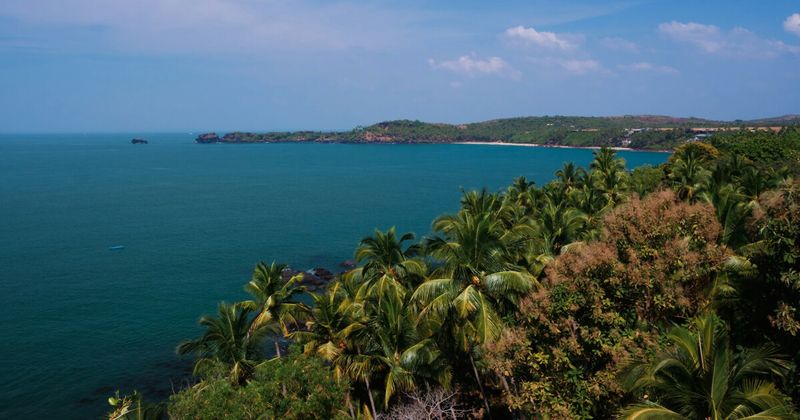
High above the coastline, Cabo de Rama Fort offers some of the most breathtaking vantage points in Goa. It's the perfect spot to escape the crowds and watch the waves crash against the shoreline.
After Cabo de Rama, continue south to Agonda Beach — a 3-kilometre crescent of sand in Canacona Taluka that is among the quieter stretches in all of Goa. Agonda has a seasonal population of Olive Ridley sea turtles nesting between November and February, which means parts of the beach are officially closed during that window and volunteers patrol at night. Even off-season, the shacks here are half the price and twice the calm of anything in North Goa. Lunch at one of the beachfront shacks — fresh-catch grilled fish, ₹350–₹600 ($4.20–$7.20 USD) per main — is the right move.
Overnight in South Goa if your itinerary allows. Palolem, 8 kilometres south of Agonda, has the widest range of accommodation from ₹800 ($9.60 USD) bamboo huts to ₹8,000+ ($96 USD) boutique guesthouses. If you're on a tighter budget, our India on $20 a day guide has a full South Goa budget accommodation section that gets updated seasonally.
Day 5: Chapora Fort, Vagator Cliffs and the North Goa Markets
Return to North Goa in the morning — by private transfer through Intui.travel or by public bus via Margao Bus Stand, which takes about 2.5 hours and costs ₹60–₹100 ($0.72–$1.20 USD) and is exactly as chaotic and excellent as that sounds. Today is for the parts of North Goa that weren't on any Instagram trend.
Chapora Fort sits on a headland above Vagator Beach in North Goa's Bardez Taluka and became briefly famous internationally after being used in the 2001 Bollywood film Dil Chahta Hai — a cultural event that Indians of a certain age will mention unprompted if you're there at sunset. The fort itself is Portuguese, built on the ruins of the Adilshahi dynasty structure it replaced in 1617. It's free. The walk up takes about 15 minutes on a well-worn path through laterite rock. The view from the battlements encompasses the Chapora River estuary to the north, Vagator Beach below to the south, and the open sea to the west.
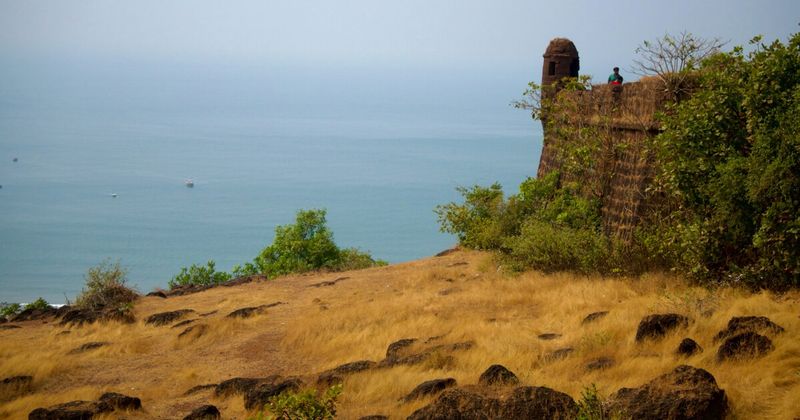
Chapora Fort was built by the Portuguese in 1617 on the site of an earlier Bijapur Sultanate fort — the name "Chapora" derives from the Shahapura fort of the Adilshahi rulers who preceded Portuguese occupation.
If you're spending a final night in North Goa, the Saturday Night Market at Arpora (also known as Ingo's Night Bazaar) is the only Goa market worth calling a destination in its own right. It runs every Saturday night from October to April, 6pm to midnight. It's not a tourist trap — it's an actual bazaar where Goan artisans, migrants from Rajasthan, Tibetan traders, and a rotating cast of expat designers sell everything from hand-printed textiles to handmade silver to genuinely excellent Goan cashew wine. Budget ₹500–₹2,000 ($6–$24 USD) depending on how much you want to carry home. Entry is free.

The Saturday Night Market at Arpora has been running since the 1990s when it began as a traders' gathering for Goa's long-stay expat and hippie community — it now draws around 3,000–5,000 visitors per evening during peak season.
For your last dinner, eat Goan-Portuguese: Thalassa in Vagator is the gold standard for authentic Greek-Goan fusion on a clifftop above the sea, but at ₹1,800–₹3,500 ($22–$42 USD) for two, it's not cheap. More authentic to the local culture is any restaurant serving a proper Goan prawn rawa fry — prawns coated in semolina (rawa/sooji) and shallow-fried in oil — which costs ₹350–₹600 ($4.20–$7.20 USD) and is possibly the best thing in Goa that doesn't require a reservation.
Goa's airport transfer back is via GetTransfer. Book 24 hours ahead for peak-season flights.
What to Skip in Goa: 5-Day Itinerary Edition
The Baga–Calangute strip on a Saturday night. Not because it's dangerous, but because it's identical to every beach strip in Southeast Asia at twice the price, and spending a night there will make you feel like you've seen Goa when you haven't seen Goa at all.
The "sunset cruise" operators at Panjim. These are hotel-branded marketing events on slow boats, priced at ₹800–₹1,500 ($9.60–$18 USD) per person for what is essentially a 45-minute river loop with one beer. The Mandovi River is lovely. Watch it from the Campal promenade for free.
Dudhsagar in monsoon (June–September). The falls are at their most dramatic in the rain. They are also inaccessible — the Goa Forest Department closes the sanctuary for the season and the jeep counter stops operating. Tourists who book monsoon tour operators and arrive at Kulem in July go home disappointed and wet.
Any elephant experience. The Supreme Court of India suspended commercial elephant activity in Goa in 2016. Some private operators still run these unofficially. Don't. The ethical travel case against captive elephant tourism in India is documented thoroughly enough that no reputable operator includes it anymore. Our Ranthambore ethical safari guide covers the broader framework for wildlife tourism ethics in India if you want the full picture.
The Dudhsagar tour operator touts at Kulem car park. They'll approach your vehicle before you reach the DTOA counter and quote private jeep prices. The government counter is 200 metres further. The DTOA rate is ₹700 per person. The tout rate starts at ₹1,500. Walk to the counter.
Hiring a scooter if you've never ridden one in India. This is less a warning than a statistic: Goa has one of the highest rates of tourist road accidents in India. Indian traffic does not drive like European traffic — the rules are more contextual. Rent a scooter by Day 3 if you want the freedom, but spend the first day or two observing how traffic actually moves before you're in it.
Pace and Burnout: Managing 5 Days in Goa
Five days in Goa is enough to see almost everything on this itinerary without rushing — if you resist the urge to add a beach day, a sunset cruise, a yoga class, a cooking class, a market, and a scooter trip to Anjuna on top of it.
Day 3 is the only genuinely exhausting day. The Dudhsagar round trip from North Goa is 11–12 hours including transit. Everything else on this itinerary is medium-to-low effort. Don't plan anything taxing the evening of Day 3.
If you have six days instead of five, add the extra day after Day 2 as a full rest day in Panjim — a long lunch, a walk along the riverfront, the Sunaparanta art gallery (Goa's best contemporary art space, on Altinho Hill, free on weekdays), and an early night. You'll cover more ground with five alert days than five and a half tired ones.
South Goa is only worth overnighting if you have the time — otherwise it works as a long day trip from Panjim (about 1.5 hours each way). The overnight adds texture and the morning on an empty South Goa beach is genuinely different from anything you'll get in the north.
How to Get Around Goa Without Getting Ripped Off
Goa has no functioning local taxi app (Uber and Ola barely operate here), which means you're dealing with either pre-booked transfers or negotiated taxis, and the latter requires vigilance.
Pre-booked transfers (GetTransfer for airport and long intercity legs; Intui.travel for city-to-city) are the cleanest option because the fare is fixed before you confirm. No negotiation, no metered surprises at the end.
Local taxis operate on fixed government rates that drivers are legally required to follow — but many don't. Ask for the rate before you get in, agree on it explicitly, and do not get into a vehicle with a meter that you're told will be "calculated at the end." The standard local taxi rate is approximately ₹15–₹20 ($0.18–$0.24 USD) per kilometre. Panjim to Calangute (about 17 km) should cost ₹250–₹350 ($3–$4.20 USD).
Public buses are wildly cheap and genuinely usable for the main corridors: Panjim to Calangute, Panjim to Margao, Margao to Canacona. Fares are ₹15–₹80 ($0.18–$0.96 USD) for most Goa routes. The Kadamba Transport Corporation (KTC) website lists routes. The buses are on-time about 70% of the time and the remaining 30% is an adventure.
Rented scooters cost ₹300–₹500 ($3.60–$6 USD) per day in season. Petrol is about ₹95 per litre ($1.14 USD). If you're comfortable on a bike, a scooter gives you the freedom to reach places no taxi will bother stopping at. If you're not: don't.
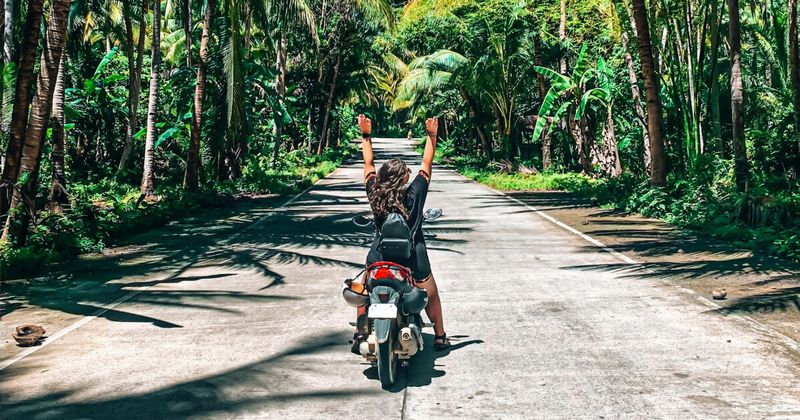
Goa has around 4,000 kilometres of roads for a state covering just 3,702 square kilometres — the road density per square kilometre is one of the highest in India, which is why almost every corner of the state is reachable by scooter or local bus in under 90 minutes.
Check Live Flight Prices
When to Visit Goa and When to Skip It
November to February is the best time. Temperatures are 22–32°C (72–90°F), humidity is low, the beaches are swimmable, the churches are beautiful in the winter light, and the Fontainhas Festival runs in February. This is also when accommodation is 2–3x the off-season price and the Baga–Calangute strip is at full volume. Book ahead.
March to May is hot — 35–40°C (95–104°F) — and often overlooked, but it has a quiet, low-season energy that suits the culture-focused itinerary on this page better than the party one. Prices drop significantly. The churches and Fort are better in this heat than they would be in a monsoon, and Dudhsagar is still accessible. Highly underrated time to visit.
June to September (monsoon) means heavy rain, closed beaches, the Dudhsagar route shut by the Forest Department, and significant logistical complications. Goa is beautiful in the rain — the spice plantations are lush green and the river runs fast — but this itinerary won't fully work. The church circuit is fine year-round; everything involving outdoor transport is not. Go only if you've been before and know what you're signing up for.
October is the shoulder season sweet spot: post-monsoon, lower prices, Dudhsagar reopening, Fontainhas still quiet before the December influx. The best-value month on this list.
5-Day Goa Itinerary Budget Breakdown
| Expense Category | Budget Traveller | Mid-Range | Splurge |
|---|---|---|---|
| Accommodation (per night × 5) | ₹4,000–₹7,500 ($48–$90) | ₹12,500–₹25,000 ($150–$300) | ₹40,000–₹100,000+ ($480–$1,200) |
| Food (per day × 5) | ₹2,000–₹3,500 ($24–$42) | ₹5,000–₹9,000 ($60–$108) | ₹12,500+ ($150+) |
| Airport transfers (both ways) | ₹1,000–₹1,500 ($12–$18) | ₹2,000–₹3,500 ($24–$42) | ₹5,000+ ($60+) |
| Local transport (5 days) | ₹1,000–₹2,000 ($12–$24) | ₹3,000–₹6,000 ($36–$72) | ₹10,000+ ($120+) |
| Dudhsagar jeep safari | ₹700 ($8.40) per person | ₹1,999 full-day tour ($24) | ₹3,500 private jeep ($42) |
| Spice plantation (Sahakari) | ₹500 ($6) per person | ₹500 ($6) | ₹500 ($6) |
| Old Goa churches | Free | Free | Free |
| Archaeological Museum, Goa | ₹20 ($0.25) | ₹20 ($0.25) | ₹20 ($0.25) |
| Experiences via Klook | ₹500–₹1,000 ($6–$12) | ₹2,000–₹4,000 ($24–$48) | ₹8,000+ ($96+) |
| Travel insurance (5 days) | VisitorsCoverage — from ~$12 | VisitorsCoverage — from ~$12 | VisitorsCoverage — from ~$12 |
| 5-day total (per person, approx) | ₹10,000–₹16,000 ($120–$192) | ₹27,000–₹49,000 ($325–$590) | ₹75,000+ ($900+) |
Prices are approximate for 2026 and exclude international flights. INR/USD conversion at ₹83 = $1 USD.
The Bottom Line
Goa has been sold as a party destination for so long that the other Goa — the one built by 451 years of Portuguese colonialism, by Konkan fishing communities, by the Jesuits and the Kadamba kings and the artists who arrived in the 1960s and never left — has become genuinely under visited. You can spend five days in Goa and come home having seen nothing that was built before the 1990s. Most people do.
This itinerary asks you to make a different choice. It asks you to walk into a 19th-century chapel and stand in front of a crucifix that once watched over the Inquisition's interrogations. To eat a dessert that takes three hours to bake and costs less than a cup of coffee at an airport. To sit in a jeep bouncing through a wildlife sanctuary at 7am and wonder why you spent the first two trips to India on a beach the whole time.
Goa is everything the brochure says and nothing like the brochure. Get on the right bus and find it for yourself.
Your Goa Culture Trip Checklist
🛡️ Insurance first — always 🛡️ VisitorsCoverage travel insurance — book before you fly, not after you land.
✈️ Flights & delays ✈️ Search and book flights with FlyFlick. ✈️ Set a Compensair delay claim alert before departure — covers up to €600
🚗 Transfers 🚗 Pre-book airport transfers with GetTransfer — fixed fare, confirmed vehicle. 🚗 Intercity and South Goa day trip transfers via Intui.travel
🚆 Trains & buses 🚆 Book Konkan Railway (Margao–Canacona or South Goa connections) via 12Go Asia — English interface, international cards accepted.
🎟️ Experiences 🎟️ Dudhsagar Falls full-day tour (best booked 24–48hrs ahead) via Klook. 🎟️ Sahakari Spice Plantation tour — Klook or pay ₹500 on arrival.
📱 SIM & data 📱 Saily 5G eSIM for North Goa and city areas. 📱 Yesim unlimited data eSIM for multi-country India trips. 📱 Drimsim off-grid eSIM for Dudhsagar sanctuary (signal drops to zero inside).
Goa was never just the beach. Prove it.