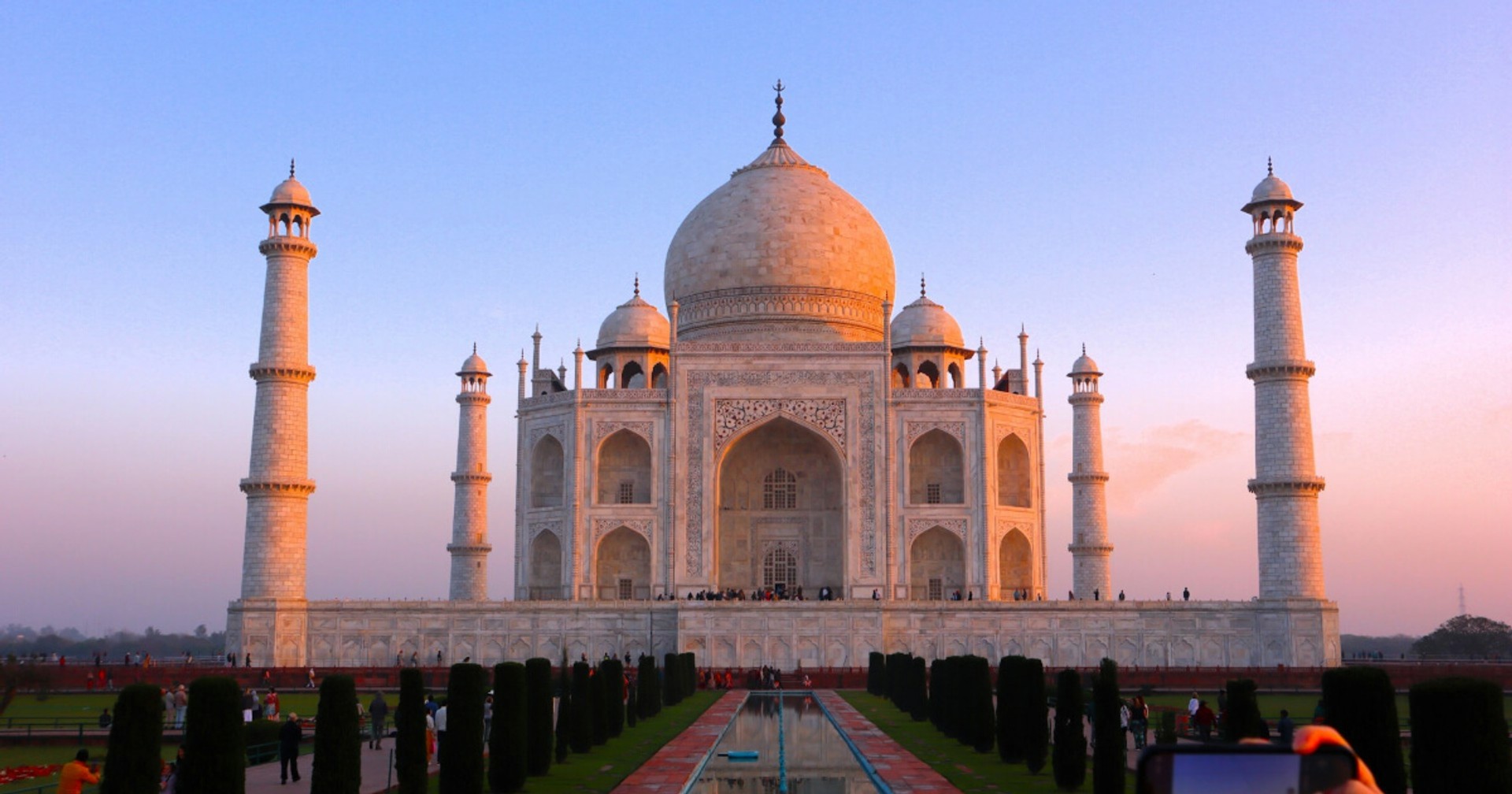

The Gatimaan Express leaves Delhi's Hazrat Nizamuddin station at exactly 8:10am. It reaches Agra in 1 hour 40 minutes. The Taj Mahal opens 30 minutes before sunrise.
Do the maths and you'll find something that almost no "India in 5 days" guide bothers to tell you: on a properly structured short trip, you can be standing in the empty Taj Mahal garden before 7am, watching white marble turn gold in the first light, with nothing between you and one of the seven wonders of the world except a few early-rising pigeons. By 10am the tour coaches start arriving. By 11am the Sheesh Mahal corridor in Amber Fort is 400 people deep. By noon you're on a train to Jaipur drinking chai from a paper cup while the Rajasthan plains scroll past the window.
Five days in India, done right, looks like that. Focused, compressed, and worth every hour of the flight to get here.
Five days in India, done wrong, looks like Delhi — Agra — Varanasi — Mumbai — Kerala — Goa, and you come home having seen nothing properly and feeling vaguely cheated by a country that was never the problem.
This post is an attempt to give you the honest maths, the three routes that actually work in a short window, and a clear recommendation about which one is right for you specifically.
Before any of that: sort VisitorsCoverage travel insurance before you book anything else on this trip. Medical costs in India for something as common as food poisoning or a motorbike scratch can reach ₹30,000–₹1,50,000 ($319–$1,596 USD) before a doctor has assessed you. Short-trip policies start from around $12–25 USD — the most cost-efficient insurance decision you'll make. If you want a second quote or a more budget-oriented option, EKTA offers travel insurance from $0.99/day with worldwide coverage and full digital claims processing. Both work. Sort one before you fly.
The Honest Maths: How Many Days Do You Actually Have?
Five days in India is not five days of sightseeing. It's approximately 3.5 usable days. Here is the breakdown nobody puts in their guide.
Day 1: You land. International flights from the UK, US, Australia, and Europe almost always arrive in Delhi early morning or late at night after a long connection. You clear immigration (30–90 minutes), collect luggage, reach your hotel, and depending on what time zone you've come from, you either need sleep immediately or you're wide awake at 3pm running on adrenaline and confusion. Even under the best conditions, Day 1 is a half day. Realistically a quarter day.
Day 5: Your international flight home almost certainly departs in the late evening or at night — but check-in for international flights requires you at the airport three hours before departure, and the Delhi airport transfer from the city takes 45–90 minutes depending on traffic. If your flight leaves at 11pm, you need to leave your hotel by 6:30pm at the latest. If it leaves at 8pm, you're essentially done sightseeing by 3pm. Day 5 is a half day of logistics, maximum.
What remains: 3 full days — Days 2, 3, and 4 — plus partial mornings on Days 1 and 5.
Three full days in India is not nothing. Three full days in the right place, on the right circuit, without wasted transit, is genuinely enough for one of India's most extraordinary travel experiences. The key word is: one. Not three cities across two different regions. One focused circuit, done with attention.
The Three Routes That Actually Work
There are exactly three India itineraries that deliver a complete, satisfying experience in five days without leaving you feeling like you rushed everything and missed the point.
Route 1: The Golden Triangle — Delhi → Agra → Jaipur → back to Delhi for departure. The iconic circuit. Covers the Taj Mahal, Amber Fort, Jaipur's Pink City, and enough of Delhi to understand why this country has been pulling travellers in for centuries. Best for: first-timers who have the Taj Mahal on their list.
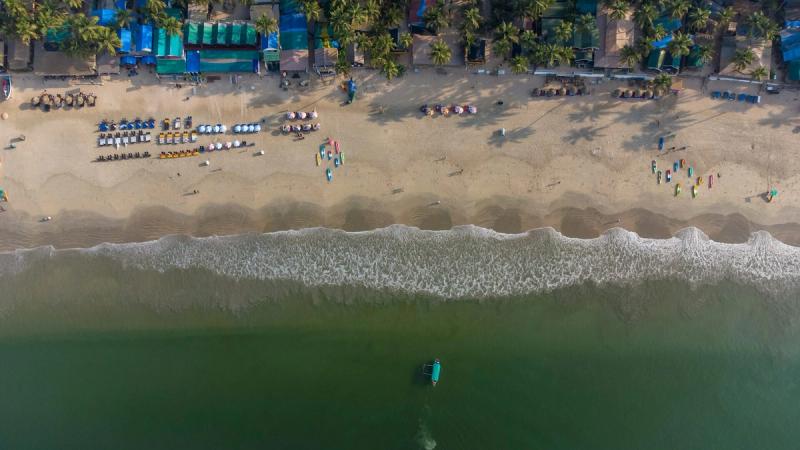
Route 2: Mumbai + Goa — Two nights in Mumbai, three nights in Goa. No grand monuments. Instead: the financial capital of India, one of the world's great cities, and then a gentle beach and heritage coast that eases you into the country. Best for: travellers who want India but find the idea of Agra and Rajasthan too intense for a first trip.
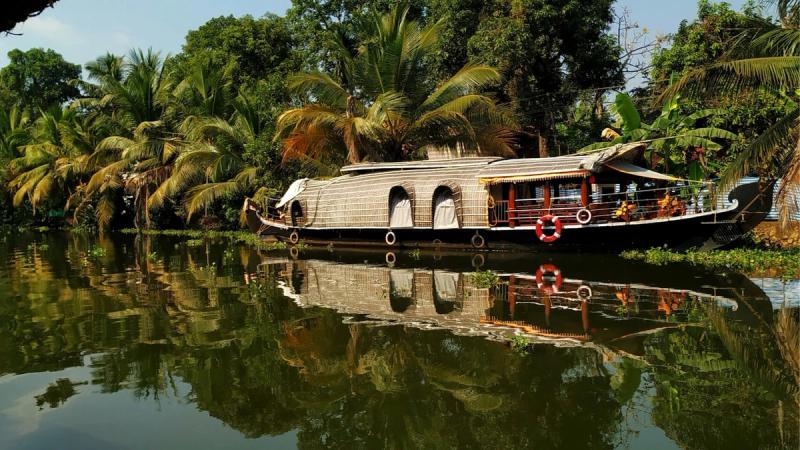
Route 3: The Kerala Express — Kochi → Alleppey houseboat → return. Three nights in Kerala's backwater and heritage circuit. Best for: nature-first travellers, solo female travellers, or anyone who specifically wants South India's pace rather than the Golden Triangle's density.
The rest of this post covers all three. But the honest recommendation is at the end: for most international first-timers on a five-day window, Route 1 is the right choice.
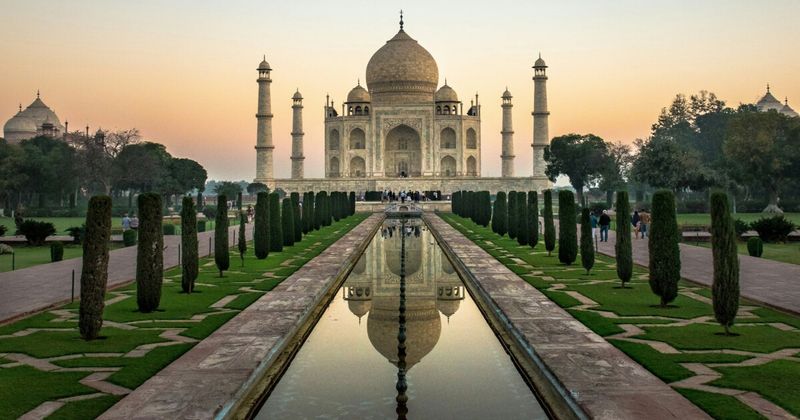
The Taj Mahal's white marble changes colour four times in the first hour of sunrise — from pre-dawn grey to pale gold to the vivid white of mid-morning — a transformation that is most visible and most moving when the garden is quiet, which is only before 8am.
Route 1: The Golden Triangle in 5 Days — The Complete Schedule
The Golden Triangle covers Delhi, Agra, and Jaipur — three cities connected in a rough triangle of about 240 kilometres on each side, all in the state of Rajasthan or just outside it. It contains the Taj Mahal, the Amber Fort, the Hawa Mahal, Chandni Chowk, and enough Mughal and Rajput history to fill a university semester. It also has the best tourist infrastructure of any circuit in India — trains, taxis, hotels, English signage, and Klook-bookable skip-the-queue entry to everything that matters.
Search and book your international flights into Delhi Indira Gandhi International Airport (DEL) on FlyFlick — Delhi is India's primary international hub with direct connections from London Heathrow, New York JFK, Toronto Pearson, Sydney, Singapore, Dubai, and Doha. Set a Compensair delay alert before departure — Delhi is one of India's most delay-prone airports in winter fog season (December–January), and EU-connected legs carry €600 compensation eligibility.
One critical logistical note before anything else: the Gatimaan Express — the fastest train to Agra — departs from Hazrat Nizamuddin station, not New Delhi or Old Delhi station. Every year, a significant number of first-time visitors show up at the wrong station at 7:45am and miss their train. Nizamuddin is in South Delhi, 15 minutes by metro or taxi from Connaught Place. Write the station name down. Tell your taxi driver "Nizamuddin station" not "New Delhi station." These are different places.
Also: the Taj Mahal closes on Fridays for prayers at the mosque. Plan your Agra day for any other day of the week.
Day 1: Arrive Delhi — Aerocity, Chandni Chowk, Rest
Book your airport-to-hotel transfer through GetTransfer — fixed fare from Delhi's Terminal 3 (international arrivals), driver waiting with your name sign, no negotiation with the touts who start the moment you exit arrivals. Or use KiwiTaxi — both offer pre-booked fixed-fare airport transfers from Delhi IGI, with vehicle class confirmed before you pay. The difference: KiwiTaxi also covers the Delhi→Agra and Delhi→Jaipur intercity routes if you prefer road over rail.
Where to stay: If you arrive on Day 1 and depart on Day 5 from the same airport, staying in Aerocity (the hotel district immediately adjacent to Terminal 3) for your two Delhi nights makes structural sense. You're 5 minutes from the airport on arrival and departure. The Aerocity metro connects directly to the city centre in 20 minutes for ₹60 ($0.64 USD). Midrange hotels in Aerocity run ₹4,000–₹9,000 ($42.55–$95.74 USD) per night — significantly cheaper than equivalent hotels in central Paharganj with none of the noise or scam pressure.
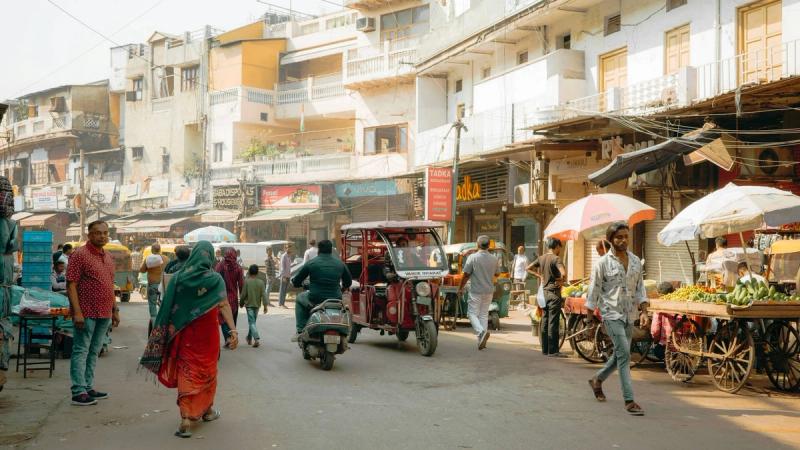
Day 1 evening: Chandni Chowk — Old Delhi's 17th-century market district — is 30 minutes from Aerocity by metro (Yellow Line from Airport Express Line, change at New Delhi). Arrive at dusk. The main market lane runs from the Red Fort gate to the Fatehpuri Mosque, and in the evening it contracts into the most intense concentration of spice, street food, silver jewellery, and human density you will have encountered. Karim's restaurant, in a lane off the main market, has been serving Mughal-recipe kebabs since 1913. Order the mutton seekh and the dal — ₹180–₹350 per dish ($1.91–$3.72 USD). Eat standing if necessary.
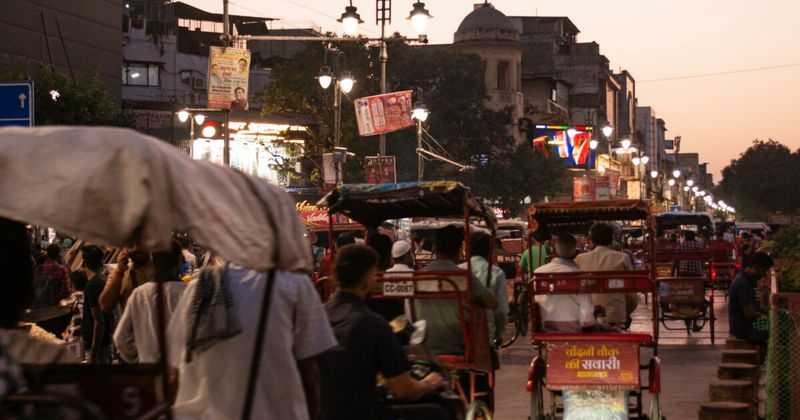
Chandni Chowk was designed in 1650 by Princess Jahanara, daughter of Shah Jahan (who built the Taj Mahal), as a central market for the newly relocated Mughal capital at Delhi — the canal that once ran through its centre and reflected the moonlight that gave the street its name (Chandni = moonlight, Chowk = square) was filled in during British colonial times.
Activate Saily 5G eSIM before you board — it works from the moment you land across Delhi, Agra, and Jaipur. If your India trip connects into a wider South/Southeast Asia journey, Yesim handles multi-country data coverage.
Day 2: Delhi to Agra — The Taj Mahal Afternoon
Wake up at 7:30am. Take the metro from your hotel to Hazrat Nizamuddin station (Yellow Line to Central Secretariat, transfer to Violet Line to Nizamuddin — about 25 minutes). The Gatimaan Express (12050) departs at 8:10am and arrives Agra Cantt at 9:50am — 1 hour 40 minutes, no stops.
Book through 12Go Asia for the English interface and international card support. Chair Car class (CC): approximately ₹690–₹750 ($7.34–$7.98 USD). Executive Class (EC) with included meals: approximately ₹1,125–₹1,365 ($11.97–$14.52 USD). Book at least 3–4 weeks ahead — Gatimaan seats sell quickly because it's the fastest and most popular Agra option. Note: Gatimaan does not run on Fridays.
If your 5-day window falls on a Friday, the Bhopal Shatabdi (12001, departs New Delhi at 6:00am, arrives Agra at 8am, CC from ₹560) covers the same journey with a slightly less optimised schedule. Also on 12Go Asia.
Arrival in Agra: Your driver from KiwiTaxi meets you at Agra Cantonment station with your name sign. The Delhi→Agra intercity route is one of KiwiTaxi's confirmed India routes — you can also book the Agra→Jaipur leg here for Day 3, which saves a separate negotiation. Alternatively, Intui.travel covers the same intercity routes with professional licensed drivers and fixed fares.
Check into your Agra hotel (midrange near the Taj: ₹3,000–₹8,000/$31.91–$85.11 USD) and deposit your bags. Do not go to the Taj Mahal this afternoon — this is counter-intuitive but correct. The afternoon light on the Taj is harsh and the crowds peak between 10am and 4pm. Instead: go to the Agra Fort (2.3km from the Taj, ₹650/$6.91 USD for foreigners, open 6am–6pm daily). It's a UNESCO World Heritage Site, it's massive and largely overlooked in most tourist itineraries, and you can see the Taj Mahal from its ramparts in the late afternoon light — white marble visible against the amber sky, 2 kilometres away, free, as part of the entry price. Pre-book your Agra Fort ticket through Klook to skip the walk-up counter queue.
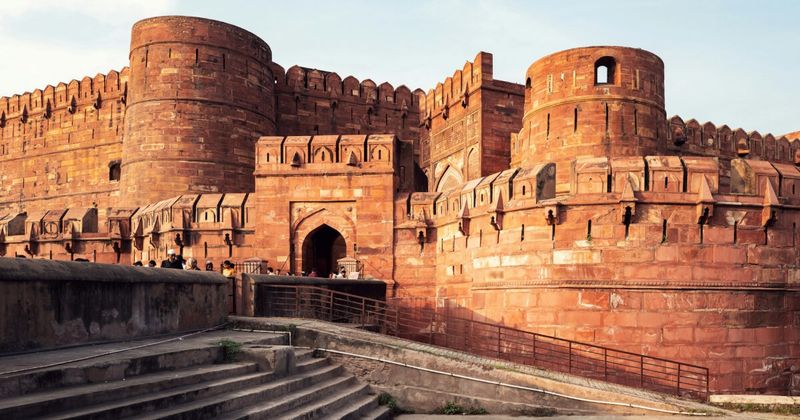
Shah Jahan, who built the Taj Mahal, was imprisoned in Agra Fort by his own son Aurangzeb in 1658 and reportedly spent his remaining 8 years in the Musamman Burj tower — a semi-octagonal pavilion with direct line of sight to the Taj Mahal visible across the Yamuna River.
Then: Mehtab Bagh at sunset (₹300/$3.19 USD for foreigners) — the garden directly across the Yamuna River from the Taj Mahal, on the opposite bank. The sunset view of the Taj from Mehtab Bagh is the photograph that professional photographers use when they want to avoid the crowd-filled garden shot. The Taj turns orange-gold at sunset from this angle. It is uncrowded. It is extraordinary.
Day 3: Taj Mahal at Sunrise, Then Jaipur
Alarm at 5am. This is not negotiable.
The Taj Mahal opens 30 minutes before sunrise — approximately 5:45am–6:00am depending on the time of year. You need to be at the Western or Eastern Gate at 5:30am. At this hour: the garden is near-empty, the light is extraordinary, and you will understand for the first time why people write home about this monument. By 8am the first tour coaches arrive. By 9am it is a very different experience.
Entry for foreign nationals: ₹1,100 ($11.70 USD) main garden + ₹200 ($2.13 USD) for access to the main mausoleum interior = ₹1,300 ($13.83 USD) total. Children under 15: free. The Taj is closed on Fridays. Book your sunrise entry slot through Klook — the official ASI sunrise slots are limited and sell out days ahead in peak season (October–February). Walk-up tickets are available but you'll queue longer and miss the first light.
The hyper-specific detail your guide probably won't mention: the four minarets of the Taj Mahal lean very slightly outward — not inward as they appear. This was deliberate engineering. If any minaret ever fell, the outward lean ensures it falls away from the main tomb. The masons of the 17th century were solving a structural problem with a solution so elegant it went unnoticed for 350 years.
Spend 2 hours at the Taj. No more is needed on a short trip — absorb the Sheesh Mahal interior (the mirror-inlaid burial chamber ceiling), walk the perimeter, photograph from the garden pool. Check out of your hotel and eat breakfast in Agra — Sheroes Hangout café (5 minutes from the Taj South Gate, managed by acid attack survivors, excellent chai and food, ₹100–₹250 per person) is the most meaningful breakfast stop in the city.
Agra to Jaipur: 240 kilometres, approximately 3.5–4 hours by road or 4.5 hours by express train. The Shatabdi Express (12036, departs Agra Cantonment 5:58am — too early if you've done the sunrise Taj) or the SF Express (12983, departs 13:00, arrives Jaipur 17:00). Book the train through 12Go Asia. Or book an Agra-to-Jaipur road transfer through KiwiTaxi — the Agra→Jaipur route is confirmed on their India network and includes a professional driver who knows the Yamuna Expressway.
Arrive Jaipur in the late afternoon. Check in. Walk the illuminated Hawa Mahal at dusk (the facade is lit after sunset and pedestrian street-level photography is at its best in the last 30 minutes of light). Eat at LMB Restaurant (Laxmi Misthan Bhandar) in Johari Bazaar — a Jaipur institution since 1954, vegetarian Rajasthani food, ₹150–₹350 per main ($1.60–$3.72 USD), and the best pyaaz kachori (onion-stuffed fried bread) in the city.
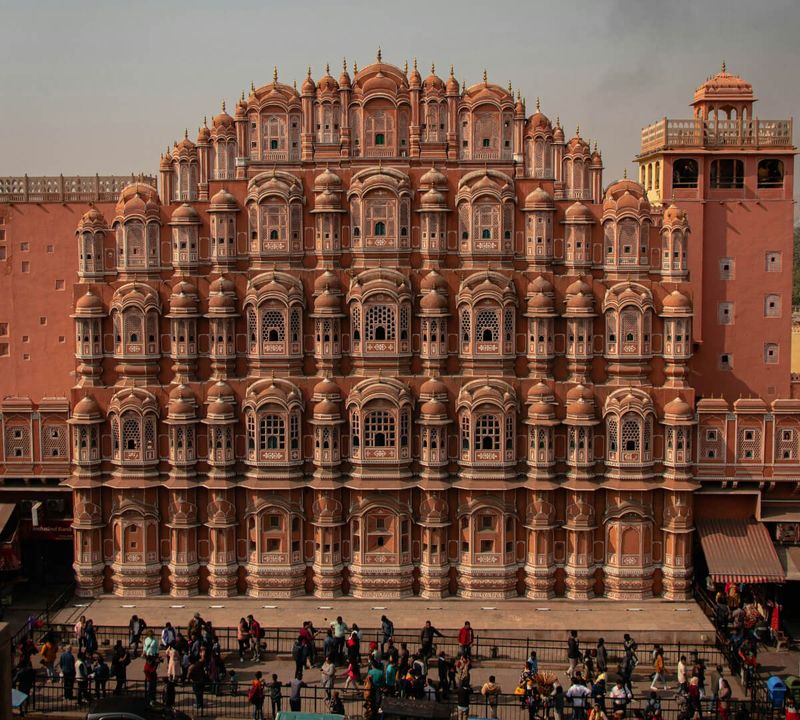
Hawa Mahal was built in 1799 by Maharaja Sawai Pratap Singh as a screen wall — it has no rooms, only a facade five storeys deep, designed to allow royal women to observe street processions without being seen; it is structurally one of the most peculiar buildings in India, barely wider than a thick wall.
Day 4: Jaipur — Amber Fort, Old City and the Bazaars
The only day on this itinerary with a full 10 hours of daylight and no transit. Use every hour.
8:00am: Amber Fort. The gates open at 8am. Be there. By 10:30am the tour coaches fill the Sheesh Mahal corridor and the experience is diminished. At 8am it's you, a few other early risers, and one of India's most impressive Mughal-Rajput fort complexes reflected in the Maota Lake below. Entry: ₹1,000 ($10.64 USD) for foreigners, including a recent January 2026 revision. The Jaipur Composite Ticket (₹1,500/$15.96 USD) covers Amber Fort plus Jantar Mantar, Hawa Mahal, Albert Hall Museum, and three other monuments over two consecutive days — better value if you're spending more time. Pre-book Amber Fort skip-the-queue entry through Klook, especially on weekends.
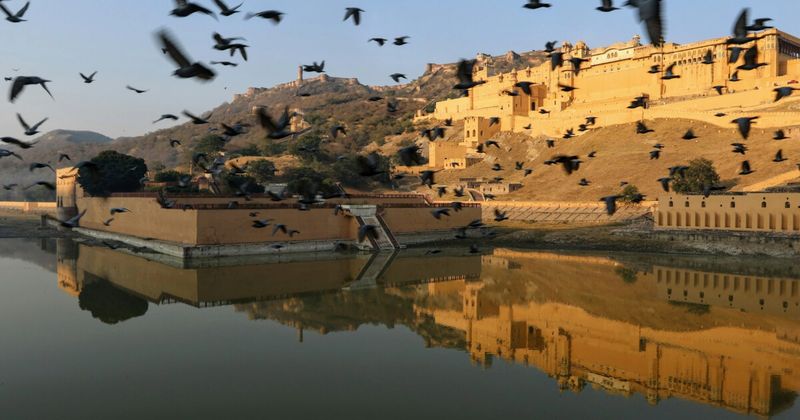
Amber Fort served as the royal capital of the Kachhwaha Rajputs for over 600 years before Maharaja Sawai Jai Singh II moved the capital to the newly built planned city of Jaipur in 1727 — the fort-palace complex covers roughly 4 square kilometres across the Aravalli hillside and lake shoreline.
11:00am: Jaigarh Fort. One kilometre above Amber on the same hill — often missed by visitors who think Amber is the destination. Jaigarh houses the Jaivana cannon, the largest wheeled cannon ever built (6.15 metres long, never fired in battle). Entry ₹120 ($1.28 USD) for foreigners. The views over the Aravalli Hills from the ramparts are better than from Amber.
1:00pm: City Palace and Jantar Mantar. These two are adjacent in the old city, walkable from each other. City Palace (₹700/$7.45 USD for foreigners) is still partly occupied by the Jaipur royal family. Jantar Mantar (₹200/$2.13 USD for foreigners) — Maharaja Sawai Jai Singh II's 18th-century astronomical observatory — is one of the most underrated monuments in India. The Samrat Yantra, a 27-metre sundial accurate to within two seconds per day, is more impressive than most of the forts on this route.
3:00pm: Johri Bazaar and block-print shopping. Jaipur is India's blue pottery and block-print textile capital. The lanes off Johri Bazaar between the clock tower and Badi Chaupar are where the fixed-price, government-approved shops sit. Budget ₹500–₹3,000 ($5.32–$31.91 USD) for textiles, blue pottery, or silver jewellery if shopping is part of your plan. The auto-rickshaw drivers and hotel concierges who steer you toward specific shops are earning commission — navigate the bazaar independently.
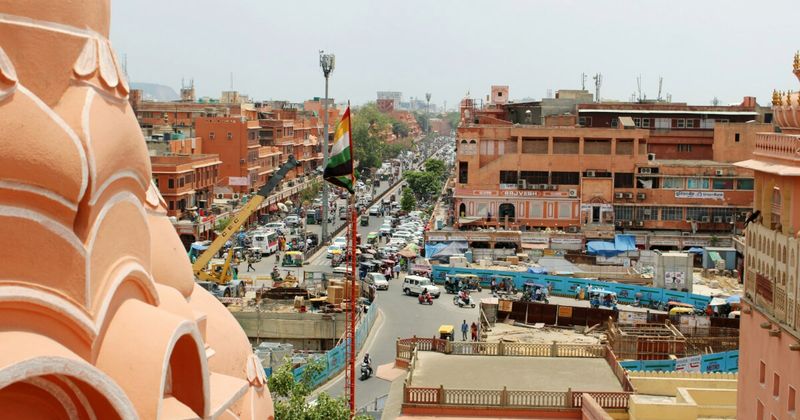
Jaipur's distinctive terracotta pink colour was applied to the entire old city in 1876 when Maharaja Ram Singh ordered the city repainted to welcome the Prince of Wales — the "Pink City" designation has persisted as a formal municipal designation ever since, and property owners in the heritage zone are legally required to maintain the pink facades.
Book your Day 4 local Jaipur sightseeing vehicle through Intui.travel — the Amber–Jaigarh–Nahargarh triangle requires a vehicle for the hill sections, and a pre-booked full-day driver at a fixed rate eliminates the negotiation at each stop.
Check Live Flight Prices
Day 5: Jaipur to Delhi — Final Morning and Departure
Do not over-schedule Day 5. India has a way of turning a "quick morning activity" into a 3-hour logistics problem.
If your flight departs Delhi after 9pm: take the morning train from Jaipur to Delhi. The Vande Bharat Express (12461), departing Jaipur at approximately 5:45am, reaches Delhi in 4h 15min — Chair Car from ₹900 ($9.57 USD) on 12Go Asia. The JP JU Express (22977), departing 6:00am, is slower (5h 10min) but cheaper from ₹160 Sleeper. Arrive Delhi Cantt or Hazrat Nizamuddin mid-morning, transfer to the airport, done.
If your flight departs Delhi before 6pm: take the overnight bus from Jaipur (departs 9pm–11pm, arrives Delhi 4am–6am, from ₹600 on 12Go Asia). Long, but it gets you to Delhi with the full Day 5 free for one last hour in Lodi Garden — the 15th-century Sayyid and Lodi dynasty tombs in South Delhi's 90-acre park, walkable at 7am, free entry, extraordinary Mughal architecture in near silence.
Book your Delhi departure airport transfer through GetTransfer or KiwiTaxi — both confirmed for the Jaipur-to-Delhi-airport route. At 3pm on a weekday, Delhi airport traffic can add 45 minutes to any transfer time. A pre-booked driver eliminates the arrival-hall scramble. Set a Compensair delay alert if your international connection runs through a European hub.
Route 2: Mumbai + Goa — For Those Who Want to Ease In
If the Golden Triangle sounds too intense for a first India trip — too many forts, too much heat, too much to process in 72 hours — the Mumbai-to-Goa route is the honest alternative.
Mumbai is one of the world's great cities. Two nights there give you the Gateway of India, a Dharavi slum walking tour (the most humanising experience you can have in India in 3 hours), the Kala Ghoda art district, and the Irani café culture of Colaba — all bookable through Klook. Fly or take the Tejas Express train south to Goa for three nights on the beaches and in the Portuguese heritage quarter of Fontainhas. Our Goa Beyond the Beach guide covers the Goa portion of this circuit in depth.
Book Mumbai to Goa transport through 12Go Asia — the Tejas Express (direct train, ~8 hours, from ₹1,000/$10.64 USD) is the best option. Fly Mumbai to Goa if time is tighter (1 hour, from ₹2,500/$26.60 USD on FlyFlick).
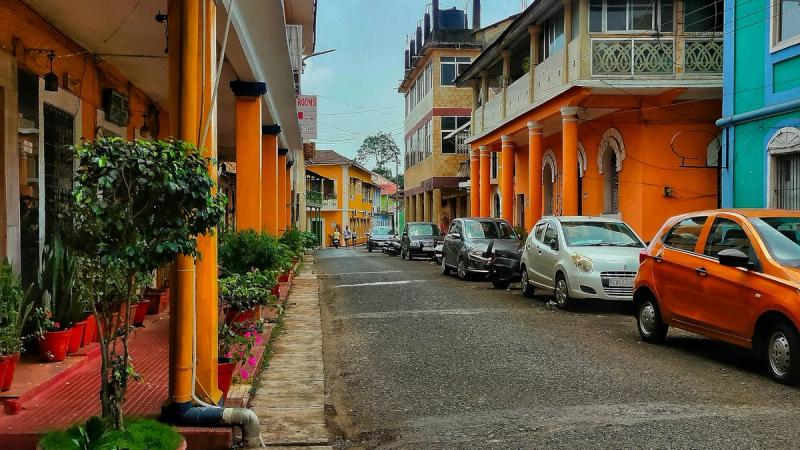
Fontainhas has had heritage neighbourhood status since 1986, which legally requires property owners to maintain their facades in the traditional Portuguese colonial style — the neighbourhood has remained almost unchanged in appearance since the 18th century and is among the best-preserved colonial quarters in Asia.
For airport and city transfers in Mumbai: both KiwiTaxi (confirmed for Mumbai Airport routes) and GetTransfer cover Mumbai airport arrivals and Goa airport transfers across all beach zones — Calangute, Candolim, Morjim, Palolem, all confirmed routes.
Route 3: The Kerala Express — South India in 5 Days
Three nights in Kerala is the slowest, gentlest, and most nature-focused option for a 5-day India trip. Fly into Kochi International Airport (COK), spend Day 1 in Fort Kochi (Chinese fishing nets, St Francis Church, the Kathakali performance at 6:30pm), Day 2 in Munnar's tea estates or on the overnight houseboat from Alleppey, Day 3 recovering on Varkala's cliff beach, and Day 4 back to Kochi for departure.
Our complete Kerala 7-day loop itinerary covers this circuit in full — for a 5-day window, compress it to Kochi (Day 1), Alleppey houseboat (Day 2–3), and Varkala or back to Kochi (Day 4–5).
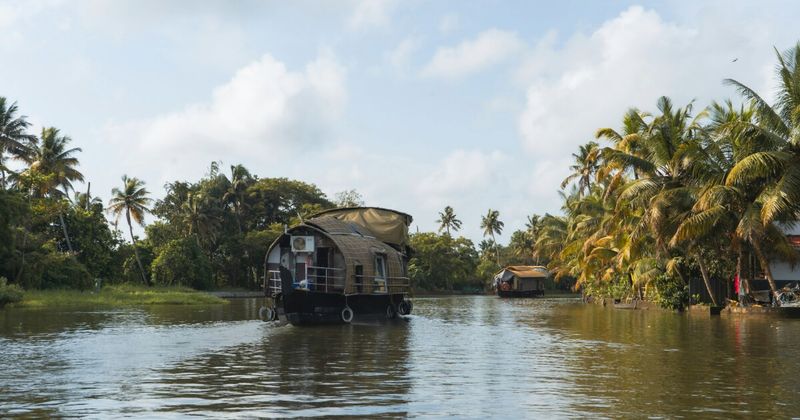
Kerala's backwater network covers over 900 kilometres of interconnected rivers, lakes, and canals — the houseboat economy supports over 1,200 registered boats operating out of Alleppey, making it one of the most visited waterway networks in Asia.
Book Kochi airport transfer through KiwiTaxi — confirmed for Kochi International Airport to Kochi city centre routes, with the Kochi Airport → Alleppey route also available. GetTransfer covers the same arrivals. The Alleppey overnight houseboat (₹8,500–₹9,500 all-in for two, including all meals) books through Klook.
The Honest Recommendation: Which Route Is Right for You
Here it is, stated plainly.
Choose the Golden Triangle if the Taj Mahal is on your list, if this is your first trip to a developing country and you want maximum landmark density for the time you have, or if you're on a conference extension or business trip connection through Delhi. It's the most optimised circuit in India for short windows. Every hour is earned. Nothing is wasted.
Choose Mumbai + Goa if the Golden Triangle sounds overwhelming, if you want beaches and city life rather than forts and monuments, or if Goa has been on your list specifically and you want to attach it to a Mumbai arrival. Our Goa Beyond the Beach guide is the companion piece.
Choose Kerala if this is your first developing-country trip and you want India at its gentlest pace, if you're a solo female traveller starting conservatively (Kerala is consistently rated India's safest state for solo female travel), or if nature and food interest you more than monuments. Our Kerala 7-day itinerary compresses into 5 days with one decision: drop Munnar and stay longer in Kochi and Alleppey.
The one thing that doesn't work in 5 days: combining North and South India. Delhi and Kerala in five days leaves you with no proper day in either — just airports and transit corridors. Our North India vs South India comparison guide is the first thing to read if you're still undecided about direction.
What to Skip on a 5-Day India Trip
Adding Varanasi. Every first timer wants Varanasi. It's extraordinary. It also requires 2–3 full days to experience properly — the ghats at 4am, the Ganga Aarti at dusk, the morning boat on the Ganges, the lanes of Banaras. Adding Varanasi to the Golden Triangle on a 5-day trip means you get 6 hours in Varanasi — enough to see it through a car window, not enough to understand why people call it the soul of India. Come back for Varanasi on a longer trip. Our 2 Weeks in India itinerary builds the correct North India circuit that includes Varanasi properly.
Booking accommodation in Paharganj for a short Golden Triangle trip. Paharganj (the backpacker district next to New Delhi station) is fine for long-term India travellers. For a 5-day trip starting and ending at Delhi airport, it's geographically inconvenient — the airport metro from Paharganj requires a train change and takes 40 minutes. Aerocity is 10 minutes from the airport by metro or taxi. For 2 nights, the location matters.
The sunrise taxi packages from Delhi to Agra and back in one day. These exist — Delhi-Agra-Taj-back to Delhi for ₹4,000–₹8,000 per vehicle, sold by every Delhi hotel and travel agent. They work logistically. They're exhausting. The Taj Mahal is extraordinary enough that spending 2 hours there between a 4am departure and a 8pm return, jetlagged, is a waste. Stay one night in Agra. See the Taj at sunrise from within the garden, not from a tour group bus. The extra night costs ₹2,500–₹5,000. It's worth every rupee.
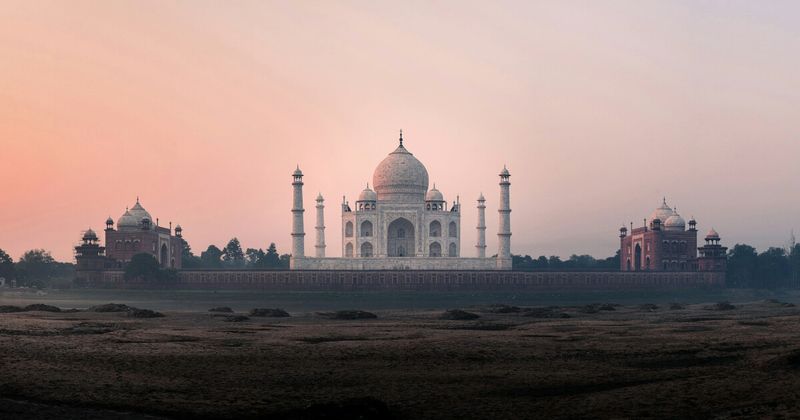
Mehtab Bagh (Moonlight Garden) was designed by Shah Jahan as the viewing garden across the Yamuna from the Taj Mahal — historical records suggest he planned a second, black marble Taj Mahal on this bank as his own mausoleum, though the theory remains contested among historians and the only evidence is the octagonal pool outline visible in the garden.
Combining the Golden Triangle with a flight to Goa "for a beach day." This requires an internal flight (₹3,000–₹8,000/$31.91–$85.11 USD), adds an airport day on both ends, and reduces your Goa time to approximately 36 hours. It also means you see neither the Golden Triangle nor Goa properly. Pick one and stay.
5-Day India Budget Breakdown
| Expense | Budget | Mid-Range | Splurge |
|---|---|---|---|
| International flights (return) | Search on FlyFlick | varies | varies |
| Delhi accommodation (2 nights) | ₹2,500–₹4,000 ($26.60–$42.55) | ₹5,000–₹9,000 ($53.19–$95.74) | ₹12,000+ ($127.66+) |
| Agra accommodation (1 night) | ₹2,000–₹3,500 ($21.28–$37.23) | ₹4,000–₹8,000 ($42.55–$85.11) | ₹15,000+ ($159.57+) |
| Jaipur accommodation (1 night) | ₹2,000–₹3,500 ($21.28–$37.23) | ₹4,500–₹8,000 ($47.87–$85.11) | ₹12,000+ ($127.66+) |
| Gatimaan Express Delhi→Agra | ₹690 CC ($7.34) | ₹1,365 EC ($14.52) | — |
| Agra→Jaipur (train or road) | ₹300–₹600 ($3.19–$6.38) | ₹1,000 via KiwiTaxi | ₹3,500–₹5,000 ($37.23–$53.19) |
| Jaipur→Delhi (train) | ₹160 Sleeper ($1.70) | ₹900 Vande Bharat ($9.57) | — |
| Delhi airport transfers both ends | ₹1,000–₹1,500 ($10.64–$15.96) | ₹2,000–₹3,000 ($21.28–$31.91) | — |
| Taj Mahal entry (foreigner) | ₹1,300 ($13.83) | ₹1,300 ($13.83) | — |
| Agra Fort | ₹650 ($6.91) | ₹650 ($6.91) | — |
| Amber Fort + Jaipur Composite | ₹1,000–₹1,500 ($10.64–$15.96) | ₹1,000–₹1,500 ($10.64–$15.96) | — |
| Jaipur Day 4 vehicle (Intui.travel) | ₹2,500 ($26.60) | ₹4,000–₹5,000 ($42.55–$53.19) | — |
| Food (5 days) | ₹800–₹1,200 ($8.51–$12.77) per day | ₹1,500–₹3,000 ($15.96–$31.91) per day | — |
| Travel insurance (VisitorsCoverage/EKTA) | From ~$12–25 | From ~$12–25 | From ~$12–25 |
| 5-day total per person (approx) | ₹22,000–₹30,000 ($234–$319) | ₹50,000–₹80,000 ($532–$851) | ₹1,20,000+ ($1,277+) |
All INR prices. USD at ₹94 = $1. Excludes international flights. INR prices reliable; USD approximate — check current rate before budgeting.
Check Live Flight Prices
The Bottom Line
Five days is enough. But only just, and only if you resist the pull to add one more city, one more region, one more monument. India rewards the traveller who arrives with a plan and executes it with attention more than the one who arrives with ambition and collapses under it by Day 3.
Choose the Golden Triangle. Get on the 8:10am train. Stand in the empty Taj Mahal garden before 7am. Then go to Jaipur and climb to the Amber Fort roof at 8am with a chai and understand why people come back to India again and again.
Five days is a beginning. Come back for longer.
Your India Trip Planning Checklist
Every item on this list is easier to sort at home than at Delhi airport at 3am. Do it now.
🛡️ Travel Insurance — Non-Negotiable, Always First: VisitorsCoverage — Compare plans; minimum $100K USD medical + emergency evacuation; 5-day India policies from $12–25 USD depending on age and coverage level. Medical costs for a food poisoning admission in India can reach ₹80,000 before a specialist sees you. Sort before flights, transfers, or anything else on this list | EKTA — Affordable second option; policies from $0.99/day; worldwide coverage; fully digital claims; ideal for budget-conscious travellers who want to compare quotes before committing. Ektatraveling.com — 24/7 multilingual support.
✈️ Flights & Delay Protection: FlyFlick — Search all routes into Delhi (DEL); check open-jaw options into Delhi and out of Goa (GOI) or Kochi (COK) if combining routes — often saves $80–200 USD | Compensair — Claim up to €600 for delayed or cancelled flights; Delhi routes in December–January fog season are among India's most disrupted; EU-connected legs especially worth protecting.
🚖 Airport & City Transfers: GetTransfer — Pre-booked fixed-fare airport transfer at Delhi IGI on arrival and departure; vehicle class confirmed before payment, driver waiting with name sign — eliminates the arrival-hall tout pressure entirely | KiwiTaxi — Pre-booked fixed-price intercity transfers covering Delhi Airport → Agra, Delhi → Jaipur, Agra → Jaipur, Jaipur → Delhi Airport, Mumbai Airport → Mumbai, Goa Airport → all beach zones, Kochi Airport → Kochi/Alleppey, Varanasi, Bangalore, Hyderabad — 105+ countries, book before you land | Intui.travel — Full-day sightseeing vehicle for Jaipur (Amber Fort circuit) and city transfers in Agra; professional licensed drivers, fixed fares.
🚂 Trains — Book 3–4 Weeks Ahead: 12Go Asia — Book all Golden Triangle trains in English with your international card: Gatimaan Express Delhi→Agra (1hr 40min, CC from ₹690), Shatabdi/SF Express Agra→Jaipur (4–4.5hrs, from ₹300–₹600), Vande Bharat Jaipur→Delhi (4h 15min, CC from ₹900). Critical: Gatimaan departs from Hazrat Nizamuddin station, not New Delhi Station. Book 3–4 weeks ahead for peak season.
🎟️ Experiences to Pre-Book: Klook — Taj Mahal sunrise entry slot (limited, sells out days ahead in peak season, Oct–Feb); Taj Mahal licensed 2-hour guide ₹1,000–₹1,500; Amber Fort skip-the-queue ₹1,000; Agra Fort ticket ₹650; Delhi Chandni Chowk street food walking tour from ₹1,200. All with cancellation policies visible before booking.
📱 Connectivity: Saily — City 5G eSIM; activate before boarding, works from the moment you land across Delhi, Agra, and Jaipur — essential for Google Maps navigation in Chandni Chowk | Yesim — Unlimited data eSIM if India is part of a multi-country South or Southeast Asia trip | Drimsim — Off-grid eSIM for rural Rajasthan road sections between Agra and Jaipur where standard SIMs can drop.
Choose one route. Do it right. Come back for the rest.