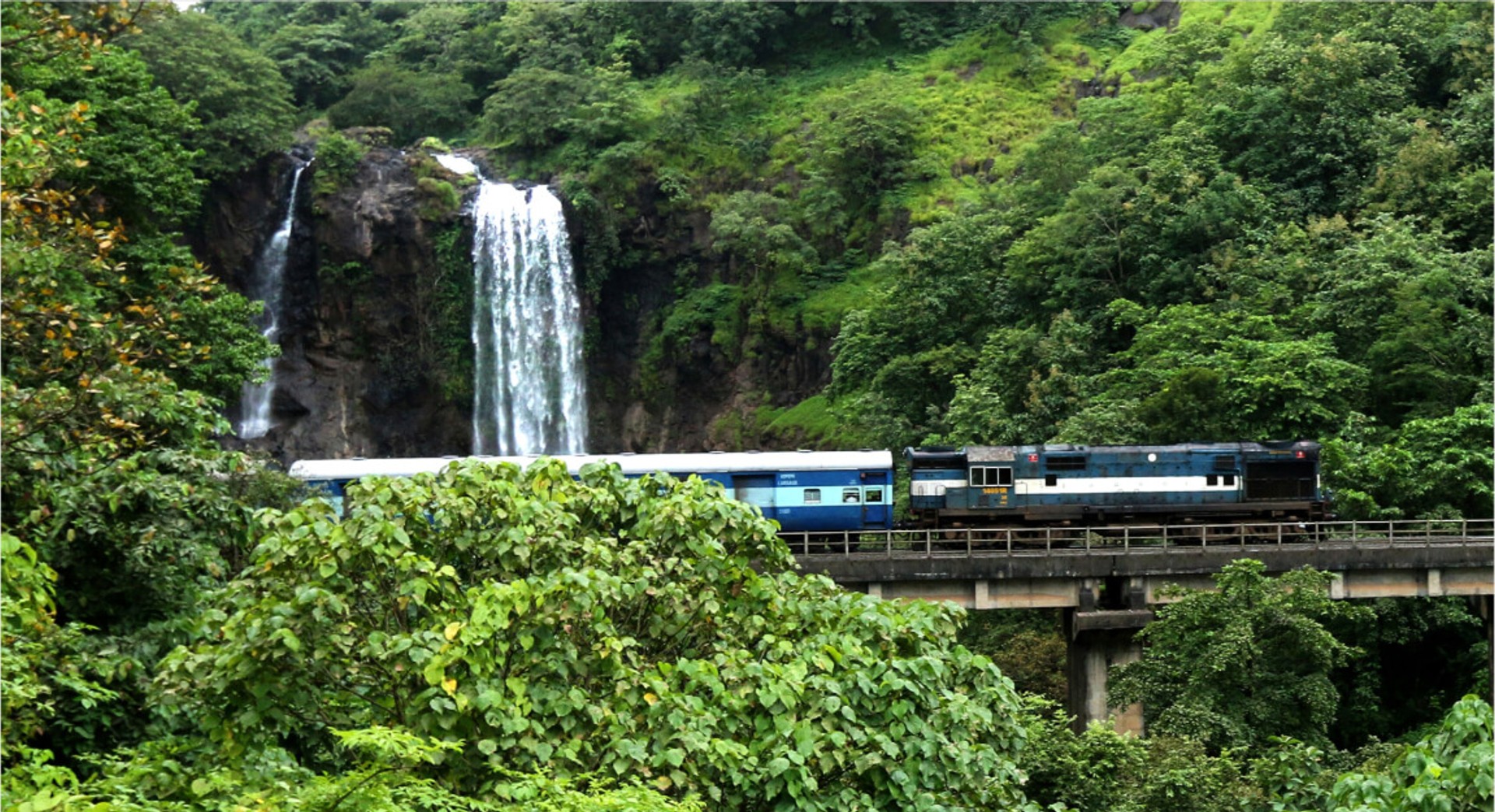

India has 13,000 passenger trains running every day. Most of them are infrastructure — the system that moves 25 million people between one place and another, the world's largest daily human movement, the veins and arteries of a 1.4 billion-person country. You book them for the destination and you endure them for the journey.
Six of them are different.
Six routes exist in India where the rational decision — fly, the journey takes too long — is also the wrong decision. Routes where the specific sequence of tunnels, bridges, river crossings, climate transitions, and window light at the right hour produces an experience that no airport-to-airport equivalent can replicate. Routes where you arrive at the destination having already seen the point.
Most travel guides list these routes. Lonely Planet calls the Konkan Railway "a textbook example of engineering excellence" and moves on. GetYourGuide tells you the Kalka-Shimla Railway goes through 103 tunnels without explaining what happened to the engineer who built one of them. Nobody tells you which side of the Konkan Railway carriage faces the Arabian Sea, or that there's a clay-pot biryani vendor who boards at specific stations and doesn't reach the air-conditioned coaches, or that the Vivek Express was named after Swami Vivekananda because it literally traces the journey he made across India — 8 states, 6 language families, 74 hours and 35 minutes.
This guide does all of that.
Sort VisitorsCoverage travel insurance before any long-distance Indian train journey. Overnight trains, multi-day routes, and mountain railways each carry their own risk profile. Policies from approximately $18–35 USD. EKTA offers a second comparison option from $0.99/day at ektatraveling.com. Compare both.
Before You Book: India Train Classes in 60 Seconds
India's booking class system bewilders most first-timers. Here is the honest version:
3AC (Third AC): The sweet spot. Air-conditioned sleeping berths in open bays of 6, curtains for privacy, bedding included on overnight trains. Clean, comfortable, social. This is what experienced India travellers book.
2AC (Second AC): More privacy — bays of 4 with curtains, slightly more space. Worth the upgrade on journeys over 16 hours if you value sleep over social interaction.
1AC (First AC): Private lockable cabins, highest cost. Rarely necessary; the experience gap from 2AC is marginal relative to the price jump.
Sleeper (SL): Non-AC sleeper. Perfectly adequate on night routes in winter (October–February). In summer, hot enough to be uncomfortable. Fine for budget travellers on the Konkan Railway night trains.
Chair Car (CC): Seated AC — for daytime journeys under 8 hours. Vande Bharat and Shatabdi services.
Vistadome coaches: Glass-roof panoramic coaches on select scenic routes (Araku Valley, Visakhapatnam; some Konkan routes). Book specifically — not all trains on a route carry them.
Book all routes in this guide on 12Go Asia — international card support, English interface, no IRCTC registration required.
Route 1: Konkan Railway — Mumbai to Goa
Train: Mandovi Express (10103/10104) or Jan Shatabdi (12051). Mumbai CST → Madgaon (Goa). Distance: 580km. Duration: 9–12 hours depending on service.
Ticket prices (2026): Sleeper ₹345 ($3.67 USD). 3AC ₹1,005 ($10.69 USD). 2AC ₹1,450 ($15.43 USD). Chair Car (Jan Shatabdi) ₹670 ($7.13 USD).
Book: 12Go Asia — book 3–4 weeks ahead for weekend departures.
Most travel guides tell you the Konkan Railway is scenic. They're right, and that's where they stop. Here is what they don't tell you.
74 people died building the Konkan Railway.
The 756-kilometre coastal line from Mumbai to Goa was sanctioned in 1990 and completed in 1998 — seven years of construction through the Western Ghats and along the Konkan coast. The engineers encountered every problem simultaneously: flash floods that destroyed completed sections, landslides that buried track, and nine tunnels bored through soft saturated clay that required a slow, manual process of excavation. The clay walls collapsed immediately several times. Nineteen lives and four years were lost in those soft-soil tunnels alone. The total construction death toll was 74. The Karbude tunnel — 6.5 kilometres through the rock near Ratnagiri — is the longest on the route and took years longer than planned. The Sharavathi Bridge — 2.06 kilometres across a river — was built using pontoon-mounted cranes and incremental launch technology, a technique being used in India for the first time on a railway project.
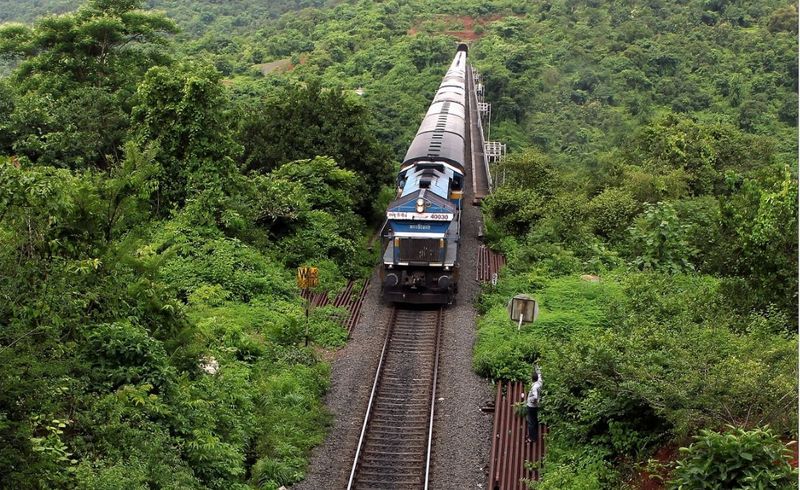
The Konkan Railway crosses 2,000 bridges and passes through 91 tunnels across 756km. The 2.06km Sharavathi River bridge was built using incremental launch technology — India's first railway use.
When the first complete train ran in 1998, every engineering problem that had killed people and consumed years was invisible. What was visible: 2,000 bridges, 91 tunnels, the Western Ghats on the left, the Arabian Sea on the right, and 580 kilometres of the most beautiful railway in India.
The practical guide nobody gives you:
Which side to sit: Book a berth on the right side of the carriage travelling from Mumbai to Goa (seats numbered with the Goa-direction window on the right as you face forward). This is the Arabian Sea side. The left side gives you the Ghats — also beautiful, but the sea views are what the Konkan Railway is celebrated for. On the return Goa → Mumbai, sit left.
Which train: The Mandovi Express is the classic Konkan choice — it runs through daylight hours in the right direction (Mumbai departure mid-morning, Goa arrival evening) and is slow enough to see everything. The Jan Shatabdi (daytime, faster, Chair Car only) gives you similar views at a higher seat class. Avoid pure overnight trains on this route — you sleep through the scenery.
The biryani vendor: In unreserved and Sleeper carriages, a vendor boards at a specific station between Ratnagiri and Goa with clay pot biryani — rice cooked in a sealed pot, the clay pot maintaining heat for hours, the rice having absorbed the vessel's minerals. It does not reach AC compartments. The Mandovi Express in Sleeper class is the correct ticket for this.
What you see: The train enters the first tunnel approximately 2 hours from Mumbai. From here, the sequence is: tunnel (dark, 30 seconds), bridge (light, height, river below, 15 seconds), valley (green, the Ghats in layers), tunnel again. This rhythm — darkness, light, darkness, light — continues for hours. The tunnels are ventilated but not lit; your eyes adjust to the dark and then the bridge light is extremely bright. After Ratnagiri, the coastal section opens up and the Arabian Sea appears on the right — flat, blue, and on clear days apparently infinite.
The Konkan Railway is the closest India gets to the Trans-Siberian in terms of a journey that justifies itself. It also costs ₹345. These facts exist in the same reality.
Route 2: Darjeeling Himalayan Railway — The Toy Train
Train: Joy Ride — Darjeeling to Ghum and back, via Batasia Loop. Distance: 14km return. Duration: 2 hours.
Full route: New Jalpaiguri (NJP) → Darjeeling. Distance: 78km. Duration: 7–8 hours.
Ticket prices (2026): Joy Ride diesel engine: ₹805 ($8.56 USD). Joy Ride steam engine (B-class): ₹1,405 ($14.95 USD). Full NJP–Darjeeling service: First Class from ₹1,290 ($13.72 USD).
Book: IRCTC (irctc.co.in) for steam Joy Ride — 2–3 weeks ahead in peak season. 12Go Asia for the full NJP–Darjeeling service.
The Darjeeling Himalayan Railway has been running on its 2-foot narrow gauge since 1881. It was a UNESCO World Heritage Site before most of the people reading this were born (inscribed 1999). Every guide covers it. Here is what most of them miss.
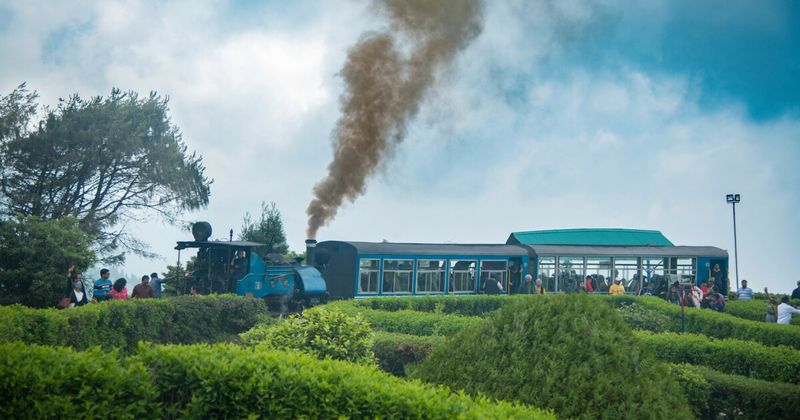
The B-class steam locomotive — the small red engine that pulls the steam Joy Ride — was designed in Britain in the 19th century and burns coal. There are fewer than a dozen still in operational service. When it moves through Darjeeling's bazaar market streets — the engine 50 centimetres from vegetable stalls, the passengers looking directly into shop interiors at eye level from the carriage — the cognitive experience is not "heritage railway tourism." It is time travel. The locomotive predates everything else visible from the carriage window except the mountains.
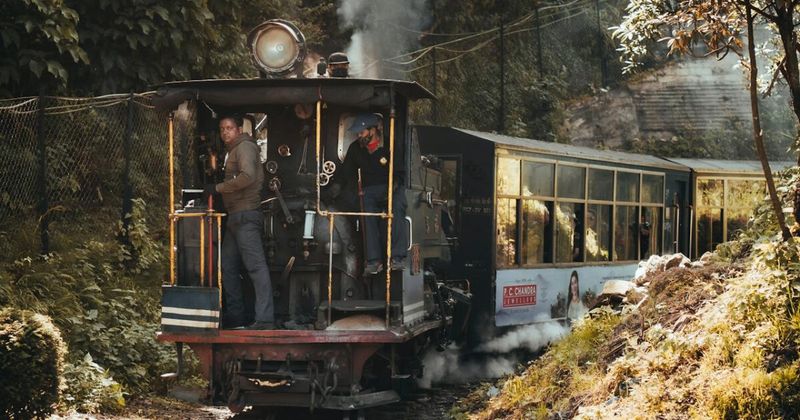
The B-class steam locomotive was designed in Britain in the 1890s and burns coal; fewer than 12 are still in operational service worldwide. The Darjeeling examples run daily.
The Batasia Loop: Opened in 1919 to solve a zig-zag reversal problem on the descent from Ghum. The train spirals in a complete circle, descending approximately 40 metres in one revolution — an engineering solution to a gradient problem that inadvertently created Darjeeling's most complete viewpoint. From the loop, the town is visible in full below, with Kanchenjunga on a clear day behind it. Entry: ₹20 ($0.21 USD) — free with toy train ticket.
The Ghum detail: Ghum station, at 2,258 metres, is India's highest railway station. The temperature when the steam engine pulls in is approximately 8°C colder than Darjeeling town. Bring a layer. The 30-minute stop includes a walk to Ghum Monastery — the 1850 Gelugpa monastery with its 4.5-metre Maitreya Buddha lit by butter lamps, 2 minutes from the platform.
Which train to book: The steam Joy Ride is approximately twice the price of the diesel option. It is worth every rupee. The sound of the coal-burning engine, the smell, and the experience of the B-class locomotive negotiating a street market at 15kmph are categorically different from the diesel version. Book steam unless it is genuinely unavailable.
Full NJP–Darjeeling route: The 7–8 hour full service is worth it as an arrival experience — the elevation gain from the plains at 100 metres to Darjeeling at 2,042 metres is visible, audible (your ears pop), and tangible (the temperature drops 15°C during the journey). Use it for arrival; the Joy Ride for the daily experience.
Pre-book through Klook for the Joy Ride steam engine with confirmed seat.
Route 3: Kalka–Shimla Railway — 103 Tunnels and One Failed Engineer
Train: Himalayan Queen (52451), Shivalik Deluxe (52457), Kalka-Shimla Express (52455). Kalka → Shimla. Distance: 96km. Duration: 5–6 hours.
Ticket prices (2026): First Class ₹485 ($5.16 USD). AC Chair Car ₹745 ($7.93 USD). Shivalik Deluxe (glass-panel windows) ₹500 ($5.32 USD).
Book: 12Go Asia or IRCTC. 2–3 weeks ahead for weekend departures and peak season (April–June, October–November).
The Kalka-Shimla Railway was opened in 1903 — a 2-foot 6-inch narrow gauge line built by the British to connect the plains railway at Kalka to the imperial summer capital at Shimla, 2,076 metres above. It passes through 103 tunnels and over 864 bridges in 96 kilometres. It was declared a UNESCO World Heritage Site in 2008 alongside the Darjeeling and Nilgiri mountain railways.
Here is the story that no travel guide tells about this railway.
During the construction of Tunnel 33, the British engineer in charge calculated the bearing for a straight-through tunnel. He was wrong by half a mile. The tunnel was completed on his specification and emerged at the wrong location — completely unusable for the line's geometry. He was court-martialled by the British authorities for the failure and died by suicide before the proceedings concluded.
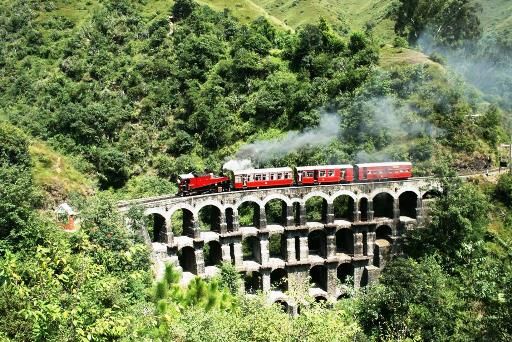
The Kalka-Shimla Railway was built in 2 years (1901–1903) and negotiated 96km of Himalayan terrain that regular broad-gauge track could never have accessed. The gradient in some sections reaches 3%.
Tunnel 33 still exists. It is at Barog, approximately halfway between Kalka and Shimla. The train stops at Barog station — there is a restaurant and a small hotel. The failed tunnel, 1,143 metres long, runs parallel to the correct Barog Tunnel (which the current train uses) and can be entered on foot from the station area. It is used for storage. The local community calls it the "Haunted Tunnel," a name that reflects both its abandoned state and the specific history of how it came to be abandoned.
The correctly built Barog Tunnel, at approximately 1,144 metres, is the longest on the route. The train enters it about 2 minutes after leaving Barog station. In that 2 minutes, anyone who knows the story is looking at the parallel tunnel entrance carved into the hillside above the track.
The practical guide:
Which service: The Shivalik Deluxe has glass-panel windows rather than the standard open-frame windows — important in winter when the temperature at Shimla is 0–5°C but the views require the windows to be open. The Himalayan Queen is the most famous and has the widest following among railway enthusiasts. Either is correct; Shivalik Deluxe for winter comfort, Himalayan Queen for the experience.
Sit on the right: Travelling from Kalka to Shimla, the right side of the carriage faces the deeper valley views. Left faces the hillside. On the return, sit left.
What to eat at Barog station: The railway station restaurant at Barog serves a simple lunch thali (₹150–250/$1.60–2.66 USD) that the train has a scheduled 20-minute stop for. This is not a coincidence — the stop was designed for passengers to eat at the station's restaurant, a practice from the colonial era that has continued because the food is genuinely good.
Book through Klook for confirmed seats with skip-counter access.
Check Live Flight Prices
Route 4: Vivek Express — The Journey That Is India
Train: Vivek Express (22503/22504). Dibrugarh (Assam) → Kanyakumari (Tamil Nadu). Distance: 4,189km. Duration: 74 hours 35 minutes. States crossed: 8 (Assam, West Bengal, Bihar, Odisha, Andhra Pradesh, Tamil Nadu, Kerala, Jharkhand traverse).
Ticket prices (2026): Sleeper ₹1,140 ($12.13 USD). 3AC ₹2,990 ($31.81 USD). 2AC ₹4,265 ($45.37 USD).
Frequency: Daily. Departs Dibrugarh 7:55pm, arrives Kanyakumari 9:55pm on the fourth day.
Book: 12Go Asia — book the full route or any segment.
The Vivek Express is India's longest train route by both distance and time. At 4,189 kilometres and 74 hours 35 minutes, it is the 30th-longest train service in the world — ranked alongside the Trans-Siberian and the Canadian in terms of continuous rail distance. This fact appears in every travel guide that mentions it.
Here is what none of them explain: why it's called Vivek Express, and why that matters.
The train was introduced in 2013 to commemorate the 150th birth anniversary of Swami Vivekananda — the Bengali Hindu monk who, in the 1880s and 1890s, walked and travelled by whatever means available across the entire length of India from the Himalayas to the southern tip. Vivekananda's journey took years, on foot and by cart and by boat, passing through dozens of language communities, climate zones, and cultural regions. He is reported to have arrived at the southern tip — the rock at Kanyakumari where three bodies of water meet — and meditated for three days, after which he described having a vision of India's unity despite its extreme diversity.
The Vivek Express makes the same geographic journey in 74 hours and 35 minutes. It departs from Dibrugarh — the tea-growing centre of Assam, near the Brahmaputra river system that defines the northeast — and arrives at Kanyakumari, where the Arabian Sea, Bay of Bengal, and Indian Ocean converge at the subcontinent's southern tip.
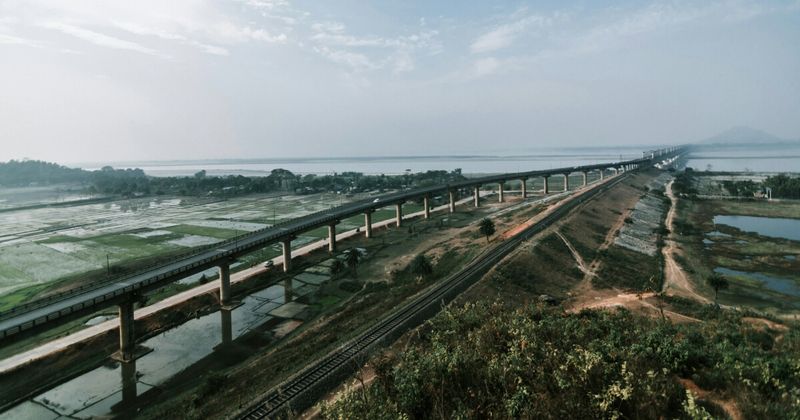
The Brahmaputra carries more water than any other river in the Indian subcontinent. The Bogibeel Bridge, opened in 2018, is India's longest railway-road bridge at 4.94km.
Between those two points, you cross 6 distinct language families. The script on signs outside the window changes from Assamese to Bengali to Odia to Telugu to Tamil — five completely different writing systems, none sharing a root with the previous one. The landscape shifts from the river delta plains of West Bengal to the coastal scrub of Odisha to the red laterite of Andhra Pradesh to the Nilgiri hills of Tamil Nadu. The food in the pantry car changes at approximate state boundaries — rice preparations in one state, wheat-based in the next. The temperature changes from the cool Assam highlands at departure to the tropical heat of the Tamil Nadu coast at arrival.
This is not a route that most visitors to India should attempt in full. 74 hours is a serious commitment and the tourist infrastructure in Dibrugarh does not justify a long flight to start from there. The Vivek Express is a route for travellers who specifically want the experience of crossing India in a single unbroken journey.
How most travellers should use it: Board at New Jalpaiguri (NJP) — the gateway to Darjeeling and Sikkim — for a segment of the journey. The NJP → Kolkata → Bhubaneswar section covers the Brahmaputra plains, the crossing of the Ganges delta, and the Odisha coast in approximately 14–18 hours. This segment, in 3AC from ₹600–800 ($6.38–8.51 USD), covers enough landscape diversity to understand what the Vivek Express is about.
The dawn crossing of the Brahmaputra: If you board at Dibrugarh or NJP, the train crosses the Bogibeel Bridge over the Brahmaputra river at approximately 5am on the first morning. The Brahmaputra at this hour — the river is 3–5 kilometres wide in this section, the largest river in the Indian subcontinent by volume — is a specific visual experience. The bridge itself is 4.94 kilometres long, the longest in India. Find your window berth, set an alarm, and watch the crossing.
Route 5: Nilgiri Mountain Railway — The Rack-and-Pinion Climb
Train: Nilgiri Passenger (56136/56137) and Express services. Mettupalayam → Udagamandalam (Ooty). Distance: 46km. Duration: 4–5 hours (uphill); 3–3.5 hours (downhill).
Ticket prices (2026): First Class ₹430 ($4.57 USD). Second Class ₹30–60 ($0.32–0.64 USD).
Book: 12Go Asia or IRCTC — book First Class 2–3 weeks ahead for weekend departures.
Every travel guide mentions the Nilgiri Mountain Railway as a UNESCO heritage site. Most of them describe it as "charming" and "scenic" and move on. Here is the specific mechanical fact that makes the Nilgiri Mountain Railway unlike any other train in India.
The section from Mettupalayam to Coonoor — the steep lower section with gradients up to 1-in-12.28 (8.15%) — uses a rack-and-pinion system. This means the locomotive has an additional central cog wheel (the pinion) that engages with a toothed rack rail laid between the running rails on the steepest sections. On standard railways, a locomotive's wheels simply grip the smooth rail by friction; on gradients steeper than approximately 4–5%, the wheels slip. The rack-and-pinion eliminates slipping by mechanical engagement — the cog locks into the rack and physically cannot slip.
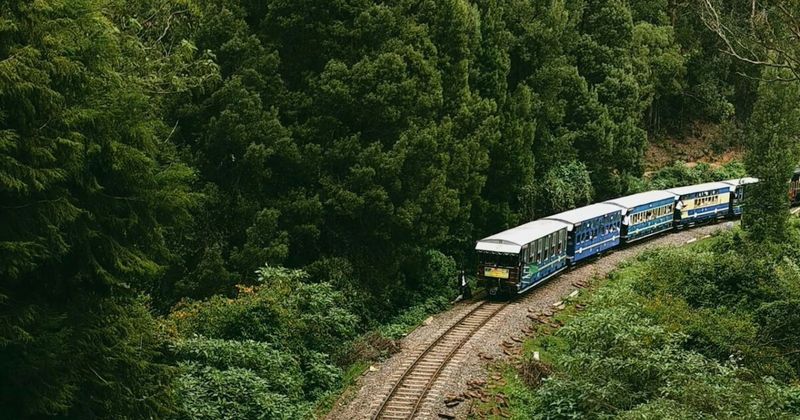
The rack-and-pinion system on the lower Nilgiri section engages a toothed rail between the running rails. The cog cannot slip — on gradients where standard trains would fail, this train climbs at walking pace.
The Nilgiri Mountain Railway is the only rack-and-pinion railway in India. On the steepest sections, the train travels at approximately 5mph (8kmph). You can walk faster than the train is moving. The steam locomotive that works the rack section (steam engines are used on this route, one of the last remaining steam rack-railway operations in Asia) produces an enormous amount of noise and effort at 5mph — the mechanical sound of the cog engaging the rack on each wheel rotation is audible through the carriage floor.
What the journey looks like: Mettupalayam station (280 metres) is in the Tamil Nadu plains — flat, hot, the smell of diesel and tamarind. The train departs and within 20 minutes is already climbing into the Nilgiri foothills. By Coonoor (1,712 metres, 2.5 hours), the temperature has dropped 10°C and the landscape has transitioned from scrub to the terraced tea plantations that cover the Nilgiri plateau. The section from Coonoor to Ooty (2,218 metres) uses adhesion rather than rack — the gradient is gentler and the train moves at a more conventional speed through a landscape of eucalyptus, tea, and the specific blue-grey light of the Nilgiri hills.
The recommended order: Take the train uphill (Mettupalayam → Ooty) in the morning — the light is better and the steam engine effort on the rack section is more visible from the carriage. Return downhill by bus if time is short; bus from Ooty to Mettupalayam takes 2 hours versus 3.5–4 hours by train, and the downhill journey is less dramatic.
Book First Class. The price difference (₹430 versus ₹30–60) is trivial and the seating is significantly better for photography.
Pre-book through Klook for confirmed First Class tickets.
Route 6: Delhi to Howrah Rajdhani — The Overnight as India
Train: Rajdhani Express (12301/12302), Duronto (12273/12274). New Delhi → Howrah (Kolkata). Distance: 1,447km. Duration: 17–18 hours.
Ticket prices (2026): 3AC ₹2,370 ($25.21 USD) — meals included. 2AC ₹3,320 ($35.32 USD) — meals included. 1AC ₹5,520 ($58.72 USD).
Book: 12Go Asia — 3–4 weeks ahead.
It is in this guide because it is the most complete version of what the Indian train experience actually is, stripped of the UNESCO designation and the mountain views and the heritage steam engine.
Here is what 18 hours in 3AC on the Delhi–Howrah Rajdhani provides:
Meals are included in the ticket. The Rajdhani is one of the few Indian train services where the ticket price covers all meals. Dinner, breakfast, and meals are brought to your berth by the catering staff — steel trays with multiple courses, vegetarian and non-vegetarian options, chai included. The food on the Rajdhani is reliably good. This is not a trivial observation — it means the experience of eating on this train is built into the rhythm of the journey rather than requiring the vendor-window negotiations that characterise the Konkan or the Kalka-Shimla.
The Delhi–Howrah Rajdhani Express has been running since 1969 and is not, in any conventional sense, a scenic route. The landscape between Delhi and Kolkata — the Uttar Pradesh and Bihar plains, the flat Ganga floodplain — is agricultural and dense and unremarkable to the eye.
The chai vendor economy. At every station stop — and the Rajdhani makes approximately 10 stops — vendors board selling chai in clay cups (₹10/$0.11 USD), samosas (₹20/$0.21 USD), and platform-specific regional snacks. At Mughal Sarai (now Deen Dayal Upadhyaya Junction) — the major junction in Uttar Pradesh — the quality of the samosas is specifically legendary among Indian railway travellers. The stop at 2am. The tea vendors' calls. The specific sound of a major Indian railway junction at night, heard from a berth in an overnight express, is an experience that no airport provides.
The Ganga crossing at dawn. The train crosses the Ganga at Patna at approximately 5am — the crossing takes 8 minutes. The Ganga at 5am in October, seen from a train window, is a specific shade of grey-silver that gradually becomes pale gold as the sun rises behind the Bihar plains. You are crossing the holiest river in India on a railway bridge at the hour when people on the ghats below are beginning their morning ritual bathing.
The compartment conversation. 18 hours in a 3AC bay of 6 berths produces, almost without exception, significant interaction with whoever else is in the bay. Professionals travelling to Kolkata, families going home, students returning to university. In 18 hours, if you are the kind of traveller who engages with the people around you, you will understand more about contemporary India from the conversations in that bay than from three days in a museum. This is the specific quality of the overnight Indian train that no amount of guide writing captures fully. It requires sitting on the berth and letting it happen.
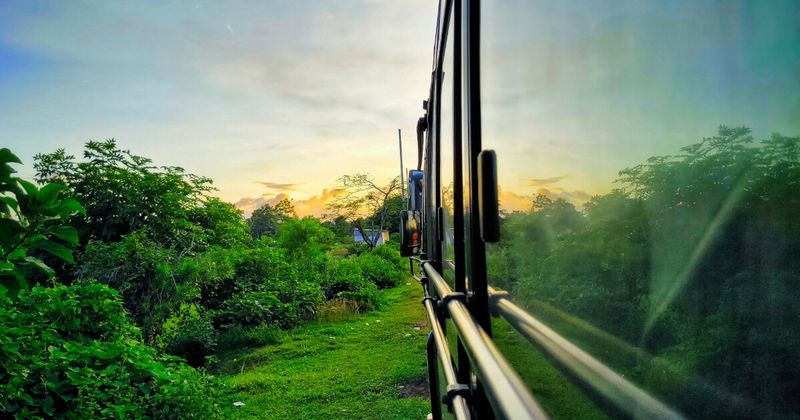
The Rajdhani Express has run continuously since 1969. The included meals, delivered to your berth on steel trays, are a specifically Indian institution that no other South Asian railway has replicated.
The Howrah Bridge arrival. The train arrives at Howrah station — the largest railway station in India by number of platforms — and the Howrah Bridge is visible from the station approach: the 705-metre cantilever bridge over the Hooghly River that has been the gateway to Kolkata since 1943. You disembark into one of the world's great cities at 7am, having been briefed on it by your fellow passengers for the preceding 6 hours.
The Practical Guide: Booking, Classes and What to Bring
Booking platform: 12Go Asia is the recommended platform for international travellers — English interface, international card support, no Indian phone number required. IRCTC (the official Indian Railways booking system) requires registration with an Indian phone number for the most competitive fares; international travellers without Indian numbers can use the Foreign Tourist Quota, which opens 365 days ahead.
Tatkal booking (last-minute): Tatkal quota opens 1 day before travel (10am for AC classes, 11am for non-AC). As of 2025, Tatkal booking requires Aadhaar authentication for certain advance windows — foreign nationals cannot complete this. Plan ahead; do not rely on Tatkal.
Foreign Tourist Quota: A small number of seats on most trains are reserved for foreign nationals and NRIs. These can be booked at the Foreign Tourist Reservation Counter at major railway stations in India (Delhi, Mumbai, Chennai, Kolkata) — you pay in USD or GBP with a nominal service fee. Useful if the train is sold out through standard booking.
What to bring on overnight trains:
- Earplugs — stations at 2am are loud
- A light layer — 3AC air conditioning is genuinely cold in winter
- A dry bag for your phone and valuables — not because of theft risk (India's trains are safe) but because of dust on non-AC routes
- Download offline maps and entertainment before boarding — mobile signal is intermittent through tunnels and rural sections
Indian train windows in Sleeper class can be lowered fully — the open window at speed provides cooling but also dust; 3AC windows are sealed, air-conditioned, and tinted, which mutes the view.
Station food strategy: At every major junction, specific regional snacks are sold on platforms. At Vijayawada — the major junction on the Howrah–Chennai route — a vendor sells specific spiced rice-and-lentil packets. At Mughal Sarai/DDU on the Delhi–Kolkata route, the samosas are the platform food people plan their journeys around. Knowing which station has what is knowledge that passes between Indian railway travellers across generations. Ask your compartment neighbours.
Airport transfers to connect: Book GetTransfer or KiwiTaxi for airport-to-station transfers at your origin city. Indian railway stations are not always adjacent to airports — Delhi's Hazrat Nizamuddin and New Delhi stations are 10 kilometres apart and neither is close to IGI Airport.
Activate Saily 5G eSIM for city and town coverage across all routes. Drimsim auto-switches between Jio, Airtel, and BSNL — essential for the Konkan tunnels, the Nilgiri forest zone, and the Assam–West Bengal section of the Vivek Express where single carriers drop.
Choosing Your Route: The Honest Comparison
| Route | Best for | Duration | From |
|---|---|---|---|
| Konkan Railway | Coastal scenery, engineering | 9–12hrs | ₹345 |
| Darjeeling Toy Train | Heritage steam, mountain views | 2hrs (Joy Ride) | ₹805–1,405 |
| Kalka-Shimla | UNESCO mountain railway, history | 5–6hrs | ₹485 |
| Vivek Express | Epic distance, India diversity | 74hrs 35min full | ₹1,140 |
| Nilgiri Mountain Railway | Rack-and-pinion, tea plantations | 4–5hrs | ₹430 |
| Delhi–Howrah Rajdhani | Immersive overnight, included meals | 17–18hrs | ₹2,370 |
If you're doing one: The Konkan Railway is the most accessible combination of scenery, engineering history, and a destination (Goa) that justifies the trip at both ends.
If you're building a circuit: Darjeeling Toy Train + Vivek Express segment (NJP to Kolkata) + overnight Rajdhani (Howrah to the next destination) forms a complete eastern India train circuit covering UNESCO heritage, epic distance, and immersive overnight travel across 4–5 days.
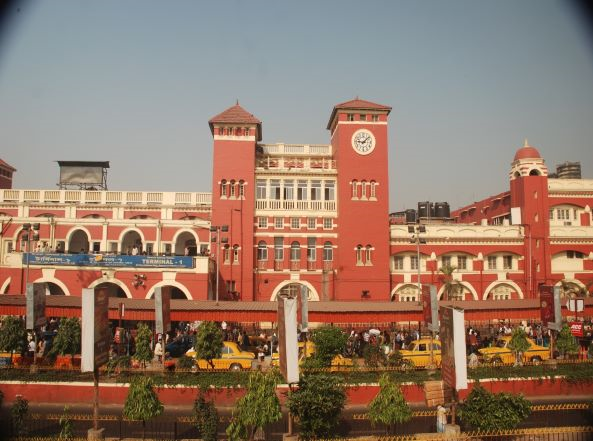
Howrah station opened in 1854 as one of India's first railway termini and now handles over 600 trains per day across 23 platforms — more trains than most European countries operate in total.
If you're in South India: Nilgiri Mountain Railway is the essential train experience — nothing else in India uses rack-and-pinion, and the Mettupalayam–Ooty journey includes a steam locomotive on the steepest section.
Connect your India train circuit to the wider itinerary — our India in 10 Days guide uses trains as the primary connective tissue. Our Varanasi to Delhi Reverse Golden Triangle guide is the best use of overnight train logic in the classic North India circuit.
Budget Breakdown: All Six Routes
| Route | Budget Ticket | Mid-Range | Book Via |
|---|---|---|---|
| Konkan Railway Mumbai→Goa | ₹345 Sleeper ($3.67) | ₹1,005 3AC ($10.69) | 12Go Asia |
| Darjeeling Joy Ride (steam) | ₹1,405 ($14.95) | ₹1,405 | Klook / IRCTC |
| Kalka-Shimla First Class | ₹485 ($5.16) | ₹745 AC Chair ($7.93) | 12Go Asia |
| Vivek Express full route, 3AC | ₹1,140 Sleeper ($12.13) | ₹2,990 3AC ($31.81) | 12Go Asia |
| Nilgiri First Class | ₹430 ($4.57) | ₹430 | 12Go Asia / Klook |
| Delhi–Howrah Rajdhani 3AC | ₹2,370 incl. meals ($25.21) | ₹3,320 2AC ($35.32) | 12Go Asia |
All prices INR. USD at ₹94 = $1. INR prices reliable; USD approximate.
Check Live Flight Prices
The Bottom Line
India has a rational case for flying between its cities: they're far apart, the trains are slow relative to aircraft, and time is a real constraint. The rational case is correct and frequently the wrong answer.
The Konkan Railway was built at the cost of 74 lives because a coastal road route could not provide what the railway provides: a continuous connection through a landscape that no vehicle road can follow at the same altitude and proximity to the rock and the water simultaneously. The Vivek Express crosses 8 states in 74 hours because India needed a single train that proved its own geographic unity. The Darjeeling steam engine predates everything else you can see from its carriage window and runs through a street market at 15kmph because it was built before the market existed and nobody has decided to stop it.
These are not nostalgic experiences. They are specific, irreplaceable, priced between ₹30 and ₹3,000, and available every day.
Get on the train.
Your India Train Journey Checklist
🛡️ Travel Insurance — First, Always: VisitorsCoverage — Overnight trains and mountain railways need minimum $100K USD medical cover; from ~$18–35 USD | EKTA — Second option from $0.99/day at ektatraveling.com; 24/7 multilingual support. Compare both.
✈️ Flights & Connections: FlyFlick — Search all routes into Delhi (DEL), Mumbai (BOM), Kolkata (CCU), Chennai (MAA), or Bagdogra (IXB) depending on route | Compensair — Claim up to €600 for delayed flights on EU-connected legs.
🚂 Train Bookings — All Routes: 12Go Asia — International card support; English interface; all six routes bookable: Konkan Railway (Mandovi Express 10103, Mumbai CST → Madgaon), Vivek Express (22504, Dibrugarh → Kanyakumari), Kalka-Shimla (Himalayan Queen 52451), Nilgiri Passenger (56136, Mettupalayam → Ooty), Delhi–Howrah Rajdhani (12301). Darjeeling steam Joy Ride book via IRCTC or Klook.
🚖 Station/Airport Transfers: GetTransfer — Pre-booked fixed-fare airport-to-station transfers at any origin city | KiwiTaxi — Confirmed for Delhi, Mumbai, Kolkata airport routes.
🎟️ Experiences to Pre-Book: Klook — Darjeeling Toy Train steam Joy Ride ₹1,405 (sells out fast — book 2–3 weeks ahead); Nilgiri Mountain Railway First Class ₹430; Kalka-Shimla First Class; Konkan Railway confirmed berth.
📱 Connectivity: Saily — 5G eSIM; works in all cities and most stretches | Drimsim — Off-grid eSIM; essential for Konkan tunnels, Nilgiri forests, and Assam rural sections of the Vivek Express.
Get on the train.