
The Cellular Jail in Port Blair was designed as a panopticon.
Seven wings radiated from a central watchtower in the pattern of bicycle spokes — a geometric solution to the problem of total surveillance, borrowed from the philosopher Jeremy Bentham's 18th-century design for the perfect prison. A single guard standing in the central tower could see into all 693 cells simultaneously. The prisoners could never know whether they were being watched, so they had to assume they always were. The British built this for Indian freedom fighters imprisoned on a remote island 1,300 kilometres from the mainland, in conditions so extreme that the punishment was called Kala Pani — Black Water — because transportation across the sea carried the ancient Hindu sanction of loss of caste. Not merely imprisonment. Exile from civilisation itself.
Three of the seven original wings survive. You can walk their corridors, look into cells barely wide enough to turn around in, and stand where the guards stood at the central tower. Then, at 5:50pm, you can sit in the jail courtyard and watch a sound-and-light show narrated in the recorded voice of Om Puri — the late Indian actor, recorded before his death in 2017 — speaking as the ancient peepal tree that stands in the compound, the witness that survived everything.
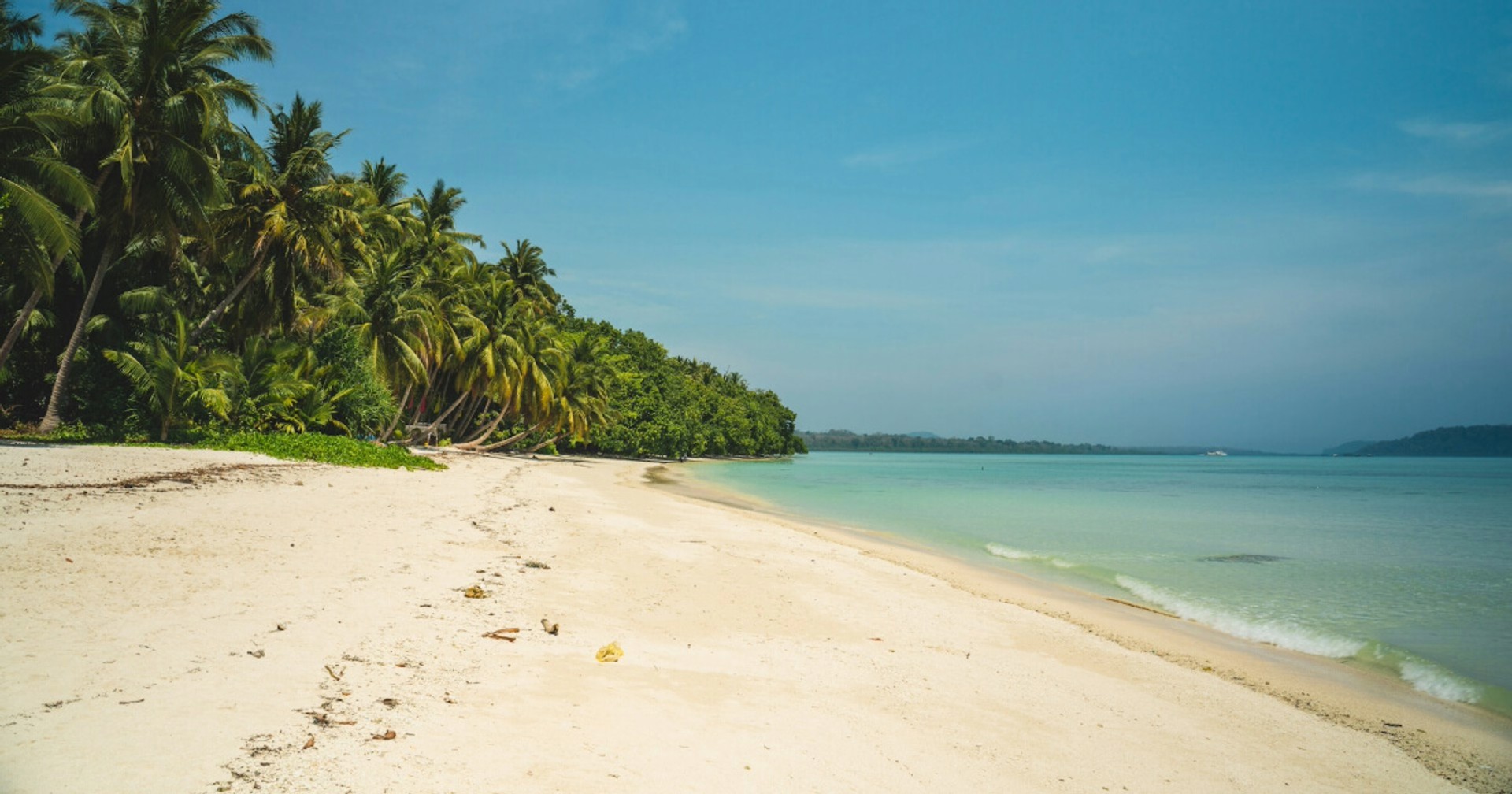
The next morning, you take a ferry across a turquoise sea to a beach that Time magazine called the best in Asia.
That contrast — colonial horror and extraordinary natural beauty, separated by 70 kilometres of Andaman Sea and one night's sleep — is what the Andaman Islands are. And it requires a minimum of 7 days to experience both properly.
Sort VisitorsCoverage travel insurance before this trip. The Andamans involve sea crossings, water sports, and potential for seasickness, jellyfish contact, and coral-cut injuries. Policies from approximately $18–35 USD for a week. EKTA offers a second comparison option from $0.99/day at ektatraveling.com — worldwide coverage, fully digital, 24/7 support. Sort one before booking anything else.
7-Day Andaman Circuit at a Glance
| Day | Location | Focus |
|---|---|---|
| Day 1 | Port Blair | Arrive, Cellular Jail, Light & Sound Show |
| Day 2 | Port Blair → Havelock | Morning ferry, Radhanagar Beach sunset |
| Day 3 | Havelock (Swaraj Dweep) | Elephant Beach, snorkelling, beach day |
| Day 4 | Havelock | Scuba diving or kayak, Kala Pathar Beach |
| Day 5 | Havelock → Neil (Shaheed Dweep) | Afternoon ferry, Laxmanpur Beach sunset |
| Day 6 | Neil → Port Blair | Natural Bridge, return ferry, evening in port |
| Day 7 | Port Blair | Fly home or Ross Island morning + depart |
Getting There: Flights and the Arrival Formality Nobody Mentions
Port Blair's Veer Savarkar International Airport (IXZ) receives direct flights from Chennai, Kolkata, Delhi, Mumbai, Hyderabad, and Bengaluru. Search and book on FlyFlick — fares from Chennai run ₹3,500–6,000 ($37.23–63.83 USD) one way; from Delhi ₹6,000–12,000 ($63.83–127.66 USD). The flight from Chennai is the shortest (1 hour 55 minutes) and the cheapest. Set a Compensair alert — IXZ flights are frequently weather-dependent and cancellations cascade.
The permit situation — what foreigners actually need to do:
Since 2018, the Andaman administration relaxed the Restricted Area Permit (RAP) requirement for most foreign nationals for 30 designated islands — including Port Blair, Havelock (Swaraj Dweep), and Neil (Shaheed Dweep). This means that British, American, Australian, European, Canadian, and most other foreign nationals do not need to arrange a RAP before arriving.
What you do need to do: present your passport at immigration on arrival at Port Blair airport. The immigration officer registers your entry and notes the permitted islands. This takes 5–10 minutes. You do not need to queue at a separate permit office.
Exception: Citizens of Afghanistan, China, and Pakistan, and foreign nationals with roots in these countries, still require a RAP with prior Ministry of Home Affairs approval — obtained from Indian missions abroad before travel.
Carry your passport throughout the islands. Hotels, ferry operators, and some island entry points verify passports for foreign nationals. Digital copies are insufficient for some checkpoints.
Activate Saily 5G eSIM before boarding — it works in Port Blair and Havelock's main areas. Connectivity drops sharply on Neil Island and Kala Pathar Beach. Drimsim auto-switches between Jio, Airtel, and BSNL networks — the best option for the ferry crossings and remote beaches where single-carrier SIMs regularly lose signal. Download offline maps before leaving Port Blair.
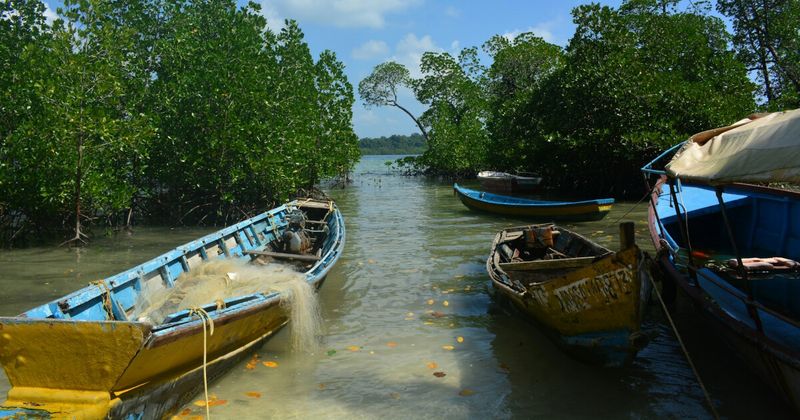
The Andaman and Nicobar Islands were occupied by the Japanese military during World War II from 1942 to 1945 — the Japanese renamed Port Blair "Nankain" and built infrastructure across the islands that is still visible in places; the islands' remoteness made them strategically significant to both the British and the Japanese, and subsequently to independent India, which maintains significant naval and military infrastructure here.
Day 1: Port Blair — Kalapani and What Comes After
Port Blair (officially renamed Sri Vijaya Puram) is the capital and transit hub of the Andaman and Nicobar Islands — a functional port city of approximately 100,000 people that exists primarily to service the islands. It's not the reason you've come. But Day 1 is about the Cellular Jail, and that is reason enough.
Book your airport arrival transfer through GetTransfer — Port Blair airport exits attract auto-rickshaw touts who quote ₹300–500 for routes where the metered fare is ₹80–120. A pre-confirmed vehicle eliminates this. KiwiTaxi also covers Port Blair airport-to-hotel routes.
Morning: Settle in, sort ferry tickets. Check into your Port Blair accommodation (budget guesthouses from ₹1,200/$12.77 USD per night near Aberdeen Bazaar; midrange hotels from ₹3,000–5,000/$31.91–53.19 USD). Port Blair has an ATM network but carry extra cash — Havelock's ATMs occasionally run dry in peak season and Neil Island has limited banking. The general rule in the Andamans: withdraw cash in Port Blair, carry everything you need.
Book your Havelock ferry on Day 1 morning — for tomorrow's departure. The ferry booking desks are at Haddo Jetty and online through 12Go Asia. Makruzz, Nautika, ITT Majestic, and Green Ocean all operate the Port Blair → Havelock route. Premium class on Makruzz: ₹1,800–3,100 ($19.15–32.98 USD); Economy class: ₹950–1,500 ($10.11–15.96 USD). The morning departure (approximately 8am) is standard. Confirm the exact schedule when booking — it shifts seasonally.
Afternoon: Cellular Jail. Open Tuesday–Sunday, 9am–12:30pm and 1:30pm–4:45pm. Closed Mondays. Entry is nominal — approximately ₹30–50 for the museum sections. The jail was built by the British between 1896 and 1906 at a cost of ₹5,17,352 — a considerable colonial investment in isolating political prisoners from the mainland. The construction alone took a decade. The panopticon design — seven radial wings from a central tower — was architect F.C. Dobbs's adaptation of Bentham's surveillance philosophy for tropical conditions: high ventilation, no need for interior lighting, minimal staff.
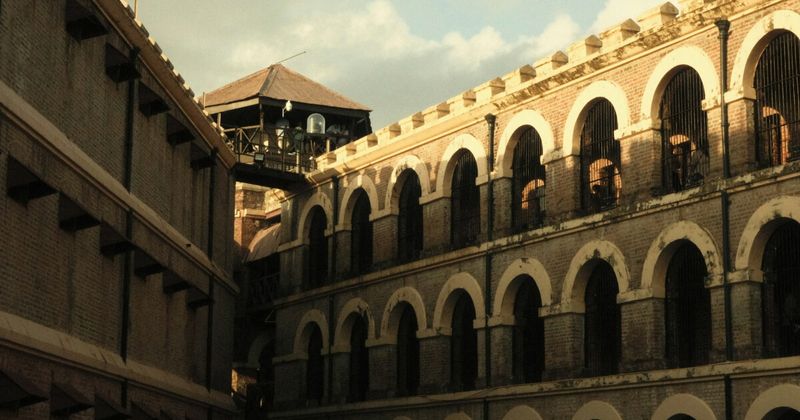
The Cellular Jail was deliberately built with cells facing the back wall of other cells rather than outward — meaning prisoners in adjacent wings could not see each other across the courtyard, only the brick rear of the facing wing; this architectural choice extended the psychological isolation of solitary confinement by denying prisoners even the sight of other human beings through their windows.
Walk the surviving three wings. The cells are 4.5 metres long and 2.7 metres wide — barely enough for a man to pace three steps before the wall. The high slit windows were designed to admit air without allowing prisoners to see each other or the outside. The gallows room, where executions were carried out, is at the end of Wing 7. Read the names on the cells. Among the most famous prisoners: Veer Savarkar, the Hindu nationalist leader, held here for 11 years; Batukeshwar Dutt, who threw bombs in the British Parliament with Bhagat Singh (Singh was hanged; Dutt was sent to Kala Pani instead). The gallery before the main jail complex contains photographs of hundreds of freedom fighters whose names never appeared in history textbooks, but whose cells are documented here.
Evening: Light and Sound Show. Purchase tickets in advance through the official Andaman Tourism portal at ₹300 adults ($3.19 USD), ₹150 children 5–11 years. Arrive 30 minutes early for seating — the show is in the open courtyard and front rows fill immediately. English show: 6:50pm on Mondays, Wednesdays, and Fridays. Hindi shows: 5:50pm and 7:50pm daily. The 45-minute show is narrated by Om Puri's recorded voice as the ancient peepal tree — speaking in the voice of an observer who watched everything, remembers everything, and refuses to forget. It is genuinely affecting, regardless of how much or little you knew about the Indian independence movement before arriving. Bring a light jacket — the sea breeze after dark is cool.
Pre-book the Cellular Jail experience through Klook for skip-the-counter access.
Day 2: Port Blair to Havelock — The Ferry and the First Beach
Leave your Port Blair hotel by 7am for the morning ferry. The ferry departs from Haddo Jetty — not Phoenix Bay Jetty, which handles government ferries. These are different locations in Port Blair. Your confirmation voucher will specify the jetty. Allow 45 minutes from Aberdeen Bazaar to the jetty by auto-rickshaw.
The Makruzz and Nautika high-speed catamarans cover the 70-kilometre distance to Havelock in 1.5–2.5 hours depending on sea conditions. In peak season (November–February), the Andaman Sea between Port Blair and Havelock is genuinely calm — flat and aquamarine, with flying fish occasionally breaking the surface beside the hull. In March–April, swells begin to build. In monsoon (May–September), the crossing can be rough enough to close the service entirely. Carry motion sickness tablets if you're susceptible to sea movement — most pharmacy brands (Avomine, Dramamine) work if taken 30 minutes before boarding.
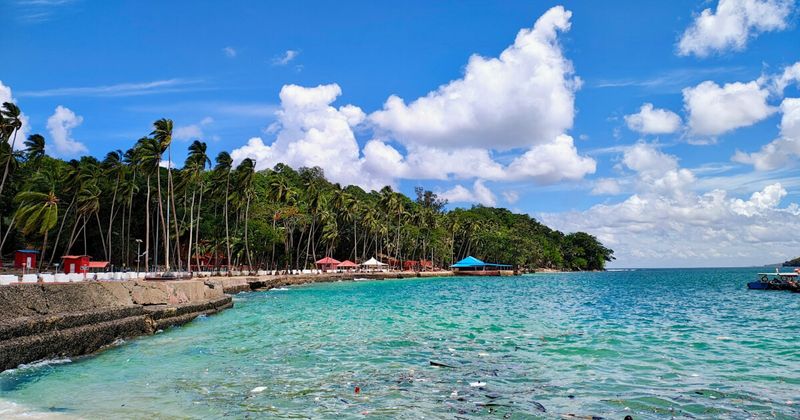
Havelock Island — officially renamed Swaraj Dweep (Freedom Island) in 2018 — is the most visited tourist island in the Andamans and the largest island in the archipelago. It's 92 square kilometres of tropical forest, paddy fields, fishing villages, and beaches of a quality that makes most people reconsider every beach holiday they've previously taken.
Check into your accommodation near Beach 5 (the main tourist hub) or Govind Nagar (quieter, closer to Radhanagar). Accommodation on Havelock ranges from budget beach huts (₹1,000–2,000/$10.64–21.28 USD) to midrange cottages (₹3,500–7,000/$37.23–74.47 USD) to eco-resorts (₹9,000–25,000+/$95.74–266.00+ USD). Book well ahead in peak season — the island has finite accommodation and it fills completely from mid-December to mid-January.
Radhanagar Beach (Beach 7): afternoon and sunset. 11 kilometres from Havelock jetty by auto-rickshaw (₹200–300/$2.13–3.19 USD one way) or scooter rental (₹300–400/$3.19–4.26 USD per day). The beach is free to enter. Facilities include a forest department checkpoint at the entrance, a covered seating area, and basic stalls selling coconut water and snacks.
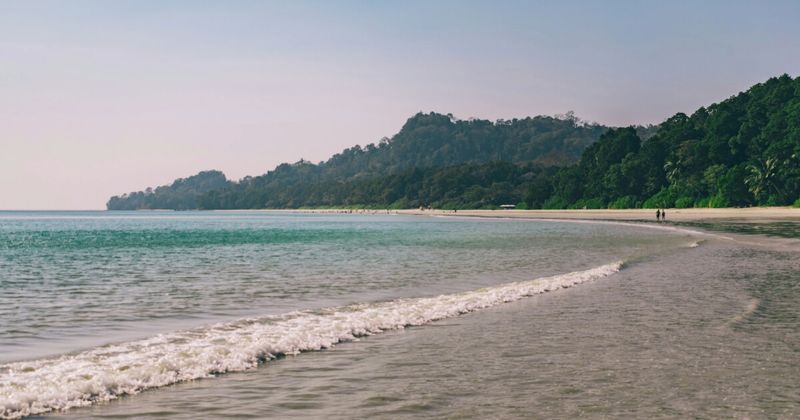
Radhanagar Beach is backed by one of the few areas of Andaman Islands that has not been cleared for agriculture or settlement — the dense dipterocarp rainforest behind the beach is part of a protected forest zone that runs the length of the island's western coast, making the beach one of the only places in India where primary tropical rainforest meets an open-ocean beach with no development visible in either direction.
In 2004, Time magazine published a ranking of Asia's best beaches. Radhanagar came first. The magazine's description — "powdery white sand, backed by dense rainforest, with turquoise water of Caribbean quality" — has not become less accurate in 20 years. The beach is 7 kilometres long. On a weekday in February, you might share it with 50 people. On a weekend in January, 500. At 6am before the day-trippers arrive from Port Blair, approximately nobody.
The beach closes at sunset. The Andaman administration enforces a strict no-night-access rule on Radhanagar to protect olive ridley sea turtle nesting. The forest department closes the beach entrance and politely but firmly escorts visitors out. Don't attempt to stay after the sun has fully set.
Watch the sunset from the beach instead. The sky above Radhanagar at 5:30pm in November — the sun dropping through orange to red above the Andaman Sea, the water changing colour as it deepens — is the photograph most people fly 1,300 kilometres to take.
Check Live Flight Prices
Day 3: Elephant Beach — Where Andaman's Underwater World Begins
Wake up early — 6am for a walk along Radhanagar before the day-trippers arrive. The beach at this hour is the clearest demonstration of what Havelock actually is before the tourism day begins: a tropical island with dense forest, empty sand, and water so clear you can see the bottom at 4 metres depth from the surface.
Elephant Beach: 10am. Access from Havelock jetty by boat (30 minutes, ₹400–550 roundtrip per person depending on operator) or by jungle trek (45 minutes through the forest — a clear trail from the road near the jetty, slippery in wet conditions). The boat option is faster; the trek is free and passes through extraordinary forest.
Elephant Beach is Havelock's water-sports hub — the place where the coral reefs are accessible by snorkel in 2–4 metres of water without a dive tank. The coral here was substantially damaged by a bleaching event in 2010 but has recovered significantly; the reef sections near the boat anchor points have healthy hard and soft coral colonies with parrotfish, angelfish, and periodic reef sharks visible in the deeper sections.
Snorkelling: Equipment rental from beach operators ₹200–300 ($2.13–3.19 USD) for mask, fins, and snorkel. No certification required. The reef starts 20 metres from the beach in water shallow enough to stand up in. Book through Klook for a guided snorkelling experience with equipment included.
Introductory Scuba Dive (Discover Scuba Diving — DSD): For non-certified divers wanting to go deeper. PADI-certified instructor accompanies you throughout. Duration approximately 45 minutes underwater. Cost: ₹3,400–6,400 ($36.17–68.09 USD) depending on operator — the higher end includes Radhanagar-area dive sites rather than the shallower Elephant Beach reef. PADI certification is not required; swimming ability is not strictly required but is strongly recommended. Most reputable operators on Havelock: Dive India, Andaman Bubbles, Ocean Tribe, Eco Diver, Blue Corals Dive. Book with an operator who is PADI or SSI certified — certification numbers should be verifiable.
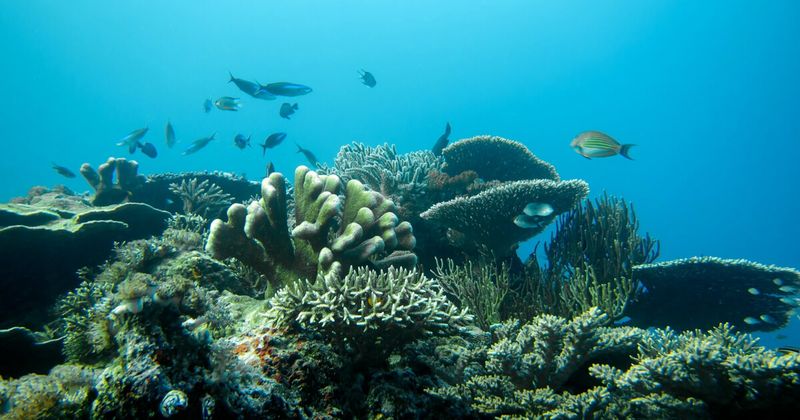
The Andaman and Nicobar Islands contain over 200 species of coral — among the highest coral diversity in the Indian Ocean — concentrated primarily in the shallow reef systems around Havelock, Neil, and the North Bay area near Port Blair; the Mahatma Gandhi Marine National Park protects 281 square kilometres of these reefs, though tourist access to the park itself requires a separate forest department permit.
The hyper-specific Elephant Beach detail that most guides miss: at 15–18 metres depth at the Barracuda City dive site (accessible only by tank, not snorkel), the reef structure produces a thermal halocline — a visible boundary layer where warm and cold water meet, creating a shimmering optical illusion like a heat mirage. Experienced divers describe swimming through it as momentarily losing visual orientation. The effect is real and is caused by the different refractive indices of warm and cold saline water in the Andaman Sea at this depth.
Afternoon: Return to your Havelock accommodation for the heat of the day (11am–3pm in peak season is 30–35°C with direct sun intensity that most Indian and European visitors significantly underestimate — use SPF 50 and a rash guard in the water). Late afternoon: rent a scooter (₹300–400/$3.19–4.26 USD per day) and explore the island's interior — paddy fields, fishing villages, and the Kala Pathar Beach (Black Rock Beach) at the northeast tip, much less visited than Radhanagar and remarkable for the contrast of the black volcanic rocks against the white sand.
Day 4: Going Deeper — Certified Dives or a Slow Havelock Day
Day 4 on Havelock exists for two categories of traveller: those who want to go further underwater and those who want to do nothing at all.
For certified divers: Havelock has multiple dive sites at 15–30 metres depth covering wreck dives (the Jackson Wreck, a sunken vessel now colonised by soft coral), drift dives at the channels between islands, and the famous The Wall — a vertical coral cliff dropping from 12 metres to 40+ metres at Johnny's Gorge site, home to reef sharks, giant napoleon wrasse, and in the right season, manta rays. Two-tank boat dive from ₹5,000–8,000 ($53.19–85.11 USD) with a licensed dive operator. Night dives available from some operators — the bioluminescent plankton occasionally visible in Havelock waters after dark adds a dimension that photographers specifically travel for.
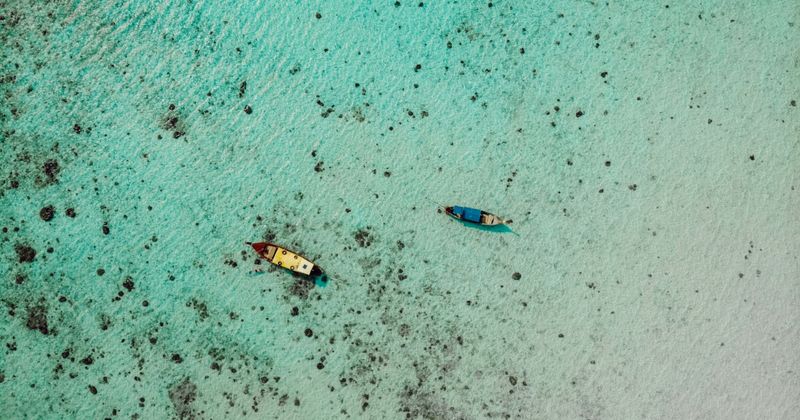
The Andaman Sea achieves its distinctive turquoise colour through the interaction of two factors: very high water clarity (visibility often exceeds 20 metres) and the specific angle of tropical sunlight on the white carbonate sand seabed at depths of 5–15 metres; deeper water appears the standard dark blue of any ocean, which is why the colour exists only in the shallow coastal zones and disappears at the channel crossings between islands.
For non-divers: Kayaking along Havelock's coast (full-day kayak rental ₹1,500–2,000/$15.96–21.28 USD from beach operators near Beach 5) or stand-up paddleboarding on the calmer lagoon sections near the jetty. The island's interior has walking tracks through secondary forest that appear on no tourist map but are used by local fishing families — the scooter ride along the ring road reveals a Havelock entirely separate from the beach-resort economy: paddy cultivation, small temples, vegetable plots, and the quiet domestic life of the 6,000 residents who live on the island year-round.
Evening: dinner. Havelock's restaurant scene is better than most visitors expect and genuinely outstanding by island standards anywhere in India. Fresh seafood — tiger prawns, local reef fish, crab — cooked in South Indian, Bengali, or continental styles depending on which restaurant is in front of you. Expect ₹300–700 ($3.19–7.45 USD) per main at midrange places near Beach 5. The Full Moon Café and Something Different restaurant near Govind Nagar are consistently cited as best value. Fresh fish curry with rice — the local standard — costs ₹200–350 ($2.13–3.72 USD) everywhere.
Day 5: Havelock to Neil Island — The Quieter Andaman
Neil Island (officially Shaheed Dweep — Martyr's Island since 2018) is 20 kilometres from Havelock and consistently described by travellers who've done both islands as "the Havelock that Havelock used to be." Fewer resorts, fewer day-trippers, better sunsets, and an atmosphere that the Havelock of 2026 — with its eco-resorts and dive shops — has largely moved beyond.
The Havelock → Neil Island ferry runs once daily in most seasons. Makruzz and Nautika operate this route; government ferries run on certain days. Private ferry: ₹950–₁,500 ($10.11–₁5.96 USD) per person; 1–1.5 hours crossing. Check the current schedule when booking on 12Go Asia — the service day and timing shifts seasonally and occasionally routes go through Port Blair. Book 2–3 weeks ahead.
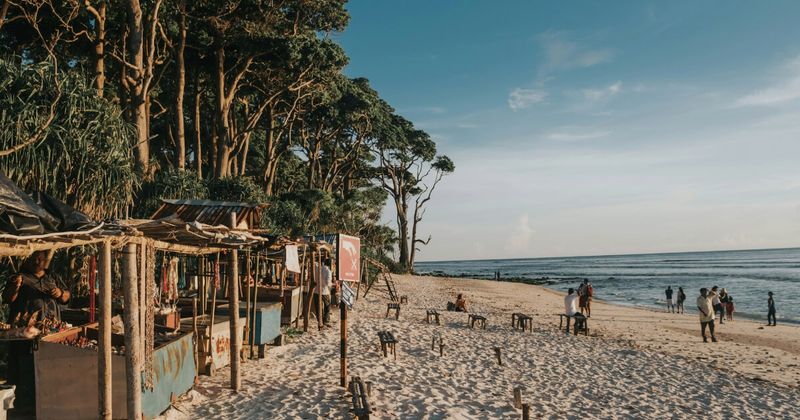
Neil Island was included in the Indian government's post-Partition rehabilitation programme of the 1950s — Bengali families displaced from the partition of Bengal were offered land grants on the Andaman Islands as part of a deliberate settlement policy to build a civilian population on strategically important island territory close to the Bay of Bengal shipping lanes; their descendants make up most of Neil Island's current permanent population and maintain the fishing and farming traditions their families brought from mainland Bengal.
Neil Island has approximately 3,500 permanent residents — mostly Bengali fishing families who settled here during post-Partition migration resettlement programmes in the 1950s and 1960s. The island grows most of its own vegetables: pumpkin, okra, and the banana plantations that have colonised the cleared forest. The infrastructure is smaller than Havelock's but covers what a 3-night stay requires.
Laxmanpur Beach 1: sunset. The western facing beach on Neil Island, 7 kilometres from the jetty by auto-rickshaw or scooter. Entry free. The beach is unremarkable by Radhanagar standards in terms of sand quality but faces precisely west across 100 kilometres of open ocean — the Andaman Sea at sunset here, without any island obstruction, turns from gold to orange to deep red in the extended Indian Ocean twilight. This is the sunset most Neil Island visitors remember over Radhanagar's, because it's unobstructed and completely unhurried.
Accommodation on Neil: beach huts from ₹1,200–2,000 ($12.77–21.28 USD); midrange eco-resorts from ₹3,500–6,000 ($37.23–63.83 USD). The island has fewer options than Havelock; book well ahead.
Day 6: Neil Island's Natural Bridge, Then Back to Port Blair
Natural Bridge: 7am. The most photographed landmark on Neil Island is an arched limestone rock formation at the northern tip — accessible only at or near low tide, when the receding sea exposes the rock arch and the sand below it. At high tide, the arch is partially or fully submerged. Check tide tables the evening before (Google "Neil Island tide table" + your date) and aim for low tide plus or minus 2 hours. The 7-kilometre scooter ride to the northern tip passes through the island's most scenic section: paddy fields, banana groves, and glimpses of the Andaman Sea on both sides.
Entry to the Natural Bridge area: free. The approach from the road requires a 10-minute walk on rocky shoreline. Wear shoes that can get wet. No facilities on site.
Bharatpur Beach: morning swim. 1 kilometre from the jetty — the beach directly adjacent to the island's main approach. The reef section here is accessible by snorkel and is considered better than Elephant Beach for coral diversity by some dive operators, despite being far less visited. Snorkel equipment from beach stalls: ₹200 ($2.13 USD) rental.
Neil to Port Blair ferry: afternoon. Most afternoon services depart Neil between 12pm and 3pm. Check your specific booking for the time — the schedule is tighter than the Havelock route. Journey approximately 1.5–2 hours.
Back in Port Blair by evening. The city's Aberdeen Bazaar area has the best concentration of seafood restaurants — the local Andamanese preparation of red snapper in coconut curry, served with rice and local vegetables, is ₹250–400 ($2.66–4.26 USD) per plate at the market-adjacent stalls and substantially better than the resort restaurant equivalents. Annapurna Restaurant near the bazaar and New Lighthouse Restaurant near the waterfront are consistently cited as best value.
Book your Day 7 activities through Klook or arrange the next morning.
Day 7: Ross Island (Optional) or Direct Departure
If your flight departs Port Blair after noon, Day 7 morning has room for Ross Island — now officially renamed Netaji Subhas Chandra Bose Island — a 10-minute boat ride from the Aberdeen Jetty area (government boats, approximately ₹100–150 round trip per person). Entry fee for the island: nominal (₹10–50, paid at the jetty).
Ross Island was the British administrative capital of the Andamans until a 1941 earthquake destroyed much of it and the Japanese occupation completed the destruction. What remains is genuinely strange: the ruins of the British administration — the Chief Commissioner's residence, the church, the bakery, the tennis courts — have been overtaken by tree roots in the style of Cambodia's Ta Prohm. The banyan trees have grown through and around the colonial buildings over 80 years, so that walls and roots are now a single structure. Deer wander through the ruins freely. Peacocks in the naval administration zone respond to visitors with complete indifference.
The Jarawa tribe of the Andaman Islands had no contact with the outside world until 1998 — their territory in the interior and western coast of South and Middle Andaman is protected under the Andaman and Nicobar (Protection of Aboriginal Tribes) Regulation; the Andaman Trunk Road passes through Jarawa territory, and it is a legal offence under Indian law to photograph the Jarawa or stop a vehicle in their area; tourists travelling by road must comply strictly with convoy regulations and photography prohibitions.
The island is maintained by the Indian Navy, which controls the southern section. The tourist zone — the ruins and the walking paths — is accessible without special permission beyond the island entry ticket.
Airport transfer: Book through GetTransfer or KiwiTaxi — Port Blair airport is 3.8 kilometres from the city centre; auto-rickshaw ₹100–150 without negotiation, taxi ₹300–400.
What to Skip: Honest Cuts for a 7-Day Window
Baratang Island and the limestone caves. The limestone caves at Baratang are genuinely extraordinary — natural formations that look imported from another geological era. Getting there requires taking the Andaman Trunk Road, which passes through Jarawa tribal territory under strict convoy conditions (specific times, no stopping, absolutely no photography). The round trip from Port Blair is 10–12 hours for 2–3 hours at the caves. On a 7-day Andaman trip already compressed between Port Blair, Havelock, and Neil, Baratang consumes an entire day without adding a beach or dive experience. Save it for a longer trip or if you're specifically interested in geological formations.
Diving certifications on a 7-day window. A PADI Open Water certification course takes 3–4 days — a significant investment of trip time. If getting certified is your primary goal, build 4 days on Havelock specifically for the course and compress the rest of the itinerary. Don't attempt to add a certification course on top of the full 7-day circuit.
Adding North Andaman (Diglipur) to this circuit. The Saddle Peak and Ross & Smith Island in North Andaman are extraordinary. Getting there from Port Blair takes 6+ hours by road or a separate ferry and domestic flight. It's a 3-day minimum add-on that doesn't fold neatly into a 7-day trip. Our India Activities and Adventures guide covers the Diglipur extension.
The government ferry as your primary transport. Government ferries between Port Blair and Havelock are significantly cheaper (approximately ₹250–₄50 per person) but take 2.5–3 hours, run fewer times per day, and have significantly lower comfort standards. For the cost difference — approximately ₹700–₁,000 per leg — the private ferry is worth the upgrade on a 7-day trip with limited transit time.
Pace and Burnout: Managing the Andaman Islands
The Andamans have a specific slow pace that most mainland Indian and international visitors take 2–3 days to genuinely adjust to. No traffic jams. No mobile data much of the time. No cinema halls or shopping centres. The schedule on Havelock is genuinely: wake up, breakfast, beach activity, rest through the midday heat, beach again, sunset, dinner, bed. Repeat. This is not a limitation — it is the design of the experience. Resist the urge to fill every hour.
The sun is more intense than you expect. At 12° north latitude, the tropical sun at midday is nearly vertical. Sunscreen SPF 50 minimum; reapply every 2 hours in and out of water. The combination of sea reflection and near-vertical sun at this latitude produces burns faster than any European or Australian beach. Rash guards are standard equipment for a reason.
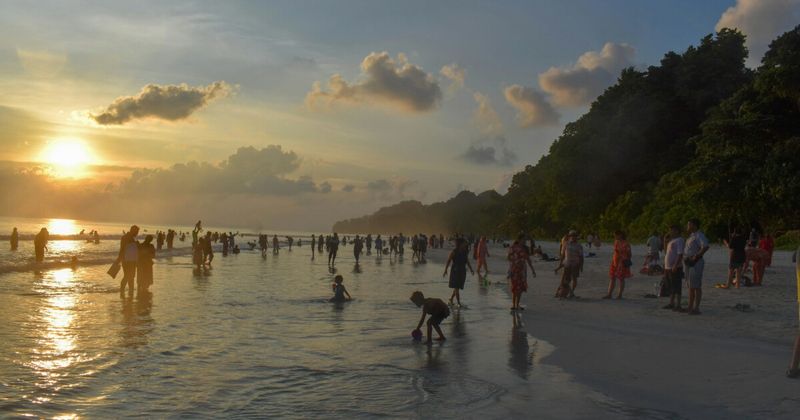
The Andaman Islands receive approximately 3,000 hours of sunshine per year — significantly more than any mainland Indian destination — because the Bay of Bengal at this latitude produces weather systems that dissipate before reaching the archipelago; the extended clear evenings, particularly October through March, are why the island's west-facing beaches produce the kind of sunsets that most first-time visitors describe as the most striking they've seen.
Ferry cancellations happen. The Andaman Sea in the pre-monsoon period (April–May) and early monsoon can cancel or delay ferries for weather. Build at least one buffer day into your itinerary — the 7-day circuit described here has enough flexibility that a one-day delay on the Havelock → Neil leg simply extends your Havelock stay. In peak monsoon (June–August), some services stop altogether; this is not a 7-day-circuit season.
The best season: November–February. Calm seas, 23–30°C, clear visibility underwater. Book flights and accommodation 6–8 weeks ahead.
Connectivity: Expect partial connectivity. Jio and Airtel work in the main beach areas. Anywhere more than 2 kilometres from a village, assume no signal. This is, again, part of the point.
7-Day Andaman Budget Breakdown
| Expense | Budget | Mid-Range | Splurge |
|---|---|---|---|
| Flights (return to IXZ) | ₹7,000–10,000 ($74.47–106.38) from Chennai | ₹12,000–20,000 ($127.66–212.77) from Delhi | ₹25,000+ ($265.96+) |
| Accommodation (7 nights avg) | ₹1,200–2,000 ($12.77–21.28)/night | ₹3,500–7,000 ($37.23–74.47)/night | ₹9,000–25,000+ ($95.74–266.00+)/night |
| Port Blair → Havelock ferry | ₹950–1,500 ($10.11–15.96) economy | ₹1,800–2,500 ($19.15–26.60) premium | ₹3,100 ($32.98) royal class |
| Havelock → Neil ferry | ₹950–1,200 ($10.11–12.77) | ₹1,200–1,800 ($12.77–19.15) | — |
| Neil → Port Blair ferry | ₹950–1,200 ($10.11–12.77) | ₹1,200–1,800 ($12.77–19.15) | — |
| Cellular Jail entry + L&S Show | ₹350 ($3.72) total | ₹350 ($3.72) total | — |
| Scuba diving Elephant Beach (DSD) | ₹3,400 ($36.17) basic | ₹4,500–6,400 ($47.87–68.09) premium | ₹8,000+ advanced sites |
| Snorkel equipment rental (3 days) | ₹600 ($6.38) | ₹600 ($6.38) | — |
| Auto-rickshaw/scooter local travel | ₹300–500 ($3.19–5.32)/day scooter | ₹500–1,000 ($5.32–10.64)/day | — |
| Elephant Beach boat | ₹400–550 ($4.26–5.85) | ₹400–550 ($4.26–5.85) | — |
| Food (7 days) | ₹400–700 ($4.26–7.45)/day | ₹1,000–2,000 ($10.64–21.28)/day | ₹3,000+ ($31.91+)/day |
| Ross Island boat + entry | ₹150–200 ($1.60–2.13) | ₹150–200 ($1.60–2.13) | — |
| Travel insurance | VisitorsCoverage/EKTA from ~$18 | from ~$18 | from ~$18 |
All prices INR. USD at ₹94 = $1. INR prices reliable; USD approximate. Ferry prices are peak season October–March and exclude the ₹100 peak season surcharge on some operators during 15 December–15 January.
Check Live Flight Prices
The Bottom Line
The Andaman Islands are what most travellers come to India looking for — before they realise India has them. Blue water of Caribbean quality, tropical forest that reaches the high-tide line, coral reefs with fish diversity that licensed divers fly from Europe to access, and the historical weight of one of the British Empire's most deliberately brutal penal systems, preserved in three surviving wings of red brick on a hill above the harbour.
Seven days is the correct amount of time. Enough for Kalapani in the evening, Radhanagar at sunset, Elephant Beach in the morning light, Neil Island's unhurried afternoons. Not enough for Diglipur and the limestone caves and the manta ray dives at Barren Island. Those are reasons to come back.
Get on the morning ferry to Havelock. Look at the water as you cross. You won't be looking at your phone.
Your Andaman Trip Planning Checklist
🛡️ Travel Insurance — First, Always: VisitorsCoverage — Compare plans; minimum $100K USD medical; scuba diving and water sports coverage essential — confirm your plan covers water sports before purchasing; 7-day Andaman policies from ~$18–35 USD | EKTA — Affordable second option from $0.99/day at ektatraveling.com; check water sports inclusion; 24/7 multilingual support.
✈️ Flights & Delay Protection: FlyFlick — Search all routes into Port Blair (IXZ); Chennai is cheapest entry point; Delhi/Mumbai have direct options | Compensair — Claim up to €600 for delayed/cancelled flights; IXZ weather cancellations are common; protect EU-connected departure legs.
🚢 Ferries — Book 3–4 Weeks Ahead: 12Go Asia — Book all three ferry legs (Port Blair → Havelock, Havelock → Neil, Neil → Port Blair) in English with international card support; Makruzz and Nautika are the recommended operators; book morning departures; confirm jetty (Haddo Jetty for private ferries, not Phoenix Bay). Peak season surcharge December 15–January 15: ₹100 extra per ticket.
🚖 Port Blair Transfers: GetTransfer — Pre-booked fixed-fare IXZ airport arrival and departure; Port Blair airport touts are persistent | KiwiTaxi — Confirmed for Port Blair airport routes.
🎟️ Experiences to Pre-Book: Klook — Cellular Jail Light & Sound Show ₹300 (English show Mon/Wed/Fri 6:50pm — fills fast; book 48 hours ahead in peak season); Elephant Beach boat + snorkel package; Discover Scuba Diving (DSD) on Havelock ₹3,400–₆,400 with PADI/SSI certified operator.
📱 Connectivity: Saily — Works in Port Blair and Havelock main areas; buy an Indian SIM in Port Blair if staying longer than 7 days (requires passport copy) | Drimsim — Off-grid eSIM; switches between Jio, Airtel, BSNL; essential for ferry crossings, Neil Island, and Kala Pathar Beach where single-carrier SIMs drop entirely.
Get on the ferry. Look at the water.