
Let us clear up a global misunderstanding right now: "Indian food" is not a monolith.
If your experience with Indian cuisine is limited to heavy, cream-laden Butter Chicken, thick paneer gravies, and garlic naan scooped up in a dimly lit Western restaurant, you have only read the first chapter of a massive, encyclopedic novel. You have missed entirely the bright, sharp, fermented, and coconut-drenched culinary universe of South India.
The southern states of India—Tamil Nadu, Kerala, Karnataka, Andhra Pradesh, and Telangana—share a geography that fundamentally changes how they cook. This is the land of the ancient spice routes. It is a tropical coastline where the air is humid, the soil yields thousands of coconuts, and black pepper, cardamom, and tamarind grow wild.
Here, wheat is replaced by rice. Heavy cream is replaced by coconut milk. And the thick, slow-cooked gravies of the north give way to sharp, fiery, tempered broths that awaken the palate rather than put it to sleep.
Navigating the menus in South India can be intimidating for a first-timer. The names are unfamiliar, the spice levels are uncompromising, and the sheer variety is staggering. But eating your way through the south is one of the most rewarding culinary journeys a traveler can take.
To help you decode the menus from the coastal shacks of Kerala to the bustling "tiffin" rooms of Bangalore, here is our meticulously curated guide to the 20 must-try South Indian dishes.
Part 1: The Breakfast of Kings (The Fermented Classics)
South Indian breakfasts are legendary. They are largely based on the brilliant alchemy of fermentation—grinding rice and lentils (urad dal) together and letting them ferment overnight to create foods that are light, probiotic-rich, and incredibly easy to digest.
To get to the best morning "tiffin" centers before the crowds, avoid haggling with half-asleep auto drivers and use InDrive to book a fair-priced ride from your hotel directly to the restaurant.
1. Idli The undisputed king of South Indian mornings. These are soft, pillowy, steamed cakes made from fermented rice and lentil batter. On their own, they are mild, but they act as the perfect sponge for fiery, piping hot sambar (lentil stew) and fresh, cooling coconut chutney.
2. Masala Dosa If the idli is soft and yielding, the dosa is its crispy, dramatic cousin. The same fermented batter is spread paper-thin on a hot cast-iron griddle, cooked with a generous drizzle of ghee (clarified butter), and stuffed with a spiced, mustard-seed-tempered potato mash. Breaking off a crispy edge and dipping it into chutney is a religious experience.
3. Medu Vada Think of this as the savory Indian doughnut. Made from a thick batter of urad dal, studded with black pepper, curry leaves, and green chilies, it is deep-fried until golden and crunchy on the outside, yet fluffy on the inside.
4. Uttappam Often described as a "South Indian pizza," this uses the dosa batter but is poured thick. While the batter is cooking, it is heavily topped with finely chopped onions, tomatoes, green chilies, and cilantro, which caramelize directly into the batter on the hot griddle.
5. Pesarattu A specialty of Andhra Pradesh, this is a dosa made not from urad dal, but from green moong dal (mung beans). It has a distinct greenish hue, a slightly earthy flavor, and is famously served stuffed with Upma (a savory semolina porridge) and ginger chutney.
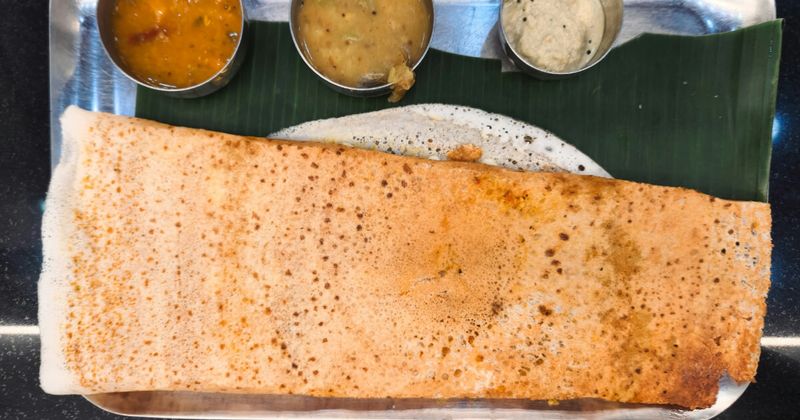
The Masala Dosa is a masterpiece of texture: paper-thin and crispy on the outside, giving way to a warm, spiced potato filling.
Part 2: The Art of Steamed Breads & Broths
Beyond the griddle, South India has mastered the art of steaming and creating sharp, digestive broths.
6. Appam and Ishtu (Stew) A Kerala classic. Appams are bowl-shaped, lacy pancakes made from fermented rice batter and coconut milk. The center is soft and spongy, while the edges are incredibly thin and crispy. They are traditionally eaten with Ishtu, a mild, fragrant stew of potatoes, carrots, and sometimes chicken or mutton, gently simmered in fresh coconut milk.
7. Idiyappam (String Hoppers) Imagine delicate, snow-white nests of rice flour noodles, steamed to perfection. Idiyappam is light and entirely neutral in flavor, designed to be drenched in spicy curries or sweetened coconut milk.
8. Puttu and Kadala Curry The breakfast of champions in Kerala. Puttu is coarsely ground rice flour layered with grated coconut and steamed in a cylindrical bamboo or metal tube. It is pushed out as a hot, crumbly log and smashed together with Kadala Curry—a deeply spiced, dark roasted black chickpea gravy.
9. Sambar This isn't just a dish; it's the lifeblood of the south. A tamarind-based lentil stew loaded with drumsticks (moringa), okra, tomatoes, and a complex spice blend. Every state—and indeed, every grandmother—has a fiercely guarded sambar recipe.
10. Rasam If sambar is a hearty soup, rasam is a sharp, medicinal broth. Made with a base of tamarind or tomatoes, heavily spiced with crushed black pepper, cumin, and garlic, it is thin, watery, and fiery. It is eaten poured over rice or drunk straight from a glass to cure a cold and aid digestion.
Logistics Tip: To truly dive into the heritage of these dishes, a guided tour is essential. We recommend using Klook to book a highly-rated, vetted culinary walking tour in cities like Chennai or Kochi. Local guides can explain the complex spice histories that you simply won't find in a guidebook.
Part 3: The Rice Bowls of the South
In the south, rice is not a side dish; it is the main event. If you are taking a long, scenic train ride down the coast, use 12Go Asia to secure your train tickets seamlessly, and look out for platform vendors selling these regional rice specialties wrapped in banana leaves.
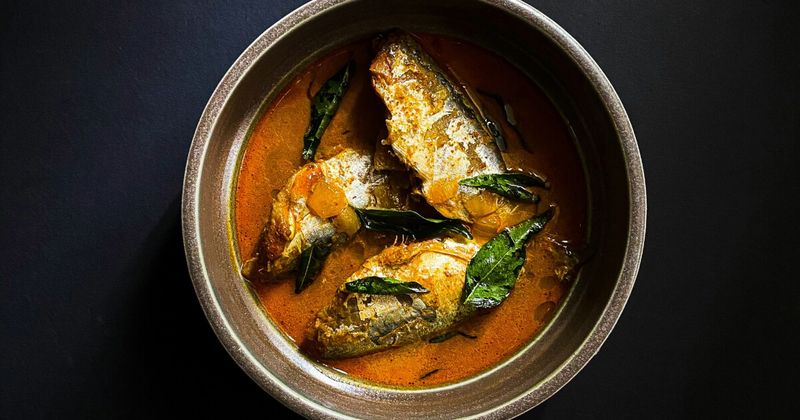
The coastal curries of the south trade heavy dairy for the sharp tang of tamarind and the rich creaminess of fresh coconut milk.
11. Bisi Bele Bath Hailing from Karnataka, this translates to "hot lentil rice." It is a glorious, mushy, comforting one-pot meal where rice, lentils, vegetables, and a specialized 30-spice powder are slow-cooked together, heavily tempered with ghee, cashews, and curry leaves.
12. Thayir Sadam (Curd Rice) The ultimate palate cleanser and summer cooler. Soft-cooked rice is mixed with plain yogurt (curd) and tempered with mustard seeds, urad dal, green chilies, and sometimes pomegranate seeds. It is eaten at the very end of a spicy meal to coat the stomach and cool the fire.
Part 4: The Meat & Seafood Masterpieces
While the south has a massive, brilliant vegetarian tradition, its coastal and historically royal communities produce some of the most fiercely spiced meat and seafood dishes on the planet.
14. Hyderabadi Biryani We could write an entire book just on this dish. Originating in the royal kitchens of the Nizam of Hyderabad, this is the undisputed king of Indian rice dishes. Raw, marinated mutton or chicken is layered with partially cooked basmati rice, saffron, and fried onions, sealed with dough, and cooked slowly over coals (Dum method). The result is fragrant, intensely flavorful, and completely distinct from the wetter biryanis of the north.
15. Chicken Chettinad From the arid Chettinad region of Tamil Nadu comes one of India's spiciest and most aromatic chicken dishes. The secret is the fresh masala: star anise, kalpasi (stone flower), fennel, dried red chilies, and black pepper, all roasted and ground into a dark, fiery paste.
16. Mangalorean Ghee Roast A legendary dish from the coastal city of Mangalore. Succulent pieces of chicken or prawns are marinated in a bright red, fiery paste of Byadagi chilies and then slow-roasted in an astonishing amount of pure ghee until the spices caramelize and cling to the meat.
17. Kerala Meen Moilee (Fish Curry) Kerala’s coastline offers a bounty of seafood. Meen Moilee is a surprisingly gentle, fragrant fish stew. Firm white fish is simmered in a turmeric-laced coconut milk broth, flavored heavily with ginger, green chilies, and curry leaves.
18. Coorgi Pandi Curry (Pork Curry) In the misty, coffee-growing hills of Coorg (Karnataka), pork is a delicacy. Pandi Curry is famous for its dark, almost black color, which comes from Kachampuli—a dark, thick, hyper-sour vinegar extracted from a local fruit. It is earthy, tart, and unlike anything else you will eat in India.
Logistics Tip: Navigating to these remote culinary hubs requires planning. Start by finding the best flight routes into South India via FlyFlick. If your international arrival into Bangalore or Chennai is delayed, you can quickly register with Compensair to claim up to €600 in compensation. Once you land, bypass the chaotic airport taxi lines entirely by having a verified Welcome Pickups driver waiting for you with a name sign.
Part 5: The Breads & The Sweets
19. Malabar Parotta & Kothu Parotta Forget Naan. The Malabar Parotta from Kerala is a flaky, multi-layered, heavily oiled flatbread that pulls apart like a croissant. It is designed to soak up heavy meat gravies. Its street-food spin-off is Kothu Parotta, where the bread is shredded and violently minced on a hot iron tawa with eggs, meat, and salna (spicy gravy) using two heavy iron spatulas. The rhythmic metallic clashing of the kothu maker is the soundtrack of Tamil Nadu nights.
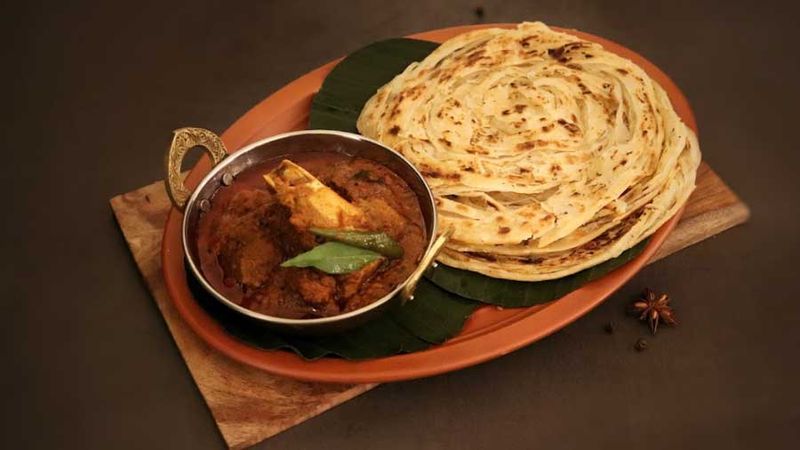
Forget naan. The buttery, multi-layered Malabar Parotta is the ultimate vessel for soaking up thick, spicy southern gravies.
20. Mysore Pak & Payasam To end the fire, you need sugar. Mysore Pak is a melt-in-the-mouth fudge made from generous amounts of ghee, sugar, and gram flour, invented in the kitchens of the Mysore Palace. For something liquid, Payasam is the southern equivalent of Kheer—a rich, warm pudding made of vermicelli or rice, boiled in milk or coconut milk, sweetened with jaggery, and studded with roasted cashews and raisins.
Decoding the Menu
Eating your way through South India is a masterclass in regional biodiversity. It is a reminder that food is deeply tied to the land—the coconut palms, the spice gardens, the long coastlines, and the ancient trade winds.
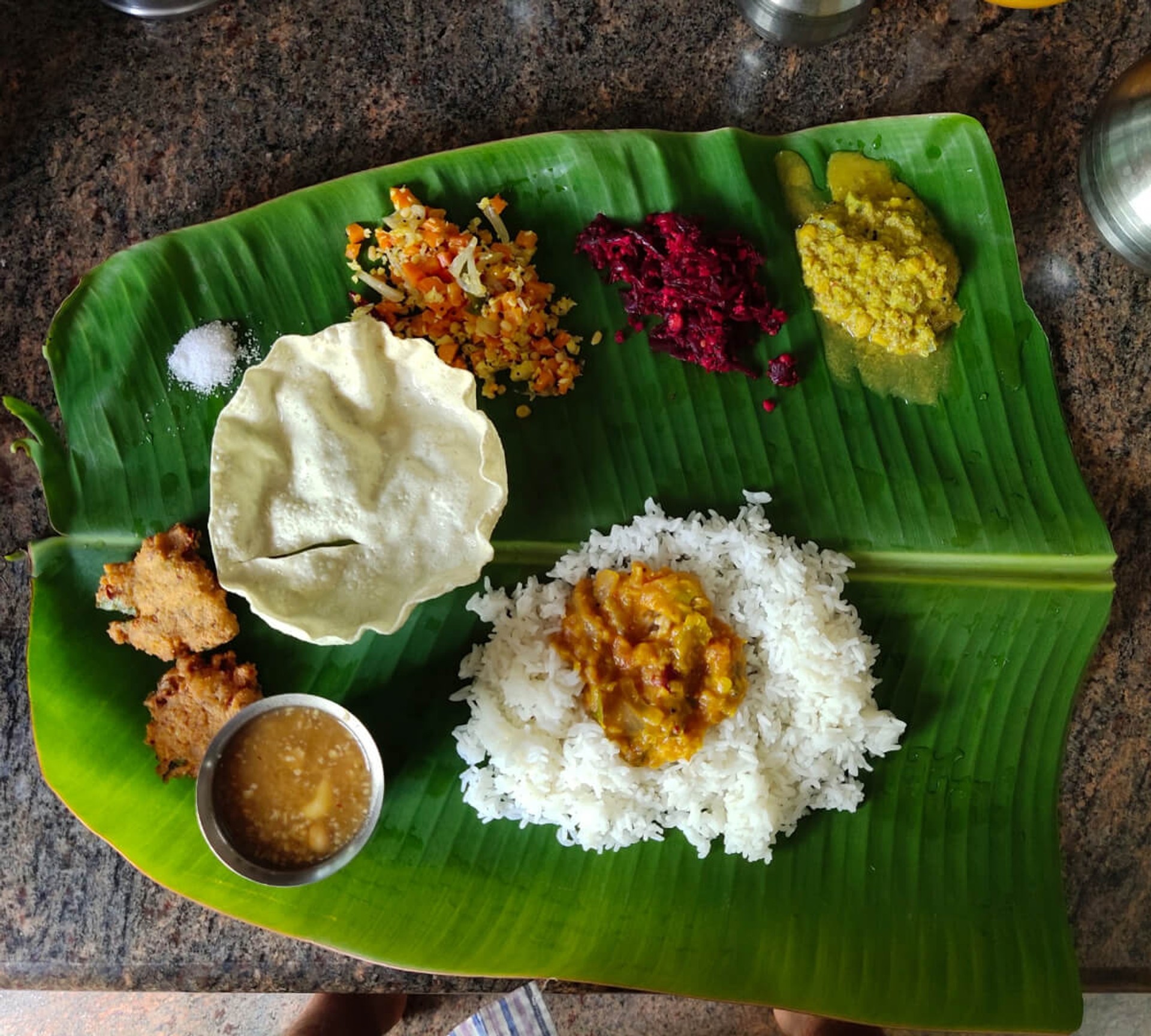
When you sit down at a local eatery and the waiter lays a massive, freshly cut green banana leaf in front of you, do not ask for a fork. Wash your hands, dive your fingers into the rice, crush the papadam, and mix the sambar. The food of the south is meant to be felt before it is tasted.
Embrace the heat. Trust the fermentation. And leave your preconceptions of Indian food at the door.
Your Culinary Logistics Checklist
Navigating the bustling cities and remote spice hills of South India requires airtight travel logistics. Here are the tools we trust:
- 🚐 Airport Extraction: Welcome Pickups (Arrive in Chennai, Kochi, or Bangalore and skip the aggressive taxi mafia with a pre-booked, English-speaking driver).
- ✈️ Flight Routes & Protection: FlyFlick (Book your flights) | Compensair (Claim compensation for disrupted or delayed international flights into India).
- 📱 Seamless Connectivity: Saily (Instant 5G for mapping out restaurants in tech hubs like Bangalore/Hyderabad) | Drimsim (Essential off-grid connection for the coffee hills of Coorg or Kerala backwaters) | Yesim (Unlimited data for streaming and uploading heavy food videos).
- 🚂 Overland Travel: 12Go Asia (Secure confirmed train tickets for scenic journeys down the coast) | InDrive (Haggle-free, fair-priced local auto-rickshaw rides to morning tiffin centers).
- 🌴 Curated Food Experiences: Klook (Book highly vetted, expert-led street food walks and spice plantation tours).
Taste deep. Fly high.